
The Book That Will Change How You See Language Learning (+ Clever Notes & Action Plan FREE)
One of the most common things I hear from language learners is
"what is the best way to do this?" You want to know how to learn a language, in as much detail as possible.
And it's hard to answer that question once and for all, for everyone. People are different, and no one's going to teach you good habits overnight. I know there are plenty of players out there telling you that their way of doing flash cards or listening to native content is the real answer.
But seriously, guys. What it really takes is that you learn to understand your own smart and capable self. That's where a book like Becoming Fluent comes in.
By the way, I've gone ahead and done a little bit of hard work for you guys. You can now enter your details below and download my book notes for Becoming Fluent along with a fab little action plan template so you know what to do next.
What Is Becoming Fluent?
Becoming Fluent is an impressive book in the field of language acquisition. It's written with the scientific background expected from academics. But that doesn't mean that language learners cannot apply it to their lives: Throughout the book, the authors mix explanations and practical tips. The book is written for adult learners who want to conquer another language, and goes into the following topics:
- What do you have to do to make sure you become a successful language learner?
- How can you choose the right target language to study?
- What are the best
- How important is it to know the culture and norms of people who speak your target language every day?
- How can you get better at memorising and remembering more?
Why It's Awesome
There are many language learning books out in the market that tell you all about how wonderful the author's methods are. Most successful polyglot-style books follow this system. The logic is that if following certain steps made the author fluent in another language, then you can do the same by copying the steps.
In Becoming Fluent, I detected none of this. The authors do work from their own experience in languages but never claim to know all the answers. Each chapter is based on a new aspect of language learning and gives a neutral summary of what the science says, followed by practical advice.
I've never used or endorsed the "copy a winner" approach, and I don't think it's quite how things work for language learners. Success in language learning is about more than just playing the game right. The more you learn and discover about yourself, your habits, your preferences and strengths in language learning, the more you will approach a real ability to learn any language quickly.
So for me, Becoming Fluent was an outstanding book about language learning because it doesn't tell you what exactly to do. This one is about empowering yourself to find your own perfect method.
What Wasn't So Great
Becoming Fluent is smart and thorough and scientific, which is a big rarity in language learning. It's great to read such a sensible voice in our field. The book comes at language learning from so many different angles that some great aspects get a little lost.
I would have liked the book's action-focused tips to be highlighted or separated from the main text, making it easier to find exactly how to put new insights into action. As it is, Becoming Fluent does require you to put in a few hours for reading, but this is time well spent.
My Favourite Parts
- All of chapter 2, which addresses the many lies and misleading beliefs that we hold in our heads before we even start learning. If you can only listen to/read one part of the book, this chapter is going to make a massive difference. It's a small window into how your brain trips you up.
- This sentence in Chapter 3:
"The REAL test of how well you speak a language is how easily you communicate when you are using that language, and the pleasure you derive from speaking it."
- The ideas behind common ground and the zone of proximal development, which are all about how you think of how good you are, how good other people are in comparison, and how you can get better step-by-step.
- The focus on learning and speaking a language like an adult, not a kid or teenager. This focus builds great insights, for example the understanding that it's more important to be yourself in another language than to sound "exactly like all the native speakers".
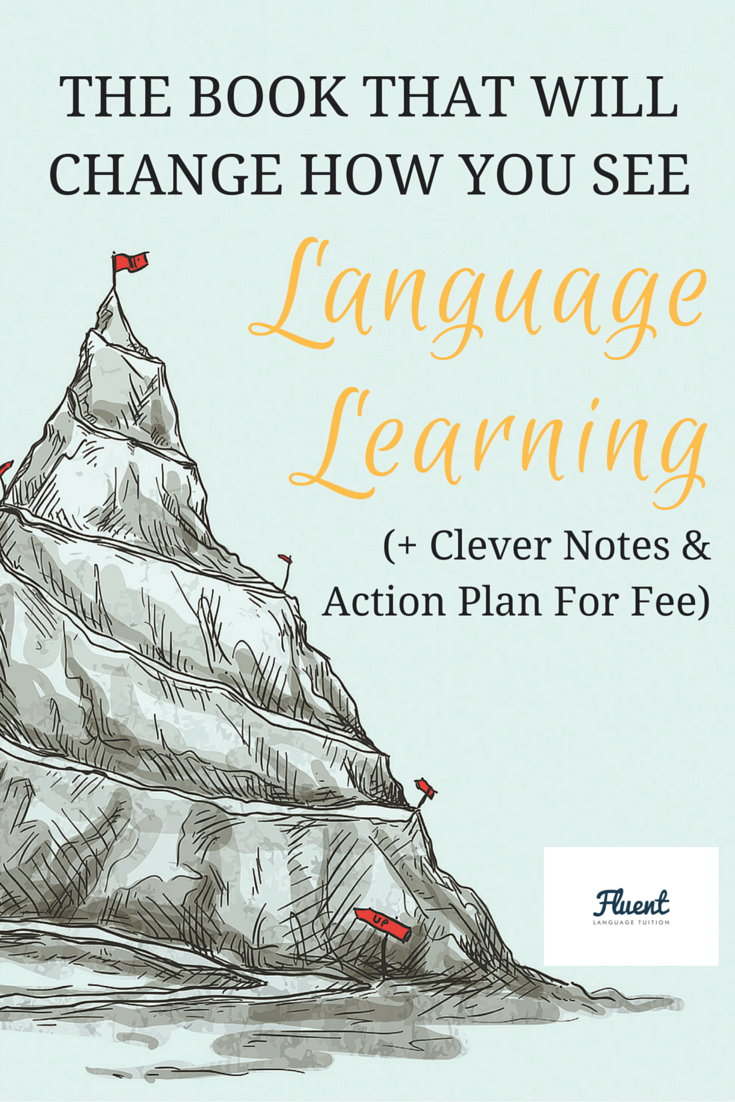
- The image of tutors and helpers as a Sherpa, i.e. Someone who's climbing the mountain with you, showing you the way, teaching you about the process as you're doing it.
- The concept of cognitive overload, which explains exactly why and how and when you get tired.
Overall, I am very happy that I read Becoming Fluent and recommend you check it out too. I ordered my copy from the local library and am very glad that it's in their catalogue now. You can get your own printed copy in the same way, or order it from Amazon (here's the US link and the UK link).
Don’t forget, you can grab my full book notes (9 pages!) by clicking the button below. They include your own action plan template and a checklist of books to check out, so next you can be prepared on your next visit to the library or to Amazon.
Don’t forget to sign up here to get the free notes and action plan.
Fluency Masterclass, Part 1: Reading
After my recent blog post
on training four core skills, we know that fluency is a product made of
all components. So in this Fluency Masterclass, I've got some tips to have you reading better than ever before.
After my recent blog post on training four core skills, we know that fluency is a product made of all components. You need the core skills to be strong to produce and consume language excellently. So in this Fluency Masterclass, I will have a look at each one of the four skills and give you tips on becoming the best you can be. Let's start with..
Reading
Everyone has a natural preference for how they consume information, so there is no common base level for all. Some may get excited by the idea of having a book to get their head into, while others swear by hearing key phrases on their mp3 player everyday.

©Christian Cable on Flickr
This is a step-by-step guide to leveling up in your foreign language reading skills. The steps start at an easy level and you can work on this as a path to becoming a great reader, no matter how long each step takes.
1) Become comfortable
When you are starting new reading exercises, make sure you keep your texts short and focused. The first stage should be appropriate to your level. If that means you stick with isolated words for a week or a month, then don't worry. Make sure you read little and often at stage 1. It is a great time for combining writing and reading by creating flash cards, examining fun materials for kids and playing spot the word games.
2) Find interesting content
No one's going to stick with the words and sticky notes forever. What do you enjoy reading in your first language? What do you like reading about? Find something interesting to yourself, be it classified ads or wedding blogs, and you'll stay motivated for longer. The key at this stage is to start with short texts and move on to longer texts gradually. For example, you could start with the TV listings, then the blurb on the back of DVD packets, and finally full reviews.
3) Aim higher
Here is where you need to bring some attitude. Challenge yourself, attempt a book or a newspaper article. Reading is practice in language consumption, with no pressure on you to keep up a certain pace or skip words. Using a dictionary 15 times per page is NOT a sign that you are bad at language, it's a sign that you are on your way to becoming really good at it.
So make the most of this fact and use reading for what it can deliver best:
- a growing vocabulary
- more familiarity with when which words are appropriate
- visual support for your spelling and writing practice.
4) Mix it up
At
all stages of this process, you have got to see reading as a skill in
the package of four, which means it's important that you combine it with
the other skills. Here are some tips for "fluency mixology":
- Read out loud wherever you can.
- Listen to recordings and read the transcripts. Sorry to all fellow Pulp fans, but for this one exercise you do have to read the lyrics whilst listening to the recordings.
- Write yourself notes to read again and again. Yes, sticky notes. They're my number 1 learning method.
I hope you enjoyed the first part of the Fluency Masterclass - why not share your own reading tricks in the comments?
Other great articles about reading in language learning
Why you must train 4 skills to achieve fluency
Ask most language learners what they are hoping to achieve, and you will come across a recurring ambition: fluency. The word fluent comes from the Latin language and indicates a sense of flow, because that's what conversations often do: they flow. So what you're hoping to achieve is a point where using another language becomes so easy that you won't have to hesitate, you won't look for words all the time and won't feel stuck.
If you are an independent learner, have you ever found yourself off balance? For example, you find yourself becoming a real expert in understanding spoken language, but a wall comes up in your brain as soon as you try to say the simplest of things. Or sometimes you have picked up a lot of spoken language and you'd be ok at the shop, but you can't read a single label!
Four Core Skills
As a language tutor, I make my students aware that there are four core skills to language learning: Speaking, Reading, Listening and Writing. You have got to become good at all of them and keep your levels balanced to prepare for true fluency in a language.
One example: Audio-based systems, such as CDs or podcasts, will put a lot of emphasis on
speaking and listening. This is excellent for basic travelling or conversation. But it is enough if you
really want to find that elusive fluency in your new language? Personally, I don't think so. Neglecting two of the four skills can really affect your confidence!

Since these core skills are ever so important, why don't we get to know them a little better:
Writing doesn't just refer to how good you are at composing a letter, note or blog post. It also includes your sound recognition. For example, how good are you at making notes based on what you're hearing, spelling them correctly and writing something legible in your target language.
Speaking, now that sounds hard doesn't it? It's not all about producing free-hand sentences and word order. Speaking starts when you meet the sounds of your target language. Pronunciation and accent work breed confidence, and putting that speaking practice in right from the start is key to helping you feel like communication is possible.
Listening is the skill of piecing together all the foreign sounds, analysing them in your mind and making sense of them as words and phrases. Listening helps you get the idea of what's going on, but more importantly it teaches you important pronunciation skills. All language production depends on what you hear, so don't underestimate this one.
Reading looks like a simple task after all those others. In any target language, the essence of this skill is in training you to spot patterns. Reading a lot will bring you in tune with the way sentences are built in a different language, and exercises engaging with a text are among the most useful you can work on for becoming fluent.
On top of learning those, you should engage with the culture, civics and geography of your target language. It really is a tall order, but trust me, it's worth it. You'll finally get over those "errrrr" moments.
How to test yourself

Ommm...find your balance, young deshi.
Here is an exercise I work on together with a lot of my learners. It's perfect for exposing a training rut or giving you inspiration for a new challenge. Draw yourself a diagram of all the skills you're hoping to train. Think about them and rate yourself out of 10 in each one. Then consult someone like a teacher or language buddy - what do they think? The outside perspective of another learner or a native speaker adds real value to the assessment.
Write your numbers on the diagram - are they balanced? Do you have a particular weakness or strength? Then think about how you have learnt your language so far, and what kind of exercises you've done most, and perhaps what you've been missing. For more exercises getting you ready to target your core skills, please check out my forthcoming ebook.
Thanks for reading this article!
Please have a look around other extremely useful articles on the blog by visiting the blog topics page or skipping straight to the Must Read content. Popular posts include:
3 Noteworthy Techniques for remembering vocabulary once and for all
4 techniques for switching your brain into language mode
How to sell your language skill to any employer



Struggling with listening? Discover realistic tips, challenge prompts, and the best tools for improving your listening skills as a self-guided language learner