
It's a free app loved by millions. Is Duolingo wasting your time?
Whenever I hear that someone new is starting language learning, I get excited.
But then, they mention Duolingo and I know how this is going to go.
I’ve spent years teaching, learning, and experimenting with language tools, and the little app with the Duolingo owl has always felt like a toy version of what language learners really need.
Using the app feels like language learning. You’ll pick up a few phrases. Cartoons cheer you on.
But deep down, it’s cosplay. Why?
What’s Good About Duolingo
This app felt like a revolution when it first came out. Here’s why:
Free-ish, easy access to language learning from your smartphone. Nice.
Lovely design with lots of fun illustrations
Gamified learning keeps you coming back!
It gets you from zero to somewhere in language learning, and officially works for getting people to do well on tests. (research sponsored by Duolingo itself though 👀)
The Downsides of Duolingo
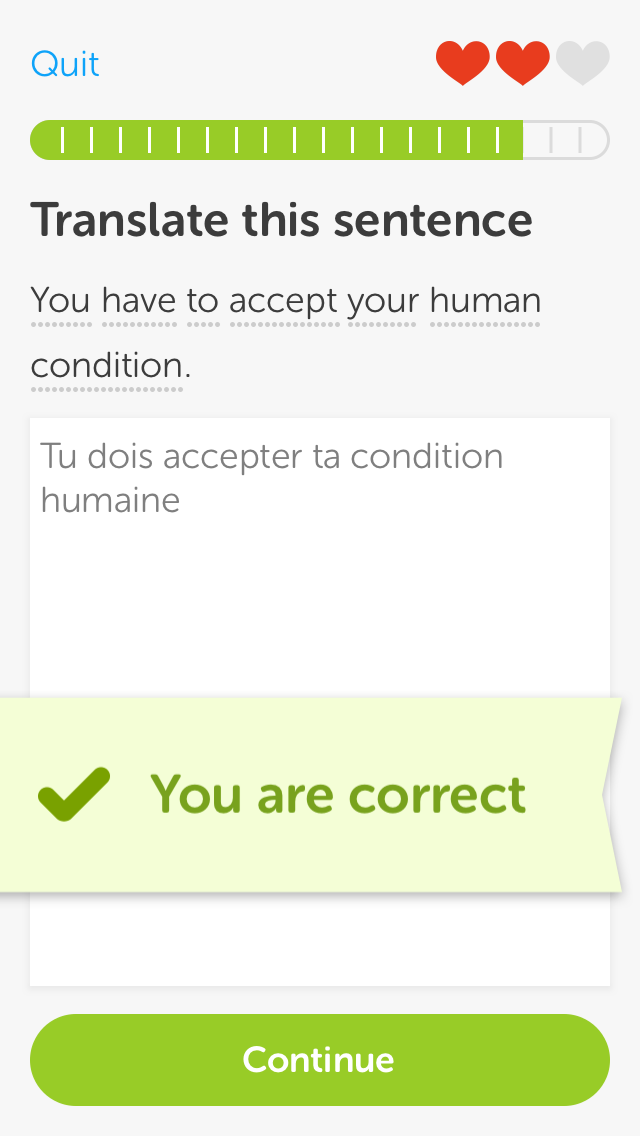
Duolingo telling me what my problem is.
You probably know about a lot of these issues by now, but let’s recap:
You have to learn endless nonsense sentences.
No flexibility about how you express yourself in your new language, so you’re not learning how to communicate.
The feedback is too easy to ignore.
Of course it’s not really free. Duolingo is now an ad-packed freemium app, and their business model has always cost teachers and learners. (Want the back story? Listen to this podcast about the hidden cost of cheap & easy language learning.)
Zero nuance, extremely limited explanations, no culture context.
Language learning should make people curious, but Duolingo doesn’t do that.
You don’t become a communicator. You become a really good Duolingo user.
What I Wanted to See Instead (So I Built it)
As a language teacher, AI has blown my mind. This endless resource of natural languages is easy to access, like a rich practice playground.
From the start, I wanted to build a community-driven, AI-powered space that actually helps people make progress:
Fresh, exciting ideas developed for real learners
Tools that help you learn with freedom, explore and have fun
Real-time personalised feedback, not just error messages
Content rooted in culture, context, and actual conversation
And most importantly: a support system. Other humans. (Plus AI that doesn’t sound like it’s dying inside.)

So I opened AI Language Club, where we create and experiment with fresh, interesting language learning ideas in ChatGPT, Gemini, and other AI tools.
If you are just getting started with a new language, don’t sleep on the big possibilities of AI, because it can do so much more than Duolingo!
What to Read Next
3 Tutor-Approved Ideas for Improving Your Duolingo Experience
Finding the Button That Makes AI Easier for Language Learners
If you are ready for fun, exciting language learning with fast results, come and join our club!
italki Review: Find Your Online Language Teacher
Finding a good language teacher isn’t necessarily an easy task. For those who don’t have a lot of local tutoring options or for those learning a less popular language, it can sometimes feel impossible.
Maybe you’ve had no luck finding teachers or language exchange partners in the past and you’re wondering if online teaching sites are a good idea. Maybe you’ve thought about trying one before, but didn’t know which option to choose.
In this review, let’s take a look at what italki is all about, what it has to offer, and how to make the most of its features to help you connect with others.
What is italki?
In short, italki is an online platform that connects language learners with both professional teachers and community tutors.
Currently, there are over a hundred languages for learners to choose from, including German, Chinese, Catalan, Armenian, and Esperanto. Since all lessons are done online, there’s also greater chance you’ll be able to find someone who teaches a language you’d like to learn.
How Do You Use It?
Like lots of language learning resources, it sounds great, but how easy is it to use?
Setting up an account only takes a few minutes and it’s free. After that, you can simply select a language from search bar to start looking for a teacher.
Finding a Teacher on italki
One thing I liked about this process was the fact that I could review all the available teachers before commiting to a decision. Each teacher on italki has a profile with a video introduction, a short description, a list of their teaching strengths, a list of the type of lessons they offer, and different costs. Professional teachers will also have a list of education and experience.
Once you find a teacher you’d like to schedule a lesson with, you’ll have to purchase italki credits, which can be done at any time from one of the options in the top menu. It doesn’t take long and there are a few different payment options, but keep in mind that each option has a different processing fee. After you’ve added enough credits, you can schedule a lesson.
Booking a Language Lesson
The booking process is simple and straightforward. Clicking ‘Schedule Lesson’ opens a window that lets you pick the language, lesson time, and lesson duration. New italki accounts have the option to select a 30 minute trial lesson, which is meant to help you get used to scheduling lessons and using the platform. It’s also great if you’re feeling nervous about your first lesson. You can use the shorter time period to test your connection, see how things work, and ask the teacher any questions you might have.
Once you pick a date and time for your lesson based on the teacher’s availability, you can also select an alternate way to connect for your session, like via Skype. I’d recommend entering in this information since the italki classroom is currently still in beta and can experience glitches.
After your lesson is completed, italki will ask you to verify that the lesson took place. If you did experience any issues, you’ll want to let them know. Then, you can leave a review for your teacher to share your thoughts on how the lesson went.
How Can I Get the Most out of Italki?
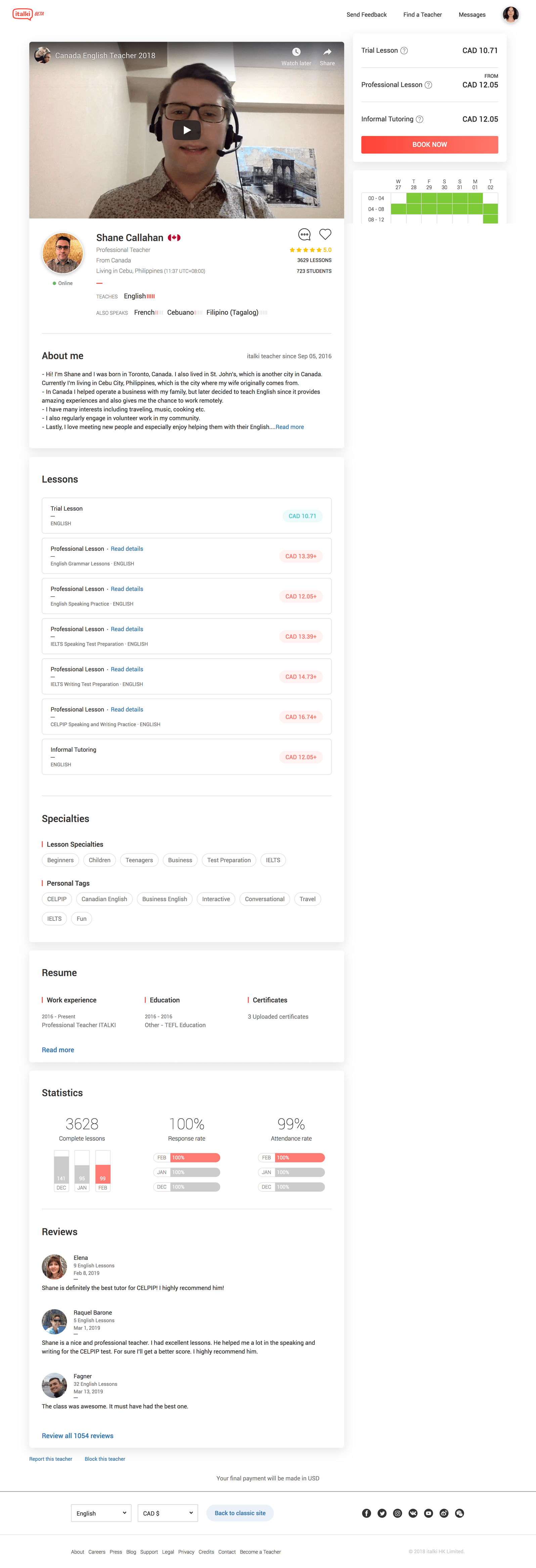
italki teacher: A sample profile
Since italki is focused on connecting language learners and teachers, it’s important to remember that your experience will depend on how you use it to interact with others. If you want to make the most of it, there are a few things you should keep in mind:
Think about Your Own Language Learning Goals
Do you want to learn a language in order to travel? Are you trying to pass a test?
There are a lot of teachers on italki and they all charge a different rate. I found that knowing my own language goals was one of the best factors in finding a good teacher, not price.
For instance, one of my reasons for learning Spanish is to have conversations with my Spanish-speaking, Latin American side of the family. So, when searching for a Spanish teacher on italki, I’m a bit more particular about finding someone who speaks Latin American Spanish and seems like someone I could easily talk to.
However, someone who wants to learn Spanish to travel to Spain or needs to pass the DELE Spanish Exam will have a better learning experience with a different teacher.
Once you’re a bit more clear on your own goals, you can use that information to help you pick a teacher. Pay special attention to:
Introduction videos
Teacher specialties
Lesson types
Reviews
To learn more about what you get for your money, read How Much Will You Pay For a Language Tutor?.
To Get The Best Italki Results: Be Patient and Prepared
Even if you think you’ve found a good teacher, you never know what a lesson might be like. You could find it hard to talk to each other or you might not care for their style of teaching.
Just remember that you won’t connect well with everyone. Don’t take it as a sign to give up. There’s nothing wrong with trying several teachers.
Starting a Brand New Language on italki
One thing that helped me was to be prepared ahead of time. My most recent italki lesson was for Arabic, a language I knew almost nothing about. Before the lesson started, I wrote down a few initial questions and made sure I had a notebook and pen nearby. I think even this small preparation helped me focus a bit more during the lesson, even though I didn’t feel confident.
Be conscious of any practical steps to need to take ahead of time as well, including finding a quiet room and making sure you have a fast, stable internet connection. It can go a long way in making sure your session goes smoothly.
Don’t Ignore the Other Italki Features
One-on-one lessons aren’t the only thing italki has to offer, but a lot of people either forget about or don’t bother with some of the other cool resources.
Improve Your Writing Skills With Feedback
Unter the Community tab of the main menu, you’ll find articles, a notebook to write things down in a language you’re learning, a place for questions and discussions, and a way to find conversation exchange partners.
If you’re interested in improving your writing skills, you’ll definitely want to try the notebook feature. You’ll be able to post an entry in your target language and native speakers have the option to give you feedback and corrections.
Similarly, you can check the Answers or Discussions pages if you have small questions or simply want to start a conversation. Any of these options is also a great opportunity to connect with others on the platform and find language exchange partners.
So, Should You Give Italki a Go?
Hopefully, this review has given you a bit more insight into how italki works and how you can make the most of its features to help you learn a language.
My honest advice is to start by making an account and simply searching for teachers. Take a look at the costs and click the small heart symbol to bookmark any teachers that you think might be a good fit. I’ll admit that I nervously did that for a bit before I finally took the chance and scheduled my first lesson.
The nice thing about italki is that you can just add a few italki credits and try it out. It’s not a big commitment, but it has a lot of potential to be extremely helpful.
italki: Better Than Your Local Class
Overall, I found the site incredibly easy to work with and much better than trying to find a class or a private tutor to connect with locally. So, if you think it might be a good resource for you, try at least one lesson. I think you’ll like your experience.
This review is part of a sponsorship from italki. It was written by Cassie Wright. To learn more about italki and get $10 of free lesson credit, go to www.fluentlanguage.co.uk/italki.
#clearthelist June 2018: Learning Languages When Busy
May was a CRAZY busy month and I missed lots of language goals. But if you need some inspiration (or commiseration!) about learning languages when busy, this clear the list entry will hit the spot.
Welcome to my latest language learning update through #clearthelist. Clear the List is a support and accountability blog group sharing monthly language learning goals.
I’m writing this article a few days later than I would have liked, but that doesn’t mean I can’t review and set my language goals.

What Happened In May
Looking back at the diary, here is a list of what happened over the month. It was a B U S Y one.
- I recorded an awesome episode of the Fluent Show with Ellen Jovin, and several episodes with Lindsay, plus a new bilingual episode that you guys will hear soon
- My beloved car Polly got the rust and failed MOT, meaning I’ll have to say good bye 🚙
- I visited Manchester, one of my favourite cities, and ran the Great Manchester Run (a 10k) in support of Manchester University’s access funds
- Olly Richards and I started working on the launch of German Uncovered, which is my new German course — of course now everything needs to be done faster than ever
- I prepared a talk and presented at the 5th Polyglot Gathering in Bratislava!
- We filled all spaces on Fluent’s first German Retreat 🇩🇪💕🍺 in Munich. The Retreat is now fully booked and I’m looking forward to announcing the next one in a few months.
- I finished the book Getting Through, about pragmatics in intercultural situations. It’s very good! Sadly no time for a thorough review.
A Polyglot Gathering is always such a fantastic experience, where you get to meet many new friends, practice your languages, and feel as if you’re not a weirdo because other people there get excited about diphthongs too!
Shout out to the lovely James who patiently let me practice my Spanish on him in Bratislava. I was encouraged to be getting sentences together. I also practiced very basic greetings in Russian, and spoke Welsh, German, and French,=.
How I’m Trying A Bit Of Chinese
True to the spirit of a month that ended in the Polyglot Gathering, this one contained some dabbling in a new language. Inspired by a mention of the LingoDeer app by Lindsay during Fluent Show 89, I’ve been learning my first ever Chinese words, letters and phrases.
The Fluent Show

On the podcast, there were some great episodes with both guests and co-host. Don't miss out on my conversation with Ellen Jovin, reminding us all what matters most in language learning. She has studied over 20 languages, all from her apartment in New York City.
Listen To The Episode About Learning And Speaking 20+ Languages In New York City
Thank you, Ellen!! You're awesome.
Welsh Language Goals: Review For May 2018
These were my previous goals
Listening
Hah! Last month I declared that watching TV wasn’t working out for me as a goal. This month I got straight into watching TV, starting with an idle viewing of a Welsh triathlon (for some reason I enjoy sports commentary), and moving on to Ffit Cymru - a sort of “Biggest Loser” show for the whole country of Wales.
And what’s best is that I managed to watch a significant chunk of it without even the subtitles. When switching off the subtitles, I don’t worry so much about understanding 100%. For me, it’s about getting more time to watch before I get tired. So with 15-20 minutes subtitle-free at a time, things are looking great in the listening department.
Complete at least 2 intensive listens to the Pigion podcast This was the original goal and I did listen to one or two of the podcasts, but unfortunately the vocab list links were missing for a few episodes in May. So I didn’t quite get it done as planned.
Still, happy with my Welsh listening comprehension!
Reading
Start reading Ffenestri or Sgwp Result! I am finding my choice Sgwp a lot easier to read than the previous choice (Bywyd Blodwen Jones), and the story is great. The chapters are a lot shorter than expected, so instead of 1-3 I managed to get up to 23 so far.
Read poetry in Welsh! Sadly, this one fell by the wayside. But I’m not ready to give up yet.
Speaking
Have at least 6 (!) short conversations in Welsh only Remember those 6 conversations I was going to have in May? Omg. Fail o Rama. Even though I now have a few people to access as language tutors and exchange partners, I just didn’t make the arrangements to actually let them know I want to practice. Lesson learnt: When you want to practice speaking in your target language, turns out you’ve got to go and arrange speaking practice.
I spoke some Welsh at the Polyglot Gathering and got good feedback, but overall I felt I wasn’t performing how I’d like. The noise levels, spontaneous nature of conversation, and mix of languages flying around my mind meant I was a lot slower. Plus, I still can’t handle those bloody yes/no questions!
All in all, maybe 2 out of 6.
Look for a book club
The book club is in contact, we’re regularly writing to each other and had a date in the diary. Sadly we missed that date, but apart from that it’s mission accomplished.
Writing
Write 2 language poems, and more considered ones. Uhhh, no that didn’t happen. I got intimidated after hearing an excellent BBC documentary about the cynghanedd poetry form, and then I thought I better not bother. Look below for a VERY simplified goal, because I am NOT ready to give up on #languagepoems.
Daily Contact Goal
In May, I logged 20 days of contact with the Welsh language. I lost track a bit towards the end, but I believe about 3-4 days were unlogged. My most used language apps were Ap Geiriaduron, Duolingo, and SmartCards+.
Language Goals For June 2018
June is another month that’s looking like it will be intense, with continued work on German Uncovered for the latest parts of the course and a well-deserved holiday in there too.
Check out the goals:
Welsh
Welsh is still my focus language, but this month I’m reducing the goals to make space for French and Chinese.
Listening
Follow The Ffit Cymru Series on S4C My goal is just to watch it, and I will switch off subtitles if I’m feeling up to it.
Reading
Try and Finish The Book Sgwp I’m enjoying this book and got about halfway through in crazy busy March, so let’s see if I can aim for finishing this month.
Speaking
2 30 Minute Conversations With My Tutor I tend to have a dislike of binding myself to a schedule, so I hadn’t booked regular classes. But noticing how that led to some serious slacking, I’ve now taken action and booked in the next 2 classes with my italki teacher in one go. They’re both in for this month.
Writing
My Welsh writing practice is now regular as I send emails and DMs to a few people in the language, but as a goal, I’m adding.
Write 1 Haiku I overshot last month and want to keep it super easy so I can achieve this one. If I write 1 and there’s time, I’ll write another. Easy!
Non Welsh Practice
There are two other languages I will probably work with this month.
French

La Belle France
Going to see the Calanques!
I’m going on holiday to France, so there’s no way I won’t be speaking a lot of the language. My French is a “rusty C1” kind of level, but especially the spoken language is very rusty. Read here for more about my French practice and tips.
My goal is to book a guided hike of the Calanques, all in French.
Chinese
In Chinese, I’m only dabbling and it feels intimidating to actually commit to a goal. I will keep playing with Lingodeer and see what I can retain.
So, in a nutshell that was the month of May! What about you?
How was your month?
If you want to join the linkup and share your own goals for the month, hop on to Clear The List with Lindsay Williams and Shannon Kennedy. I would love to read about what you’re up to in the comments below!
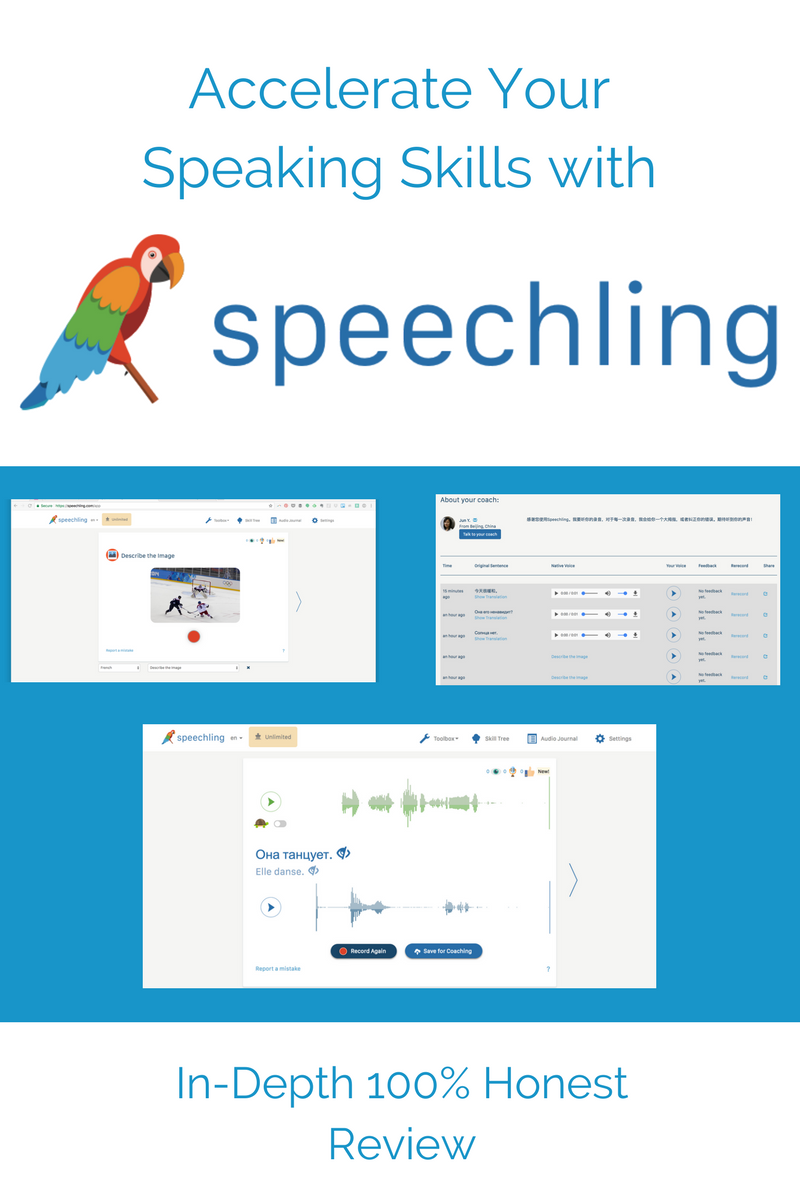
Accelerate Your Speaking Skills with Speechling: In-Depth 100% Honest Review
Speaking in other languages is harder than it looks at first. You can read books and study flashcards, and still choke when you speak to a real person.

It can be difficult to practice pronunciation and have conversations on a regular basis. Tutors are awesome, but your lesson time is limited. And many apps and bots make us feel detached.
Speechling claims to have cracked that problem. This new app offers speaking skill training, attractive design, and the most convenient access to a real person tutor that I have ever seen. No scheduling, no exchange of Skype names.
Sounds good, but does it work? In this review, let's take a deep dive and find out.
How does Speechling Work?
Speechling's courses use sentence repetition, a premise that you may know from fellow Fluent favourite Glossika. But there is a twist: Speechling includes feedback on everything you record, from an actual human.
After repeating the sentence you see and hear on the screen, you have the choice of listening back to your pronunciation, or to save it for coaching. After you save your recording, you will receive feedback and tips from a Speechling coach.
How I Tested The App
Speechling's six language options gave me the chance to test ot for at different levels:
- Advanced (French),
- Confident Beginner(Russian)
- Absolute Beginner (Chinese).
The Advanced Learner Test: French
In French, my language level is around B2-C1 on the CEFR. I can navigate most conversations without hiccups, and I know for a fact that speaking French is what I need the most.
So for my level, saying a few sentences every day at my own convenience was perfect.
The live feedback here was eye-opening. I have an optimistic blind spot to my own weaknesses in pronunciation and word choice. I always learnt French in academic environments, so I produce great grammar. But in reality, my spoken French sounds textbook and a little uncomfortable. The coach feedback made me more aware of my little mistakes without discouraging me completely. I felt encouraged to try again, to fix what I was saying and carry on.

Describing a picture using Speechling's Freestyle mode
With the freestyle mode, I got to practice free speech instead of repeating pre-written sentences. In the dictation feature, I added listening comprehension at natural speeds.
The Confident Beginner Test: Russian
Russian is a language I studied about two years ago and I was able to have very basic exchanges (“what did you have for breakfast?” - “I had porridge”, that kind of stuff). I pronounce words correctly, and can read Cyrillic. So with this language, I wanted to see
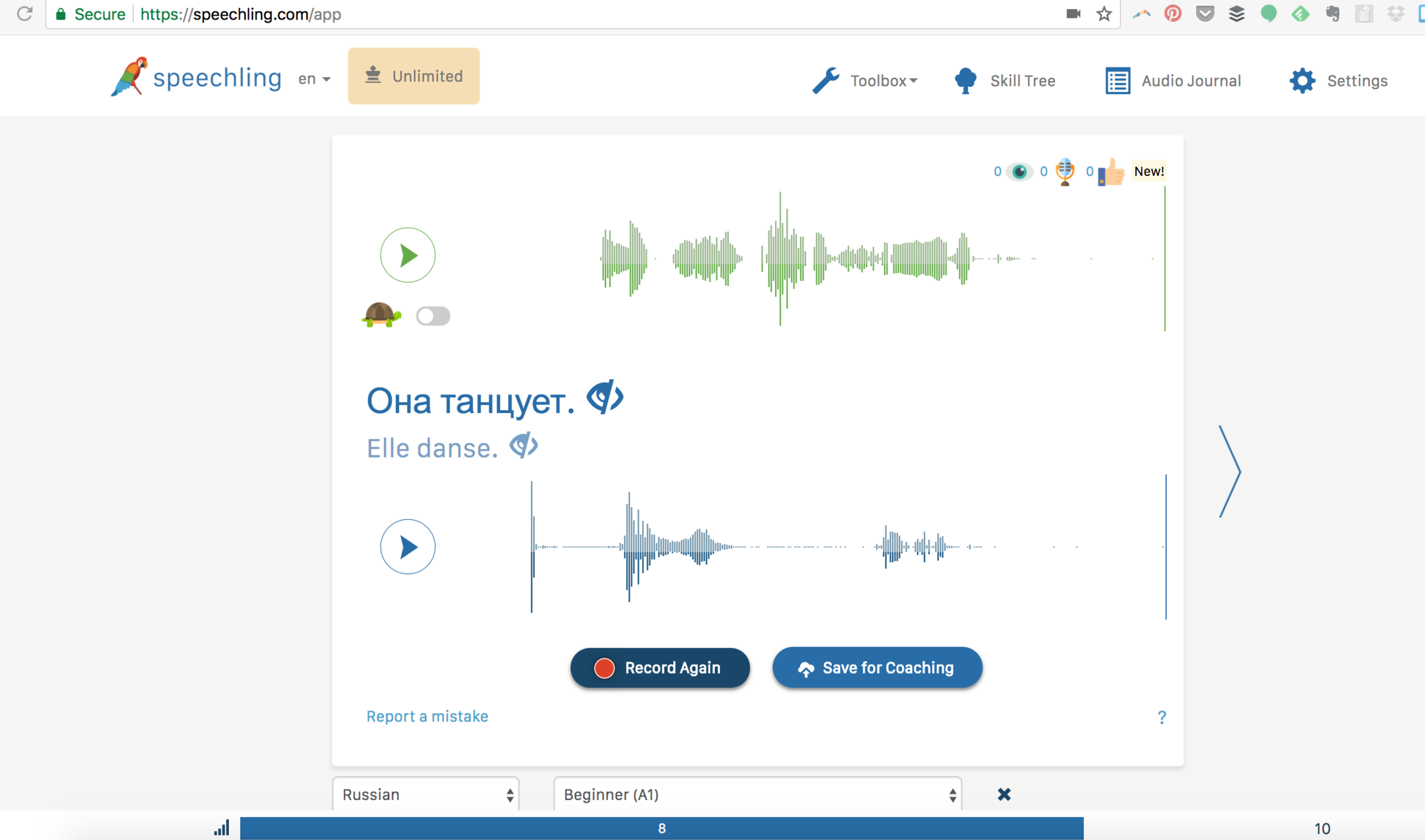
- if Speechling can teach me something new and
- if my pronunciation is accurate.
The module I chose was “Beginner (A1)”, which was a great entry point after a few years off. With each repetition, I felt like I was learning. The examples were well pronounced, came at a speed that felt like a suitable challenge, and soon I was improving.
I also felt that pronouncing each new word immediately helped me remember it, especially when I added a recording. The accountability of recording and coaching (“someone will actually hear this”) helped me link the phrase with a strong emotion. For more about how emotions amplify memory, check out my interview with Gabriel Wyner from Fluent Forever.
With a language like Russian, you need regular exposure to stay comfortable with the alphabet and pronunciation. Speechling surprised me here because it felt like the perfect tool. There were so many sentences I had never said before, and so many opportunities for me to improve.
Best of all, I was speaking Russian right there and then without any hesitation.
Of course, exposure to lots of sentences won't teach me more than lots of sentences. If I wanted to get back into Russian and start making steady progress, I would definitely use Speechling and I would add a textbook, dictionary, grammar explanations, and lots of input resources.
The Absolute Beginner Test: Chinese
Chinese is the only language out of Speechling’s range that I have never studied, so I decided to go for the “simplified” version. Does that mean easy Chinese? No idea, but it's worth a try. The module I chose was “Beginner (A1)”, as there was no way of picking anything even easier.
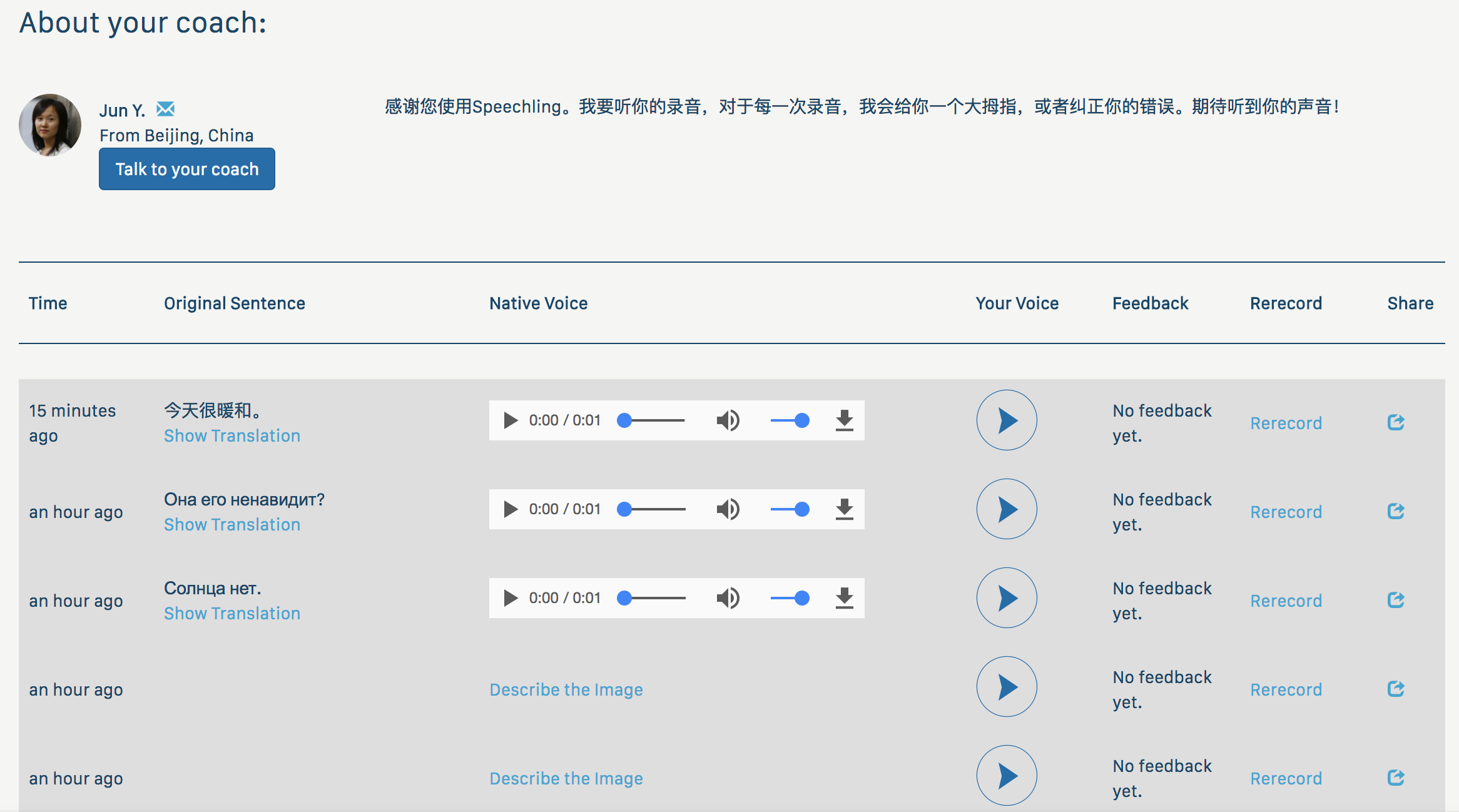
My Speechling Audio Diary
With Chinese, Speechling shows the sentences in Hanzi (Chinese characters). There is also the option of viewing the sentence in pinyin. Good job - it was the only way I could even start to guess at repeating the sounds I was hearing.
For a complete beginner like me, the sentences were interesting. I had to repeat the audio input 4-5 times before I dared to repeat the sounds. Surely, any Chinese speaker would be impressed?
Speaking Chinese to a Chinese Native After 5 Minutes
Well, I do know a Chinese speaker so I was ready to shine. Having newly acquired the sentence 今天很温暖 (“it’s warm today”), I asked my co-working buddy to listen to my Chinese and tell me if it’s correct. And he did understand what I was saying, although “impressed” would be stretching the truth a bit.
I also sent my recorded sentence to the Chinese coach, who drew my attention to the specific parts I got wrong.
Learning mass sentences as a complete beginner isn’t ideal. It leaves you without a sense of what each word means (which one out of jin tian hen nuan huo is “warm”, which one is “today”....and what do any of those symbols mean?). Learners don't get to understand what any of the rules of speaking are. But that’s okay, as Speechling not designed for that. This tool is a great confidence builder and accent sharpener. I could imagine it as a fantastic basis for tutoring, sending students away with homework on a topic.
Multilingual Usage

If you have studied more than one of Speechling’s range of languages, you can view translations in any of the six languages. This means you get to practice two languages at once, and it’s one of easiest ways to train your polyglot muscles.
Downsides of Speechling
On several occasions, my recordings were too long to be saved for feedback. This is understandable, but it was frustrating particularly in the freestyle mode. It’s disappointing when you say a complex sentence to send to your coach, and then get a message saying “file too large - cannot save”. It would be great if Speechling could include a guide on how long I can record for.
For languages where I knew nothing at all, I’d also like to see a primer module so I understand what I'm doing. But this is a tiny point, especially since Speechling is not aimed at complete beginners.
In Conclusion: Speechling is Great
All in all, I found Speechling a great addition to my studies. It was challenging and helped me improve my pronunciation and speaking skills in three languages. I was most excited about what Speechling could do for my Russian language skills. I improved both my vocabulary and accent, and the process was efficient and fast.
Speechling is free from robot voices and works with male and female voices (native speakers, of course). Its interface looks great and it gets you into the action immediately.
I love the record-feedback cycle, because it prompts you to re-record a better version of what you said. You get feedback, and you improve pronunciation, confidence, and speed.
The coaches were great for all the languages I tried. They recorded speedy corrections. At the very early levels, feedback is not rich, because they are native speakers and they use their native languages. But even so, it was clear where exactly I was supposed to change something. The more you learn, the more you will get out of these coaches.
If you work with a tutor that you don’t see every day, definitely try adding Speechling to your language routine. You will be speaking your target language more, you'll build a better accent. And best of all, pronouncing all the new words will help you remember them faster.
How to Get Started (+ Speechling Discount)
Create a free account and start speaking at Speechling.com, or by download the app from the App Store or Google Play Store.
Speechling is currently available in six languages: French, German, Spanish, English, Russian, and two types of Chinese.
It’s a freemium app, and you get 15-20 minutes of feedback for free every month. I would recommend checking out the paid plan (see below for 10% off) if you want to
- get a speaking boost, especially when there’s a deadline
- learn more than one language at once
- keep track of your progress with the audio journal.
The unlimited plan is open to Fluent readers at a 10% Lifetime discount: Make sure you use the code FLUENT when you sign up.
Good to know: Speechling is a non-profit company and also has a classroom version called Speechling for Education. I have an existing relationship with Speechling as they are a sponsor of my podcast. This only influenced the amount of attention the product received, not the verdict. It is a cool app.
Have You Tried Speechling?
Are you a pronunciation master now? How did you like the coach feedback? Leave a comment below and share your story.
***hello from the future!!***
Since my original review of Speechling in February 2018, these folks have been hard at work and have just emailed me to share the following new developments.
1. A new module called "Speechling Foundations", which will teach newbies from the very beginning. This start from zero module covers teaches the most essential words in context.
2. New listening options: Speechling now offers listening comprehension, multiple choice, fill in the blank, and flashcards. It's all available for free without login. All of this works on mobile too.
3. More language! They've more than tripled our content collection.
4. Offline mode!! Premium users can download a huge chunk of Speechling’s sentence collection (~10k sentences) and even audio books and Anki decks .
And added in March 2020
1. Speechling now includes Italian, Japanese, Korean, and Portuguese.
2. The recording time has been upgraded to 15s as Standard! It’s quadrupled to 30s for paid users.
3. There are now over 10k recordings (male + female combined) for each language, from words to complex sentences.
4. Speechling now includes word hints where you can mouse over words and get pronunciation tips and definitions.
I love it when an app listens to its users, this alone makes it worth checking out!
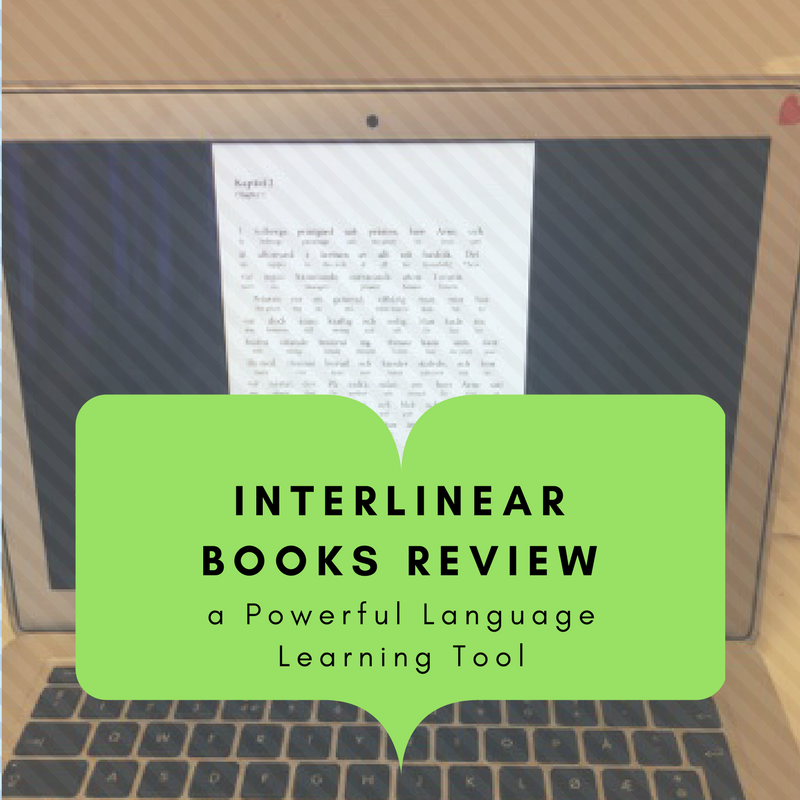
Interlinear Books Review: a Powerful Language Learning Tool
Interlinear are bilingual books that include the original and an English translation below. The English is in a smaller font, so that it doesn’t distract too much from the original language. Each word or phrase is translated below the original one, and the books are classic literature from the language it is teaching. In Interlinear Books’ own words: it’s like subtitles for books.
But do these live up to their promise? Read on to find out if Interlinear can really help you learn a language through books
Remember the recent podcast about reading in other languages? We talked a lot about how difficult it can be to find original literature in your target language that is actually comprehensible too.
In today's post, I've asked Fluent contributor Victoria to take a look at an intriguing offer...Interlinear books - they're like original subtitled literature. Say what! Victoria is both Norwegian and book-obsessed - no better candidate to review the books we examined in this post.
Read on to find out if the promise of Interlinear books delivers:
When I was asked to review Interlinear Books, a language learning literature tool, I was intrigued - I'm always looking for new reading experiences, and this certainly was unlike anything I have read before!

Short version of verdict: Interlinear Books are a great supporting language learning tool for intermediate learners to infuse some foreign language literature into their lives.
This review is based on no previous knowledge about Interlinear products, and all comments are based on my first-hand experience of trialing the Swedish Interlinear book.
What are Interlinear Books?
Interlinear are bilingual books that include the original and an English translation below. The English is in a smaller font, so that it doesn’t distract too much from the original language. Each word or phrase is translated below the original one, and the books are classic literature from the language it is teaching. In Interlinear Books’ own words: it’s like subtitles for books.
Click here to view all Interlinear books
Does it work?
Initially I was intrigued by the idea of learning language by reading quality literature – as a literature graduate and a book lover at large there could hardly be anything more fitting! I chose the Swedish title, Skatten: Herr Arnes Penningar (The Treasure: Sir Arne’s Money) and dived into it.
As a native Norwegian speaker, I was already fairly acquainted with Swedish as a language and feel that I was already somewhere between advanced and fluent level. However, I find that reading books in the language you are learning is always useful to broaden vocabulary, regardless of your fluency level. I wanted to feel more confident reading Swedish and thought this would be the perfect tool to do so with some guidance.
The story is not the most compelling and the language is fairly poetic for a novel, which I thought was a slightly strange choice. However, Interlinear does ensure that this poetic language carries through into the English translation, which I appreciated.
Not Your Usual Translation
Since each word is translated in the word order of the original text, I found that the English text could sometimes be strange to read. As a consequence of the word-for-word translation, the English sentence structure is sometimes quite unusual. However, this appears to be an effect of Interlinear’s aim to make you read sentences, rather than single words; the intention is for you to be able to grasp the meaning of the sentence without looking up every single word, just the ones you don’t already know. The text is translated and proofread by humans, which sets it apart from other translation language learning services.
Personally, I found the layout of the pages slightly hard to follow; the translation may be in a smaller font, but it is nonetheless very existent on the page and can be distracting at times. The result of the text appearing twice on one page is often that there is very little white space. You do get used to this as you read, however it may throw you off slightly at first.

I did, however, very much enjoy reading the text, and found that my reading skills improved throughout reading the text, as well as adding new words to my vocabulary. I also enjoyed the fact that Interlinear Books allow you to explore the literature of the country whose language you are learning and consequently get an insight into the cultural specifics.
Intermediate Learner? Look to Explore Interlinear
Interlinear really works best if you're an intermediate learner, as the concept of understanding the meaning of a sentence from understanding a few key words is unlikely to be effective at a beginner level. For this same reason I would also suggest that the Interlinear Books are a great tool for bridging the gap between beginner and intermediate; it allows you to put your language skills to the test with the translation to fall back on when necessary.
The key question you're all probably wondering about right now – can the Interlinear Books support your language learning experience? The answer is: absolutely.
So Should You Give Interlinear Books a Go?
If you're an intermediate learner, the short answer is: yes – but be aware that it cannot replace more conventional language courses or classes. It works best as a learning supplement.
The whole concept of Interlinear Books is to provide a tool that helps support your language learning, and the books should therefore not be the sole language learning you implement in your everyday life. Instead, you should use the books to replace some of your other English-language reading – read a chapter during lunch or during your commute, for example. The books are relatively short, so they are likely to feel easier to get through than a massive brick.
Interlinear Books currently have 10 books on offer, in 10 different languages. They're also continuously developing new books and languages, and you can sign up for their newsletter to be the first to hear about any new titles they produce.
View the Interlinear catalogue in full by clicking here
So, if you're looking to take that next step into reading books in the language you are reading, Interlinear Books is a brilliant place to start.



Struggling with listening? Discover realistic tips, challenge prompts, and the best tools for improving your listening skills as a self-guided language learner