
Field Report: Three Strategies You'll Wish You Knew When You Hit a Wall Learning a Foreign Language
When you’re feeling stuck and making no progress in language learning, frustration can rob all the fun. But with these 3 strategies, you’ll easily find your way back to a more positive approach and keep going on the path to fluency.
Thank you to Cher Hale for this guest post.

I sat at my desk and stared at the screen.
The Chinese characters seemed to taunt me as I wrote their literal meaning in English to grasp why one character went after the verb here and after the subject in so many other cases.
After five minutes, I sighed, rolled my eyes at the Mandarin language, and moved on.
Four months prior I would’ve let frustration take over.
In fact, when I was learning Italian, frustration was the reason why I stopped lessons, and if it weren’t for my commitment, I would not have reached the level where I’m at now.
With Mandarin I find myself running into the same frustration, but instead of wanting to quit, I feel more at ease and motivated to tackle the language again.
What inspired that difference?
What did I learn in six months that changed my view of frustration?
When I’m not learning Mandarin or writing for the Italian site, I’m usually reading an academic paper (or watching Doctor Who) – most notably from the Modern Language Journal. On one of my most recent linguistic explorations, I stumbled across a linguist named Stephen Krashen from the University of Southern California.
He talks about the Comprehension Hypothesis, which suggests “we acquire language and develop literacy when we understand what we hear and what we read” (Krashen, 2014).
This means that what comes in – books, audio, and lessons – are more important than what goes out – speaking and writing.
There is more to this theory, so if you’re interested, read this interview from Language Mastery.
3 Ways to Reduce Frustration in Language Learning
1) Understand that you don’t learn grammar concepts, phrases, or vocabulary until you’re ready to learn them.
This point comes from Krashen, and it’s interesting to note how representative this point is of life.
How many times have you gone through difficult situations and only learned the lesson after the third time?
The lesson was there and had been waiting for you all along. You only needed to develop to a certain level to absorb it.
So when it comes to grammar, know that you won’t learn certain concepts until you’re ready.
You can try hard to memorize usages and nitpicky rules, but studies suggest you need to be at a certain level first.
Like the famous polyglot, Kató Lomb, paraphrased from the original German:
One learns grammar from language, not language from grammar.
(Original German: “Man lernt Grammatik aus der Sprache, nicht Sprache aus der Grammatik.” – Toussaint and Langenscheidt)
While this might sound depressing (because you can’t game the system and memorize everything), it’s actually liberating.
What this means for you: When you encounter a difficult concept or don’t understand something, seek an answer. If it’s still not connecting, LET IT GO.
You might not understand it today, but I guarantee that as you continue learning, it and one hundred other invisible things, will become visible. It will be frustrating, but you’ll be more at ease when you let yourself off the hook after honouring that this is how our minds work.
2) Drop boring textbooks, and pick up content that interests you.
Some might argue with me, but I think you can use interesting, relevant content in your target language no matter what level you’re at.
For example, Lomb, the polyglot mentioned earlier, used a Russian novel to learn Russian. She never went to a class and learned rules. She used what she had – a compelling novel – and worked through it.
What this means for you: Find a book, a television show, a magazine, or even memes online that you’re interested in to integrate into your learning schedule.
Don’t have a schedule or know what to do each day? Read this: 5 Steps for Planning a Productive and Successful Language Learning Week
You can also learn techniques for how to read books here : “You Assume They Don’t Have Chick Lit in Polish”, our discussion on reading on the Fluent Show
My final point is that the more background knowledge you have on a topic, the easier the content will be to acquire, so use content you’re familiar with AND enjoy.
3) Stop EVERYTHING, and be honest with what is and what is not working.
Humans are creatures of habit – both good and bad.
Out of routine, we use a technique to learn and keep doing it even though we recognize we’re not learning from it anymore.
Then we get confused because we know we’re supposed to be learning everyday, but we’re not sure what we should be doing that actually works.
At this point, many of us fall off the wagon…but that doesn’t have to be you.
What this means for you: Look candidly at the techniques you’re using.
Questions to ask are:
Am I using a material that I hate or find boring?
Am I studying at a time when I’m unfocused or tired?
Am I still using a technique from when I was a beginner that is no longer serving me as an intermediate learner?
Then, take out a sheet of paper and make three columns.

My worksheet for what works and what doesn't!
Column I: What I l love doing to learn in (target language)
Column II: What I dread doing
Column III: What I want to try doing
Write 4-5 items per column.
Look at column II and either find creative ways to make them fun or let them go.
Make plans for trying the activities listed in column III.
This can be tough if we think that memorizing 10 words a day is “supposed” to help, but give it a try. Letting go of things you hate or find boring will reduce frustration and invite more joy into the process.
The strategies people claim have been effective for them may not be effective for you. Try them out, and if they haven’t proved themselves within a month, wave goodbye.
Remember, in this process you are the most important person, so make the best decisions for you.

5 Hilarious Games for Learning Languages in a Group
It’s an open secret among experienced language teachers: We love playing games! During my retreats and lessons, I’ve had so many experiences when an hour of Articulate in German helped my students speak fluently with more ease than a hundred other lessons. In this guest post, Italian teacher Gloria presents her top 5 games for learning languages.

It’s an open secret among experienced language teachers: We love playing games!
During my retreats and lessons, I’ve had so many experiences when an hour of Articulate in German helped my students speak fluently with more ease than a hundred other lessons. In this guest post, Italian teacher Gloria presents her top 5 games for learning languages.
Many of these games will be a lot of fun for learning other languages, too. Over to Gloria…
Among the tools we can use to learn languages, games are surely the ones I love the most. I know it sounds weird said from a teacher, but I’ve never really liked traditional learning methods. Sure, when I was learning languages at school, these traditional methods made me feel like I was doing the right thing. Still, I found them endlessly boring and energy-consuming. All those drilling activities, fill-in-the-blank exercises, multiple-choice quizzes… they just made me feel anxious and in the end, they weren’t contributing to my learning.
The Problem With Traditional Study Methods
When you feel tense or anxious, you are pushing yourself away from your learning goals. Why? Because we need to create positive memories if we want to store new information into our brain. If we want to secure a long-term learning or, in other words, if we want to truly acquire new information, we need to be in a relaxed and stress-free state of mind. Stress prevents new information from coming in. Conversely, happiness and calmness open us up to letting new information in.
This is especially true for Italian.
Italian is known particularly for its charm, but also for being quite a complicated language. If English is your first language, you might have experienced a few tough moments when approaching Italian for the first time.
Group Games for Language Learners
Below you will find some creative group games which will help you add some fun to your Italian practice and secure yourself a stress-free and efficient learning.
1) Strega Comanda Colore (Witch commands colour)
This game comes straight from my childhood and is a part of the Italian kindergarten-games tradition. Here I would like to propose it with a small variant. Originally, we have one person who plays the witch and who says “strega comanda colore…” (witch commands colour…) and then he or she adds one colour of their choice. Once the other players have heard the colour, they have to run and touch one object with that specific colour before the witch catches them. If someone gets caught, they become the witch, and the game continues until everyone gets caught.
Now, here is the variant I would like to propose to you: When you touch an object, you can also shout the name of that object. This way, you will create an opportunity for learning and revising new Italian words.
You can also stick a post-it note on the objects you haven’t learned yet. After that, you can remove the post-it note and add a bit of a challenge to your game by relying on your memory. If you want, you can use this game to revise words in other languages as well and spread a little bit of the Italian traditions all over the world.
2) The Miming Game
We can use this game for many languages, and for Italian it comes particularly in handy when you want to revise verb conjugations. When you struggle with verb conjugations, the miming game gives you an opportunity to practice Italian verbs in a laid back and fun way.
First, write a subject pronoun like io (“I”), tu (you) or lui (“he”), on a paper or a whiteboard, and mime a verb of your choice. The other players will have to guess the verb and say it conjugated according to that subject. If, for example, you choose the subject “noi” and you mime the verb bere (to drink), the participants will have to shout beviamo. The first player who guesses the right answer will take your place, and the game will continue until you all decide it’s over.
You can then choose which tense you want to revise. You can begin with the present tense and then shift to the passato prossimo or the imperfetto as well. If you want, you can also choose to revise more tenses together.

A round of Pictionary in our comfortable lounge at the Fluent German Retreat
3) Pictionary
It’s the perfect game to play with a language buddy or a small group of friends. One person begins by drawing a picture, and the other participants have to guess what that picture is and say their answer in their target language.
You can draw pictures representing nouns like cane (“dog”), albero (“tree”) and libro (“book”). You can even draw adjectives like felice (“happy”), stanco (“tired”) and triste (“sad”). Then, you can also draw verbs like mangiare (“eat”), dormire (“sleep”) and leggere (“read”). You can use this game to revise what you’ve already learned.
It’s a good opportunity to spend some good time with friends and turn a leisure moment into a learning opportunity.
4) Pronunciation Memory Card Game

Everyone loves the sound of the Italian language, but how many out there find Italian easy to pronounce? So, here I want to propose a variant of the classic memory card game.
You can still match pictures and words, but, in order to help you with your pronunciation, you can focus on tricky words like ciao, chiesa, schiena, sci, formaggio, laghi… When you find a matching pair, shout the word out loud. If you don’t remember how to pronounce that word, the other players can help you with that.
Remember, this is all about teamwork, it’s not a competition. Plus, working to support each other is going to lead you further than competing against each other.
5) Game of the Goose

It’s the famous board game where you throw a dice and move pieces from one box to another around a track. You can build this game gradually, as you learn new sentences and words.
First, print out a blank template for the game of the goose (there are plenty online) and in each square you can write a question you’ve learnt to answer. Once all the squares are filled in with a question, you and your partners can throw the dice, move your pawns and answer the question where your pawn has landed.
Remember this is about team support, instead of competition, especially if you’re shy and you feel a bit intimidated when it comes to speaking.
As you can see, when it comes to learning Italian - and languages in general, applying creativity is the first step towards a new kind of language-learning experience.
You can play these games with your friends and classmates, or you can even involve your family, if you’re learning together. You will see how easy it is to transform a learning moment into an enjoyable shared moment that will bring beautiful and positive long-term memories.
What Are Your Favourite Games for Learning a Language?

Gloria Spagnoli is a playful Italian teacher online and founder of Speakita - Playful online Italian lessons for beginners. She’s committed to helping shy beginners and false beginners speak Italian confidently, with no stress and by having fun.

7 Reasons Your Cultural Awareness Matters More Than Perfect Vocabulary
You know about vocabulary lists, flashcards and pronunciation guides, but sometimes there’s more at stake than just knowing the language. In this article, you’ll learn about the hidden ingredient you need for avoiding misunderstandings (even offence!) worldwide.
The following post is written by the lovely Michele from Intrepid Guide, a blog dedicated to language and travel.

How well would you say you speak the foreign language you’re learning? Are you beginner, intermediate or even advanced and near fluency?
Now, I don’t want to bust your bubble, but, you may not be as ‘fluent’ as you think.
While we may learn languages with the goal of being fluent (whatever that means to you) the most important question to ask here is, how culture-savvy are you?
You may understand a foreign language but that doesn’t guarantee that you understand the nuances and the whole range of meaning that native speakers communicate to you.
Communicating in another language requires more than just memorising words and grammar. We have to learn how to communicate beyond words by understanding its culture. Therefore, as we study a language, we must learn it alongside its culture.
Afterall, language is culture!
What is Cultural Awareness?
Cultural awareness understanding that our own culture differs from one individual and group to the next, and specifically from our target language.
Being culturally aware helps us recognise and have an appreciation for other’s values, customs and beliefs and meet it without judgement or prejudice.
As we encounter new languages and cultures we begin to make comparisons and realise that our own behaviours, values and beliefs are not the general norm found elsewhere in the world.

Michele at the Vatican
Why is Cultural Awareness Important?
Cultural awareness is key when we communicate with people from other cultures. Since we use language to communicate, our knowledge of foreign languages gives us ‘access’ to different societies and cultures. We become mediators between cultures.
The most important reason why we should be culturally aware is so we have an increased awareness of people all over the world. This helps us develop a deeper understanding of our own and other people’s cultures, while broadening the mind and increasing tolerance.
Expressing Respect
When we are culturally aware we know what is considered inappropriate or offensive to others. For example, incorrect body language and can lead to misunderstandings. Even something as simple as nodding your head in agreement can be misunderstood in places such as Greece, Bulgaria, and Albania where shaking one's head can actually mean yes.
In Western culture we’re taught that it’s polite to look someone straight in the face when talking to someone, however, in Japan this is considered disrespectful.
Being culturally aware isn’t just for those learning a foreign languages either. As an Australian who swapped her life in Melbourne for a life in Rome and then again for London (where I’m currently based), I learned that even between English speaking countries our cultures can differ and that these differences can surface in unsuspecting ways.
During the past 5 years of living in the UK, I’ve accidentally ruffled a few feathers and learned some important cultural lessons the hard way.
Here are 7 times learning cultural awareness changed my life way more than any vocab table ever could
1. Inviting STRANGERS Round To Yours - Kidnapping Or Hospitality?
Whilst living in Italy, I travelled the country extensively and took many walks and tours with local guides. Each of Italy’s regions has its own personality, unique history, culinary delights and beauty. You can’t just visit Florence or Rome. You have to visit other cities too to really understand Italy.
When I was on one of these local tours in Milan, our guide explained that we shouldn’t be ‘discouraged’ if we encountered a ‘rude’ Milanese. She explained that people from Milan can seem rude or cold at first, but once you make an effort to get to know them they are just as warm and welcoming as we’ve come to know Italians to be.
Compare this with an experience I had at the opposite end of Italy in Sicily. One summer I was in Palermo celebrating a girlfriend’s birthday with 4 other girlfriends. we went to dinner at a popular restaurant frequented only by locals. It’s fair to say we stuck out a sore thumb.
After about 10 minutes at our table, a middle-aged lady from a neighbouring table who was with her family enquired where we were from. Her eyes lit up when we replied in Italian. After no more than 5 minutes of chatting, Maria invited all 5 of use around to her house the next day for coffee and cake! She gave us her number, address and a time. It was all set.
I’d never in my life received such an invitation. After some internal juggling wondering if we were about to experience Liam Neeson’s movie ‘Taken’, we decided to take our chances and go. I’m so glad we did. Maria had very kindly baked two different homemade cakes and even gave us her recipe.
This would whole encounter would never happen in Australia, or the UK for that matter. To this day I still can’t believe it did. It just goes to show that just because you do things one way in your country, doesn’t mean it’s the same everywhere else.
2. American, British, and Australian English: Similar but Different
Even though Australia is a British colony and Australian English is based on British English, we’re not very politically correct with our choice of words. Australians say things that can be considered highly offensive, but we do so without malicious intent.
It's like we’ve used these words so much in everyday speech that they've lost all power and negative connotations that it no longer offends anyone, hopefully.
This was and still is the hardest lesson for me to learn since living in London and something I still struggle with today.
An example of a word that Australians will use without batting an eyelid and which makes up part of many common Australian idioms is the word ‘bloody’. So common is it for us to say ‘bloody’ that it was even part for a A$180 million advertising campaign by Tourism Australia that was banned in the UK for being too offensive. The slogan read “So, where the bloody hell are you?”.
A more extreme example, which I know will probably make you cringe, is the use of the highly offensive c-word. It may surprise you to learn that many Australian males will use this as a sort of term of endearment towards other males. They’ll say things like, “Hey c&!, how are ya?”, or “he’s a good c%!.” The c-word is never directed to females or used by them as it’s still considered an offensive word, but it’s not nearly as taboo as it is in the UK or America.
3. Being 'On Time' Means Being Early, Late, Or Just On Time Depending On Where You Are
Even being punctual can cause misunderstandings. While Germans consider punctuality to be very important, the exact opposite is true in South America where it is considered rude to arrive on time.
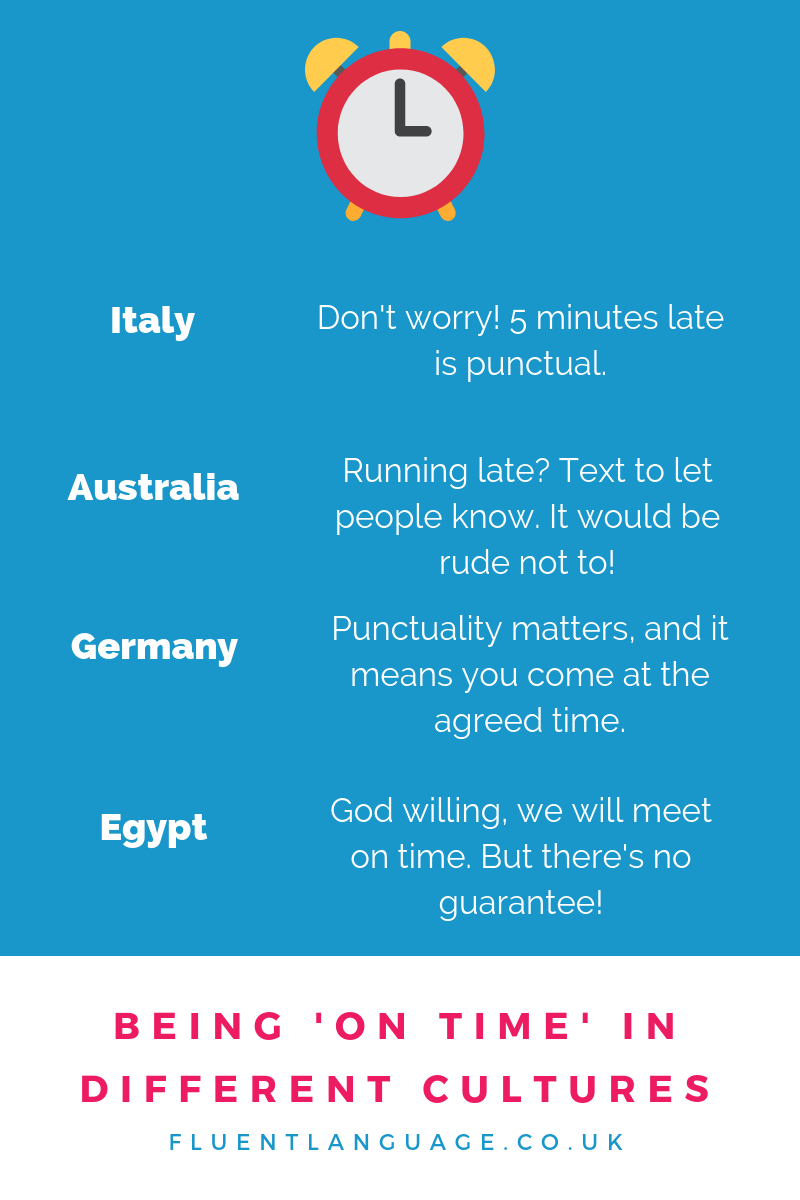
During my early days in Rome, I distinctly remember the first time I was running late to an appointment with my Italian friends. I messaged my friend Marta and apologised for running 5 minutes late. She responded with Ma Michele, sei troppo anglofono. Non ti preoccupare! (Michele, you’re too English, don’t worry!).
When I started learning Arabic leading up to my trip to Egypt, I learned that if you say to someone that you’ll see them tomorrow they might reply with, ‘in sha Allah’ or ‘insha'Allah’ which literally means ‘god willing’. This is often used in response to anything tentative, or when timing is in question.
The phrase expresses the belief that nothing happens unless God wills it ("if God doesn't want me to be on time..." ¯_(ツ)_/¯ ). From this one phrase we can see just how much of an influence religion plays in the Arabic language and in the lives of those who speak it.
A similar phrase is also found in Spanish and Portuguese, ojalá (Spanish) and oxalá (Portuguese). This was adopted into both languages after they came into contact with the Arabic speaking world as far back as the 8th century.
4. Saying 'Thank You' Can Make Your Host Unhappy - Only In Italy?

One year I celebrated Easter with a friend’s family in Naples. They welcomed me and my Dad who was visiting into their home and fussed over us making sure we had everything we needed and making special dishes just for us. They made us feel so special, like we were part of the family. I was so grateful and I wanted to let them to know.
Everytime Carmela, my friend’s mum, would hand me a plate, or do anything, I would say “grazie” (thank you). On the third day, Carmela said something I’ve never forgotten.
“Michele, devi smettere a ringraziarmi, mi fa piacere. Siamo famiglia e non si ringrazia familia. Non mi piace,... ci separa.” (Michele, you have to stop thanking me, it’s my pleasure. We’re family and you don’t thank family. I don’t like it,... it separates us.)
Before that moment, I never thought that thanking someone could offend them but I could understand Carmela’s point. At the same time, it felt foreign to me to not show my appreciation and gratefulness towards her for everything she was doing for us. I felt like I was being rude, but it was what she wanted so I had to fight my instincts so I wouldn’t not offend her again.
5. You Can Scare Italians With An Ill-Timed Party
After organising my birthday party whilst living in Rome, I learned just how superstitious Italians are.
You see, I have the unfortunate pleasure of being born two days after Christmas when most people aren’t around to celebrate with me. This usually means I have organise my birthday celebrations a couple of weeks in advance while everyone is still around.
The first time my birthday rolled around in Rome, I knew I wanted all my friends to be there and that since most of my friends weren’t from Rome and would be heading home for Christmas, no one would be around to celebrate my birthday on the 27th of December.
With that in mind, I booked a venue two weekends prior to my actual birthday and sent out the invites. Within minutes I was inundated with messages “Ma, Michele, non si può festeggiare il compleanno in anticipo, porta sfortuna!” (But, Michele, you can’t celebrate your birthday early, it’s bad luck!).
Up until this point I had never heard of such a thing. Growing up in Australia, it was something I was used to doing otherwise I’d never see my friends for my birthday. I felt that if I celebrated after the fact (which by then would be New Year’s Eve) everyone would be all partied out and celebrating the following year just didn’t feel right.
After explaining that for an Australia it wasn’t bad luck, they tried to understand but it still didn’t sit well with them. On the night of the party they didn’t wish me happy birthday, they insisted on waiting until the my actual birthday to tell me.
6. Gruesome Things Can Happen If You Don't Make A Toast With Caution

The custom of making a toast is universal. That moment when you say Cheers! Prost! Salud! or L’chaim! in celebration of anything from New Year’s Eve to weddings to a night out with friends.
This seemingly simple and harmless practice comes with disclaimers in some culture who have their own twists on this tradition.
In Spain, for example, making a toast with water or any non-alcoholic drink is considered bad luck resulting in ‘seven years of bad sex.’
Those in France or Germany believe the same to be true it you don’t make and hold eye contact whilst making a toast.
Living in Italy, I learned that Italians take things a step further. Aside from not being able to toast with water, and making sure you maintain eye contact, you also can’t toast with a plastic cup and you have to touch a table or ledge with the bottom of your drink after clinking glasses with everyone.
Interestingly, this superstition comes from the Ancient Greeks who, according to Greek mythology, would toast to the dead with glasses of water to symbolise their voyage, via the River Lethe, to the Underworld.
Who knew making a toast could be so complicated?
7. La Dolce Vita, Let It Change Your Outlook On The Working World
When I moved to Italy, I left behind a pretty intense job where I worked crazy hours, sometimes working til 1 or 2 am. In places like Australia, the UK and America, you’re rewarded for working overtime which usually comes in the form of a pay rise or promotion, where funnily enough you’re given even more work to do!
Living in Rome made me realise how flawed this whole concept was of working hard and sacrificing time with friends and family for the sake of climbing the corporate ladder. I quickly learned that Romans value time with their family and friends so much that they don’t have this poisonous desire to work overtime just to get ahead. Quite often, I would go out with friends til 1, 2 sometimes 3 am on a “school night”. We weren’t getting drunk, were were just socialising and just hanging out.
I never did this in Australia, but in Rome I was living La Dolce Vita or the Sweet Life. I replaced my work addiction with friendships and I began to value my relationships over work. I enjoyed life to the fullest with the people who matter and sometimes that meant staying out until the wee hours of the night.
La Dolce Vita isn’t just for Italians though, the Danes have their own version of this too. Unless you’ve been living under a rock, the Danish word hygge (pronounced hue-guh) has gained worldwide popularity. Hygge describes the feeling you get, either alone or with friends, where you feel cosy and have warm feelings of togetherness, contentedness and enjoying the simple things in life.
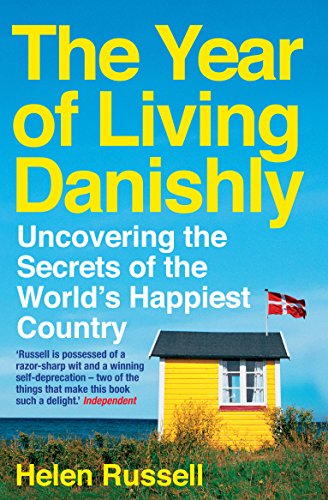
The Danes also don’t believe in overtime. Helen Russells explains in her book, a The Year of Living Danishly, that working overtime is not only frowned upon by your peers but you’re considered as being inefficient!
In Conclusion
Being knowledgeable in foreign languages shows native speakers that you respect their ideas and their way of living. This is why I encourage travellers to learn some of the local language before their travels and I’ve created a collection of free travel phrase guides to help my readers do that. Knowing even a just a little bit of the language can help offset cultural shock and open you up to new experiences in a destination.
Cultural awareness extends into your everyday life, not just while travelling. Think about how valuable this skill can be (and it is a skill) to the development and advancement of your career. Being able to communicate with global communities is invaluable to a business when they scout new talent.
Being able to communicate effectively has a lot to do with context and culture. Therefore, understanding cultural implications is just as important as learning correct grammar, vocabulary and pronunciation. Neglecting this part of the learning process can lead to unnecessary misunderstandings or miscommunications.
When Have You Learnt More Than Just Language?
What moments of cultural awareness have you encountered? Ever you offended someone or embarrassed yourself like me? I'd love to hear from you - share your story in the comments below.
About Michele
Michele from The Intrepid Guide is a language and travel blogger and author of Learn Italian FAST. Originally from Australia, Michele moved to Rome in pursuit of improving her Italian. Currently based in London, she lives by the motto “The more we travel, the more we learn.”
With her blog, Michele shares her passion for bringing language and travel closer together with detailed destinations guides, and free travel phrase guides, and more! You can follow her on social media as she shares fascinating and little-known linguistic and cultural facts.

The Two Sides of Foreign Language Learning
What does it take to start learning a language and stick with it...even through the difficult parts?
Today I have a guest post from linguist and blogger tutor Julia Gracheva. In this article, Julia is all about balance and will give you actionable tips on marrying the two important sides of learning: Joy and Discipline...or Yin and Yang!
What does it take to start learning a language and stick with it...even through the difficult parts?
Today I have a guest post from linguist and blogger tutor Julia Gracheva. In this article, Julia is all about balance and will give you actionable tips on marrying the two important sides of learning: Joy and Discipline...or Yin and Yang!
Over to Julia..
How To Create Balance In Language Learning

Learning a foreign language is fun! Learning a foreign language is rewarding and uplifting! Learning a foreign language is a pure joy you could only otherwise get from eating chocolate (insert “cheese” instead of “chocolate” if you are a savoury person not a sweet one)!
Now, let me tell you: it’s not all peaches and cream (and, yes, I am writing this hungry). It’s oftentimes hard, brain wrecking work that doesn’t give you immediate results to motivate you to keep going. But this hard work has to be done, so that your language learning could also be fun, rewarding, uplifting and a pure joy (have just tucked into a cheese sandwich, so no more food mentions, I promise!).
What is the Yin and Yang of Language Learning?
I will be referring to the hard part and the pure joy one as the yin and yang of language learning. These parts are very different and still cannot exist without each other.
Yang is that hard bit, the grammar you need to understand, the words you have to memorise and the peculiar sounds that you teach your mouth to articulate.
Yin is the fun bit, the melody of the language, its humour, flavour and culture. It’s all the stuff that makes a combination of sounds, words and grammar rules a unique, rich and fascinating phenomenon which is a language of the people who speak it, reflecting their unique ways, views, lifestyle, history and what not.
I have seen many adults lured into studying a foreign language by its yin side only to discover the yang one is not so easy and far too long winded to crack in a couple of months of even intense study. They would learn some frequently used or touristy words and phrases, some easy dialogues, may be read an easy book or two in this language or even complete a beginner course at a language school or with some app. The novelty would wear out, they would discover they are still far away from fluency, their busy adult life would take over and au revoir the big sweet language dream!

Where there used to be pleasant exotic sounds flowing about of hoş geldiniz’s being trained, doors, windows and dinner table carefully labelled with sticky notes with die Tür, das Fenster and der Tisch written on them or where there used to be a poster of the Eiffel tower overlooking the desk with a neat stack of French for beginners books on top with pretty bookmarks showing between the pages, now there is just a whiff of foreign language sadness and a pile of unused publications gathering dust.
Not Forgetting the Yang
So, how do you save yourself from this heart breaking scene of your foreign language that died young? Of a big language dream that crashed down having barely taken off the ground? Of having to repair the wall in your study after the blooming Eiffel tower poster came off with half the wall when you tried to take it down?
Firstly, you shouldn’t forget the yang of foreign language learning. And, secondly, you need to marry the two of them, the yin and the yang.
You need to be ready for the long term game, to realise that there is not only yin but there is yang as well and you cannot get the one without the other. The better you get at the language, the better you get tuned to the culture and understand the ways of the people who speak it. And the more you are able to take part in all this language/cultural awesomeness yourself!
When the novelty of a new language wears out and you have learnt all the shiny touristy stuff about the culture, you can get too lazy to keep dealing with the yang. If you give up on the yang, you won’t be able to appreciate and enjoy the yin deeper, to really understand and fall in love with the culture. And you won’t carry on with learning the language!
So, to make a success out of your language study, to get really fluent in the language you are learning, you need to marry yin and yang.
Finding the Yin
The yin and yang of my first foreign language were separate for quite a while. As I started learning it at school as a kid (I studied English as a foreign language at a Russian school), I didn’t go through this phase typical for many adult language learners that I talked about earlier.
Instead, I just followed the rules as any diligent student would, without too much of a passion and excitement over yin injected into my study. Then at some point in my early twenties I got overtaken by the yin and had to really sort out the yang. So, here is the story of how I married the yin and yang of my language learning.
Marrying the Yin and Yang
So, it starts at school. Do you remember how you studied your foreign language at school? To me personally it all seemed to be about new grammar and vocabulary topics. We drilled them by doing all sorts of exercises and were assessed by doing more (marked and timed) exercises. Of course, after graduating from high school, I didn’t speak a word in the language I had been studying. None of us did. And I would have been surprised if anybody did. And that was fine as apparently learning a foreign language at school doesn’t imply that pupils will be able to speak it.
On the other hand, was I myself trying hard to learn the language? Was I driven by the yin? In other words, was I interested in the culture of the people who spoke it? Nah, not really. I was barely aware of my own at that time. So, the yang of the language was underdeveloped and the yin was just totally lost on me.
You see, kids and teens are very practical about languages: if there is no point in using it, they won’t. Period. Unless, of course, they are bilinguals. Or constantly pushed by parents, tutors or teachers to speak it in artificial settings. None of these two was my case. So, for me there was no point in using it. Indeed, if I don’t need to use a foreign language living in a country where it’s not really spoken, if I am not really fascinated by the yin, why would I want to be able to read, listen, write or speak in it? Especially, if there is more than enough interesting (and easier) information for me to digest in my own language?
But then I got older. And the Internet happened. Websites in the language. Language exchange. Wow. The yin was right there at the end of a long monotonous sound of a modem connecting my PC to the big big world out there. The yin with its people, their habits, foods, houses, their beliefs, dreams and values: all of them not quite like my own hence super exciting. The oops moment - they spoke a different language which I myself could barely speak. On top of it, I was painfully slow with instant messaging and who cares to write lengthy emails in their early twenties? So, I had to sort out the yang for real, grab the books, learn words and drill the grammar. The more I progressed with the yang, the more I enjoyed the yin.
So, the two were finally married and have been living happily ever after. Years passed but I still try to keep up and improve the yang, so as to get a better grip of the yin and enjoy it more. It’s no longer chats with peers and reading love stories like in my youth. It’s mostly collectively expressed yin in the form of the media, non-fiction books and Netflix. The yin that keeps me going with my yang, which in its turn helps me understand the yin deeper. The unity of the two that makes me really fluent.
There is another story of my second foreign language. It is less of a success but the yin and yang idea helps me to keep going. I hope that someday I will be able to mark it as a success story, too.
So, if you feel like giving up your language study, may be all you need to do is marry the yang and yin?
Yin & Yang In Action: How To Learn Languages In Balance
Here are the yin and yang tasks I marry to make my language learning “happy ever after”.
Yin: I watch comedies and TV series. These are a lot of fun!
Yang: While watching I make sure I record the new words I loved. The more words I learn, the better I understand while watching!
Yin: I listen to songs. And even sing them along when no one is listening!
Yang: I listen to and sing along the same songs again and again so that I can sing along with the same speed as the original. It’s not easy but worth it as helps me improve my pronunciation. The better I can articulate, the more I enjoy singing along!
Yin: I talk to my language partner regularly. Luckily he’s an interesting person who makes me laugh and tells interesting stories.
Yang: I make sure I discuss with him the stuff I have recently read about in the language I learn. Thus, I use in the conversation the specific vocabulary and even certain grammar I picked up while reading. The better I express myself, the more I enjoy the conversation.
What helps you to keep going with your language study?
Have you noticed your own sense of yin and yang in language learning? Are you drawn to one of them: the yin that motivates you or the grammar and efficiency of the yang? Tell us in the comments below!

Thanks to Julia Gracheva for sharing this article. You can find more of Julia's writing on the vocBlocks blog. Her target languages are German and French.

7 Tips For Learning A Language From Your Girlfriend or Boyfriend
If I had 5p every time I read someone telling someone else that the best way to learn a language is to "get a native speaking girlfriend", I think I could retire at 35. But don't get me wrong: having a native speaker on hand at any time of day certainly has its advantages.
Today, you'll hear from English teacher Nick Vance, who is in the lucky position of having that girlfriend. So, how's it working out?
If I had 5p every time I read someone telling someone else that the best way to learn a language is to "get a native speaking girlfriend", I think I could retire at 35.
Today, you'll hear from Nick Vance, who is in the lucky position of having one of those handy "native speaker girlfriends". So, how's it working out?
In this article, Nick will share 7 useful tips to help you understand how to learn a language with your sweetheart.
Learning German from My Girlfriend

As an American living in Berlin with my German girlfriend, Natalie, people constantly ask me the same questions.
Where did you two meet? In Costa Rica - surprising, but true!
Did you move to Berlin to be with her? Nope - it took us many years to finally fall in love.
Is she the reason you speak German fluently? Jein - a combination of the German words “ja” and “nein” (“yes” and “no”).
Natalie did indeed play a huge role in helping me reach fluency in German. However, she didn’t actually teach me very many things about the language. She “just” talked with me for thousands of hours, giving me the opportunity to practice. I learned German grammar, vocabulary, and pronunciation in a language school, through self-study online, and in private one-on-one lessons.
Your partner can be a big help in you learning their native language, but it’s important to be careful about expecting too much from them. Today I’m going to share some concrete tips for how you and your partner can work together to learn each other’s languages.
Speaking Practice with Your Partner
Once you’ve reached about B1 level, you can start having real conversations about real topics. Awesome! This is the area where your partner can really help you, and you can start making lots of progress really quickly.
Set Up Some Rules
There’s no right or wrong way to set up your plan on how and when you speak which language, but they need to be agreed upon by both people. For a long time Natalie and I would alternate weeks. Every Sunday night at midnight, we would switch from English to German, or the other way around. Yes, I would sometimes look at the clock and switch at exactly 12:01 am, mostly just because I thought it was funny. Other people might agree to always speak Spanish at the dinner table, or to speak French on weekends, or whatever. My advice: the simpler the plan, the better.
Focus on What You Say (Not How You Say It)
This part of your language practice should be fun and focused on improving your ability to quickly form sentences and communicate them. Avoid correcting the other person during this time. If you BOTH agree, take some time maybe once a week for the native speaker to share some feedback on what you can improve.
But what if you’re still at level A1 or A2?
Honestly, your conversations aren’t going to be that interesting. However, you can still have some short conversations to get used to the idea of speaking in that language. For example, speak in the language for the first 5 minutes when you see each other in the evening. Depending on your relationship, that’s often how your day was and what you did. You’ll quickly get used to this vocabulary and be able to feel more comfortable in the language.
Your Partner Isn’t the Perfect Teacher
Teaching Is a Skill
I’ve heard lots of stories from friends in similar relationships who were frustrated that their partner wasn’t able or willing to teach them their native language. Some of them even blamed their partner, calling them lazy, uninterested, or simply unhelpful. The more likely explanation is that teaching is a skill that not everyone has.
If you’re just starting out in a language (A1 / A2 level), your partner probably doesn’t understand pedagogically how to teach a language. Should you first focus on learning all of the tenses and their uses? How important is learning vocabulary compared to improving your pronunciation? What books are appropriate for your level? These are questions that a normal person just doesn’t know about their language.
Additionally, your partner might not know exactly how their language works, even if they speak and write it perfectly. For example, what’s the difference between “while” and “during” in English? I only learned this when I became an English teacher. Before then I always used the correct word, but it was just because it “felt” right.
Different Roles
In your relationship, you and your partner have specific roles. Perhaps you make vacation plans while your partner just shows up at the airport and follows your lead. But that’s made up for by your partner cooking dinner every night for the both of you. Everything is great as long as both sides are comfortable with the arrangement.
Teacher-student is a very special role that comes with lots of built-in assumptions. If your partner (acting as the teacher) tells you to work on your pronunciation of “th,” and you don’t practice it, what happens? If the person is just a teacher, that disappointment, frustration, or embarrassment is left in the classroom. If that person is also your partner, it can bleed into the rest of your relationship and cause bigger problems.
Give It a Shot!
This all is not to say it’s impossible. If you both are willing, give it a shot. Maybe your partner is actually quite good at explaining when to use what tense, and you develop a teacher-student relationship that doesn’t does lead to any other issues. Learning the language from your partner could then be a great way to spend time together and strengthen your bond.
But if it feels like a struggle, don’t force it. Accepting this limitation is important for preventing feelings of resentment.
Their inability to teach you about subordinate clauses shouldn’t be seen as a lack of love for you, but only their inability to teach subordinate clauses.
It’s not language learning, but I recently learned how to drive in Germany - both the rules of the road and how to drive stick shift. I’d been driving automatic cars in the US for 15 years, but had never needed to drive stick.
Once again, I hoped to profit from Natalie’s knowledge. We decided that she’d try to teach me a couple of times, and if it didn’t work out, I’d pay for driving lessons from a professional. Even though she had no experience as a driving instructor, she was an amazing, patient teacher, and it was a fun experience. And now I can drive in Germany!!!

No More Borders
No more borders - Nick (from the US) and Natalie (from the former East Germany) on a bridge that once marked the border between East Germany and West Germany.
Being a Supportive Language Helper
If your partner is trying to learn your language, you have a unique responsibility. Even if you don’t act as their teacher or even speak the language with them, there are things you can do to help or hurt their progress. Here are some things that you should definitely avoid.
Don’t Make Fun of Their Language Ability
I’m sure you don’t intend it to be mean, but little comments or jokes can make your partner feel self-conscious and kill their desire to speak. This doesn’t mean you can’t laugh about the language, but just be extra careful you’re laughing with them. Like when I asked Natalie if she had used the helicopter to clean our apartment (I meant vacuum cleaner but had somehow mixed up the words Hubschrauber and Staubsauger… they still sound similar in my head, but apparently in no one else’s).
Don’t Talk about How Difficult Your Language Is
This is usually meant in a helpful way, letting your partner know that they shouldn’t feel bad about struggling or to show them how impressed you are at the progress they’ve made. However, it often comes across as “why are you even bothering.” I can’t tell you how many people have told me that German is “so hard” and “impossible for foreigners to learn.” Yes, there are some things that take time to learn or do 100% perfectly, but there are millions of immigrants in Germany today proving them wrong. If you need help with this language in particular, Kerstin has some great German learning resources.
Conclusion
In the end, there are plenty of ways your partner can help or hurt your language learning. Find out what works best for the both of you, and don’t try to force something that isn’t working. They might be the love of your life, but that doesn’t mean they have to be your language teacher.
If you’d like some more tips, check out Kerstin’s article about helping your partner learn your native language. And I’d love to hear about your experiences.
Share with me in the comments your ups and downs about learning a language from or teaching a language to your partner. Especially if there were any hilarious misunderstandings!
Nick Vance is originally from the U.S. but has been living in Germany the last 6 years. For him, being able to speak German fluently has been a key to feeling at home in Berlin. Learning a language as an adult is much different than learning in school, and Nick uses his own personal language learning experience when he teaches English. You can find more information about his online English lessons at Skype Englisch (in German) or English with Nick (in English).




Struggling with listening? Discover realistic tips, challenge prompts, and the best tools for improving your listening skills as a self-guided language learner