

7 Reasons Your Cultural Awareness Matters More Than Perfect Vocabulary
You know about vocabulary lists, flashcards and pronunciation guides, but sometimes there’s more at stake than just knowing the language. In this article, you’ll learn about the hidden ingredient you need for avoiding misunderstandings (even offence!) worldwide.
The following post is written by the lovely Michele from Intrepid Guide, a blog dedicated to language and travel.
How well would you say you speak the foreign language you’re learning? Are you beginner, intermediate or even advanced and near fluency?
Now, I don’t want to bust your bubble, but, you may not be as ‘fluent’ as you think.
While we may learn languages with the goal of being fluent (whatever that means to you) the most important question to ask here is, how culture-savvy are you?
You may understand a foreign language but that doesn’t guarantee that you understand the nuances and the whole range of meaning that native speakers communicate to you.
Communicating in another language requires more than just memorising words and grammar. We have to learn how to communicate beyond words by understanding its culture. Therefore, as we study a language, we must learn it alongside its culture.
Afterall, language is culture!
What is Cultural Awareness?
Cultural awareness understanding that our own culture differs from one individual and group to the next, and specifically from our target language.
Being culturally aware helps us recognise and have an appreciation for other’s values, customs and beliefs and meet it without judgement or prejudice.
As we encounter new languages and cultures we begin to make comparisons and realise that our own behaviours, values and beliefs are not the general norm found elsewhere in the world.

Michele at the Vatican
Why is Cultural Awareness Important?
Cultural awareness is key when we communicate with people from other cultures. Since we use language to communicate, our knowledge of foreign languages gives us ‘access’ to different societies and cultures. We become mediators between cultures.
The most important reason why we should be culturally aware is so we have an increased awareness of people all over the world. This helps us develop a deeper understanding of our own and other people’s cultures, while broadening the mind and increasing tolerance.
Expressing Respect
When we are culturally aware we know what is considered inappropriate or offensive to others. For example, incorrect body language and can lead to misunderstandings. Even something as simple as nodding your head in agreement can be misunderstood in places such as Greece, Bulgaria, and Albania where shaking one's head can actually mean yes.
In Western culture we’re taught that it’s polite to look someone straight in the face when talking to someone, however, in Japan this is considered disrespectful.
Being culturally aware isn’t just for those learning a foreign languages either. As an Australian who swapped her life in Melbourne for a life in Rome and then again for London (where I’m currently based), I learned that even between English speaking countries our cultures can differ and that these differences can surface in unsuspecting ways.
During the past 5 years of living in the UK, I’ve accidentally ruffled a few feathers and learned some important cultural lessons the hard way.
Here are 7 times learning cultural awareness changed my life way more than any vocab table ever could
1. Inviting STRANGERS Round To Yours - Kidnapping Or Hospitality?
Whilst living in Italy, I travelled the country extensively and took many walks and tours with local guides. Each of Italy’s regions has its own personality, unique history, culinary delights and beauty. You can’t just visit Florence or Rome. You have to visit other cities too to really understand Italy.
When I was on one of these local tours in Milan, our guide explained that we shouldn’t be ‘discouraged’ if we encountered a ‘rude’ Milanese. She explained that people from Milan can seem rude or cold at first, but once you make an effort to get to know them they are just as warm and welcoming as we’ve come to know Italians to be.
Compare this with an experience I had at the opposite end of Italy in Sicily. One summer I was in Palermo celebrating a girlfriend’s birthday with 4 other girlfriends. we went to dinner at a popular restaurant frequented only by locals. It’s fair to say we stuck out a sore thumb.
After about 10 minutes at our table, a middle-aged lady from a neighbouring table who was with her family enquired where we were from. Her eyes lit up when we replied in Italian. After no more than 5 minutes of chatting, Maria invited all 5 of use around to her house the next day for coffee and cake! She gave us her number, address and a time. It was all set.
I’d never in my life received such an invitation. After some internal juggling wondering if we were about to experience Liam Neeson’s movie ‘Taken’, we decided to take our chances and go. I’m so glad we did. Maria had very kindly baked two different homemade cakes and even gave us her recipe.
This would whole encounter would never happen in Australia, or the UK for that matter. To this day I still can’t believe it did. It just goes to show that just because you do things one way in your country, doesn’t mean it’s the same everywhere else.
2. American, British, and Australian English: Similar but Different
Even though Australia is a British colony and Australian English is based on British English, we’re not very politically correct with our choice of words. Australians say things that can be considered highly offensive, but we do so without malicious intent.
It's like we’ve used these words so much in everyday speech that they've lost all power and negative connotations that it no longer offends anyone, hopefully.
This was and still is the hardest lesson for me to learn since living in London and something I still struggle with today.
An example of a word that Australians will use without batting an eyelid and which makes up part of many common Australian idioms is the word ‘bloody’. So common is it for us to say ‘bloody’ that it was even part for a A$180 million advertising campaign by Tourism Australia that was banned in the UK for being too offensive. The slogan read “So, where the bloody hell are you?”.
A more extreme example, which I know will probably make you cringe, is the use of the highly offensive c-word. It may surprise you to learn that many Australian males will use this as a sort of term of endearment towards other males. They’ll say things like, “Hey c&!, how are ya?”, or “he’s a good c%!.” The c-word is never directed to females or used by them as it’s still considered an offensive word, but it’s not nearly as taboo as it is in the UK or America.
3. Being 'On Time' Means Being Early, Late, Or Just On Time Depending On Where You Are
Even being punctual can cause misunderstandings. While Germans consider punctuality to be very important, the exact opposite is true in South America where it is considered rude to arrive on time.
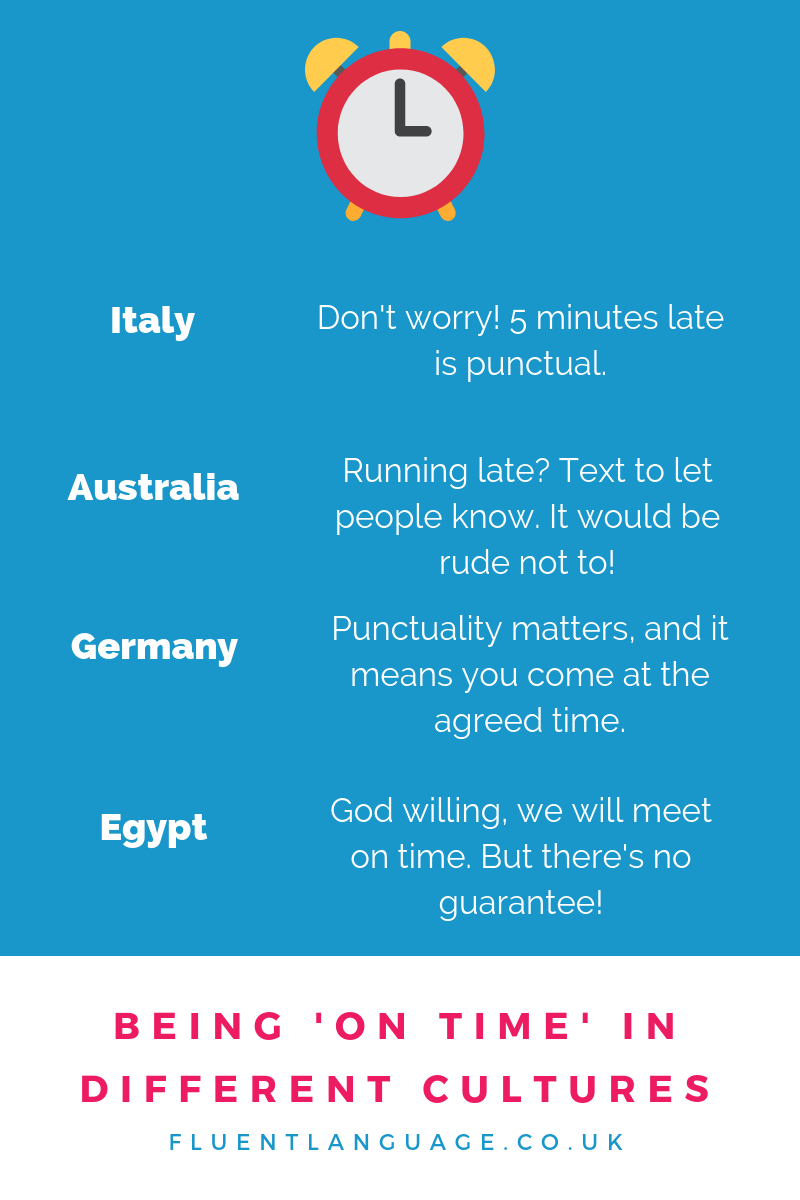
During my early days in Rome, I distinctly remember the first time I was running late to an appointment with my Italian friends. I messaged my friend Marta and apologised for running 5 minutes late. She responded with Ma Michele, sei troppo anglofono. Non ti preoccupare! (Michele, you’re too English, don’t worry!).
When I started learning Arabic leading up to my trip to Egypt, I learned that if you say to someone that you’ll see them tomorrow they might reply with, ‘in sha Allah’ or ‘insha'Allah’ which literally means ‘god willing’. This is often used in response to anything tentative, or when timing is in question.
The phrase expresses the belief that nothing happens unless God wills it ("if God doesn't want me to be on time..." ¯_(ツ)_/¯ ). From this one phrase we can see just how much of an influence religion plays in the Arabic language and in the lives of those who speak it.
A similar phrase is also found in Spanish and Portuguese, ojalá (Spanish) and oxalá (Portuguese). This was adopted into both languages after they came into contact with the Arabic speaking world as far back as the 8th century.
4. Saying 'Thank You' Can Make Your Host Unhappy - Only In Italy?

One year I celebrated Easter with a friend’s family in Naples. They welcomed me and my Dad who was visiting into their home and fussed over us making sure we had everything we needed and making special dishes just for us. They made us feel so special, like we were part of the family. I was so grateful and I wanted to let them to know.
Everytime Carmela, my friend’s mum, would hand me a plate, or do anything, I would say “grazie” (thank you). On the third day, Carmela said something I’ve never forgotten.
“Michele, devi smettere a ringraziarmi, mi fa piacere. Siamo famiglia e non si ringrazia familia. Non mi piace,... ci separa.” (Michele, you have to stop thanking me, it’s my pleasure. We’re family and you don’t thank family. I don’t like it,... it separates us.)
Before that moment, I never thought that thanking someone could offend them but I could understand Carmela’s point. At the same time, it felt foreign to me to not show my appreciation and gratefulness towards her for everything she was doing for us. I felt like I was being rude, but it was what she wanted so I had to fight my instincts so I wouldn’t not offend her again.
5. You Can Scare Italians With An Ill-Timed Party
After organising my birthday party whilst living in Rome, I learned just how superstitious Italians are.
You see, I have the unfortunate pleasure of being born two days after Christmas when most people aren’t around to celebrate with me. This usually means I have organise my birthday celebrations a couple of weeks in advance while everyone is still around.
The first time my birthday rolled around in Rome, I knew I wanted all my friends to be there and that since most of my friends weren’t from Rome and would be heading home for Christmas, no one would be around to celebrate my birthday on the 27th of December.
With that in mind, I booked a venue two weekends prior to my actual birthday and sent out the invites. Within minutes I was inundated with messages “Ma, Michele, non si può festeggiare il compleanno in anticipo, porta sfortuna!” (But, Michele, you can’t celebrate your birthday early, it’s bad luck!).
Up until this point I had never heard of such a thing. Growing up in Australia, it was something I was used to doing otherwise I’d never see my friends for my birthday. I felt that if I celebrated after the fact (which by then would be New Year’s Eve) everyone would be all partied out and celebrating the following year just didn’t feel right.
After explaining that for an Australia it wasn’t bad luck, they tried to understand but it still didn’t sit well with them. On the night of the party they didn’t wish me happy birthday, they insisted on waiting until the my actual birthday to tell me.
6. Gruesome Things Can Happen If You Don't Make A Toast With Caution

The custom of making a toast is universal. That moment when you say Cheers! Prost! Salud! or L’chaim! in celebration of anything from New Year’s Eve to weddings to a night out with friends.
This seemingly simple and harmless practice comes with disclaimers in some culture who have their own twists on this tradition.
In Spain, for example, making a toast with water or any non-alcoholic drink is considered bad luck resulting in ‘seven years of bad sex.’
Those in France or Germany believe the same to be true it you don’t make and hold eye contact whilst making a toast.
Living in Italy, I learned that Italians take things a step further. Aside from not being able to toast with water, and making sure you maintain eye contact, you also can’t toast with a plastic cup and you have to touch a table or ledge with the bottom of your drink after clinking glasses with everyone.
Interestingly, this superstition comes from the Ancient Greeks who, according to Greek mythology, would toast to the dead with glasses of water to symbolise their voyage, via the River Lethe, to the Underworld.
Who knew making a toast could be so complicated?
7. La Dolce Vita, Let It Change Your Outlook On The Working World
When I moved to Italy, I left behind a pretty intense job where I worked crazy hours, sometimes working til 1 or 2 am. In places like Australia, the UK and America, you’re rewarded for working overtime which usually comes in the form of a pay rise or promotion, where funnily enough you’re given even more work to do!
Living in Rome made me realise how flawed this whole concept was of working hard and sacrificing time with friends and family for the sake of climbing the corporate ladder. I quickly learned that Romans value time with their family and friends so much that they don’t have this poisonous desire to work overtime just to get ahead. Quite often, I would go out with friends til 1, 2 sometimes 3 am on a “school night”. We weren’t getting drunk, were were just socialising and just hanging out.
I never did this in Australia, but in Rome I was living La Dolce Vita or the Sweet Life. I replaced my work addiction with friendships and I began to value my relationships over work. I enjoyed life to the fullest with the people who matter and sometimes that meant staying out until the wee hours of the night.
La Dolce Vita isn’t just for Italians though, the Danes have their own version of this too. Unless you’ve been living under a rock, the Danish word hygge (pronounced hue-guh) has gained worldwide popularity. Hygge describes the feeling you get, either alone or with friends, where you feel cosy and have warm feelings of togetherness, contentedness and enjoying the simple things in life.
The Danes also don’t believe in overtime. Helen Russells explains in her book, a The Year of Living Danishly, that working overtime is not only frowned upon by your peers but you’re considered as being inefficient!
In Conclusion
Being knowledgeable in foreign languages shows native speakers that you respect their ideas and their way of living. This is why I encourage travellers to learn some of the local language before their travels and I’ve created a collection of free travel phrase guides to help my readers do that. Knowing even a just a little bit of the language can help offset cultural shock and open you up to new experiences in a destination.
Cultural awareness extends into your everyday life, not just while travelling. Think about how valuable this skill can be (and it is a skill) to the development and advancement of your career. Being able to communicate with global communities is invaluable to a business when they scout new talent.
Being able to communicate effectively has a lot to do with context and culture. Therefore, understanding cultural implications is just as important as learning correct grammar, vocabulary and pronunciation. Neglecting this part of the learning process can lead to unnecessary misunderstandings or miscommunications.
When Have You Learnt More Than Just Language?
What moments of cultural awareness have you encountered? Ever you offended someone or embarrassed yourself like me? I'd love to hear from you - share your story in the comments below.
About Michele
Michele from The Intrepid Guide is a language and travel blogger and author of Learn Italian FAST. Originally from Australia, Michele moved to Rome in pursuit of improving her Italian. Currently based in London, she lives by the motto “The more we travel, the more we learn.”
With her blog, Michele shares her passion for bringing language and travel closer together with detailed destinations guides, and free travel phrase guides, and more! You can follow her on social media as she shares fascinating and little-known linguistic and cultural facts.

#clearthelist September 2018: Immersion, Eisteddfod, Druid, Video!
Welcome to my monthly language goals round-up, this time reporting on my language learning progress and new goals for September 2018. I have news about immersion, where I’m travelling next, and how I’m going to get to the next level in Welsh.
OMG it’s clear the list time again, and WHAT A MONTH IT HAS BEEN!!! 🛎 #clearthelist is a monthly language learning round-up sharing monthly language learning goals, support, and accountability.

What Happened In August?
So back in the last blog update, I already shared all about the amazing Fluent German Retreat in Munich. This technically happened into the first days of August, so it’s fair enough mentioning it here again. ☺️
Eisteddfod!
Barely home from the Retreat, I was back on the road, this time for my own immersion experience at the Eisteddfod Genedlaethol in Cardiff. If you’ve never experienced an Eisteddfod before, they’re hard to describe. Imagine EVERYTHING WELSH CULTURE in one place, colourful and happy and ancient and new, packed into a week-long festival. In other words, it’s amazing!
The Eisteddfod takes festival volunteers, so I signed myself up as a steward. Volunteering at the festival is a great way to ensure I speak as much Welsh as possible, experience things from a different angle, and attend events I may not have considered otherwise. Plus, it teaches me great phrases like these:
- Dyn ni’n hollol llawn fan hyn. (We are completely full here)
- Ddeffniddiwch y drws arall, os gwelwch chi’n dda. (Use the other door, please.)
- Paid ag eistedd yn y seddi wedi cadw. (Don’t sit in the reserved seats.)
In addition to all that, I also got free entry to one of the most popular events of the whole Eisteddfod week: the chairing of the bard! Here, you can see the Welsh archdderwydd (archdruid) in action:

The Fluent Show
All that August travel didn’t stop us from celebrating a major Fluent Show milestone as we recorded our 100th Podcast Episode this month.
We celebrated with a quiz and a live show including FIVE awesome guests: Shannon Kennedy, Gabriel Wyner, Richard Simcott, Kylie Sturgess, and Benny Lewis. So much fun! Catch up with us here.
Language Goals and Progress
Time to review August’s goals and get set up for what’s in store in September 2018. As expected, August was not a month for my dabble languages Spanish and Chinese. Instead, I taught lots of German and learnt lots of Welsh, so let’s focus on Welsh.
Listening and Speaking
I had grouped these skills together for August because of the trip, and would say I delivered on both!
My room in Cardiff was rented from Cymdeithas yr Iaith Cymraeg, meaning I had plenty of Welsh-speaking flatmates. I even ran into Robin, who I’d chatted to before on HelloTalk! In addition to that and the volunteering, I met up with friends and Welsh speakers I met online and spent over half of my days speaking the language.
At first, speaking Welsh was tricky and my head was working extra hard on day 2. You know that “I’m an idiot who understands nothing” feeling? Yep, I had it too! But by day 3, it felt like a lightbulb was coming on and Welsh became much easier. Here is a video filmed by Nicky Roberts, showing the way I was able to speak on my final day in Cardiff.
I’ll be honest, I’m actually pretty proud! This is approaching free conversation in Welsh, what better feeling could I have. And shout out to all the Welsh people I spoke to - turns out almaenes sy’n siarad Cymraeg (a German woman who speaks Welsh) has some novelty value and everyone was extra lovely.
Progress After A Few Days Of Immersion
One little note here on immersion, and you’ll see this as I write about the German Retreat on the blog too. This visit to Wales definitely felt like the most effective, productive, and encouraging immersion experience I’ve had so far. Last time I visited the Eisteddfod, my level was “high beginner” (late A1 ish) and I found it motivating and enjoyable, but I wasn’t ready to speak Welsh freely yet.
This time, with my level at a firm “intermediate” (B1 ish), it was WAY different and I enjoyed the experience because I was able to get truly involved.
Often, we think of “immersion” as a learning strategy that is beneficial to complete beginners. But in fact, it’s more helpful when you’re at the intermediate level and you DO have some knowledge to build on. This is when your mind is ready to join up the puzzle pieces and take you to the next level.
More About This And My “Language Waffle” Theory Here
Reading
I got about 7 chapters further into Sgwp!, but still not finished. My goal was to get halfway into it, and I would say I’m at 45%.
However, I also read through the whole issue of Lingo Newydd, including the red bits for advanced learners! Plus lots of incidental reading of programmes and tickets during the Eisteddfod.
Writing
As expected, I didn’t put any longer pieces of writing together in Welsh. I regularly direct message with friends and I posted on Instagram a few times with captions in Welsh, but I’m beginning to feel that it’s time to take my writing one step further.
More about that in the goals section…
Monthly Contact Goal
Every month, I log my “daily contact” with the Welsh language. And August was great, with 23 days out of 31 logged. As always, this also depends on me remembering to tick a box, so it’s not a 100% accurate number.
Best strategies: Visit where your target language is spoken, text friends in the language, and put the magazine where you’ll actually read it.
Tiny Note on Duolingo
I’m now at a level where I can test out of every new level Duolingo gives me and I never remember any of the new vocab it shows me. Duolingo, at my current level, feels like it has become inefficient for Welsh learning. Have you experienced anything similar?
Goals For September 2018
Listening
I have noticed that my podcast Pigion has become boring, but I’ve started listening to Radio Cymru live through the TuneIn app. There’s more music and I understand more than on the podcast, even though the podcast is supposed to be for learners! Radio also makes me feel more connected to the community of Welsh speakers.
The goal here is to switch the radio on in Welsh 2-3 times per week.
Reading
I’m feeling keen to try something different after a year of subscribing to Lingo Newydd, so for this month I’ll stick with Sgwp! and keep an eye out for a new printed publication I can try out.
As usual, the goal is to progress with Sgwp! It’s not a bad novel, and the short chapters are helping lots.
Speaking
It’s SO difficult to come away from an intense “Welsh every day” experience and drop back into normal life where I don’t have all these handy Welsh speakers around me. So my goal for September is definitely
In August, I picked up Say Something in Welsh (SSiW) again and got over my hesitations between the Northern and Southern dialect versions. I now just make my sentences in either dialect and go with the flow, so I feel ready to progress.
I’m on challenge 16 of level 2 and my goal this month is to move through challenge 18.
And lucky me…I’m going to Wales again! No details planned yet, but I’ll be sure to head North and speak more of the language.
Writing
Time to get real: I should put down a page of writing and get it corrected. For writing practice, it can be hard to know where to look as a solo learner. I’ll try the Welsh exam council and see what they ask for at the intermediate level, and work on writing an exam paper and getting it corrected.
If I don’t get this done this month, no harm done as I know September’s a busy one and I will make sure I still DM friends in Welsh every week.
How Was Your Month?
So that’s it for this month’s goals! Be sure to check out the linkup for #clearthelist, hosted by Lindsay Williams and Shannon Kennedy.
Are you a language waffle or a language pancake when you travel? Do you feel the same as me about Duolingo once you’re above the B levels? Are you setting goals?
Leave a comment below to tell me all about it!
How to Learn a Language While Travelling the World
What is it really like to travel the world? What do you need to know about language learning so you can connect with people anywhere and make any trip a success?
Learn more in this podcast episode, where world traveller Lindsay shares her 5 top takeaways from visiting over 20 countries in one year.
Language learners dream of travel, meeting new people, and learning more about other cultures. But we only rarely get the chance to take life by the collar and say "I will DO this!".

For my podcast co-host Lindsay Williams, the dream of travelling the world became a reality last year as she set off to visit over 15 countries on a huge trip with her new husband. They called it the übermoon, and in today's podcast, Lindsay is going to reveal what one year of travel and language was really like.
Listen to the full show:
Lindsay's Top 5 Takeaways About Travel and Language Learning
1. Immersion Is Not The Quick Fix You Need
You have to be actively doing something else, like Lindsay's husband Ashley who started off strong learning Spanish and ordering food every day in Cuba...and then trailed off when conversation became less essential in Mexico. And remember, just because there are people walking around speaking your target language, they are not your teachers.
2. You Can Get By With Next To No Language Anywhere
The young modern traveller du jour is connected to technology and knows where she is going, booking, translating, and checking directions apps. So even in places where you don't know the language and English is limited with the locals, you can actually navigate better than ever before. Plus, people are always happy to communicate and so much can be said with hands, feet, and a smile.
As a result, you can get involved and travel with confidence, especially if you're an English speaker.
3. But It's Better With Even Just a Few Words And Phrases
We're not just talking "hello" and "thank you", but a handful of extra phrases. In Myanmar, Lindsay experienced the world-changing results of remarking "it's hot, isn't it?" and "it's really cold!" during the water festival. Who wouldn't point that out when it's 35 degrees outside and someone's pouring cold water on you!

4. Language is Warm
People open up to you and are beyond friendly if you are learning their language, especially when it is a smaller language and they don't expect that effort from a visitor. For example, in Paraguay Lindsay found that "I'm learning Guarani" was such a magical phrase that it led to whole families inviting her to stay at theirs for the weekend.
5. Don't Forget Culture!
A successful travel experience is not just about the language and the perfect phrase, because it matters to be in tune with local customs and culture. For example, in East Asia where saving face and staying calm and "demure" in public is extremely important, it is impossible to get annoyed when the bus is late or someone gave you wrong directiongs. Even in perfect Vietnamese your actions may still stick out and break your connections to other people.
Conclusion: It is helpful and polite to read up on etiquette in your target country.
Want more tips for learning languages the fun way?
Join the Fluent Language newsletter today for the best language learning tips and offers in your inbox. (and SO many great freebies too!)
Welsh Is Not English: How The Welsh Language Fought Back
When I first moved to the UK 15 years ago, I thought Welsh was dying out.
But did you know that people went on protest marches and even got ARRESTED to keep this language alive?
In this podcast episode, I bring you interviews with Welsh learners and teachers, sharing their own passions for this ancient language.
What do you know about the Welsh language?
When I first moved to the UK 15 years ago, I thought Welsh was dying out. I moved to England and never considered that people in the UK speak more than English. To me, the Welsh language was a relic from the past.
But did you know that people went on protest marches and even got ARRESTED to keep this language alive?
In this podcast episode, I bring you interviews with Welsh learners and teachers, sharing their own passions for this ancient language.
Where is Wales?
Wales is one of the four nations that make up the United Kingdom. It's a small part of the UK, located on the western border of England.
It covers just over 8,000 square miles (20,722 km²) - that's about the same size as Massachusetts in the USA or half the size of Switzerland. In other words, Wales is not big.
But it's certainly old. The Welsh history begins with the Celts, and just like the bigger British island, it has a whole history of invasions and territorial fighting on its record. Here is a great timeline guiding you through the last few millennia of Welsh history.
What Is Welsh Like? A Quick Introduction
In terms of the language, Welsh is what was here first. The Celts spoke a dialect that would later evolve into Welsh, so this language is now considered a treasured part of Welsh identity.
Welsh is a Celtic language in the same family as Irish Gaelic, Scottish Gaelic, Cornish, and Manx. It's spoken in two dialects these days: Northern and Southern Welsh.
The Welsh alphabet is quite similar to the English one, with a few quirks:
- The vowels of Welsh are a, e, i, o, u, w, and y
- There are no letters j, k, q, v, w, x, and z
- There are extra consonants, namely ff, ll, rh, and ph
The Welsh letters also mutate when you start putting words together, which means that the first letter can change in all kinds of fun ways. Apart from that though, it's quite easy to pronounce because Welsh is phonetic, meaning what you see is what you get.
Find out more about how the language works and looks on Omniglot
But let's get back to our story.
How Welsh Came Under Attack
Welsh was spoken im Wales for thousands of years. But as the nation entered a turbulent period of history in the 19th century, the MPs and lawmakers in London started to wonder "why are these Welsh folks so much trouble?"
They decided that the existence of Welsh must have something to do with it, and introduced harsh measures to start eliminating Welsh from public and school life. On the podcast, you will hear from Morfydd who remembers her mother avoiding Welsh like the plague...for a pretty good reason!
Fighting For Welsh Language Rights

"I want to live in Welsh" - a campaign poster from the Welsh Language Society
So between the 1800s and the 1950s, the use of Welsh decreased and English became seen as the standard language for any part of the UK.
In the 1960s, the activist language group Cymdeithas Yr Iaith was founded. This group campaigned for many of the things that are now bilingual standards in Wales, such as road signs and official council letters, television, and customer service in Welsh.
Many members were arrested, asserting their willingness to go to court for language rights. And over time, this fight for language rights has led to significant changes in law and society. The Welsh language hasn't died out.
In the podcast, you'll hear from Steffan Webb who shares how Cymdeithas yr Iaith started and what they got up to. Until today, the Welsh Language Society remains an active protest movement and Steffan explained that they see a long way to go.
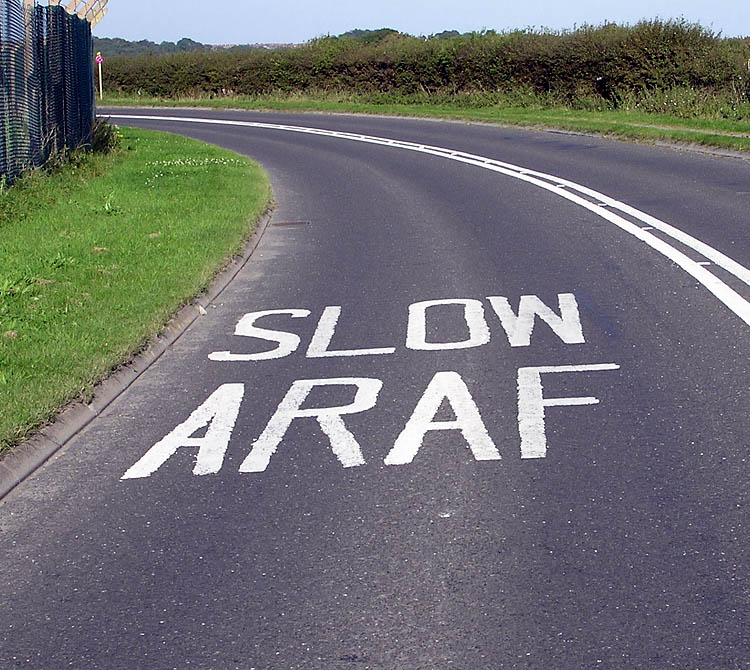
Bilingual Driving Directions
in Wales
What's Next For Welsh?
The Welsh government is a devolved government, meaning they have the power to determine some of what happens in their area. But officially, Wales is still a part of the United Kingdom and they don't get to determine which languages are spoken.
The Welsh language became an official language in Wales in 2011, with the government act stating:
This means it must be treated no less favourably than English.
Fighting For Welsh Language Rights
Welsh is now on Duolingo, and there is a hugely popular online course called Say Something in Welsh, focusing on enabling learners to speak everyday Welsh.
This means that there are independent Welsh learners everywhere in the world now, learning online just like me (read about my own langauge progress).
Do You Want To Give Welsh A Try?
Every Welsh learner becomes a part of this bigger story. If you're interested in trying the language for yourself, you can download my Welsh Starter Kit here and kick off with the resources that I used to start my own journey.
Before you listened to this podcast, what did you think about Wales? Did you already know this story of protesting in the streets for language rights?
Share your thoughts in the comments - I'm excited to hear from you.
And if you want to support the Fluent Show podcast, make sure you subscribe so you always get the latest episodes and share the story with a friend who loves languages too!
Top 5 Fictional Languages (Podcast Episode 51)
Do you speak Sindarin?
The world of fictional languages is richer than a London billionaire, and we have researched and collected the most awesome fictional languages for you to learn about.
In this episode, you'll hear the new Good, Bad and Struggling followed by the Ultimate Fictional Languages Chart. Here in the shownotes, you'll see our Top 5 and the best of all links available so you can follow along and listen to the show.
Our Top 5 Fictional Languages
- Elvish
- Nadsat/ Newspeak
- Klingon
- Minionese
- Simlish
And here is a little bit more background information to tell you which languages we discussed in the show, and what they mean to us.
Dothraki, High Valyrian and Game of Thrones
The languages in Game of Thrones were developed by David Peterson via a referral from the Language Creation Society. David says "You have to start with the language and the people..what might their world be like?"
No character is a better representative of their power than Danaerys Targaryen (Mother of Dragons, Khaleesi, Stormborn, and all that). This queen conquers her lover's heart by connecting to him in Dothraki, the language of the horse people who don't have a word for "boat". She also speaks High Valyrian, and gains an advantage in several scenes in which she understands what's said about her by oblivious fools.
- Creative Language Learning Podcast Episode 4 features more about Danaerys
- Game of Thrones: Creating the Dothraki language
- The Language Creation Society
Elvish, Quenya and Tolkien
These languages were made famous as part of the Lord of the Rings saga. Author J.R.R. Tolkien spent nearly 60 years working on Elvish languages: Sindarin, Common Eldarin, Quenya and more - there are roots and language families, and he created a whole language family tree and evolutions rather than just one language, and his world-building skills are breathtaking once you start getting into the endless back stories he created for Middle Earth.
While the Elvish languages remained at the center of Tolkien's attention, the narratives of Middle-earth also needed languages of other races, especially of Dwarves and Men, but also the Black Speech. It's a dystopian parody of an international auxiliary language, just like Sauron's rule over the Orcs is a dystopian parody of a totalitarian state.
Other languages by Tolkien include Kkuzdul (Dwarves), about 5 different Mannish languages, and my favourite, Black Speech of Sauron. What a dedicated life's work.
- The Elvish Linguistic Fellowship
- The J.R.R. Tolkien Audio Collection
- A free Quenya course from Norway
- J.R.R. Tolkien Reads (A Poem In Elvish)
- The Ring Verse read in Black Speech
Klingon and Vulcan
Klingon is a famous alien language - could this be the most famous Alien language? - from the Star Trek world. It was developed by linguist Mark Okrand. Klingon is different from Tolkien's languages as Mark only had to write language for the film dialogue at first, but for the next movie this started growing into a full language. Mark himself has published "The Klingon Dictionary".
I love how Klingon mirrors the culture of its speakers, so that "nuqneH", the Klingon greeting, reportedly translates to no more than "whaddaya want?". There's no "hello" in Klingon.
Klingon has an incredible fan base, evidenced by the existence of the Klingon Language Institute, which provides meet-ups, a certification programme, a language corpus and language exams.
- Youtube clip of Mark Okrand talking about how he developed Klingon of him describing the development).
- The Klingon Language Institute
- The Klingon copyright case in 2016
- Klingon teacher on Youtube: Lesson 1
- Klingon phrasebook for your intergalactic needs
Na'vi
In James Cameron's movie Avatar, the alien race Na'vi were given a fully developed language by linguist Paul Frommer. This represented the demonstration of how advanced the race is, and how it contrasts with the soldier who enters their world.
Simlish
Simlish is a language not developed for a movie or a book, but for a video game. What started out as pleasant gibberish in Will Wheaton's first game in 2000 grew to become a beloved part of the game. Apparently, it's a combination of "Latin, Ukrainian, Navajo, and Tagalog."
- A little Simlish phrasebook
- 15 Songs You Didn't Know Were Recorded in Simlish
- Fun - We Are Young in Simlish
Minion Language
The Minions in the Minions films are all voiced by co-director Pierre Coffin. His parents are from France and Indonesia and he spent a lot of time working in London. They didn’t invent a full Minion language because they wanted to keep the funny random gibberish element for humour, and as such this language is a lot of fun for everyone, as there’s bound to be something you understand
Newspeak in 1984
Newspeak is thought control, designed to limit freedom of thought by making the language smaller. In the classic book 1984 by George Orwell created this language. He said "the purpose of Newspeak was not only to provide a medium of expression for the world-view and mental habits proper to the devotees of IngSoc, but to make all other modes of thought impossible." shudder
So here is a remarkable example of language used for evil, and you can spot Newspeak vocabulary like un, ante, plus and doubleplus, which gets combined with English words.
Nadsat in A Clockwork Orange
This language -- or is it a dialect? -- was created in the original book "A Clockwork Orange" by Anthony Burgess, and later used by Stanley Kubrick in the film version. The name comes from the Russian suffix for "-teen", and it is indeed a teen speak. Burgess actually learnt some Russian and had a real interest in language. He learnt Malay, and taught himself Persian too.
Nadsat features many Russian-sourced words, such as devotchka, govoeeting, malenky and yarbokles.
Other Links and Resources From This Episode
- Do Canadians Say Autumn or Fall?
- 6 Fictional Languages You Can Actually Learn
- Invented Languages - Opinion Piece on Eurolinguiste
What do you think?
Do you agree with our Top 5? Ready to chat a little more? Share your own favourite fictional language in the comments - and tell us if we forgot any important ones!




Struggling with listening? Discover realistic tips, challenge prompts, and the best tools for improving your listening skills as a self-guided language learner