

9 of the Best Resources for Starting to Learn French Online
Learning French is easy with these fantastic resources for beginners! From online course packages, to TV shows and online tools, we've got you covered.
Bonjour! French is one of the most widely spoken languages in the world and is still considered more important than English in some European countries. It is one of my most advanced languages, so I'm bringing you over 30 years of French learning experience today!
Whether you dream of wandering the streets of Paris and Montréal, or you want to boost your career in fashion, the following resources will be everything you need to start parler français!
This article contains some affiliate links which are marked with *.
9 Top Resources For Learning French Online
1. Finally Get It in French Grammar
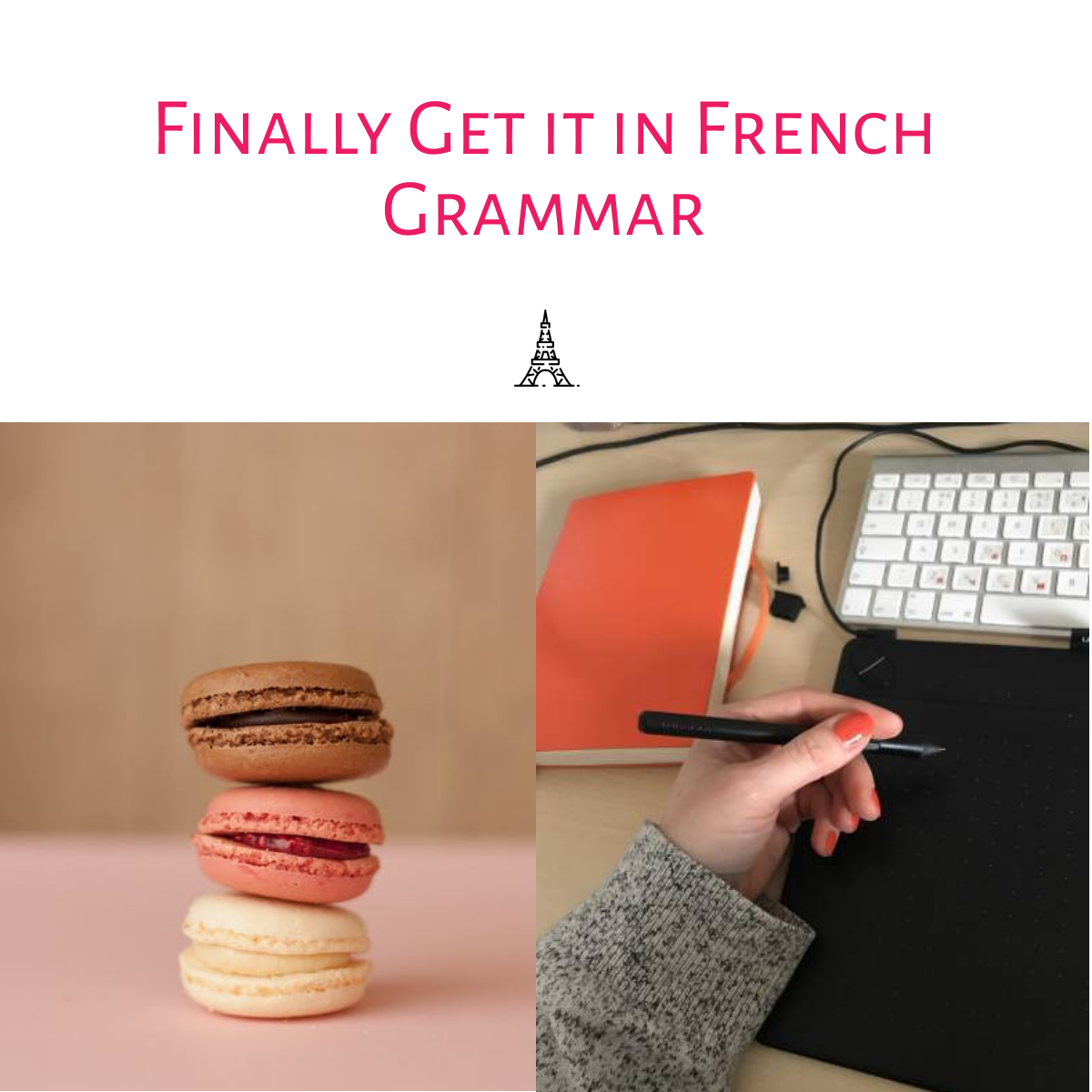
This super friendly course is created for French beginners or "false beginners" - those who studied a while ago and don't feel like they got anywhere.
You will learn how to speak simple, correct, beautiful French together with me (and my kitty). Featuring easy explanations of the all the grammar you’ll need for your first year of French, this course will help you eliminate embarrassing errors with a friendly and informal tutor – yep that's me.
The course comes with offers 2 hours of videos, live discussions and worksheets to ensure you have understood everything correctly.

2. TV5 Monde
TV5 Monde is an international TV channel in French, which offers its own language courses and practice under the ‘Langue Française’ tab. From digital libraries to dictionaries and video classes, this website is perfect for beginners who aren’t quite sure where to begin.
3. Intrepid French: Master French Phrases for Travel FAST

Michele from Intrepid Guide is your go-to guide for language and travel! Her resource is the BEST if you want to pick up the language for travelling to France, Québec or beyond.
I love Michele's course because it comes with so many highly valuable extras like a menu guide and great pronunciation guides. Click here to learn about Mastering French for Travel - FAST*
4. Bite Size French*
Bite Size is the perfect companion for anyone who has learnt a little French and wants to become better at listening and speaking.
The course is packed with beginner-friendly dialogues that you can listen to in just a few minutes a day to become better at French without having to work harder and harder.
4. Bon Patron
If you’ve gotten a tiny bit comfortable with the French language, Bon Patron is the perfect place to practice those writing skills. Bon Patron is a French autocorrect tool; you can practice your writing skills by typing in sentences and have it correct the grammar and spelling errors it can find. The perfect tool to practice those sentences you’ve learned!
5. French Language TV Shows
French TV shows are an excellent way to implement some new vocabulary and to get used to the sound and pronunciation of French. Get the DVD, and you'll also have bilingual subtitles to play with. Try these shows for a start:
Les Revenants* is a supernatural drama which follows the residents of a small French alpine town as they come to terms with a series of mysterious and unbelievable occurrences: a small group of deceased men, women and children suddenly return from the dead and attempt to re-join the family and friends they left behind years before. As if this wasn’t creepy enough, the town also begins experiencing a series of chilling local murders.
Spiral* is the perfect show for you crime lovers out there. When the badly beaten body of a young Romanian woman is discovered on a Parisian rubbish dump, we are suddenly plunged deep into a murky underworld of prostitution, drugs, business, politics and justice. If you like CSI, The Wire and 24, chances are you’re gonna like Spiral.
7. Crack the Grammar Code Course
Ready for communicating in French at a higher level? Let this training be your secret!
This resource is not specific to French, but it will definitely help your English speaker brain untangle the complicated grammar of French! Crack the Grammar Code is a step-by-step guide to efficient language learning, giving you the foundation for fluid French learning without having to memorize grammar all the time.
8. Bescherelle Complete Guide to Conjugating 12,000 French Verbs*
One of the hardest parts of learning a new language can be getting used to all the rules for conjugating verbs – sometimes they don’t make sense to the beginner eye!
This is where the Becherelle Complete Guide comes in; it includes just about every verb you can think of. If it’s not in there, chances are you won’t need to know it! This language course book has been around since the mid 80s, I used it in the mid 90s, and is just as useful today as it was back then.
9. BBC Languages French
BBC has a fab introductory hub for learning French. Some of the content is aimed at children, making it perfect for beginners! They have a test where you can test your skills and determine your level, links to French TV and radio websites. Some of it is a little outdated, but still worth a look for the amount of free resources you can find here.
By measuring your progress, you’ll soon feel so confident about speaking French that you won’t be able to wait to talk to someone.
Recommended French Courses
Finally Get It In French Grammar (for beginners and refreshers)
Bite Size French (focus on sentences, not explanations)
French conversations (for intermediate to advanced learners)
Struggling to get ahead in solo language learning?
Join my free training, the Little-Known Secret to Success in Language Learning.
3 Ways to Learn Any Language By Taking it Easy
Learning languages is a smart thing to do, but a lot of people worry about whether or not it’s effective to learn a language without teachers, classroom, or in-country immersion.
Full Disclosure: I Started as a Bad Self-Teacher
After many years of learning at school, the following 3 steps are the most important ones I learnt about how to grow true fluency. My secret? Take it easy.
Learning a foreign language is arguably one of the most rewarding things that people can do in their lifetime. Language learners stay healthy for longer, they’re more attractive, they earn more money.

There are over 6900 languages spoken in the world today, and in fact the World Economic Forum recently cited research showing that languages can be picked up at any age, and that bilingual workers and managers earn more in the workplace.
Learning languages is a smart thing to do, but a lot of people worry about whether or not it’s effective to learn a language without teachers, classroom, or in-country immersion.
How can you become organised, consistent, motivated, and effective as a language learner?
Full Disclosure: I Started as a Bad Self-Teacher
When I became a self-teacher, I had already learnt 5 foreign languages at school and university, and taken a postgraduate degree. I thought I was totally set for life as a language learner.
Safely supported by the structures of school, exams, language classes, I never really wondered what happens when you’ve got to think up your own routine.
After I left university, I took a job in international marketing. In my new job, nobody needed me to speak any other language than English. I still loved languages, and maintained my level in French after begging my employer to let me attend classes…but I was entirely dependent on those classes.
One day, a local teacher I knew decided to offer a single Polish class. I attended, loved what I learnt. The class never picked up enough students to become a course, and it was cancelled. So I decided I was going to “learn Polish” by myself. Simple!
That Polish class was in 2007, 10 years ago today. I consider it my first attempt at learning a language by myself. And I totally failed. I can’t say much more than “czesz, nie mowie po polsku” (and that means “hi, I don’t speak Polish”).
I can’t say it any other way: I was a bad language learner. My Polish project ended the way so many other people’s attempts end: I ran out of motivation and ideas after a few months. I didn’t know where to look for good materials. The language just fell off my radar.
If You Gave Up Before, You Haven’t Failed
At this point in language learning, many people feel that they have failed, or have “no aptitude for language learning”. But sadly, I already knew lots of languages. Aptitude wasn’t the problem. There must be something else I don’t know.
I didn’t really try another new language for a few years after that. I was interested, but had no need to learn…until my job started sending me to Kazakhstan: a country where English wasn’t the norm.
In Kazakhstan, I was surrounded by Cyrillic script and unusual sounds, and I totally wanted to talk to people. The radio, the maps, the street signs: Everything was in Russian (and Kazakh!). I felt like I just had to talk to more people in Russian.
So I did what I had not done for years: I started from absolute zero and I finally figured out “how to learn a language”.
Russian From Zero
Starting small was what mattered the most at this point. I didn’t need to be perfect, and I had to shake off any ideas about where I “should” be with my new languages. I bought the simplest, most encouraging book I could find: Russian in 10 minutes a day. And with this book, I found my first techniques of self-learning.
There were lots resources to play with: visual, aural and even kinaesthetic learning. There were even stickers and flashcards and role play ideas, giving me the kickstart I needed to feel entitled to discover my own style.
And slowly, I continued on my path and started learning the language. I didn’t get lost, and I didn’t “give up”. Instead, I developed language learning routines that put me head and shoulders above most friends I knew who studied in evening classes.
Learn How to Learn Languages With Ease
If you want to reap all those benefits of language learning that I mentioned at the start of this article, it’s important to learn how to learn. At some point, any group class will end and leave you with a cliff edge. The following tips will help you take things easy while growing your self-teaching skills.
Tip 1: Make it Just 10 Minutes a Day
Let’s not kid ourselves here: 10 minutes every day is not enough for you to learn a language “fluently” in under 2 years.
But what matters here is not how little you plan to study. This one is all about overcoming your internal resistance. If you feel like you have to study for 2 hours “or it won’t count”, you’re on your way to giving up too early. Instead, aim for the smallest possible effort, and make it consistent.
You’ll soon find yourself starting a 10-minute session that turns into an hour-long one.
If you want to get ahead in your language and build a simple language learning routine, try the Language Habit Tracker included in the Language Habit Toolkit. Simple system, monthly reviews, and you no longer have to worry about what counts.
Tip 2: Play
The best thing that happened to me when I started self-teaching languages was the flexibility that came with the “10 Minutes a Day” book. I had so many options: flashcards, images, role plays, stickers.
You will learn better when you break through your own limitations and shake up the routine every now and then.
Play around, dabble, try a new language or a new book, discard what you don’t need. It’s good to try out what experts recommend, but never feel like someone else’s path is the only way to do this.
The line here is this: If it’s not working for YOU, then it doesn’t work.
When you’ve played for a few weeks, use something like the “Your Month in Review” worksheet from the Language Habit Toolkit to find exactly what works for you and what you can safely discard.
Tip 3: Continue.
Looking back, persistence was one of the most significant actions on my way to becoming the multilingual person I am today. Had I stopped after that cliff edge of classes and exams, I would be on my way to average, knowing very little and regretting how much I have forgotten.
But if you continue on your language learning journey and make persistence one of your core values, you’ll never go wrong. You can forget a lot of what you learnt, but you cannot really go backwards!
It took me a while to hone these self-study skills, and nothing helps more than a good tracking routine. If you want to find out how to plan, track, and optimise your routine, check out the Language Habit Toolkit.
Do you love self-learning a language? How long have you been at it? Share your thoughts in the comments below!
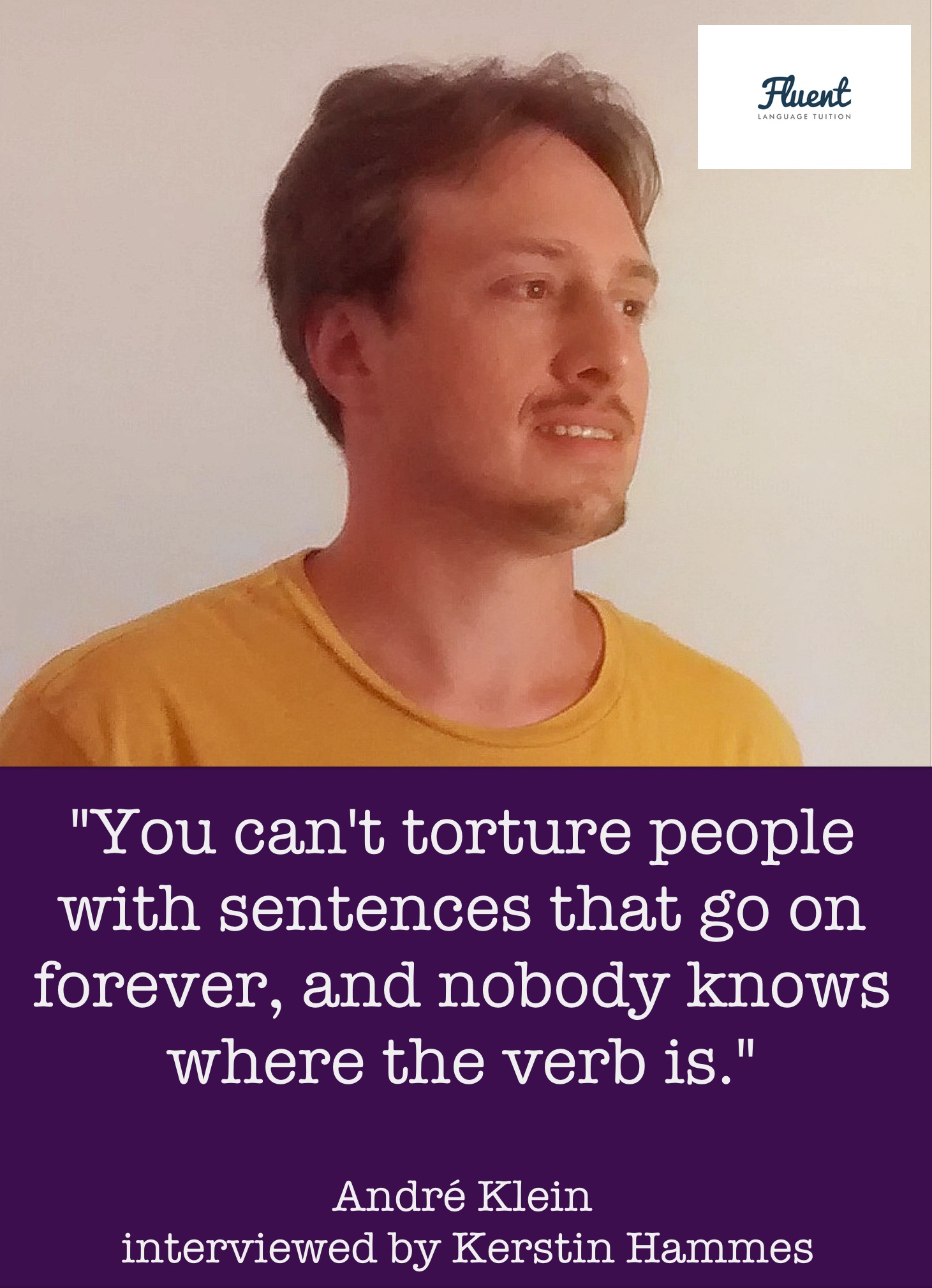
New Podcast! André Klein On Storytelling and Being Creative as a Learner
The new Fluent Language Podcast is out now, and I'll be sharing an inspiring interview with author André Klein. We discussed so much - freedom, creativity and other big ideas. Find out how to make things real for you.
Now on Stitcher
If you're using Stitcher, you can now find the Creative Language Learning Podcast on there too. Make it a star by giving it some stars! Here's an easy link to Stitcher's website.
How To Run The Show in Language Learning
Reading a language learning blog is a funny undertaking, isn't it? You can find amazing community, new ideas and reviews of products that you have not tried yet. For many people, looking at the language learning successes out there is also a real motivator: When you feel like it's never going to be a thing to really learn 20,000 words in Japanese, it's nice to see others out there who have done it.

As a language teacher, I know how you feel. My Twitter and Feedly are full on inspiration for making lessons more interesting, helping students with grammar and being a better teacher. Websites and blogs are an amazing resource and I love reading about what other teachers have tried, what works and just how they go about language teaching. It's so reassuring to know I'm using an idea that works!
Focusing on Yourself
But every now and then, I have to take a break from all the blogs. The internet is noisy, and I start reading about how it's all about immersion, how "using English in lessons is a big mistake" or "no sensible learner uses paper anymore".
It's all "have to do this" and "useless if you don't do that". And I kind of have to shout "NO!! This is my show! We're using my style!" I am a teacher who likes to get to know and forge a real partnership with my student, I want to teach relaxed, happy people. I don't want a cramped-up forced immersion and I know that this method really does not work when I try it. The atmosphere of trust and joy in my lessons disappears when I turn army general, and I feel like a failure.
Conclusion? I am much better when I run the show my way.
Does that sound familiar to you? Too many blogs telling you to watch 5 hours of TV in the foreign language every day, or to only read articles that are way too difficult? Yes, thanks internet. I don't think you need to do that. In fact, I think what you need to do is chill out.
What is something you can do that you truly enjoy without stressing out? Even if it’s something that people don't blog about, if you like it, you're way more likely to do it more.
The Core Skills Idea
For example, take my strong belief that every language learner needs to work on all four core skills: listening, reading, speaking and writing. What if you could work out a plan that addresses each weakness systematically?

First reveal of the new book cover. Do you like it?
The idea of my book Fluency Made Achievable is to guide you through the right kind of self-assessment without telling you what you absolutely have to do. I provide ideas, methods, showing what works and what has crystallized throughout the years as good advice from language teachers and learners. But what I never want to do is have you feel like you are failing if you are doing things your way.
The book’s sequel, The Vocab Cookbook, will then address how you remember all of the vocabulary you pick up and help you develop good systems for learning it. Again, what I do is give sensible advice. Sensible is sensational but not sensationalist.
Run the show.
If you feel demoralised, and can’t believe you’ll ever improve just because the internet says so, take comfort in knowing that you’re not alone. I hope two books will help you to develop skills to conquer this, but most importantly I want you to feel like you're having fun here.
For me, it's all about trying out my new words on people, looking like an idiot and sticking post-its with vocabulary all ove the house.
What are some things that you love doing in your language study?
- “Fluency Made Achievable” and “No Forgetting – A Smart Guide To Vocabulary Learning” are out now and available at www.fluentlanguage.co.uk/book



Struggling with listening? Discover realistic tips, challenge prompts, and the best tools for improving your listening skills as a self-guided language learner