

Master Language Learning: The Benefits of Keeping a Language Learning Journal
Discover how a language learning journal can enhance your self-teaching methods and boost your fluency goals. Featuring a gallery of language notebook examples and podcast with expert language learners.

Are you an electric language fiend, armed with Flashcard apps and podcasts? Or going it old-school with pen and paper?
What if you had a language learning tool that costs you hardly anything, adapts to your own preferences, boosts your memory and helps concentration?
Turns out you do, and it's probably in your bag right now: Your notebook!
In today’s article, I want to introduce you to some of the tricks I use to get the most out of my language learning routine without adding to my screen time.
On the podcast I'm joined by language lovers Kathryn and Sam who are passionate about taking fantastic language notes. Listen to discover their experiences, language learning tips and strategies for effective note taking.
My absolute language learning essential is a notebook. Flashcards are great for vocabulary lists, but notebooks are for everything. The first thing I do with a new word is write it down in a notebook, maybe with an example and pronunciation note.
Get Step-by-Step Journal Tips with Write Your Way to Fluency: only $9!
Dive into a world where motivation meets organization, and discover how a simple journal can become your most powerful tool for mastering a new language. Click the image to find out more!

Like this article?
Then you’re going to LOVE Write Your Way to Fluency, my new guide to creating your language learning journal.
Why Keep a Language Learning Notebook?
Working with a paper notebook can bring many excellent benefits to your language learning routine. It provides a refreshing break if you spend most of your time chained to a computer screen or mobile phone. Here are a few reasons that writing on paper can help you add vocabulary, improve your memory and create a better learning experience:
Personalised Learning
Language learning notebooks are a completely blank canvas where you can design the textbook of your dreams. You control the layout and the content, and get to create what makes sense to you.
As you add notes, you are filling pages of paper with clear signs of your work. It is unmistakably yours as it’s written in your personal style and handwriting. No matter if you are 5 or 50 pages into the adventure, there is nothing like the proud feeling of looking back over what you have already done.
You are in charge of your learning experience. Writing allows you to start from zero and design your page in the way that aligns best with how your mind works.
Clearer Thinking

Writing in a notebook means expressing concepts and sentences in a way that makes sense to you personally. It automatically helps organise what you are learning. In the podcast episode, Sam mentions that he selects what he finds most helpful and important from podcasts, YouTube videos and online lessons so he can curate his own version of a personal textbook.
Your thoughts become clearer in your own mind. The UK Handwriting Association features this great quote from a 17-year-old student on its website, illustrating the way in which a screen can actually make it harder to focus on what you are learning. He says:
“The process of handwriting promotes clear thought and natural structure. Being so close to the page means that translation of thought has less opportunity for deviation.
When typing I find I compulsively re-read my work on the screen and the ability to edit is sometimes paralysing, Although computer work can allow for more complex structure, it is often too complex and has many complications for timed conditions.”
Memory Boosts
When you write your notes by hand, you become better at remembering them. The act of writing, perhaps even colouring or illustrating your note is an in-depth repetition of what you’re learning. Add to that the personal connection as you write what is meaningful to you, and the increased repetitions as you look back over your notebook, and what you have created is a reliable system for remembering what you learn.
If you want more inspiration for creating effective study notes in your notebook, check out my short course Write Your Way to Fluency.
Language Learning Motivation
Filling a book is visible progress, a huge psychological benefit which is going to keep you motivated and coming back to your language time and time again.
If you have a creative side you’d like to unleash, your language learning notebook is a welcome new playground. Kathryn and Sam already loved drawing, design and papercrafts. The language notebook became a way of adding language to what they enjoy, and it has helped create time to combine two great hobbies.
Freedom from Screens
Learning online gives you access to infinite materials, but sometimes it’s hard to remember everything that you see. The notebook becomes your place to capture the coolest bits you find online, the new words you learn from an app, everything you find in your personal language learning world.
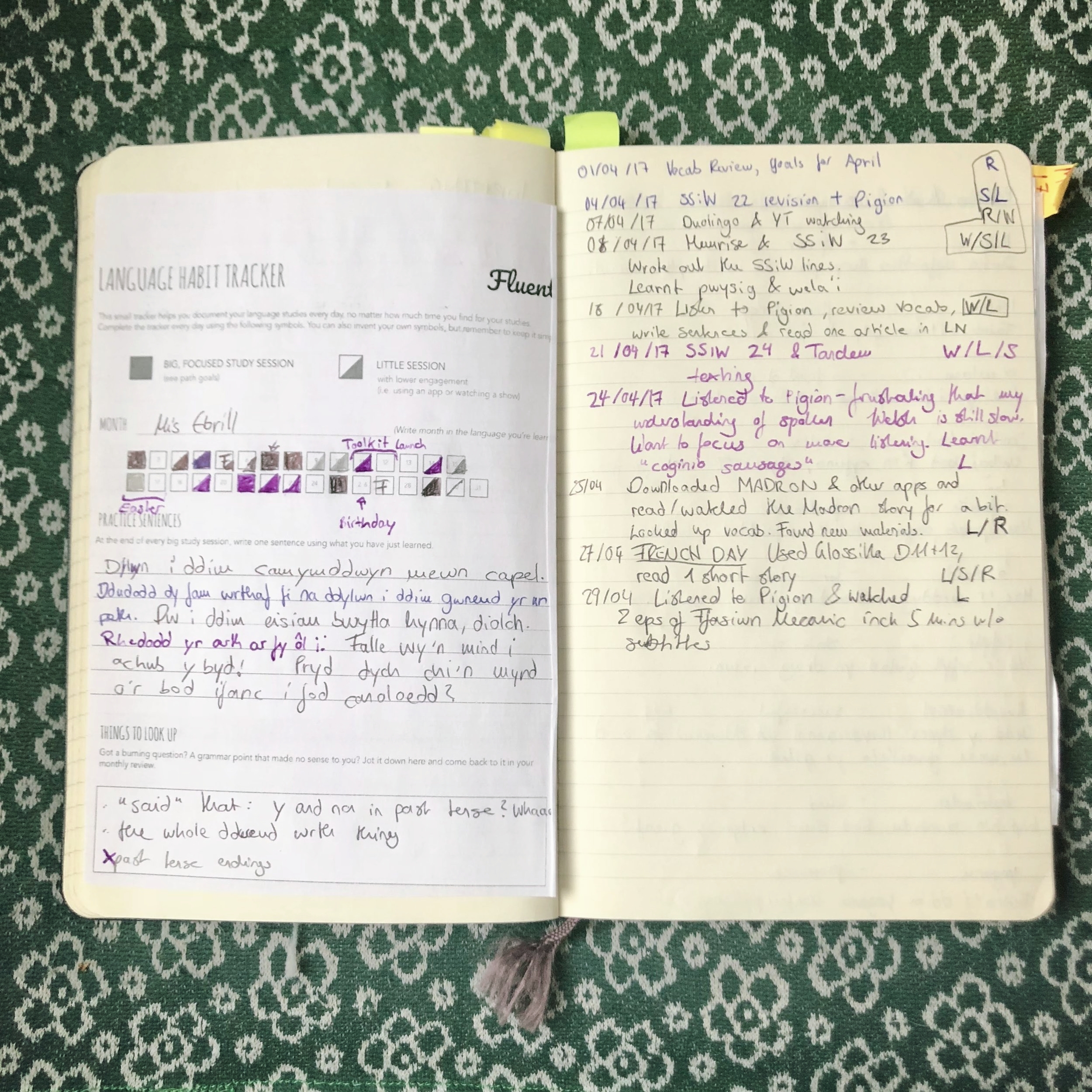
Need Inspiration? Welcome to our Language Learning Notebook and Language Journal Gallery
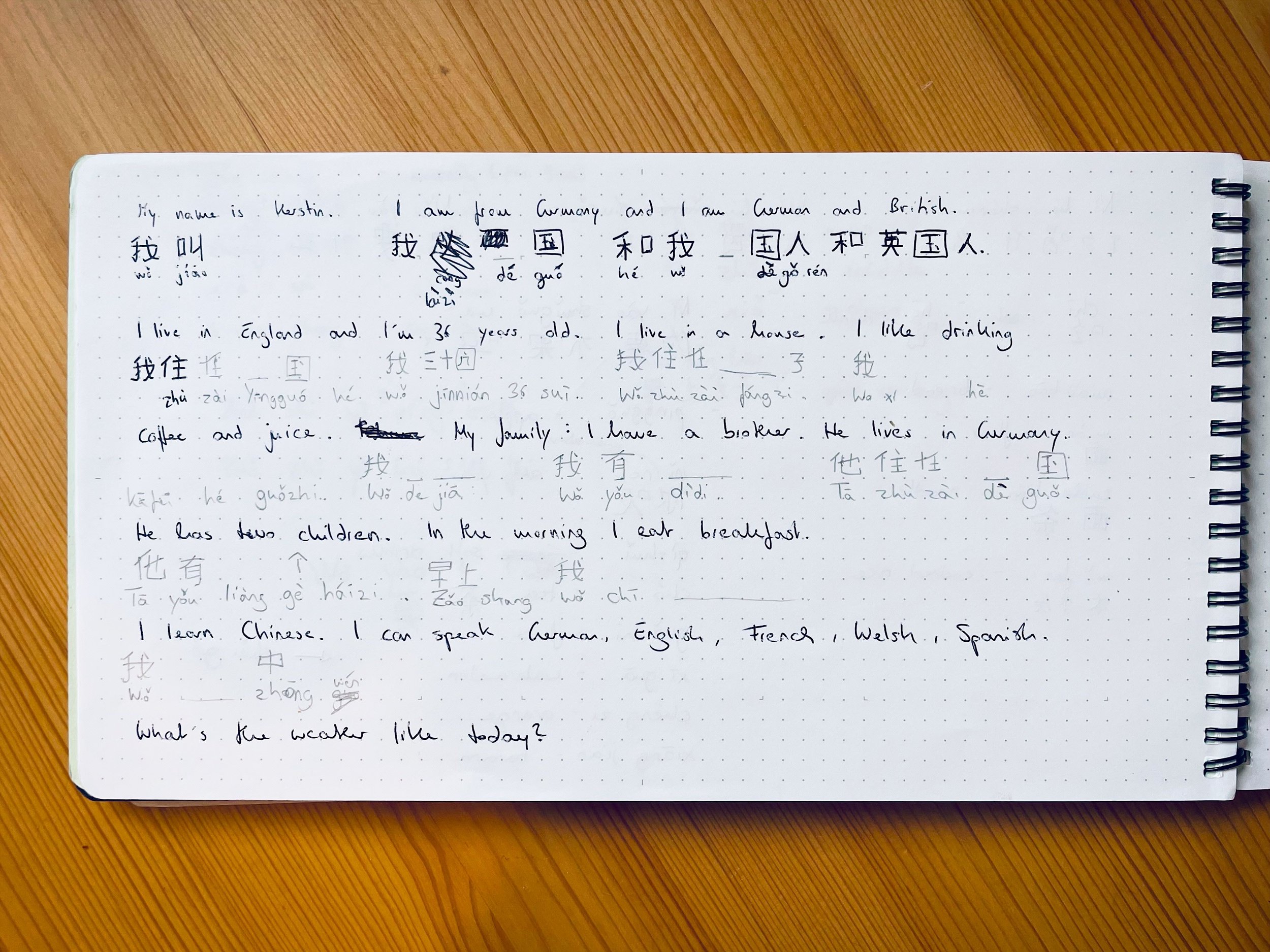
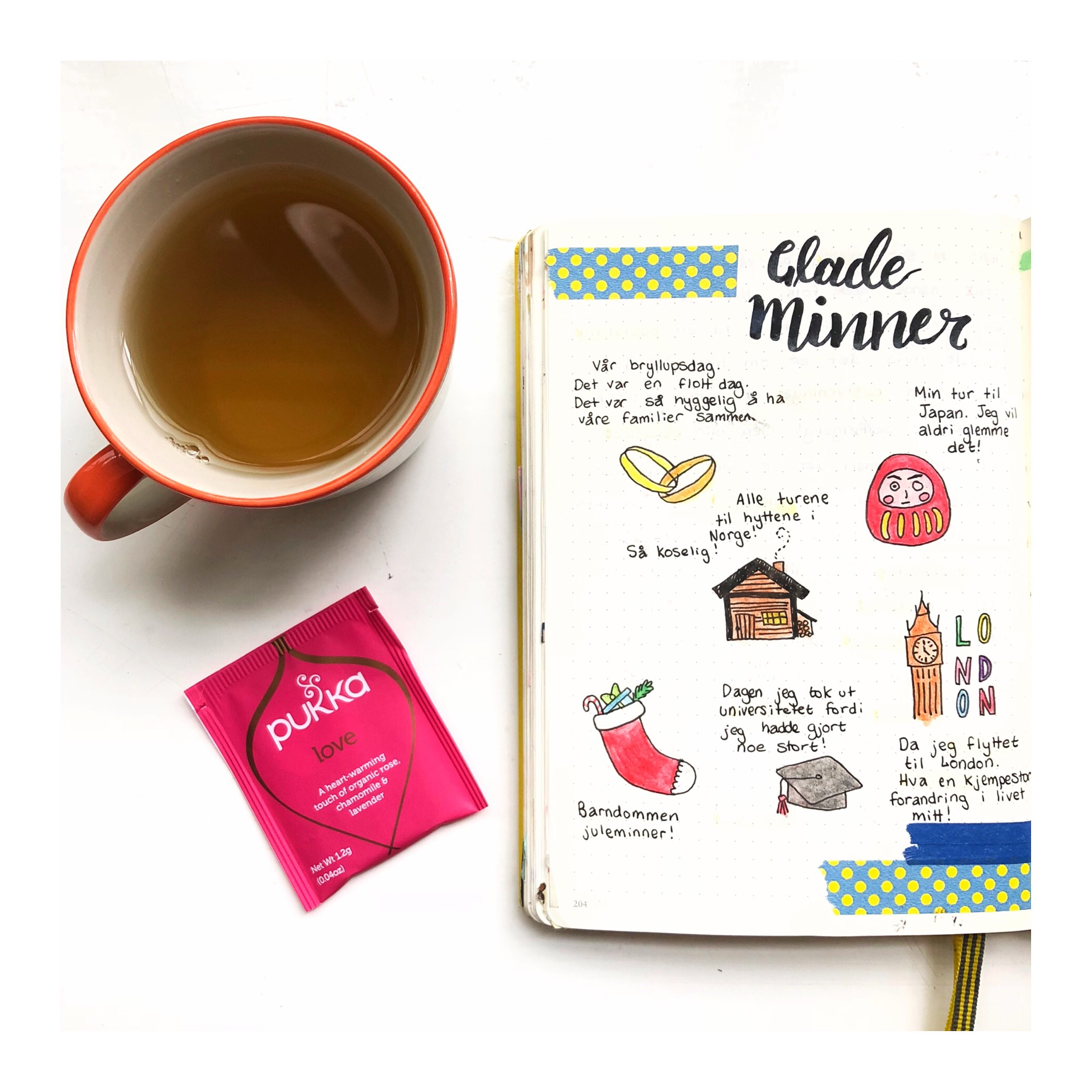
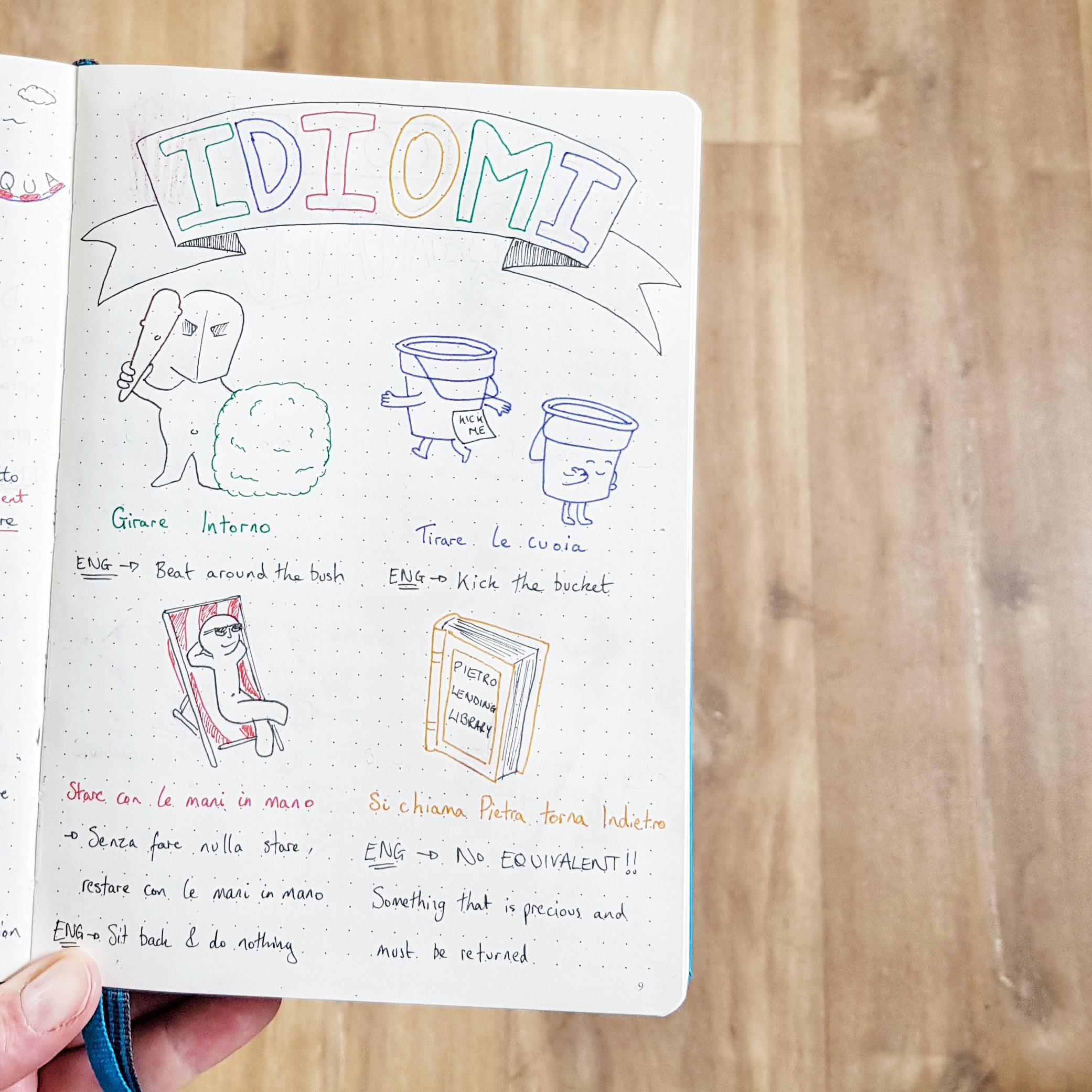


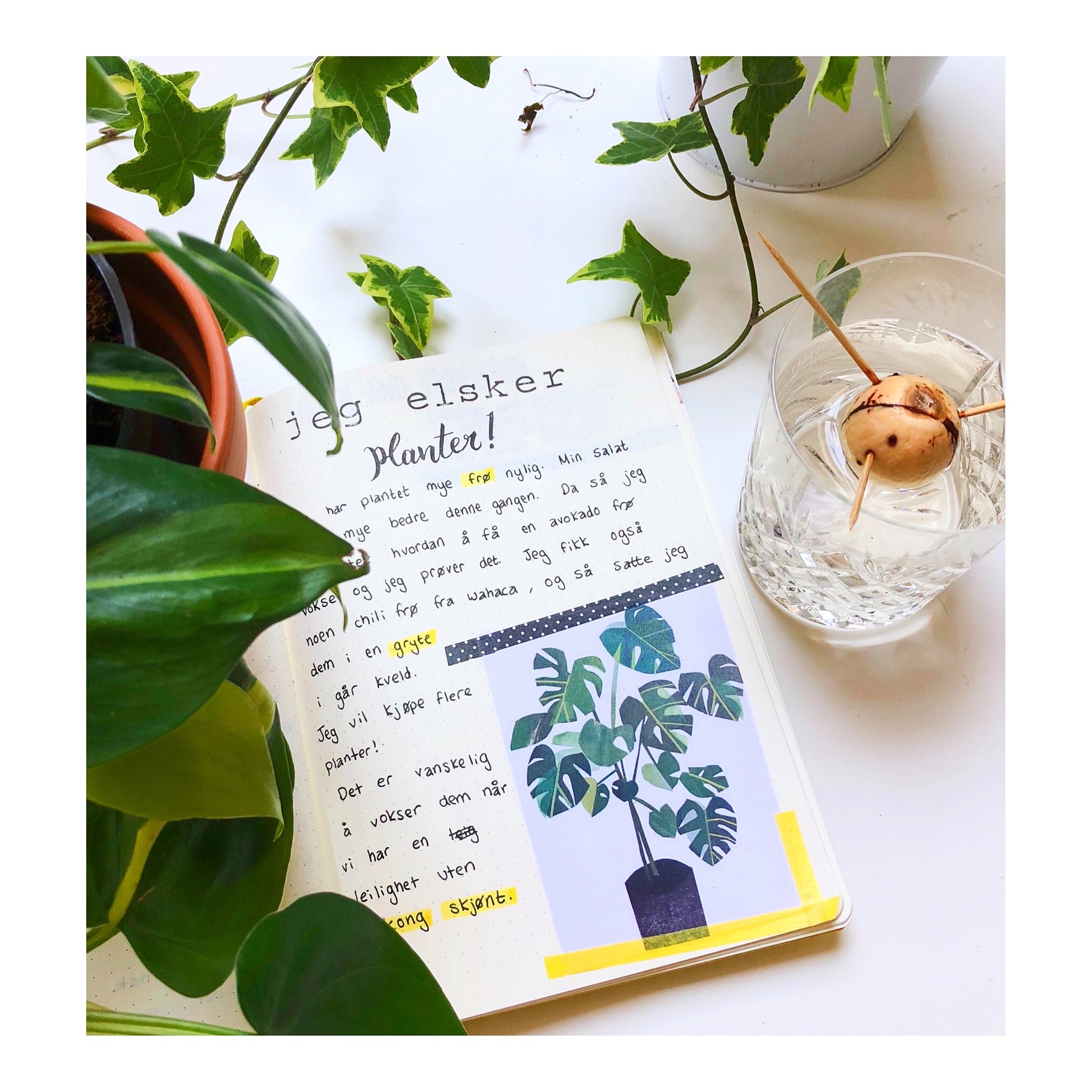
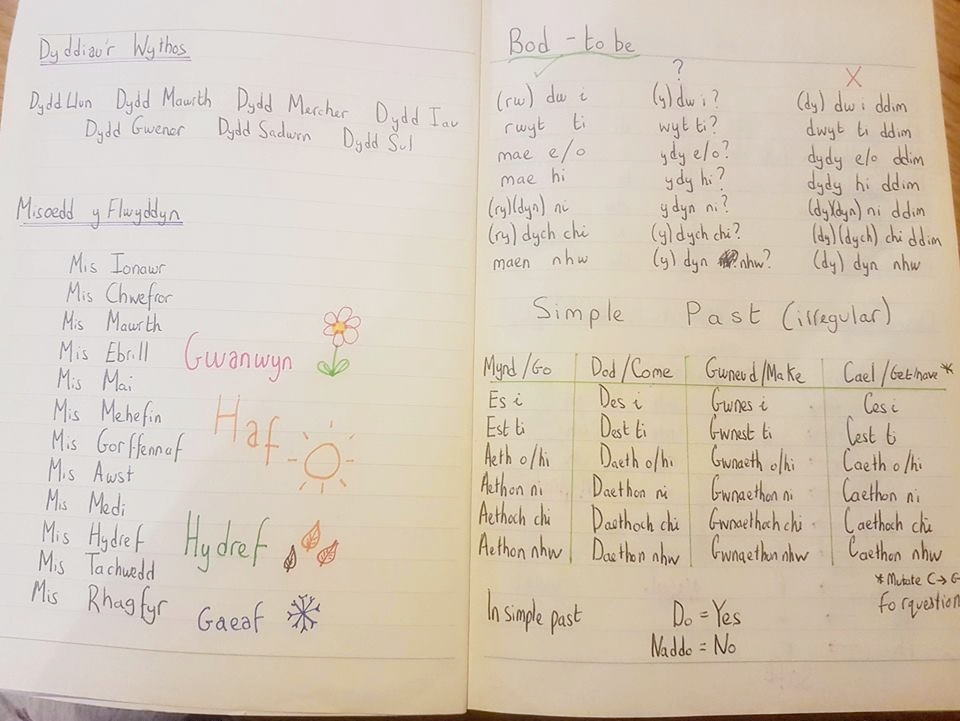
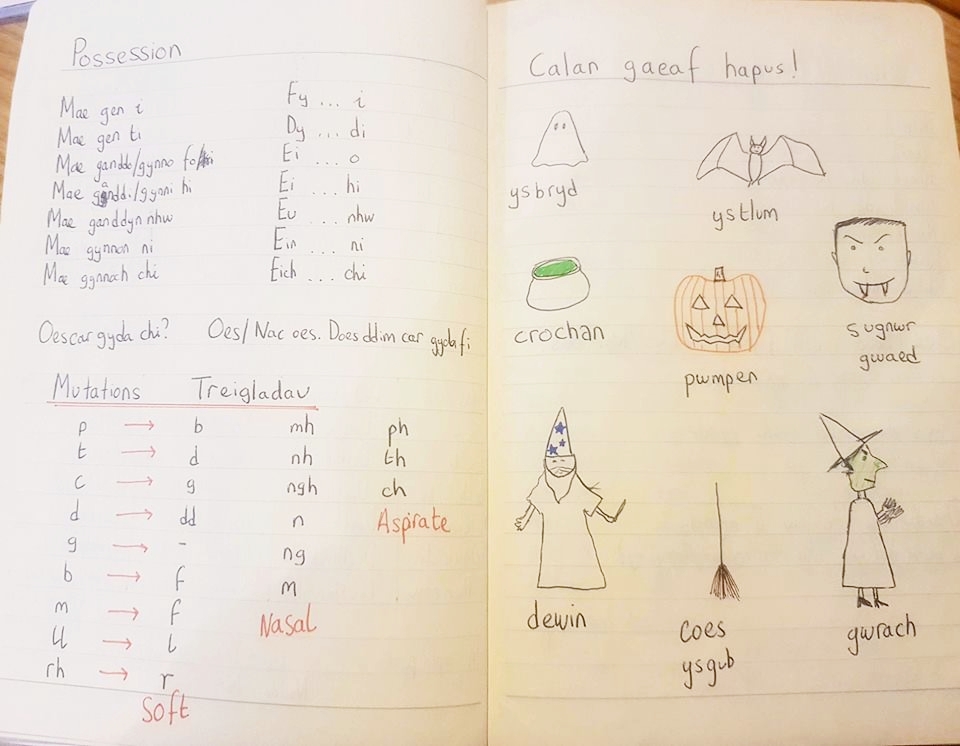
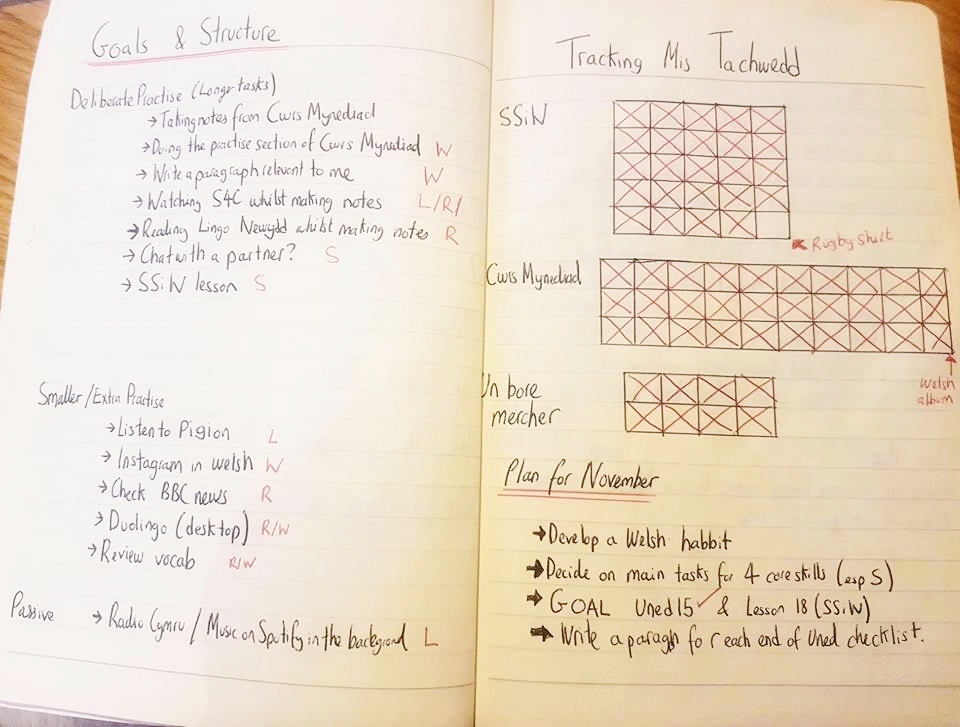
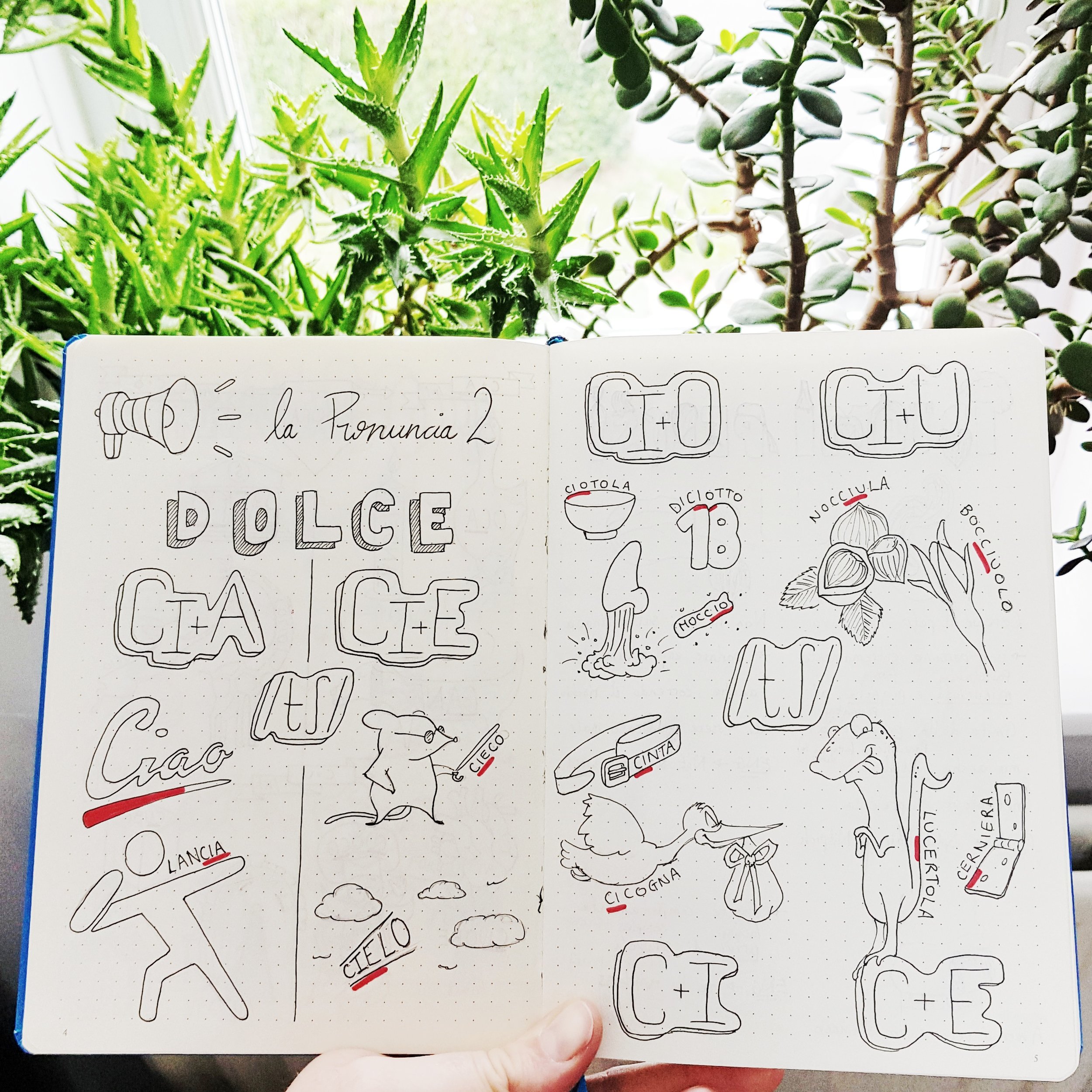
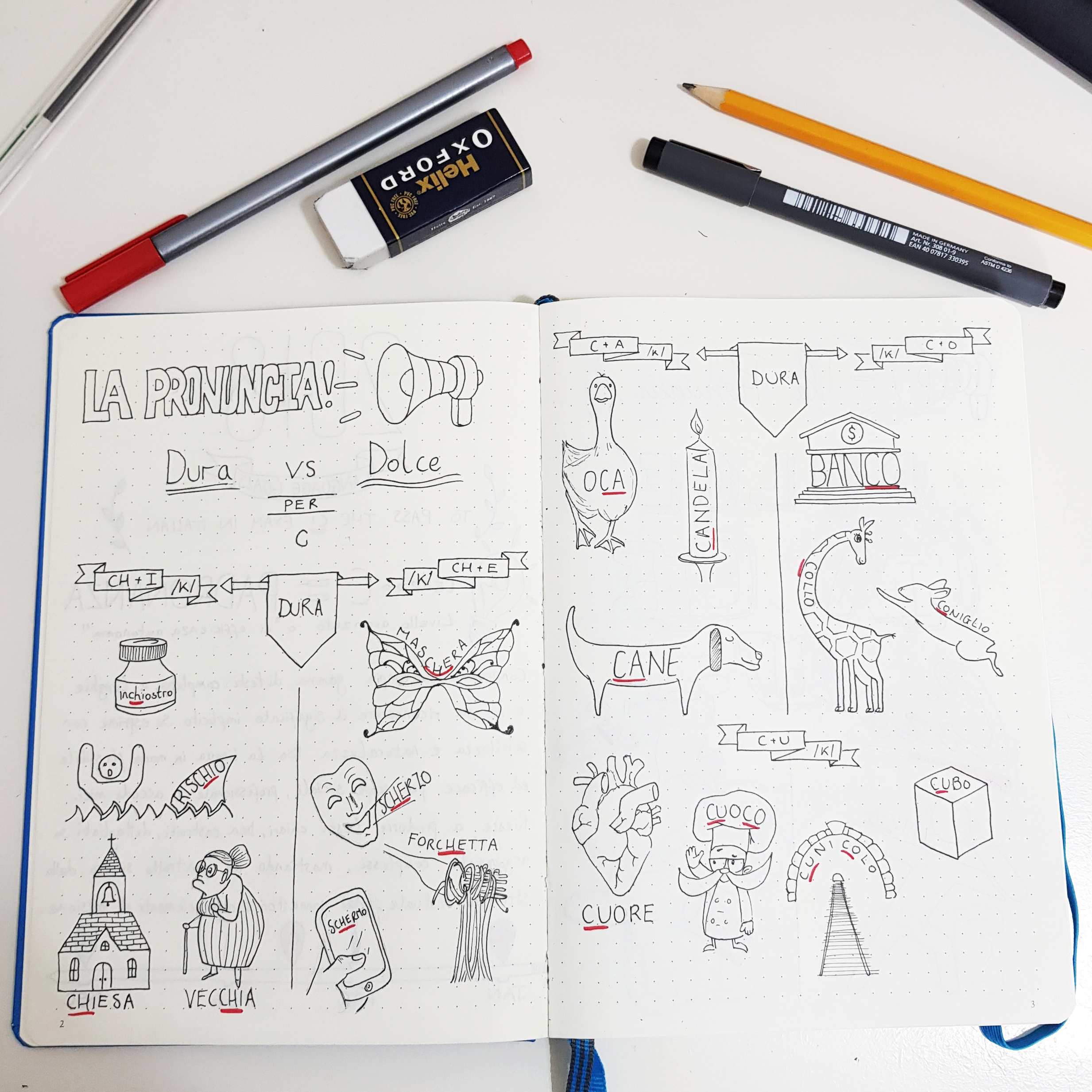
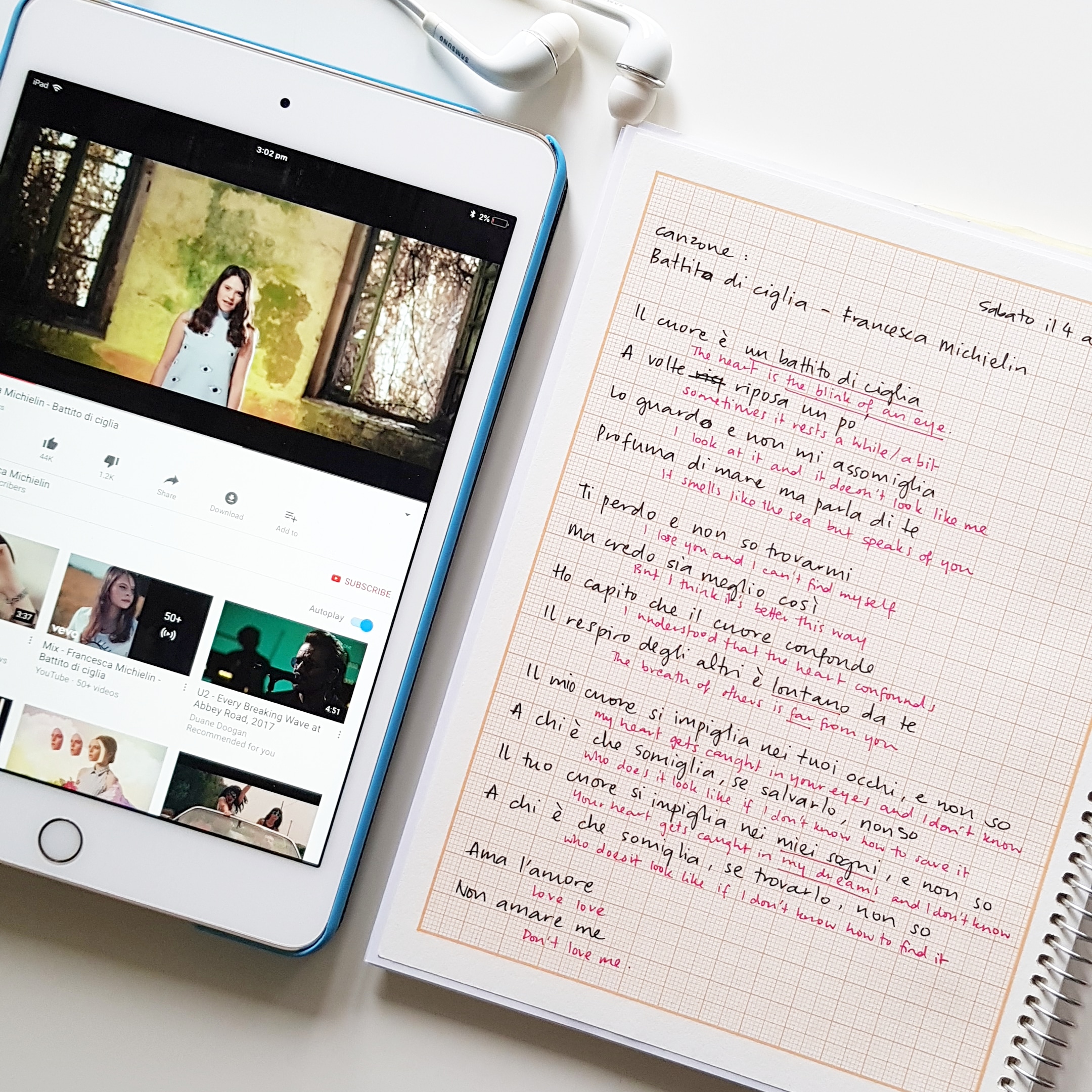
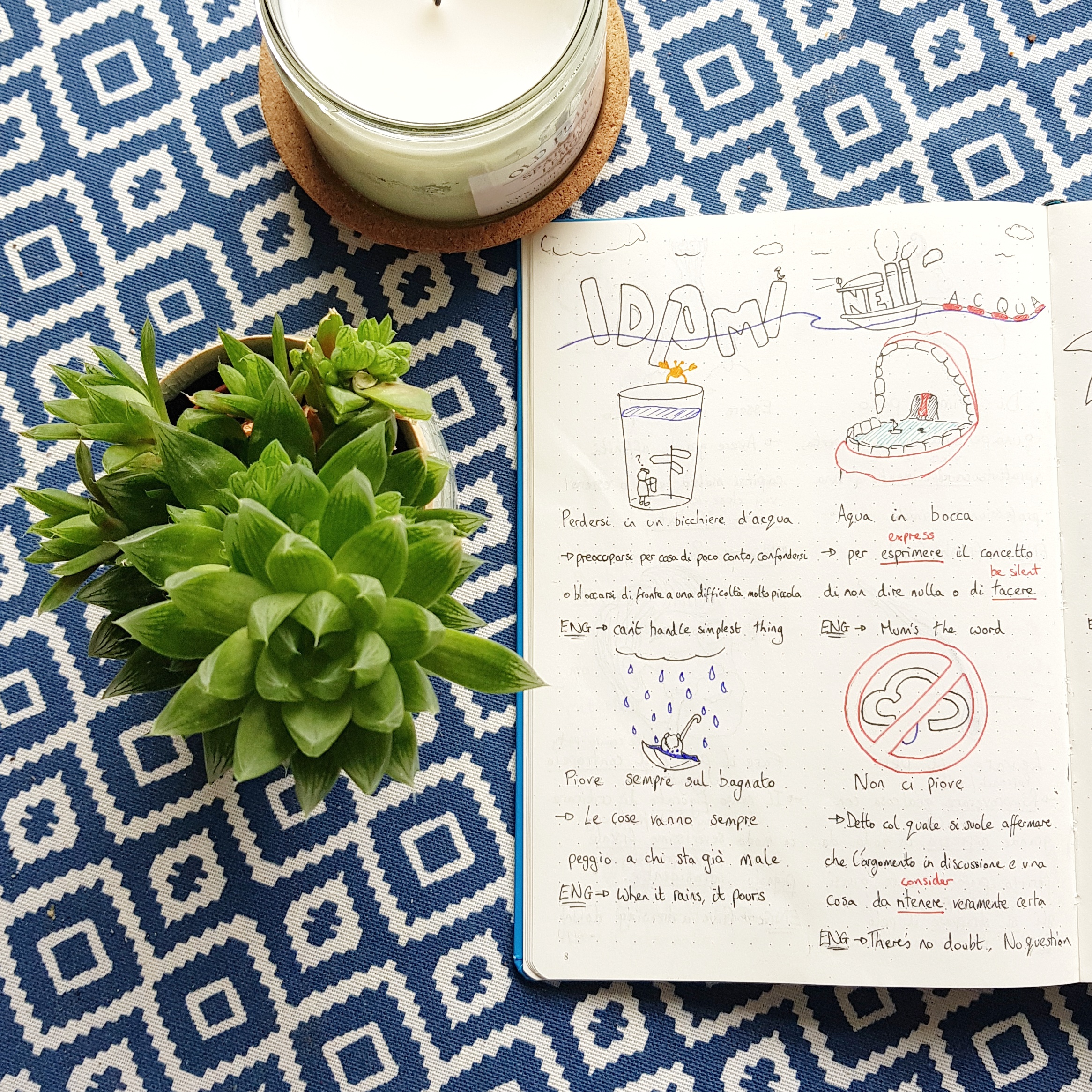
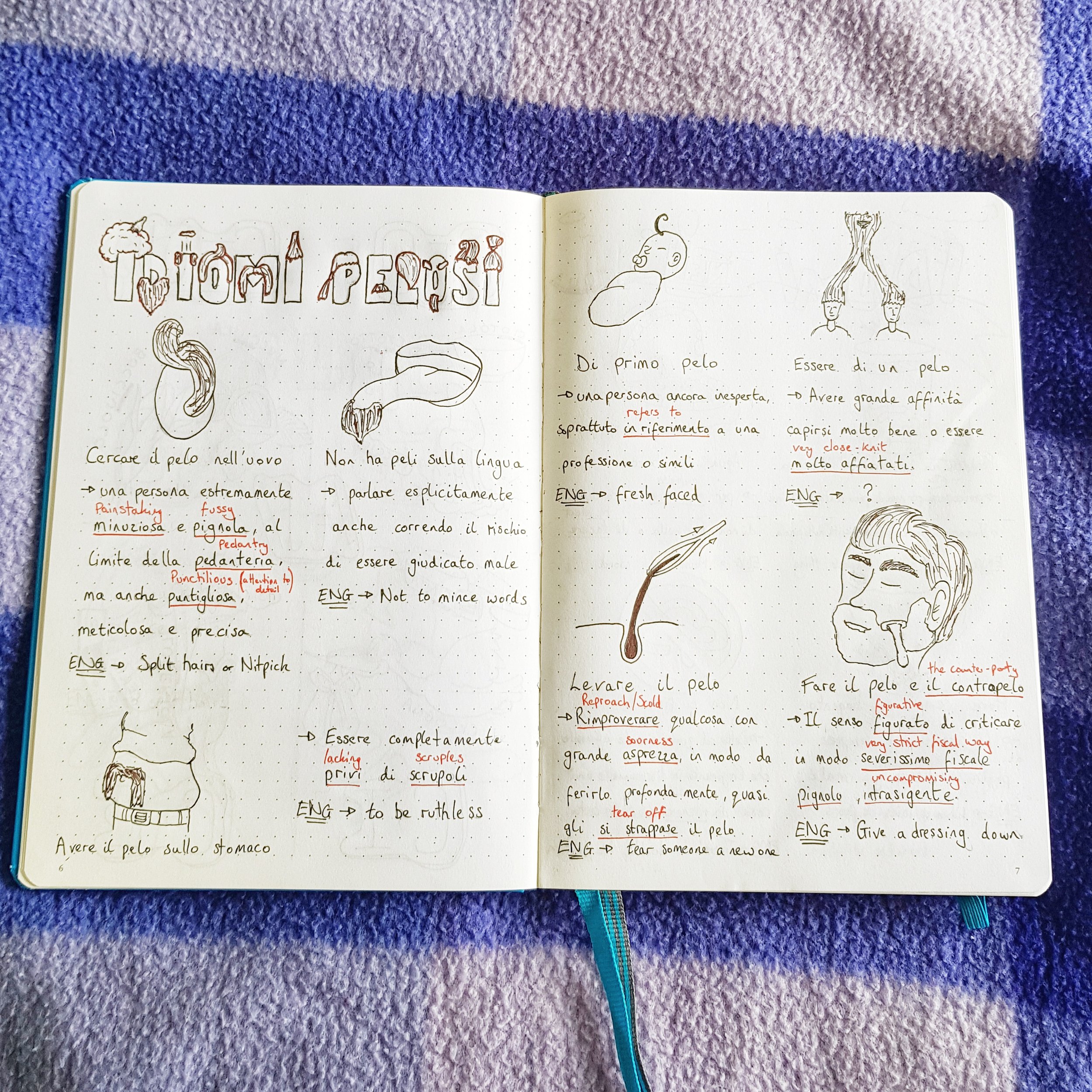

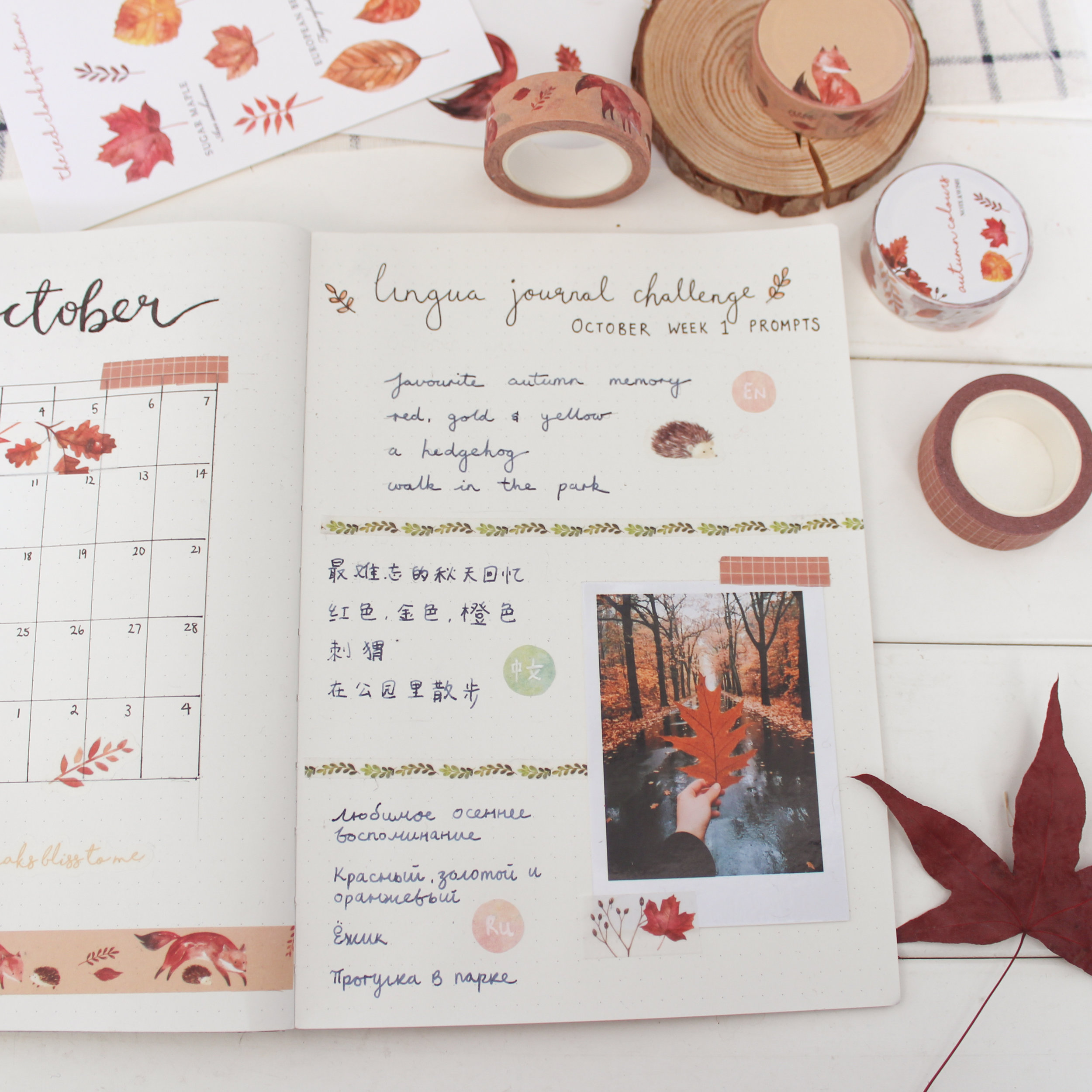


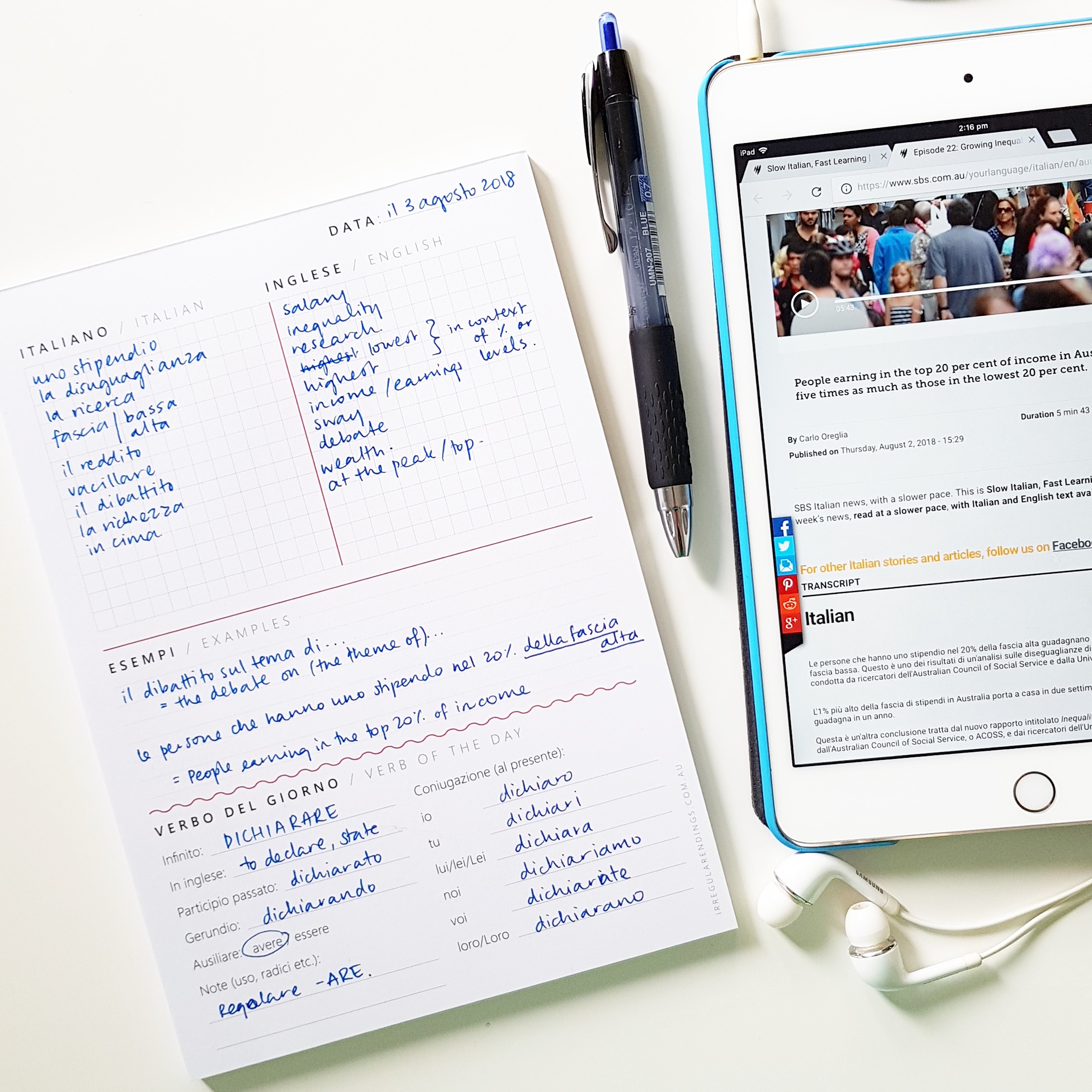
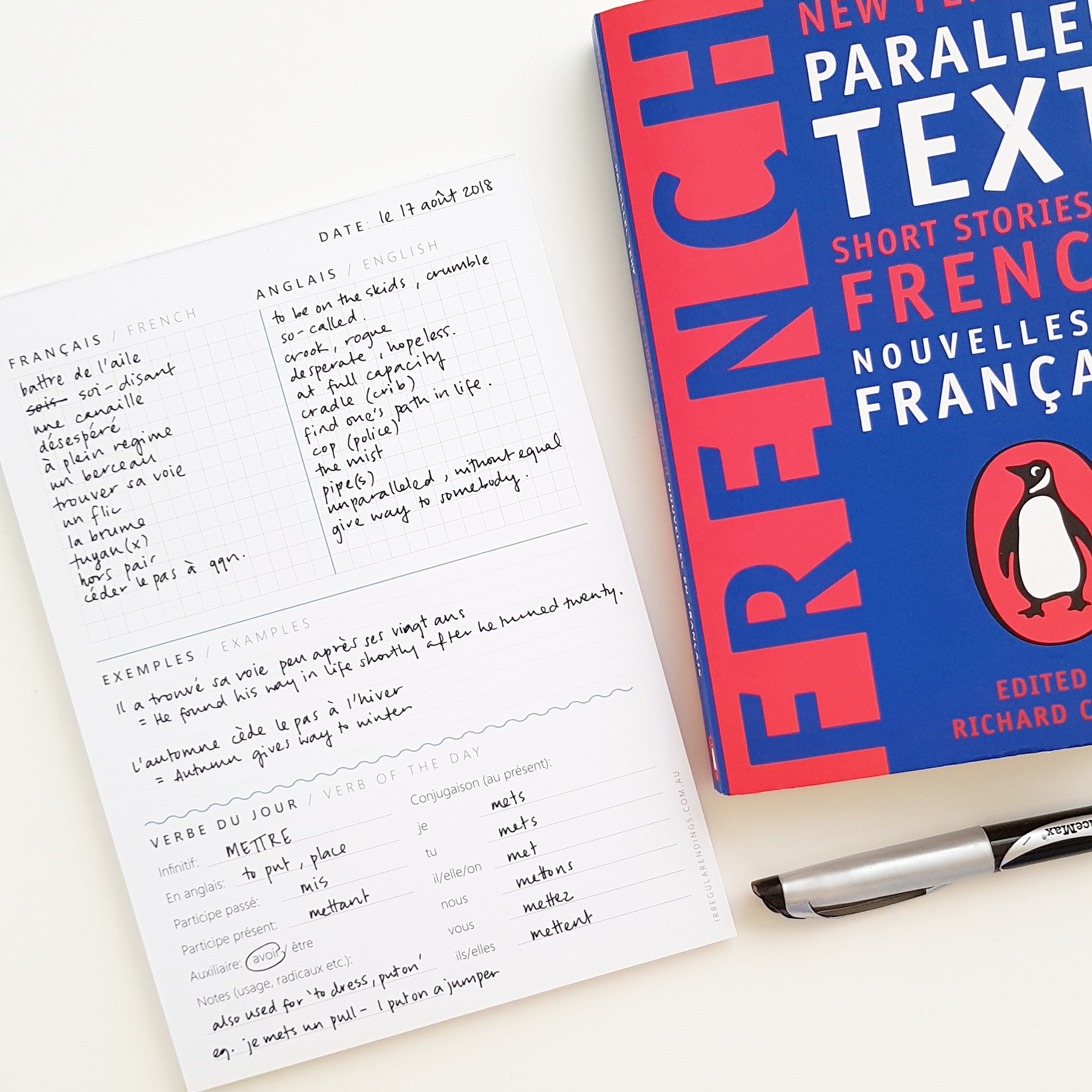
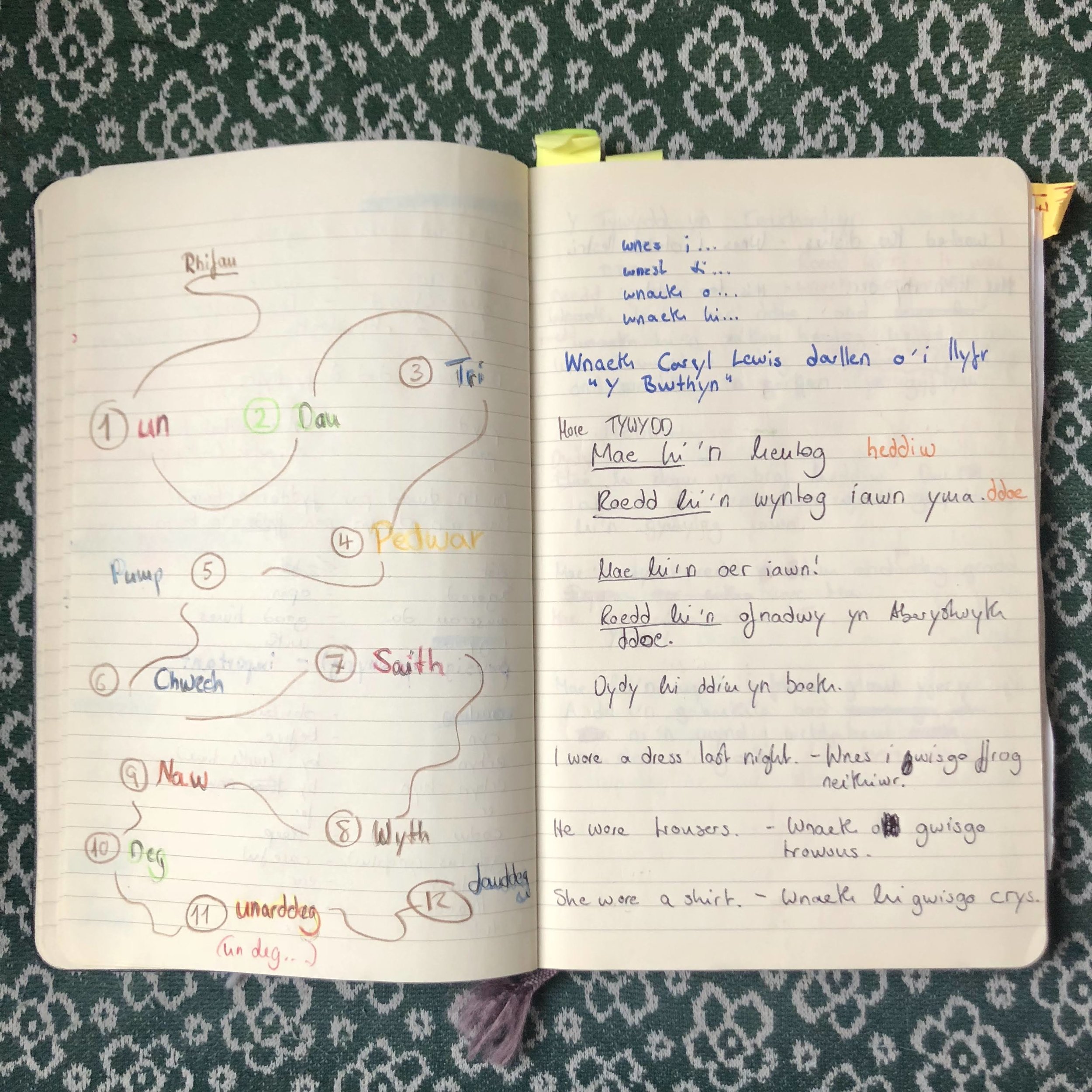
How To Work With The Language Notebook?
When you start learning languages, the notebook becomes more than just the place to note down the bare facts. You can use it for two core purposes:
1. Language Learning
Noting new vocabulary as and when you hear it, drawing memory aids, mapping out your memory palace even. Notebooks are also the right space to write down grammar rules and example sentences. On the pages of my own notebook, I see pronunciation notes and alphabet practice. Basically, anything.
For reviewing and testing yourself, there can be pages dedicated to vocabulary learning. My technique for such pages is to create special reference sections. This works in any book or journal, and you can learn it step by step in my $9 course, Write Your Way to Fluency. .
Here is an example of what this looks like in my current book:

It is easy to highlight words that I tend to forget, and even easier to add them to another list at a later stage so that my revision materials always stay fresh.
At the start of every new session, try looking through previous pages to review what you have learnt before. There is no need to memorize it word for word, but it will jog your memory and set up the ground today’s session can grow from.
2. Goal Setting and Productivity
Language learning is a big journey. For some learners it’s about growth and development, for others it’s a hobby or an aspiration. No matter what your goals and motivations are, you can gain a lot from creating a language learning journal..
Consider adding interesting facts about places, drawing maps or pasting in tickets and mementos from your trips.
Again, writing by hand and focusing on the book in front of you aids clarity and minimises distraction. In a busy world full of overachievers, this is more important than ever.
Here are some more ideas for what you can write in your language learning journal:
Vocab doodles or lists
Jokes & Cute Pictures
Repeat and review things you learnt from YouTube or a podcast
All types of language learning goals and motivations
Memories from cool things you’ve done
Tracking: Core skills balance, daily contact with an app
Your resource lists
Weekly learning plans
Ready to transform your language learning journey with just a pen and paper?
Join Write Your Way to Fluency for only $9! Dive into a world where motivation meets organization, and discover how a simple journal can become your most powerful tool for mastering a new language.
How Can You Navigate Your Language Learning Notebook?
One of the downsides of paper is that it doesn't have a search bar.
To aid yourself with a bookmark system, consider colour-coding areas like "grammar", "vocab" or "situations". Again, the beauty of your notebook is that this is your personal space. You’re no language learning robot, so work with what feels good to you.
The great thing about building your personal language learning system is that these categories can be unique to you and help you build the exact language course that you need (remember that this is one of the core principles in independent language learning).
My favourite bookmarks are sticky notes such as this cute set from Filofax, but this isn't the only way. You can experiment with a notebook in sections, with highlighter pens or beautiful bookmarks.
Good Notebook Options
You can get paper from anywhere of course, but the best language learning notebooks are durable and built to handle a bit of use.
Go for a notebook that is bound like a real book and lasts you all year. Next, discard any paper that is too thin or delicate to take scribbles, highlighters and different kinds of pen. You never know when you'll want to write something down and all you'll have to reach for is your auntie's fountain pen.
The style of paper does not matter - go for squared, lined or blank and pick a paper size that gives you a little space to work with. The language learning notebook works best it doesn't fill up too quickly. My favourite options are:
Frequently Asked Questions
How to Use A Bullet Journal for Language Learning
Having a bullet journal can be an incredibly effective tool for language learning, combining the flexibility of a notebook with the structure of a planner. Bullet Journaling not only improves productivity, it is also extremely flexible in terms of personalizing it for your own needs
Pinterest is excellent to see how other people are designing their bullet journals and to get inspiration for your own.
To keep simple, you set yourself a number of keys, which basically mean you choose which symbols have which meanings. Clarifying your keys is, pun intended, key to using bullet journaling successfully.
Once your keys are sorted, you need to decide on a format. This, however, doesn’t need to be strictly adhered to – indeed, I would actually encourage you to try out different things, since you will know when you’ve got a format that works for you. I like planning my whole year very briefly at the end or the beginning of my notebook. I use a Leuchtturm 1917 with dotted pages, having weekly spreads with the key events from each day, then doing daily pages with detailed to dos and agendas.
Why Do You Need a Language Learning Journal?
A language learning journal is an essential tool that helps you learn a new language more effectively and enjoyably.
Here's why a language learning journal is essential:
Progress Tracking: Helps you visually track your improvements and milestones.
Focused Improvement: Allows you to identify and concentrate on areas needing more work, like grammar or vocabulary.
Memory Aid: Writing down new information helps in better retention.
Customized Learning: Lets you tailor your notes with examples and visuals that make learning more fun and effective.
Self-reflection: Offers a space to ponder your learning methods and discover what techniques suit you best.
Share This Blog to Spread Language-Learning Inspiration With Your Friends!
Share this link on your Instagram stories or Facebook so your friends can create their own personalised language journal: https://www.fluentlanguage.co.uk/blog/language-notebooks.
Who knows, maybe you'll motivate someone to start learning. The more people you know who are learning a language, the more motivated you are!
Don't forget to tag @kerstin_fluent on Instagram or @fluentlanguage on X when you share it!
Further Links
Write Your Way to Fluency, your easy guide to creating the best language learning journa. (just $9)
How To: Bullet Journal for Effective Language Learning by Fluent Language
The Language Habit System | Fluent Language — Templates for building your language learning routine

The Best Ways to Memorize Vocabulary in a Foreign Language
When it comes to language learning, vocabulary is a different kind of monster. Instead of jumping out to scare you (like grammar), it hides until you figure out the right trick to help you learn. The most frustrating part is that what works for someone else might not work as well for you.
But if that’s the case, what can you do to find a method that truly helps you memorize new vocabulary in a foreign language? In this article, I’m sharing my best language learning tips and ideas…plus a brand new FREEBIE so click through to find out more.

Do any of these describe your relationship with vocabulary?
* I keep forgetting new words.
* I don’t like using lists, flashcards, etc.
* I feel like I’m not making progress because I don’t know enough words.
When it comes to language learning, vocabulary is a different kind of monster. Instead of jumping out to scare you (like grammar), it hides until you figure out the right trick to help you learn. The most frustrating part is that what works for someone else might not work as well for you.
But if that’s the case, what can you do to find a method that truly helps you learn new vocabulary?
Why are you learning?
All language learners have a reason for why they’re learning a language in the first place, usually requirement and/or enjoyment.
But what’s your motivation for learning a particular set of vocabulary words?
Maybe you’re still working on the basics or using a list of words to learn from a textbook or an app. Either way, it’s not the most exciting material. In some cases, it might not even seem useful.
One of the benefits of learning as an adult is that you can choose exactly what you want to learn next. You can focus on vocab for more interesting topics or ignore words you’ll probably never use. Even if you’re having trouble learning essentials like numbers or directions, you can put them in a context that’s important to you.
Give Your Vocab Meaning Any Way You Can
You might not care about a list of numbers in a textbook. But you do want to know how to say dates and times, and knowing numbers can also save you money.

A snapshot from my old life, representing my university on the road in Kazan.
Back when I was a regular business traveller, I spent a good amount of time in Kazakhstan and Russia. These are not places where a regular taxi will give you the best deal. Most people just stand at the side of the road, flag down a car, and haggle for the cost of a ride.
I’m a people person and ever curious about everyone’s cars, so for me this sounded like heaven! The only problem was that I spoke no Russian at all.
After several half-bungled negotiations ("Holiday Inn...Ulitsa Shevchenko! Hundred Tenge??") and some support from local colleagues, I picked up the expression “tri sti” for 300.
From then on, every single ride in Kazakhstan AND Russia had to cost me 300 of whatever their local currency was. I simply couldn’t agree on a different amount! 😄In Kazakhstan this may have been driving a bargain...in Russia I was more like their best paying customer, every single time.
After a few months of this, I did start picking up Russian and the motivation to learn numbers was top of my list.
What’s your motivation to learn these words?
How can you see yourself using them? Most textbooks will at least give some sample dialogues, but it’s just WAY cooler to say your own birthday in your new language.
In addition to making note of your motivation, it helps to understand learning vocabulary as a process or a system that includes three stages:
1. Growing vocabulary (figuring out what words you need or want to learn, selecting your sources, and taking good notes)
1. Memorizing vocabulary (strategies to make your words stickier so you don’t forget them easily)
1. Revising or reviewing vocabulary (using new words or testing yourself regularly so that they become anchored in your long-term memory)
Not sure what you should learn?
Before you even start trying to memorize new words, you have to figure out which ones you should try to learn. Once you’ve covered basics like greetings, colors, directions, etc., it’s easy to feel a little unsure about where to go next.
There are a few different options you can choose to start feeling more in-control of your vocabulary learning:
Download My Topic List for Beginners
Using a list that is already created can save you quite a bit of time when you're busy. It's perfect for you right at the start of learning a new language.
My vocabulary checklist for beginners is different from most lists because it gives you topics and skills. This is more useful than just a list of words, and it will help you create a solid foundation without getting bored.
Create your own list of words

What do you want to talk about in your target language?
Consider your interests and hobbies as well as things you’d usually talk to your friends or coworkers about. Consider both individual words and expressions.
One great way to go about this is to choose a topic and do a mind map or create a quick list of every word or expression you can think of that relates to your topic. Then, edit your list and translate the words into your target language.
If you want to add on more vocab to your list, try searching social media with your translated words as well.
Learn more vocabulary from what you enjoy
You can also choose to create a list based on the things you watch, read, and listen to in your target language.
Here are a two great apps that help you understand and find resources in your target language:
Lingq for books, articles, videos, and podcasts with transcripts
Yabla for native videos designed to work for language learners
Learn more about Yabla with this full review
Pay attention when you listen or read something in your target language. Is there a word that keeps coming up when you listen to songs or watch your favourite tv series? Put it on your list. Do you have a book you’d like to read in your target language? Go through and write down all the words you don’t know to start learning them.
Most importantly, remember that you should always have a solid system for compiling new words and expressions.
Switch up your language learning methods
Even if you’ve got a great list of words to learn, it doesn’t help if you can’t remember them. This is especially true for abstract vocabulary. You can’t see the word for "brave", so how are you supposed to remember it in another language?
Luckily, there are 4 different methods that can help you learn both the simple words and the more difficult ones.
The Post-it Method
For words like "coffee" and “door”, it’s easy to write the word in your target language onto a post-it note and stick it on the actual object.
But what do you do for those abstract words?
You can still write them on post-its, but you’ll have to get a little creative on where you place them. Think of quirky places that have some sort of connection to the idea. For instance, you might decide to put a post-it with the translation for "awake" on your coffee cup.
As a bonus, the added creativity involved in connecting the abstract concept to the object will help you remember even more as you have to spend time contemplating the word.
The Language Play Method

In addition to associating abstract words with an object, you can also use the linguistic characteristics of the word you’re trying to remember. Link the word you’re trying to learn with similar sounds or spellings or take the time to look into where it came from.
Quick tip: Google the word you’re learning and "etymology" together, and you’ll find out more about its history.
You can use rhyme or look at the cognates of a word, or the parts of a word that borrow or share origins with another language you already know.
Chunks of Language
In this method, also called "chunking", the idea is to study chunks of language rather than individual words. That might mean choosing to learn short sentences or phrases, such as “I’m so hungry” or “Where is the bathroom?”
This can be even more helpful if you’re trying to learn abstract words because you can connect those words to a sentence you might actually use or remember.
Examples of the concept in music and art
Have you ever learned a new word only to suddenly see or hear it everywhere you go? If so, it probably made you more likely to remember the word later on.
Seeking out examples in music, movies, or even advertisements can help reinforce words that might otherwise slip your mind.
Final Tips to Keep in Mind
Don’t beat yourself up for forgetting something.
The leading scientific theory is that humans tend to halve their memory of newly learned knowledge in a matter of days or weeks unless they consciously review the learned material. This is known as the forgetting curve.
In other words, you simply can’t expect to remember everything all the time. Even native speakers forget words in their native language from time to time.
By the way, if you're interested in my best tips for learning grammar (and why memorizing is NOT among them), don't miss this blog article full of grammar boosts.
Remember to continue reviewing and revising your vocab list.
You might find that some words still give you trouble, so you need to make use of a few different methods if you want to learn them. If there are words that you find difficult to remember, it is okay to also decide that some of the words on your list might not be as important as you thought.
True fact: If a word is important enough, it will make sure that you remember it!
Make sure to apply what you’re learning.
You should always make a conscious effort to use a few new words outside of dedicated study sessions. This might mean actively using new words in conversation, using your vocabulary list to search social media or find new hashtags to follow, or looking for news articles about related topics.
Above all, don’t worry about your level when you’re trying to learn vocab. As long as you’ve got a handle on the basics using new words in sentences and questions, you can learn any vocabulary words you want. After all, you never stop learning new words.

How To Create The Best Vocabulary Learning Technique In Any Language
How can you make sure that your memory is always sharp - even when you're learning important vocabulary?
Here are a few important points that will help you set up your language learning routine. The concept always remains the same: You need to acquire, memorize and review your words until they go in
How can you make sure that your memory is always sharp - even when you're learning important vocabulary?
Here are a few important points that will help you set up your language learning routine. The concept always remains the same: You need to acquire, memorize and review your words until they go in.

Follow The Vocab Flow: Acquire, Memorize, Review
There are three steps that I want to take you through about vocabulary. These steps don't make up a method, but they will teach you how to think about vocabulary.
1) You Can Learn a Language Without Frequent Word Lists
The first step is growing (or acquiring) your vocabulary, and this one is about organization. You need to know where to find the words. Some learners use frequency lists for this, but in reality your new vocabulary is all around you.
It's more helpful to you if you think about which words matter the most to you and what you will want to talk about. For example, in Welsh I learnt the word for "self-employed" really early because a lot of new friends at the Eisteddfod asked me what I do. That is not a word you'll find in frequent word lists, but it's definitely one I need.
2) How to Memorize Vocabulary With Ease
There are lots of methods for memorizing vocabulary. For me, two core steps work best: First of all, I examine my vocab lists and start looking for patterns. Words are made up of different components, and many of those components repeat in language.
My background in having learnt Latin and many other languages comes in very handy here. For example, look out for prefixes, for example I started seeing more words that started in cefn in Welsh, so I looked up the meaning of cefn by itself and started to see a pattern in how all those words connect.
Related Blog Article: What Gets Easier When You Study More Languages?
If you're a German learner, check out this interesting explanation of how the prefixes work and what many of them mean.
If you don't want to observe your words themselves, you can also check out word association and even Memory Palaces. Connect your words to something that is meaningful and vibrant for you - this works with phone numbers and grammar rules too. Pretty much anything. In The Vocab Cookbook, I described some of these methods step-by-step so you can practice memorization immediately.
3) You Can Train Yourself to Remember Vocabulary
No matter how well you memorize a word, your brain might forget it at some point. This isn't a failure - in fact, it's normal.
All language learners recognise that forgetting is part of this learning process. The forgetting curve isn't so easy to control, either. Sometimes a word can stay in your mind for a week or two, just to disappear after another week. This is why good systems work on the spaced repetition system (SRS), meaning you will need to revisit words many times over...but you also get a break in between.
Great online systems that are built on SRS abound, and you will find that most flashcard apps are built on it. My personal system is first based on handwriting and working away from screens. But for the stubborn words, I also add in a Memrise course in which I curate the words to be the most efficient use of my time.
But every now and then, I trail off and just study everything. Make it your own and "do you" -- it's one of my favourite rules!
What's Your Best Vocabulary Learning System?
You don't have to follow every single step and become a slave to my method.
Instead, experiment through finding a style that you can set once and use for ANY language you'll ever want to learn.
5 great reasons for language learning with a buddy
When you are learning a new language, your motivation is often rooted in appreciation of how people connect and communicate. Language learning is social by definition, and it's clearly most fun when you can practice and learn with others. All good on paper, but what if you don't know any fellow learners?
5 great reasons for finding a learning buddy
Just like a lot of language learners, I'm not averse to a bit of a challenge. Teaching yourself from books is definitely one of those, but my advice would be that you stay away from challenging yourself to learn in isolation. Here are 5 good reasons why sharing the language learning journey with a buddy (someone at your level, a friend or tutor) makes a lot of sense.

- You'll open up
Expressing your feelings is super-beneficial, no matter if it's through talking, drawing, writing or singing. In the context of language learning, this means you will benefit a lot from speaking about the language learning experience. Shared frustrations and worries are often halved when you have the chance to talk to someone who knows what you mean. - You'll keep going
Giving up is much less of an option when people know about your commitment to really making this work. Yes, this tip is just one of my whole library of tips that work both for diets and language learning :) - Double the research power
Have you been on the internet these days? It's so full of great resources and media and music and articles that I barely have time to watch Game of Thrones! Even if your chosen buddy isn't one who shares your fluency ambitions, they can help you by keeping an eye out for the best resources, recommended tutors or fellow learners. A network is a powerful thing, and it's so easy to start. - They can quiz you
There is rarely a thing more efficient than asking a friend to quiz you on your vocabulary lists - they'll be able to engage with your experience with all the pressure taken off, play teacher, set challenges or even grade you.
I can imagine that this works particularly well in married couples - wouldn't you just LOVE to have the licence to educate your other half?! From my own experience, I also love how it enables my partner to help me with things like my Russian, without having to understand any of it himself. - You might save money
From borrowing dictionaries to taking cheaper private classes with a tutor (like me), you might find that sharing the language learning experience can really save you a lot of money. This doesn't have to be an expensive experience and not every book or course will do the same for all people, but even if you spent no coins at all on it, you might benefit from a shared cost trip to the exciting destination of your dreams!
How to make it work
There's no straightforward recipe for success for learning with a friend or loved one. Some of us are reassured by having fellow learners, others feel particularly shy about it. You might also want to learn at a different pace to your friend, or work best at different times. If you aren't attending classes together, consider texting in the other language or sitting down just for a monthly catch-up. And if you have found someone who is not a learner him- or herself but wants to cheerlead and support you, how about planning that great trip together?
If you found this article useful, maybe you'd like regular emails from Fluent Language Tuition with more information my ideas, workshops and courses. Just use the sign-up form below :)



Struggling with listening? Discover realistic tips, challenge prompts, and the best tools for improving your listening skills as a self-guided language learner