
It's a free app loved by millions. Is Duolingo wasting your time?
Whenever I hear that someone new is starting language learning, I get excited.
But then, they mention Duolingo and I know how this is going to go.
I’ve spent years teaching, learning, and experimenting with language tools, and the little app with the Duolingo owl has always felt like a toy version of what language learners really need.
Using the app feels like language learning. You’ll pick up a few phrases. Cartoons cheer you on.
But deep down, it’s cosplay. Why?
What’s Good About Duolingo
This app felt like a revolution when it first came out. Here’s why:
Free-ish, easy access to language learning from your smartphone. Nice.
Lovely design with lots of fun illustrations
Gamified learning keeps you coming back!
It gets you from zero to somewhere in language learning, and officially works for getting people to do well on tests. (research sponsored by Duolingo itself though 👀)
The Downsides of Duolingo
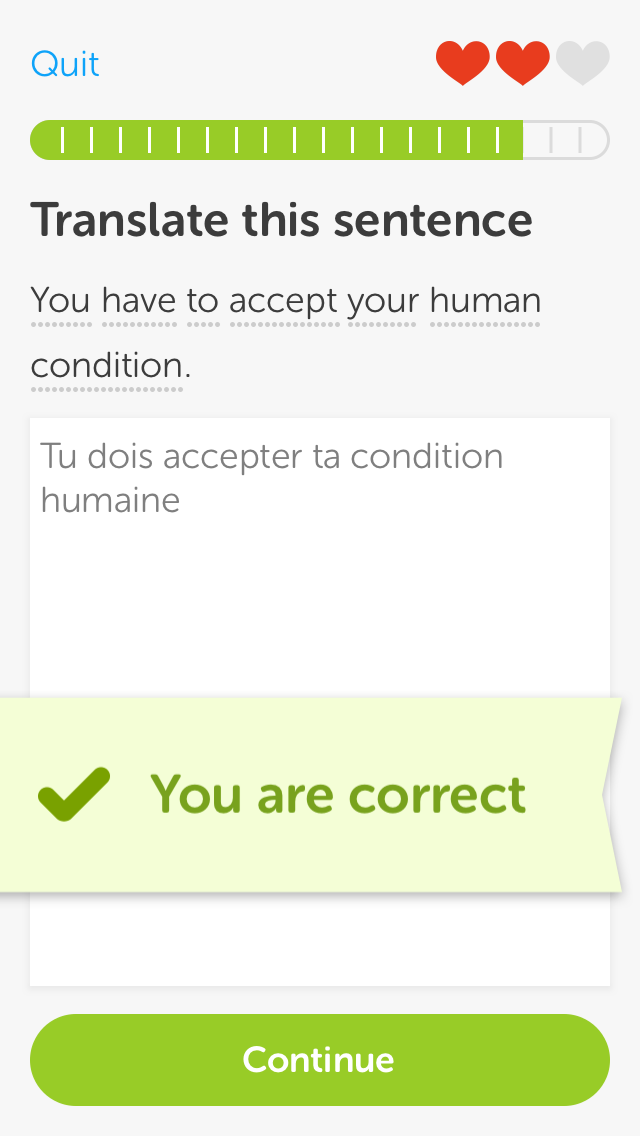
Duolingo telling me what my problem is.
You probably know about a lot of these issues by now, but let’s recap:
You have to learn endless nonsense sentences.
No flexibility about how you express yourself in your new language, so you’re not learning how to communicate.
The feedback is too easy to ignore.
Of course it’s not really free. Duolingo is now an ad-packed freemium app, and their business model has always cost teachers and learners. (Want the back story? Listen to this podcast about the hidden cost of cheap & easy language learning.)
Zero nuance, extremely limited explanations, no culture context.
Language learning should make people curious, but Duolingo doesn’t do that.
You don’t become a communicator. You become a really good Duolingo user.
What I Wanted to See Instead (So I Built it)
As a language teacher, AI has blown my mind. This endless resource of natural languages is easy to access, like a rich practice playground.
From the start, I wanted to build a community-driven, AI-powered space that actually helps people make progress:
Fresh, exciting ideas developed for real learners
Tools that help you learn with freedom, explore and have fun
Real-time personalised feedback, not just error messages
Content rooted in culture, context, and actual conversation
And most importantly: a support system. Other humans. (Plus AI that doesn’t sound like it’s dying inside.)

So I opened AI Language Club, where we create and experiment with fresh, interesting language learning ideas in ChatGPT, Gemini, and other AI tools.
If you are just getting started with a new language, don’t sleep on the big possibilities of AI, because it can do so much more than Duolingo!
What to Read Next
3 Tutor-Approved Ideas for Improving Your Duolingo Experience
Finding the Button That Makes AI Easier for Language Learners
If you are ready for fun, exciting language learning with fast results, come and join our club!
What To Do When Duolingo Gets Boring
After 3 months of learning Spanish with Duolingo, Luka has had enough and wrote to me asking how to move forward. Listen to my response in this episode of the Fluent Show.

Every other week on the Fluent Show, I put aside a little time to answer your listener questions. Email your question to me at kerstin@fluentlanguage.co.uk or tweet it to @thefluentshow
Luka asks:
I have been learning Spanish for 3 months. I started learning with Duolingo and was really into it, and recently I have been using a textbook as well but have become really demotivated - not because I give up, because I am bored of duo lingo. I’m tired of the way it’s trying to teach me and I don’t feel like I’m progressing. [..]
My question is, if I’m not using duo lingo, what can I actually do to learn Spanish? I’ve looked everywhere and all the websites have a lot of ‘tips’ but not an actual guide saying things like resources to use etc.
Does that sound familiar?
Listen to my answer and the best tips on how to learn a language here:
How To Refresh Your Duolingo Experience
Duolingo is a small app with a big promise, and largely it keeps its promise because it’s a game and it does correct you right in the lesson. Duolingo is nice enough, but it can become a monotonous experience and it sounds like you’re hitting a wall
Tips for dealing with Duolingo boredom - in Duolingo!
Get on the web version so you can read explanations (more about this here)
Restrict yourself to a few minutes a day - how about Duolingo while waiting for your kettle to boil or your bus to arrive?
Try out one of the in-app clubs so you can compete with your friends and compare progress.
Duolingo is great, but…in all these scenarios, you’re still reacting to a screen and you maintain your sense that you don’t have a plan. So let’s address the other issue: Motivation!
How To Refresh Your Whole Language Learning Experience
Most projects, be they language learning or dieting or a new job, start with enthusiasm and optimism. You have reasons why you’re doing this.
But that initial motivation, that burst, does not last. Motivation is cyclical: It leads to an experience of success, and then that boosts you on to work through a boring period, and then you have another success experience. So in a way, you’re not having that experience of success.
How To Create A Sense Of Progress And Success
In order to feel successful in a predictable, sustainable way, you need to learn how to set good goals for yourself. Your success must be more than a vague sense of progress, it has to be “I achieved what I set out to do".
Your practical goals - I call them Path Goals - need to be SMART: Specific, Measurable, Achievable, Relevant/Realistic…and whatever people say the T stands for. I go with Time-Bound.
I also advise learners to work with the 4 core skills listening, speaking, reading and writing.
Your start is to set yourself goals, think about where you want to be and what that looks like. Get specific! And then ask “what do I need to do to get there?"
Your goals can totally include Duolingo and your text book, but I would advise you to start where you are. Right now where you are is bored with no sense of progress. So your goal has to be:
Excited about Spanish learning
Feeling like I’m getting somewhere
So what will help you answer those two questions? That’s the interesting bit.
Example: Learning Spanish For Travel

In a coaching session, this is what we’d explore. What are you into? What is interesting you about Spanish?
Let’s say you’re dreaming of walking the Camino de Santiago in Northern Spain. So you’re interested in travel, you dream of speaking Spanish to the locals there, to have the right words to talk about your religion and spirituality, and to feel confident sorting your own food and accommodation.
That’s your Vision goal - the big, inspiring thing you dream of.
To get a sense of your Path Goal, ask yourself how much time you have and what you want to tackle first. Let’s say it’s ordering food and learning about Northern Spanish food.
Your 3 month goals could be
to cook a meal for yourself
to role play a restaurant scenario with a tutor
to know 50 words for food items
to study a restaurant menu
to listen to 10 podcasts so you can understand the words
to pronounce every place name on the Camino.
These are specific goals. They’re way less boring than doing Duolingo forever in the hope you’ll finish a skill tree, because they are YOURS.
No app or textbook is leading you now because your routine is becoming personal. The next question? What do I need to get there? Duolingo becomes a part of the journey, rather than your leader.
No, a short-term goal approach won’t teach you all of Spanish instantly. But that’s because that doesn’t exist. Language is a long-term game.
Yes, you will have to think differently. But this is how to fire up your motivation and keep going.
The Language Habit Toolkit
If you want to learn more about this, the Language Habit Toolkit is designed to help you set up exactly this way of thinking and create a solid language learning routine.
There’s even a Resource Manager worksheet included, in which I’ve listed exactly what you need to set up a good and supportive set of resources. Duolingo is a good start, but I’d advise you add an input resource and a set of reference material.
A few final tips:
Practice with people, either native speakers or at least by finding like-minded folks. Feeling like you’re on your own with this makes motivation harder to maintain. Come and join our Facebook group for check-ins every Saturday.
I actually spoke to you Luka and you mentioned you’ve listened to Spanish music. That’s so awesome! Always look for interesting input from real life like stories, music, conversations. Lyrics are great for interest.
Always consider how far you’ve come - being aware of your progress from a few months ago is an instant cure for feeling like you’re getting nowhere.
For Spanish Learners
You can find my curated list of resources and articles for Spanish learners at www.fluentlanguage.co.uk/for-spanish-learners.
The Fluent Show is supported by LiveLingua, where you can have your first Spanish lesson entirely for free. I tried it out, and spoke Spanish for a whole hour. And they have many other languages available like German, French and Russian. Get your free lesson by clicking here.
Episode Links
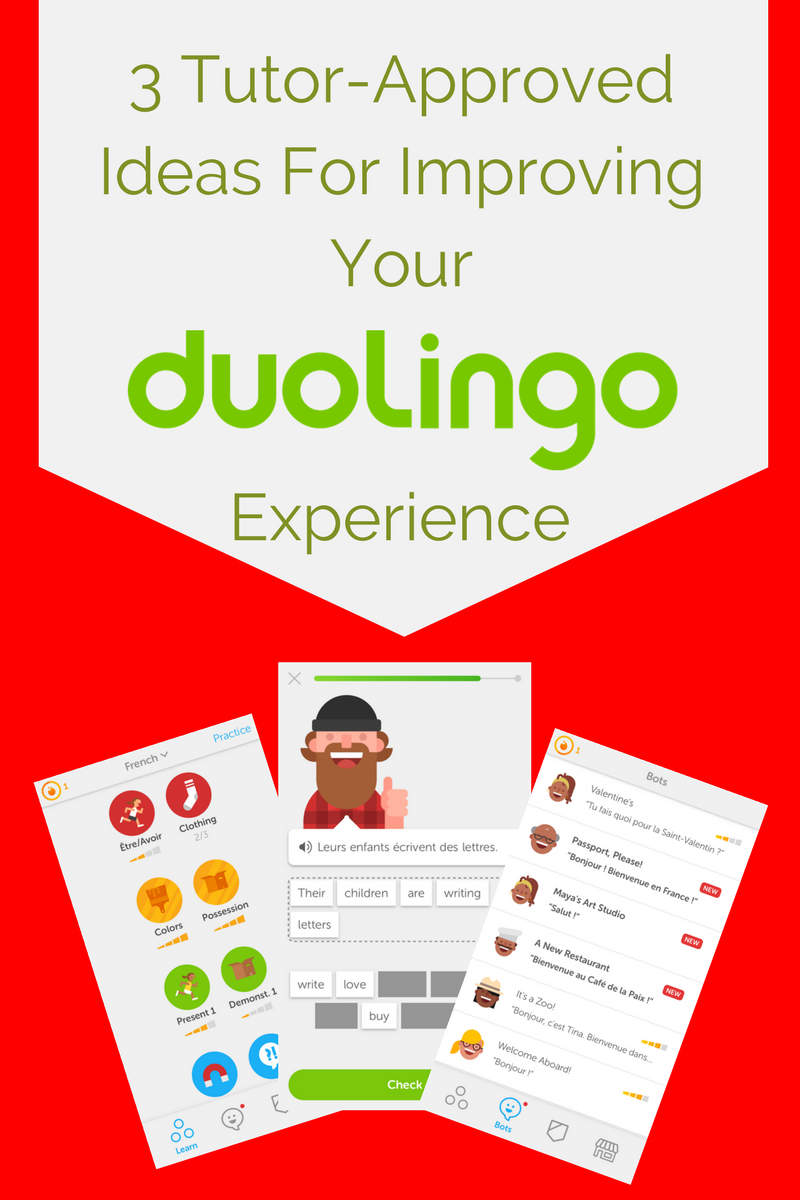
3 Tutor-Approved Ideas For Learning a Language With Duolingo
Language learning was so boring before a little owl in a tracksuit came along.
Armed with addictive streak and modern technology, today's smartphone language learning feels more like a computer game than a language lesson. And in many ways, that's a great thing.
Read on to find out my top 3 tips for getting the most out of your Duolingo time.
Language learning was so boring before a little owl in a tracksuit came along.

Armed with addictive streak and modern technology, today's smartphone language learning feels more like a computer game than a language lesson. And in many ways, that's a great thing. Did you know that every month, the world completes over 6 billion Duolingo exercises? That's a lot of language learning done voluntarily - no school teacher forcing you, no boss breathing down your neck asking "where are you with that language tree?"
Is Duolingo Good For Language Learning?
On the whole, I'm on record as a Duo skeptic. I'm a tutor, I've used it and worked with app users, and it really didn't make them "fluent". But I've come to realize that making you fluent is not the point of Duolingo.
Duolingo mobile provides structure and training in several core skills. Plus, it's sort of a productivity app, with the streaks and bite-sized lessons designed to fit into user's busy lives with ease. All in all, you get a free language-based computer game, an addition to classic courses and tutors and most certainly not a replacement.

Chat bots are a recent addition to Duolingo's courses in more common languages. I haven't seen any in Welsh yet.
I could make a clear case both for or against using this app. On the one hand, I want you to ignore when Duolingo tells you that you are "now 53% fluent" because that is laughable. But on the other hand, I've been truly excited to see constant improvements in recent years.
This app might not become any more effective in terms of teaching you language. But as users, we're becoming better at fitting a language learning app into our lives. And if you've tried it, here are some invaluable tips for raising your Duolingo game.
1) Use the Web Version of Duolingo
Duolingo's mobile app is nice enough, but it lacks solid explanations. If you're a new language learner, you might find it difficult to figure out many of Duolingo's exercises by yourself. Sometimes you are asked to construct sentences, even though the app never taught you how to do these things. In other exercises, a new topic is introduced and can feel overwhelming for app users.
The Duolingo web app is a different story and comes with Personally, I don't use the web app much - Duolingo is a mobile experience for me and I enjoy learning away from the desktop (more about how I learn in my Welsh language updates). But if you're a committed user and want Duolingo to be your main resource, here are 3 awesome things you will find in the web version:

Explanations in Duolingo's web-based interface
The web version offers a fun practice option called "Timed Practice", allowing you to challenge yourself against the clock.
The ability to use the full keyboard and type out each of your answers, helping you to increase your spelling skills.
Explanations 👏! Duolingo web offers an extended "Tips and Notes" section. There are explanations, tables, and even references to which textbook unit you can use to train the same exercise. The content isn't uniform and varies by language, because Duolingo courses are partly created by volunteer experts in each language.
2) Use The Duolingo Skill Tree as a Guide
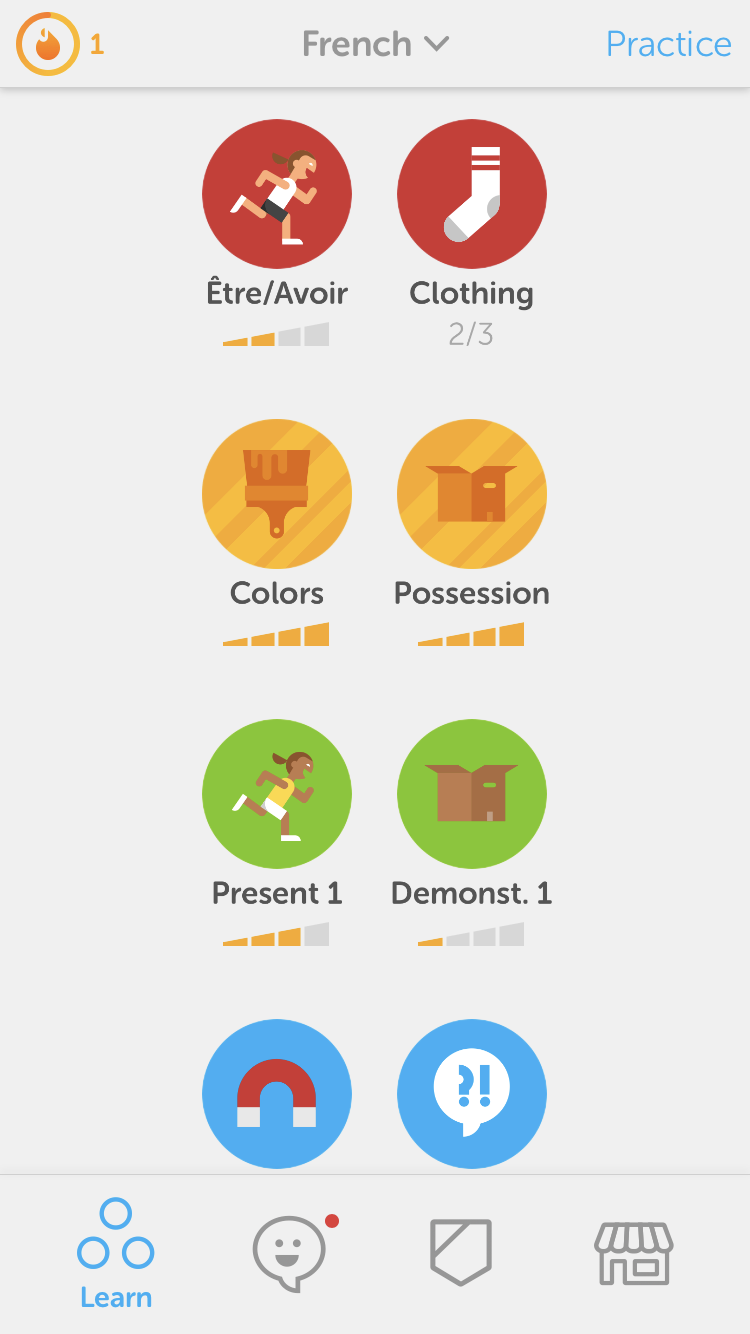
The Duolingo Skill Tree
The skill tree is a the heart of Duolingo and structures it in a way that's quite similar to textbooks. So using the Duolingo setup as a guide, you can let your own questions guide you. Have a classic resource available to answer those questions - why not outside of Duolingo?
A few resources you could try are grammar books, textbooks, podcasts, online courses, language tutors, and even social media. You can read recommendations for more language learning resources in my Resource Guide when you sign up to the Fluent Cool Kids Club.
If you're wondering about the cost of extra books, I recommend checking out your local libraries and charity shops. You're more than likely to find resources for pennies.
Related: Watch My Talk "What You Need to Know Before Spending Money on Language Learning" on YouTube
3) Take Duolingo For What It Is
Duolingo is a language learning app, nothing more and nothing less. In many ways, this makes it perfect for casual users who want to fit in a few minutes of practice at different moments in their day.
It's certainly not a waste of your time if you work your way through a few lessons, and there are dozens of great advantages of using Duolingo. It's cute, it's a fantastic performing app, it's supported by language communities.
If you're a beginner and learning your first or second foreign language, I think that the web version can be your genuine "digital language textbook". But don't rely on it solely and start adding in other resources very early. A good language learning routine is built on habit, human contact and variation in resources.
Do You Use Duolingo?
Are you happy with the little owl? Or does it make you want to howl? I'd love to hear more from you in the comments - tell me which app version you're using!
And for more guidance on language learning apps, join our Fluent Language Learners Facebook group, where I've got a video in the archive for you.




Struggling with listening? Discover realistic tips, challenge prompts, and the best tools for improving your listening skills as a self-guided language learner