

13 Inspiring Ideas for Language Learning By Creating Your Own Podcast
I'm a super passionate teacher and love to teach people about what I tried and loved in my life, and one of those passions is podcasting.
For me, starting the Fluent Show was life-changing. I got to interview amazing people and learn something amazing every episode, from neuroscience to language creation.
You can read more about how podcasting made me a better language learner over here.
Most people think of podcasts as a marketing tool for their business but in reality they are so much more!!
Podcasting is perfect for people just like you: language lovers with a passion for learning.
Want some inspiration? Here goes!
If you're learning a language and want to speak more..
you could record a regular podcast in your target language practicing new topics and vocab you've just learnt
you could exchange podcast episodes as a joint show with a learning buddy
you could record interviews with native speakers as practice for your conversation skills
you could record a podcast about the resources you used and review and what you learnt - in your target language, of course
you could bring together friends and start a bilingual podcast book club, or film club, or music club
Or if you're taking regular language lessons...
you could get together with your fellow students and record a study club show together, talking about what you are learning
you could interview your fellow students to learn their motivations and learning methods
you could make your own accountability show, checking in every week to share what you've been learning
Let's get back to talking about business for a minute.
Are you a language teacher looking to get more students for your lessons and programmes?
you could share some of your lessons with the world and build a huge following of eager students
you could interview successful students as super powerful testimonials
you could share your teaching philosophy so the perfect students get to know you
Or maybe you're a teacher with a full roster of students!
you could share homework assignments and tips directly to your students' phones through a simple podcast feed
you could upgrade your content and open a new income stream by going deeper in a podcast discussion
And by the way, if you're a woman or non-binary, we need you even more because right now 75% of podcast hosts are men.
All this leaves just one question:
How do you start a podcast? Who can show you how to do this?
Guess what...I can!!
I'm super excited to announce that starting 20 September, I'm inviting you to join my Podcasting 101 course and get access to a 3-week live round full of support, action and friendly accountability.
Wanna learn more? Ready to do this thing?
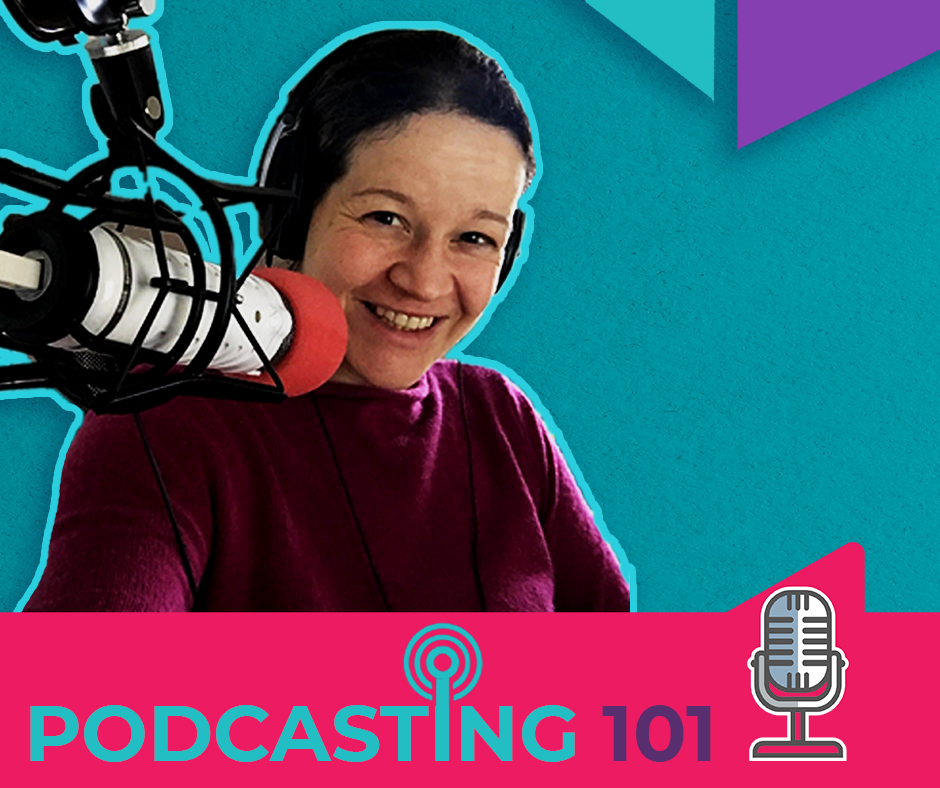
3 Lessons Podcasting Has Taught Me About Life and Languages

You know how much I love podcasting - you hear me do it almost every week! I have been recording The Fluent Show since 2013, and it has brought me such joy and excitement being able to chat with other guests and give you all the best language learning tips.
But today, I want to tell you all about my tips for starting a podcast.
My goal is to open you up to an idea - could you start a podcast? A little one? Maybe a big one? Maybe for your business, your project, for other language learners, for your students if you teach?
There are so many different reasons to start a podcast, and I know you have so much knowledge up in your brain that the world could use.
Now to help you understand the amazing experience that being a podcast host has to offer, I thought it would be fun to put together what podcasting has taught me over the course of the last 7.5 years...and to tie it back to the bigger picture!
Want to create and launch your own podcast?
Learn my tried-and-tested podcasting system in this Podcasting 101 workshop
Here are three ways that podcasting has made me better at languages.
#1: Consistent improvements and the joy of curiosity
Goals require our commitment, and that's the same for learning a language, creating a popular podcast, or anything else that we want to achieve.
When you decide to work towards a big goal, you decide to contribute to that goal on a regular basis.
With a podcast, the initial goal is to create many episodes and keep the project going for a while. Let's say we're aiming for 10 episodes. You probably can't get it all done in a day and must work on the project consistently to produce something good.
I started my podcast 7 years ago with my laptop, a jingle created by my friend Jonathan, and a will to spend an afternoon in GarageBand. Over the years, so many things have changed. I restructured, renamed, rebranded, re-edited, and learned how to create systems that make podcasting a lot easier. None of this happened overnight. Just like no language learner can be perfect overnight.
![Copy of [Templates] Instagram Grid.png](https://images.squarespace-cdn.com/content/v1/500fab79c4aa83ca4b6cacae/1620665028660-DR82OCH8LL5V8ZW5QYA4/podcast+quote+graphic)
I am still ready to talk about anything and everything and enjoy the process!
Podcast creation isn't about cranking out perfection. It's about having fun and capturing fun just by being yourself.
#2: Team work, trusting, and daring
When I first made the Fluent Show, I made it on my own. Same with my tutoring business. A whole one-woman show, and yes, that meant doing my own edits, publishing, and notes. You can hear in the first episodes that I was trying something out and finding my feet.
But I always knew that it takes a village to create something awesome.
I am not a practiced musician, so my friend Jonathan pitched in with a jingle, and my husband had a microphone he allowed me to use. Over time, I added an editor and an assistant who can help me organise the guest interviews.
One of my big dreams was also to have a co-hosted show. I listened to those and enjoyed them, and I remember first getting in touch with Lindsay and asking if she'd like to be involved with the podcast.
When you have more than one person who knows you're working on your product, you're no longer “playing”. That can be scary, because it’s you standing up and saying “this project is worth my time and your attention”.
Podcasting has taught me that a project I care about can be important enough to justify proper time and attention. It is a really good thing to dedicate yourself to a project like this.
What else does this remind you of? Learning a language!
Remember that, no matter how important someone else calls the language you are learning, your judgement is worthwhile and your goal is worth pursuing.
#3: Being myself and speaking like me
Podcasting means sharing your voice, your breath, and your physicality. It can feel vulnerable. For you as language learners, you know that feeling. Someone hearing your voice and accent, your thoughts, as you become a better speaker - that's putting yourself out there as less than perfect.
Over the years, podcasting has taught me how to become more comfortable with the sound of my voice and the way I express myself.
In conversations, I have learned invaluable skills about listening, prompting good answers, and supporting my conversation partner.
Here’s a fun fact: Extroverts are not automatically gifted communicators. There is a lot that can go wrong. I know many introverted or shy people struggle, but trust me, introverts make amazing podcasters. Extroverts have a few bad habits that need to be improved on: interrupting, speaking without thinking, thoughts that go nowhere.
Also, realize that you can edit everything you say (I've just learned the expression speaker's remorse! It's so perfect), but my podcasting philosophy is, hey, put it in well and save yourself the work. Podcasting has taught me how to become a better communicator in every possible way and it can make you a better teacher and learner as a result.
Podcasting 101
After 213 episodes, over 1.5 million downloads, 77 guests, I want to share everything I know about how to start a podcast for yourself.
Podcasting is simply perfect for people who love to communicate and learn. I am so passionate about podcasts and want to encourage others to start their own and share their voice, I have a workshop called Podcasting 101.
I believe launching a podcast is liberating, creative, and extremely good for business!. My followers discover me through the podcast 2x more than anything else.
The workshop will be perfect for you if:
You’re in the beginning stages of starting a podcast and need a clear roadmap to get you to success.
You’ve started a podcast, but now you need tips and trade secrets to polish it up and make it shine.
You’re interested but also worried it would be way too much work, and you want a system that allows you to publish weekly easily.
You’re looking for a flexible and straightforward way to plan out content, so you always know what’s coming next.
You’re unsure of your voice (or message) and want to express yourself confidently.
You want to expand your reach and turn listeners into customers who cannot wait to pay you and work with you.
Plus, I've prepared a fantastic workbook for you, too. So if you're pod curious and ready to become a great communicator, grow your business or project, and have so much fun, you should not miss Podcasting 101.

In Language Learning, Are Apps All Amazing? Are All Apps Amazing?
In this episode, we caught up, talked about a new directive on language use in a very special setting: Childbirth!
We also discussed language learning apps and how to make the most out of them, so if you're enjoying Duolingo but you're STILL not fluent, this is the episode for you.
Welcome to Fluent Show episode 79, where co-host Lindsay joins me to catch up, talk about language, and discuss the hot topic of language learning apps.
If you've ever downloaded and used a language learning app, and then wondered "Am I doing this well? Could I learn more from this?", then our discussion will help you swipe and tap your way to fluency.
The Language You Use When She's Giving Birth
The British Medical Journal recently published a blog article sharing guidelines on how to speak respectfully to women during childbirth. Is this "political correctness gone mad", or does it matter how we refer to people in these settings? Would you expect that less dramatic and violent language can help mothers stay calm in labour?
Also, as ever: The important theme of "use her name", and how we'd expected to be addressed in different language environments.
If I got to the stage where I'm having a baby, I would expect to be called signora..not the equivalent of 'girl'
Tune in to our discussion to find out, and leave a comment below to share your own views.
How To Make Good Use of Language Apps

In this episode, we talked about language learning apps and how to use them.
Practical Tips
- Use different apps on different devices if you have them, for example you could make your iPad your reading resource while you use the phone to text language exchange partners
- Take most of the promises that come from language learning apps with a grain of salt - using an app without effort does not mean learning a language without effort
- Customize your experience: Apps are not all you need to learn a language, but it can help you create a language learning environment that is unique to you. We find that when an app is not the only way you're learning a language, your experience and results gets be better.
- Don't ever feel ashamed or embarrassed about your app choices and what works for you!
The Essential Language Apps To Try On Your Device
Apps can be roughly sorted into a few categories, and it's worth trying a few to find your personal preference
- A good dictionary app like WordReference, LEO, or even Google Translate
- A flashcard system like Memrise, Anki, or Smartcards+
- A language course app (often gamified) like Speechling or Duolingo 4. Our sponsors Clozemaster of course!
- A non-language related app that can help you stay productive like 30/30, Timeglass, Pomodoro, or Streaks
Which language learning apps do you use regularly? Can you manage without them?
Leave us a comment below or tweet @thefluentshow.
EPISODE SPONSORS
EPISODE LINKS
- Code-switching - Wikipedia
- italki - where people can find online language tutors
- Humanising birth: Does the language we use matter? – The BMJ
- 12 Ideas For Making the Perfect Language Learning App by Fluent Language
- After Duolingo? : Esperanto
- The Welsh-Dictionary App: Language Technologies Unit, Canolfan Bedwyr
- The Fluent Show: Gabriel Wyner is NOT a Robot (with Fluent Forever author Gabriel Wyner) — Interview with Gabe Wyner, the creator of the Fluent Forever app
- Gboard - the Google Keyboard - Android Apps on Google Play
- STREAKS. The to-do list that helps you form good habits. For iPhone.
- 30/30 | You have never experienced a task manager like this!
- Gretchen Rubin: The Four Tendencies — Cool personality quiz that can tell you more about your habits. See also Fluent Show 32
- clear the list Archives - Eurolinguiste
- Language Learning Goals: Clear The List - March 2018 - Lindsay Does Languages
How To Get Off The Intermediate Plateau in Language Learning
Welcome to Fluent Show episode 76, where I tackle the question:
**"How Can I Get Off The Intermediate Plateau?"**
If you're stuck somewhere in the language weeds, this show will help you untangle them and get those wheels turning again.
Welcome to Fluent Show episode 76, where I tackle the question:
"How Can I Get Off The Intermediate Plateau?"
If you're stuck somewhere in the language weeds, this podcast episode will help you untangle them and get those wheels turning again.
Just like any big goal that leads us to a happier life, language learning for the long haul works best as a habit. It’s possible to reach miraculous short-term results, but if we’re looking for mastery and SUSTAINABLE mastery then there’s no point putting your 6 week boot camp crash challenge attack plan into place.

Note On Progress and Your Sense Of Progress
- You’re in this for the long haul. After reaching a level that shows you’ve been studying this language for a long time, your motivation is likely more than fast progress. It doesn’t help to count the time you have spent learning.
- It doesn’t help to assume that going to A2 from zero is the same as going to C2 from B1 — it really isn’t like that.
Rewards
The problem with the plateau is how frustrating it feels. You don’t feel the rewards anymore. So let’s talk about rewards and how you can bring back the feeling that your work is paying off.
Strategy 1: Get Fresher Rewards
6 months ago, you got a real kick out of being able to watch the news in your target language without subtitles. 3 months ago, you were still watching the news but it started feeling like a chore. Today, you still understand everything but you’re frustrated in a new arena. Rewards are most rewarding when they come after some really hard work towards a desire, and right now your frustration is rooted in your shortfall.
Ask yourself honestly where you are most frustrated right now. What is missing? What do you feel scared to attempt? Whatever it is, it’s likely not something you can do on your current plateau.
(Example of reading a book in Welsh)
Strategy 2: Intrinsic Rewards
This is about your identity, who you are as a language learner, and what you love the most.
Strategy 3: Extrinsic Rewards
These incluce
- Validation from friends
- Passing exams
- Career advancement
Strategy 4: Change the conversation
Reward yourself for effort, not result. No point in burning yourself out.
So now I’ve convinced you to keep going, there is one question remaining. How do you actually get better? How do you study the right topics?
Do Difficult Things
Yes, I mean working hard. Your learning curve is slowing because you are not doing the difficult things anymore, so this is a good problem to have.
Getting to the C levels without the four core skills, without grammar, is not possible.You will not automatically get to the highest language learning levels by just keeping going. Things do need to develop, and if there’s a corner of grammar or a core skill that you have been neglecting, now is when it catches up with you.
Put That Yardstick In Place
If you feel like you’re not making progress, it’s likely because you have lost something that helps you measure your progress. It's time to get the yardstick back. Yardstick options:
- Set consistent path goals and share them with people, then check in every week. Join a learning club or mastermind.
- Write down your goals and be accountable to yourself — keep them in front of you
- Sign up for a language exam and get yourself tested
- Use a guiding resource, something you can really measure
- Work with rewards and treats - there is nothing wrong with celebrating where you are right now. You’ve come a long way
Become REALLY Clear On Your Aims
People often remark on the high quality of my English, and this level of English is impossible to reach without an incredible amount of exposure. But this level is NOT C2 - it is in fact higher.
Find a person who will mentor you.
This doesn’t have to be a paid tutor, but could be a patient and dedicated friend or group of friends. They might not even know they're your mentor. This is why people often report success when they travel - they put themselves in a world where language mentors are easily accessible. But just because something is not quite as straightforward, doesn’t mean it’s impossible.
In Conclusion
It’s easy to give up at this stage…but just because it’s difficult, doesn’t mean we give up. Right? Right!
You never have to finish the language. You never will. It will just speak to your soul in new ways.
EPISODE SPONSORS
CODE: FLUENT
EPISODE LINKS
Mastery and Advanced Level Language Learning (Podcast Episode 46) by Fluent Language
3 Reasons why you're still an intermediate level language learner - The Polyglot Dream
Common European Framework of Reference for Languages - Wikipedia
How To Learn A New Language With Smart And Useful Goals by Fluent Language
Why is it so Hard to Find Pop Music in Other Languages?
This podcast goes into so much detail - it's an exploration of pop music in languages and language learning.
- Why does pop music matter for language learning?
- What influence does the industry have for which music gets made and which doesn't?
- Why is English such a convenient language for pop music?
- How should you incorporate pop music into your language learning routine...or should you?
- Where can language learners find music in their own target language?
- Who are our favourite artists in other languages?
I remember learning hundreds of new words as I was listening to my favourite bands, reading the CD liner notes to understand the lyrics. Music is an amazing language learning tool. It gets your pronunciation into gear, it motivates you to open your mouth and sing, and of course it's fun so you'll be engaging again and again!

Listen to Lindsay Williams and me in Creative Language Learning Podcast episode 57 to discover:
- Why does pop music matter for language learning?
- What influence does the industry have for which music gets made and which doesn't?
- Why is English such a convenient language for pop music?
- How should you incorporate pop music into your language learning routine...or should you?
- Where can language learners find music in their own target language?
- Who are our favourite artists in other languages?
Links from this Podcast Episode
- How to Use Spotify for Language Learning
- Quora: Why do non-English speaking countries listen primarily to English-sung songs instead of producing modern/pop songs in their own languages?
- Guardian: Behind the music: What it costs European acts to sing in their own languages
In dance music it's generally more important how lyrics sound than what they actually mean. Artists with English as a second language can be less judgmental about what's deemed a cliche.
- 10 Great Songs That Topped US Charts But Weren’t Performed In English
- Foreign language songs that got to Number 1 in the UK
- The Hottest German Lesson in Town: Deutschland 83 and Major Tom (PLUS Free Lyric & Vocab Sheet
- How I Built This, an NPR Podcast
- Honest Reggaeton (not 100% SFW)
The Biggest Pop Genres That Succeed in Other Languages
Latino pop
Notable collaborations include Despacito with Luis Fonsi, Daddy Yankee, Justin Bieber, and Bailando with Enrique Iglesias, Sean Paul et al.
- Alt.Latino Podcast
- Residente by Residente), an album exploring the artist's international heritage
K-Pop
European Music and Eurovision
Check out Stromae, KRO, Prince Pi, Indochine, Robyn (in English).
And I am delighted to sign off with one of the amazing "Moskau" performance by Dschinghis Khan:



Struggling with listening? Discover realistic tips, challenge prompts, and the best tools for improving your listening skills as a self-guided language learner