

How Much Will You Pay for a Helpful Language Tutor?
A language tutor can teach you the ins and outs of your target language, and help you achieve your learning goals faster and easier. But the pricing confuses many students. Some tutors cost $50+ per hour, others are available for less money? What’s the difference? Read on to learn more about different backgrounds, levels, and prices.
A language tutor can teach you the ins and outs of your target language, and help you achieve your learning goals faster and easier. But how much should you pay for a language tutor? There are different online teaching platforms where you can choose from a wide range of tutors with different backgrounds, levels, and prices.
For example, on italki*, one of the most popular online language learning platforms, you can find tutors who charge as low as $5 per hour or as high as $50 per hour. You can even find great language exchanges for free!.
So what’s the difference? Read this article to discover which options will be right for you.
Do I need a language tutor?
Experienced language learners agree on one thing: Learning a language with a tutor is a true game changer.

Need Support On Your Language Learning Journey?
Don’t miss out on the Fluent Language newsletter! Sign up today and get weekly language learning advice from me.
It’s impossible to progress as much if you don’t start speaking your language at some point. And for an early stage learner, picking a tutor means working with someone who can help you bridge the gaps with ease.
Language tutor or language exchange?
I would recommend all learners to try at least one tutor, and to be clear about what you’d like from your lessons. A great tutor will ask you about your goals and tailor their service to you.
I wouldn’t recommend tackling a language exchange before you have learnt at least the essential structures and phrases of your target language (use this checklist to help you work out what to study).
Starting an exchange too early might leave you feeling frustrated, and there is a risk that you and your partner rely on the stronger language exclusively.
You do not get top quality at bottom prices
For the purpose of this article, I want to assume that you have made up your mind and you are looking for a tutor.
Now here is the part I want to talk to you about. I disagree with many other articles are telling you. Let's talk about price. Most other articles include a sentence that goes a little like this:
"Language lessons online are very cheap, you can get them for just $5 an hour."
US$5 an hour? That’s less than you pay for a drink at Starbucks. Now I know that wages and currencies vary around the world and I’m not stupid, so please don’t come commenting with the “$5 is lots of money in xyz!” argument. Your online teacher's costs are not just measured in time-per-hour. They also have a family to support, an internet connection and webcam to buy, personal development to cover. These are all part of the job, and that’s the case even if they live in the cheapest country in the world.
Self-employed language teachers will price themselves as low as they can because they really love working with you. But when they are taking on 50 students a week because the price per lesson is very low, they become mediocre teachers. If you are able to approach the exchange with a mindset that considers both payment and benefits, you will not be ripped off.
Read on to find out how to find exactly the right partner for your needs and your budget.
How To Find A Price That Works For You
In order to help you select the right language learning partnership, it is helpful to approach sites like italki* with a clear image of what you are truly looking for.
It's a good idea look beyond italki, because many of the greatest and most experienced teachers I know have their own blogs and websites. You can also try other platforms such as LanguaTalk.*
Option Number 1: The Freebie
Look for a language exchange partner and simply swap time helping them practice your native language for time practicing your target language.
Pros:
- You don’t even have to look online because many foreign students or residents in your town might be looking for language exchanges too.
- Sharing the language learning experience is very motivating and you’ll see the partner’s success just as much as yours.
Cons:
- There is a learning curve and this exchange may be frustrating at first. You have to be comfortable setting boundaries and working with rules, otherwise you become someone else’s free teacher.
- Your partner will speak the language but may not be able to explain it
- You give as much as you get, so prepare to work hard
Got a partner whose language you want to learn? Get our tips about learning a language from your partner.
And if you’re the one who wants to help your partner learn your language, here’s what I’ve learnt from having an English speaker partner (spoiler: I didn’t become his tutor!).
Option Number 2: The Super Bargain
Look for lessons under $10/hour and take advantage of the low living costs in other countries. Bear in mind these types of prices are below minimum wage in most countries, and probably this includes yours.
Pros:
- Maybe you will find a great tutor for peanuts
Cons:
- This is a trial and error technique, it often takes longer to find someone you click with, whose expectations match yours, and who is familiar with students from your cultural background
- The cheaper language teachers tend to be those supporting themselves temporarily, so you don’t get ongoing support as most cheap teachers decide to move on to another job within a few months
- This isn’t really a con from my perspective, but hopefully the tutor will soon raise their rates!
My personal verdict on this option? It’s better than nothing, but the worst of both worlds.
Option Number 3: The Professional
Hire an experienced language tutor for a minimum of $20/hour. Look for someone who is showing their expertise and commitment by having their own website, blogging about their work and knowledge and giving you a clear idea of what lessons will be like.
I’m biased, and here are my Pros:
- You’ll get a free consultation from most experienced language teachers and they will clearly tell you which goals you are working towards, and keep you committed
- The lessons tend to be tailored, long-term and built for you
- You’re doing a great thing because this is the way to support an experienced professional
- Professional teachers strive towards working full-time for you, so they can offer a flexible schedule and will fit the lesson times around you
For more details on how you can find that tutor that's worth your time, here is a list of questions you should ask them.
Cons? Well, we'd all love to get more free things in life.
A Tip for Ethical Teachers
For language teachers who are reading this article and excited about stepping up their business, here’s some important advice:
- Be serious and trustworthy: I would not charge a student until I know for sure that I connect with them. I don't take on each one, only students that understand my style. I don't want people to spend money on me unless I feel like I really understand what they need.
- Commit to your business: If you don’t want to be seen as some kind of fly-by-night operation, you have to show your worth to your potential student. Be worth their investment, be around and be reliable. You can’t do this without a brand and website, but it’s not as difficult as you may think.
For more information, have a look at the “Teach Languages” section here on Fluent, and in particular you should investigate the Live Lessons Course. This step-by-step course is written for language teachers who are excited to start standing out as one of the best out there.

Frequently Asked Questions
How Many Sessions With My Tutor Should I Have per Month?
There is no right or wrong answer to this question. The more sessions you have with your tutor, the more you can benefit from your tutor’s expertise and feedback.
Deciding on the number of tutoring sessions will depend on your personal situation and preferences. Here are some questions to help with your decision:
• What is your language learning goal?
• How many hours do you dedicate to learning your target language?
• How frequently do you have difficulties and need your language tutor's help?
For more detailed questions. Check my blog post 9 questions to ask your language tutor. And if you want deeper guidance to help you answer the questions above and find the right language strategy for yourself, I recommend checking out the Language Habit System or talking to a language learning coach.
Should I Hire A Native Speaker As My Language Tutor?
You don't actually need a native speaker to practice with. This is so important to understand. You just need someone who's good enough or a little better than you. Sometimes it even helps not to have the native speaker, because a non-native speaker has learnt your target language too and can explain grammar and other problems more easily.
You can check my blog post where I dive into why having a native speaker as your tutor might not be necessary.
Are Tutor Lessons A Good Way To Learn A Language?
Yes, they should be part of your system along with helpful resources and input, self-motivation is important so you don't become too reliant on one thing, learn how to build your routine here.

Language Exchange Tips for Fun and Effective Conversations
The most rewarding way of practicing your language is by connecting with people on a 1-to-1 basis. It takes commitment to make any language exchange successful.
Discover the best tips for a fun and effective exchange with the Fluent Show, featuring Kerstin Cable, Lindsay Williams, and language exchange expert Jonathan Huggins, who runs several community challenges and groups for language learners.

Everyone and their dog knows that language learning is easier, faster, and more fun when you have found a great language partner. It makes it so much fun when you can easily practice your vocabulary with someone you really want to speak to.
In this article, I'm going to tell you the best tips from our Fluent Show episode with Lindsay Williams and Jonathan Huggins, who runs several community challenges and groups for language learners.
Listen to the episode here:
Ready to level up your language learning game with my very best tips?
Then make sure you join the Fluent Language newsletter right here! Subscribe now, and every week, I'll send you handpicked language learning tips right in your inbox.
How to Find The Perfect Language Exchange
The most rewarding way of practicing your language is by connecting with people on a 1-to-1 basis. It takes commitment to make any language exchange successful.
Approach Exchanges With The Right Mindset
No matter who you are speaking to in your target language, remember that a little consideration can go a long way. It is easy to add an exchange partner to your checklist right next to "app" and "coursebook", but harder to remember that they're a person with a life to live too.
Start by generously giving something, and consider how you can help the other learners instead of simply seeing them as a resource. It's important to respect your partner's life so you can build up a relationship that keeps on giving.
To make sure you’re ready for the new words you’ll learn in an exchange, review these great guidelines for improving your vocab memory.
Before you start a language exchange:
It's important to feel like you're going to both give and get something out of your language exchange.
Who would be a great exchange partner for you?
Consider whether you will benefit most from finding a native speaker, a teacher, a good explainer, or simply a buddy who can help you progress.
Think also about where you’d like them to be located, because online exchanges are much easier when your timezones are convenient for each other.
Look for people who you have something in common with. Find out if you'll be on your partner's wavelength by checking out their profile, hobbies, location, and more.
Is it best to practice with my partner?
It can be amazing to learn languages with your partner, but…not always! In my own relationship of German/English speaker, we never really made it work. Read my story and get 5 Ways to Inspire Your Partner to Learn Your Language.
Where to find the best language exchange partners?
For detailed tips on finding great people locally and online, make sure you check out this blog article on the best places to find great exchange partners.
You can also look for people on these apps.
Tandem | Find Conversation Exchange Partners
— here is a detailed review of TandemHelloTalk - Language Exchange App
— here is a detailed review of HelloTalk
Language Exchange — Jonathan's Facebook group for anyone who wants to practice with native speakers.
Before starting a conversation or following someone, it's important to check their bios on social media. It helps gauge their interests and motivations. Sharing a brief summary of your background, interests, and goals can also increase the chances of a satisfying exchange.
Tools and technology needed for a language exchange

Most language exchanges online require fast internet, a good webcam, a microphone, and video conferencing software.
Click here to read about our recommended online teaching tools, which you can use for exchanges too!
Don’t forget, you might even find a local exchange partner to meet in a café. Then you only need a phone to send a message and organise the meeting!
Don’t just start with “hello”
Send more than just a "hello", and try asking questions and connecting based on something you saw in your potential partner's profile. For example, if they are a Frencg learner and they talk about a place they love to travel to, you can say: “Hey, I saw that you’re learning French and you’ve travelled to La Rochelle. I love it there! Have you ever eaten at Le Petit Marinier?".
Consider your expectations. Being someone's language learning partner is a commitment to be taken seriously, and it is your partner's decision whether they will be ready to join you.
Agree on how your exchange is going to work:
When will you practice which language?
Who's going to arrange the timeslots?
Will you send recordings, chat, focus on specific language points like grammar topics or vocab?
What will you talk about each week?
Finally, consider what level you are at in your target language and how this will impact the kinds of things that you can say and understand.

Once Your Language Exchange is Underway
“A language exchange is like a plant: If you don't look after it, it's going to die.”
Jonathan
Great job, you’ve started meeting your language exchange partners. Here’s how to make sure the new connection doesn’t fizzle out.
Keep the Conversations Interesting
Prepare something to talk about in each session and make sure you don't let each other down and spend the whole session asking superficial questions. For example, find a news item and explain what it means in your local context, share a recipe, or select a conversation starter question. This directory is an incredible list of topics, you’ll never run out of ideas.
Stay Kind to Yourself

No one needs to expect a miracle from a language exchange. If you are shy and you don't establish what you have in common with another person, your language exchange will be just as uncomfortable as it would be in a monolingual environment.
Before and during the exchange, it helps to have a notebook ready. You can even start a language learning journal so you have space to reflect on how it went. Here’s my online course showing you exactly how to organise this journal for success, and here are some tips about using the bullet journal technique.
We love to try these tricks for helping you with your mindset and any self-doubt that comes up while you’re speaking another language. And if you want more ideas, here’s a list of 5 creative ideas for language lessons and exchanges.
Don’t Partner-Hop Like You’re on Tinder
Language exchanges are best treated like a really great friendship. Find consistent people to talk to so you can establish common ground and start going beyond the broring, repetitive topics that happen at the start of creating a new relationship.
Try alternative ways of making your exchange work, for example recording yourself so you can send a "message in a bottle" and still stay in touch even when life gets busy.
Don’t Forget About Group Exchanges
If you haven’t found a 1:1 language exchange partner yet, you can also join a language exchange group and talk to other learners.
In my podcast episode with Brian from Online Language Exchange, we discussed the best ways to get a lot out of these groups.
Don’t worry if you are a beginner: If you find somebody who is at a more advanced stage than you are, you can give them advice and share tips and resources.
No more dull textbooks or mundane drills – you'll be part of a community of like-minded learners who are passionate about mastering new languages. See you in the newsletter!
Frequently Asked Questions
How do you start an effective language exchange?
Remember, language exchanges are about building relationships. So don’t just look for “someone to talk to”, instead imagine you are getting in touch with a brand new friend. You can find exchange partners online in forums, groups, through apps like HelloTalk and the fantastic website italki. (affiliate link, we recommend italki)
What makes a good language partner?
A good exchange partner will be learning a language you know well, and fluent in a language you are learning. This way, you can share the time each of you spends practicing speaking.
It has to be someone that you enjoy talking to, and feel comfortable with. In conversations, it helps if your exchange partner is patient, interesting, and doesn’t correct too much.
What do you talk about during a language exchange?
There are no rules! You don’t have to talk about language rules at all, because exchanges are not like lessons. Find some common ground, talk about what you like, the sports and hobbies you do, favourite foods, and what bands you’ve seen live. A great language exchange is just like talking to a good friend…only in another language!
Why is a language exchange good?
Language exchanges are a powerful language learning tool! They give you
Authentic conversations to improve your listening skills, pronunciation, and fluency
Language learning on a budget. They are often free, both partners give up their time.
A great opportunity to meet new people, grow your relationships, and learn more about the culture of your target language.
Do you need to practice with native speakers?
You don’t have to find a native speaker! Often, learners who are more advanced than you are a great person to practice with. With native speakers, it can be difficult to understand regional accents and they don’t always know how to explain their language rules in detail.
To get native-level practice into your studies before you go hunting for speakers all over town, try bringing in audio resources or even TV. It's easy to watch television in other languages or use cool software like Yabla. (affiliate link)
Read more about this in this blog article: Language Practice: Why You Don't Need A Native Speaker
Inside The Tandem Language Exchange App: A Full Review
What if I told you that right now you're only 10 minutes away from chatting about your dreams for the future in your brand new language...on your phone? Sounds mad, but that's exactly what the language exchange app Tandem is designed for.
In this full review, you'll discover exactly how to make the most out of language exchanges and become fluent on your phone.
If you're new to a language exchange, the concept won't be hard to understand: You find a speaker of your target language. That person should want to learn your native language. When you chat to each other, you spend a little time speaking each language, and voilà...it's free, mutual, friendly practice.
Finding those other language lovers used to be a massive pain. Back in the day, you might have to strike up a conversation and exchange addresses with a tourist in the nearest town. Or if you're lucky, someone might put up a notice on a pinboard in the local café.
But what if I told you that right now you're only 10 minutes away from chatting about your dreams for the future in your brand new language...on your phone? Sounds mad, but that's exactly what the language exchange app Tandem is designed for.
How to Start a Language Exchange
Of course, language exchanges are not new. Good ideas start early and stick around. The language exchange concept has been around since the 1970s, named "Tandem" after the word for a two-person bicycle.
Here's an amazing quote from Tandem Fundazioa, explaining the bicycle analogy:
TANDEM is a bicycle designed for two riders both involved in getting forward. We have taken this word into our method of learning by exchanging languages with our motto: "In order to understand each other better I help you to learn and you help me to learn." TANDEM is therefore the bicycle among various language learning approaches - it is cheap, individual and ecological.
Check out this article for more inspiration about how language exchanges can make us happy.
Who'd argue with that... no one. So for free language practice, could the Tandem App be your step into the world of exchanges?
How Good is Tandem Language Exchange App?
You can download Tandem in the App Store for iOS and on the Google Play store for Androis. In this review, I focused on using the iPhone app on an iPhone 7. The app is completely free, with no limitations or premium memberships.
When I opened up the Tandem app, I was immediately taken in by the design and the personalised approach that they took. You open Tandem, connect your profile, and crucially you will tell the app a few things about yourself and your preferences.
There is an approval process, so you cannot join the app randomly and it's monitored by a staff member. I found this reassuring - after all, it's important that you keep your data safe online! Community is very important to Tandem, which has 1 million members from 150 countries.
There are three big sections in the app:
- The Community, where you can search for new people
- The Tutors section, where you can find and book lessons
- The Chats, where you can view all your conversations
Optimizing Your Language Exchange Profile
Before you can join Tandem you have to make an application and become approved by one of their staff members. Your profile will be linked to Facebook.
Once you're in, your profile won't be quite as protected as on other apps. I enjoyed the fact that I could see more photos of my new language friends and learn who they are before I chat to them. This can make it easier to find a good match, but be aware that you're also sharing more data with a big community.
Here are some tips for optimizing Tandem:

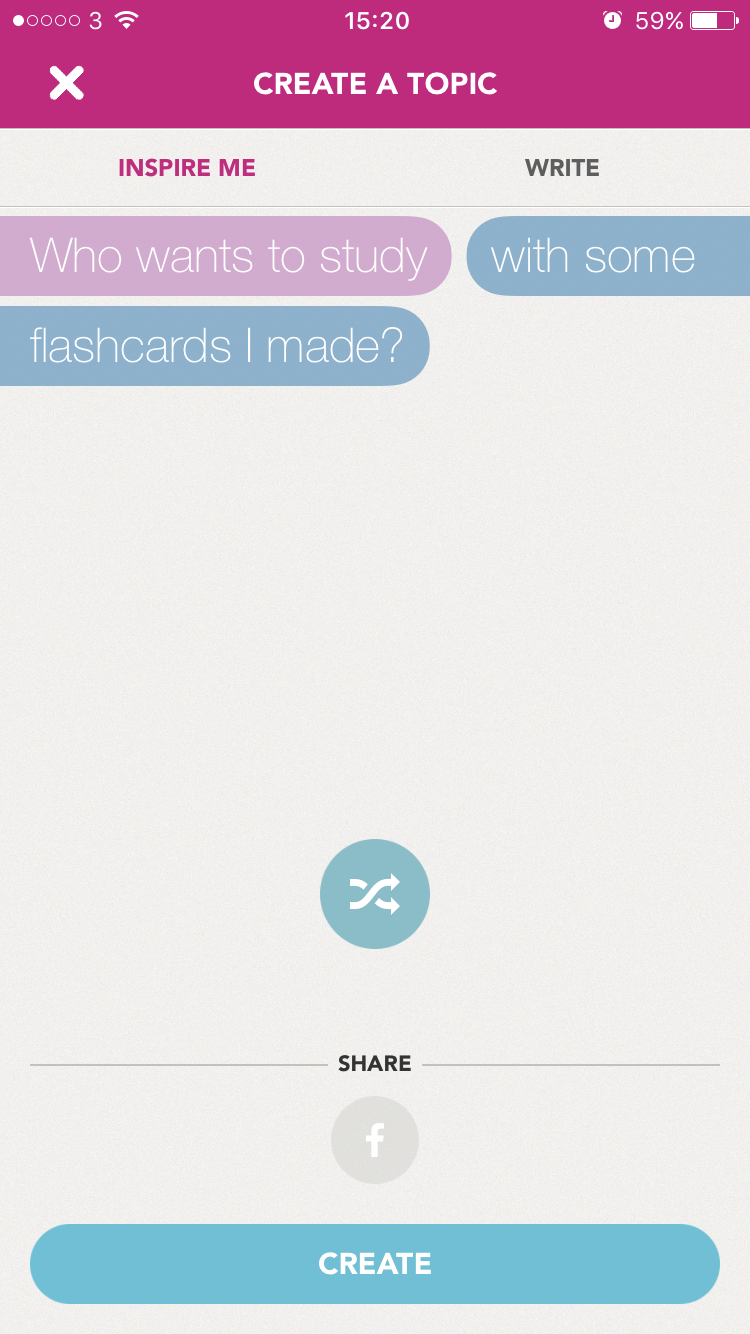
The "My Topics" section makes you an interesting exchange partner.
- Check out the Settings area in your profile to decide who should be able to find you.
- Select something fun you want to talk about in My Topics. The app offers lots of fun and inspiring prompts, or you can make your own conversation starters. These will be seen by others when they find your profile.
- Go into About Me to make sure you're happy with your profile picture and information.
Finding Language Exchange Partners
The partner search is the most important part of any good exchange app.
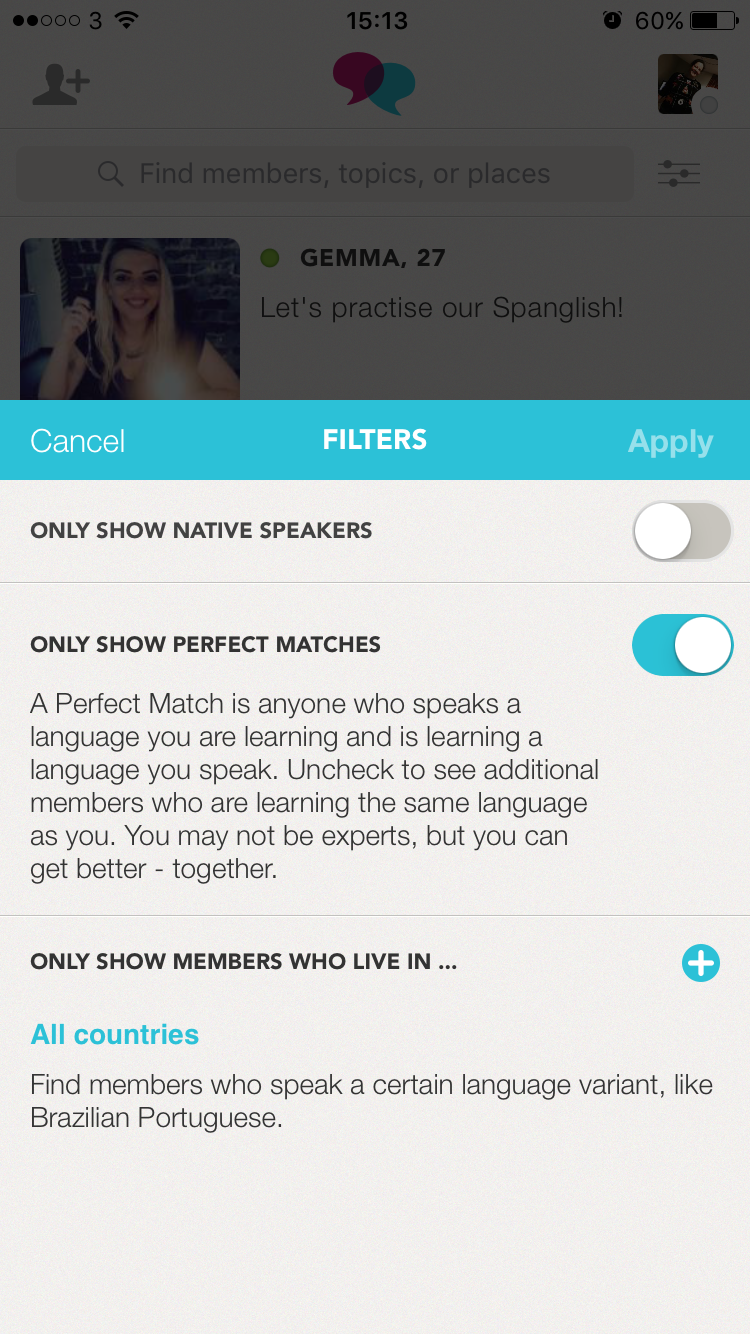
Tandem suggests people for you based on your language, but there's also a search bar. I had lots of fun on there, as you can search for anything. I tried
- Westworld
- hockey (nothing)
- Manchester United (SO MANY PEOPLE)
It was easy to find Welsh speakers on this app, as well as people learning each one of my interest languages. Remember not everyone needs native speakers.
The search is automatically limited to those users who are some kind of match for your languages, so you save time.
Tandem feels a little like a dating app. The personality of every profile comes out so well through that deeper connection with photos, likes and information. And to top it all off, you can leave comments on a language partner's profile to recommend them and tell others how nice they are.
All in all, I would say 5/5 - well done Tandem for your search experience.
How to Chat With People on Tandem
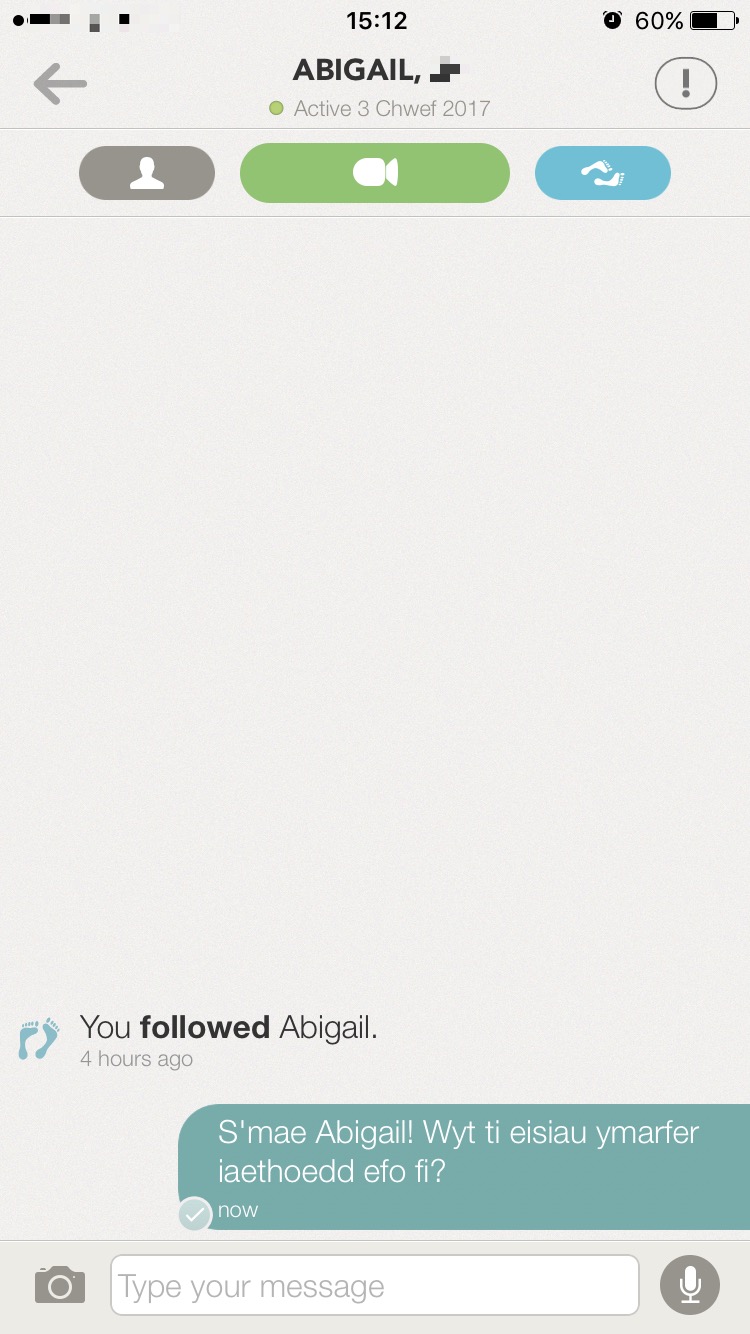
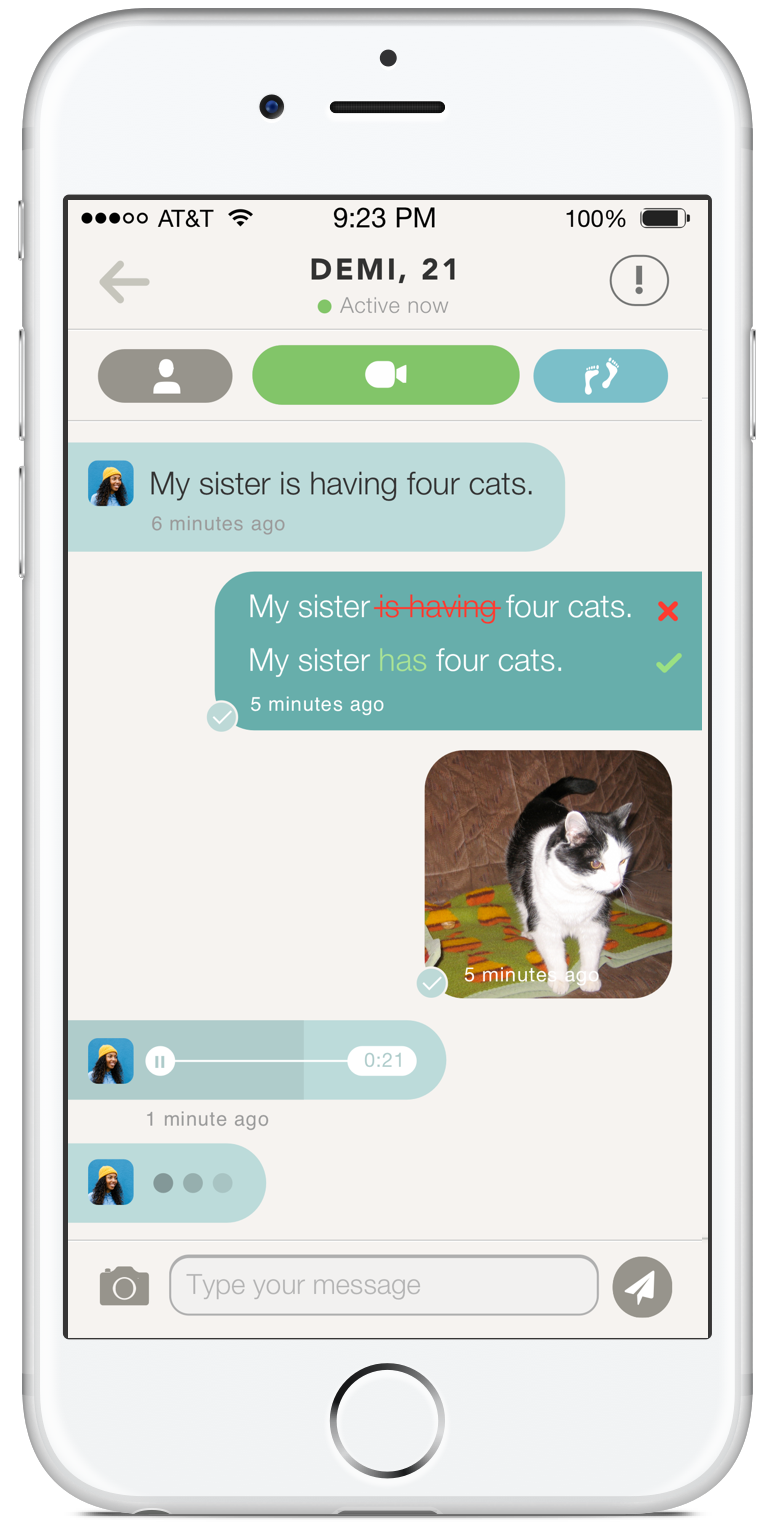
Chatting to someone on Tandem is straightforward. You shoot them a message through your profile. This app has the closest experience to texting that I've seen so far. You can send texts and voice messages, phone them on VOIP or go all out and make a video call.
I like how Tandem has simplified the design of its chats to remove anything you don't need.
Unlike other exchange apps, there is no in-app dictionary, but you can correct your partner's sentences easily. Chats are a friendly experience , making languages a tool for connecting with people. And the community moderation made me feel more comfortable sharing pictures and voice messages, too.
If you find someone who looks interesting and you're feeling shy, you have the opportunity to follow their updates and maybe contact them later. I am not sure how useful this feature is in practice, though.
Make Language Exchange Friends Without Losing Interest
If you go ahead and partner up with someone on Tandem, here are a few tips for making the process easier for you both:
- Arrange a time to meet and video chat or send each other longer messages on a regular basis. If it's a calendar appointment, you won't ignore it as much
- Allow for each person to ask a lot of questions and answer in longer sentences so you don't run out of things to say
- Prepare some interesting and unusual topics to talk about, for example these ideas on the Tandem blog:
- Follow Up each new exchange session by reviewing vocabulary and making sure you follow the acquire-memorize-review technique (I describe this in detail in The Vocab Cookbook)
Language exchanges do come with a small cost, as it takes your time and energy to prepare properly. In a good exchange, you both have responsibility for making this a fun conversation, so get creative and make sure you put in a little effort.
I give the chat experience a 3/5 - personally I'd like more language tools, but the design was lovely.
Or if an exchange sounds like it doesn't suit you right now...
You Can Find Language Tutors in The Tandem App
The inclusion of language tutors in Tandem touches on a really important point: You cannot expect your language exchange partner to be your tutor. I love that this app gives you the option of deciding how you want to be supported in your language learning journey.
Sometimes we all need extra help. Language tutors can explain more complex concepts, tricky grammar rules and fix your pronunciation.
More about this in my article on what you can expect to pay a tutor.
I tried out the tutor process and was absolutely satisfied. There is a personal vetting process, so that tutors have to apply and show how they are qualified and experienced for offering this paid service. The profiles are also reviewed by other users, so you know what you're getting.
Some tutors offer a free trial, but to be honest I found the prices so low that most people should not have to think twice before paying. The app even takes Apple Pay, a testament to its great user experience.
One thing was weird. I know that there are currently no Welsh tutors on Tandem. But even so, the app showed me tutors for everything. I'm a language nerd, so this wasn't a low point. I found it more inspiring...I could learn Korean! American Sign Language! Polish!
I'm giving the tutors in Tandem a 5/5 - this isn't a language school, and the support level seemed perfect for the app purpose.
Conclusions: Should You Try Tandem?

When it comes to recommending Tandem, I'm giving this app a big thumbs up. 👍 It's perfect for aspiring polyglots, because the community is both enormous and very varied. The user experience in the app is the nicest I have seen so far.
Within minutes, you can start swiping and reviewing dozens of cool people's profiles. Who knows what could be uncovered...a new local friend, an exciting connection around the world? No need to leave your house - you can strike up a conversation halfway around the world without ever getting off the couch.
The tutors as a support network are a really smart idea because they keep you committed.
My one bugbear would be with the general lack of integrations - I dream of a language learning app that lets me connect to my flashcards, my other apps, and more. If it works with Facebook, surely it can be done with Memrise?
I am closing my review with a solid 4.5/5 for Tandem. This app is totally free and worth checking out.
You can download the free Tandem app right now



Struggling with listening? Discover realistic tips, challenge prompts, and the best tools for improving your listening skills as a self-guided language learner