
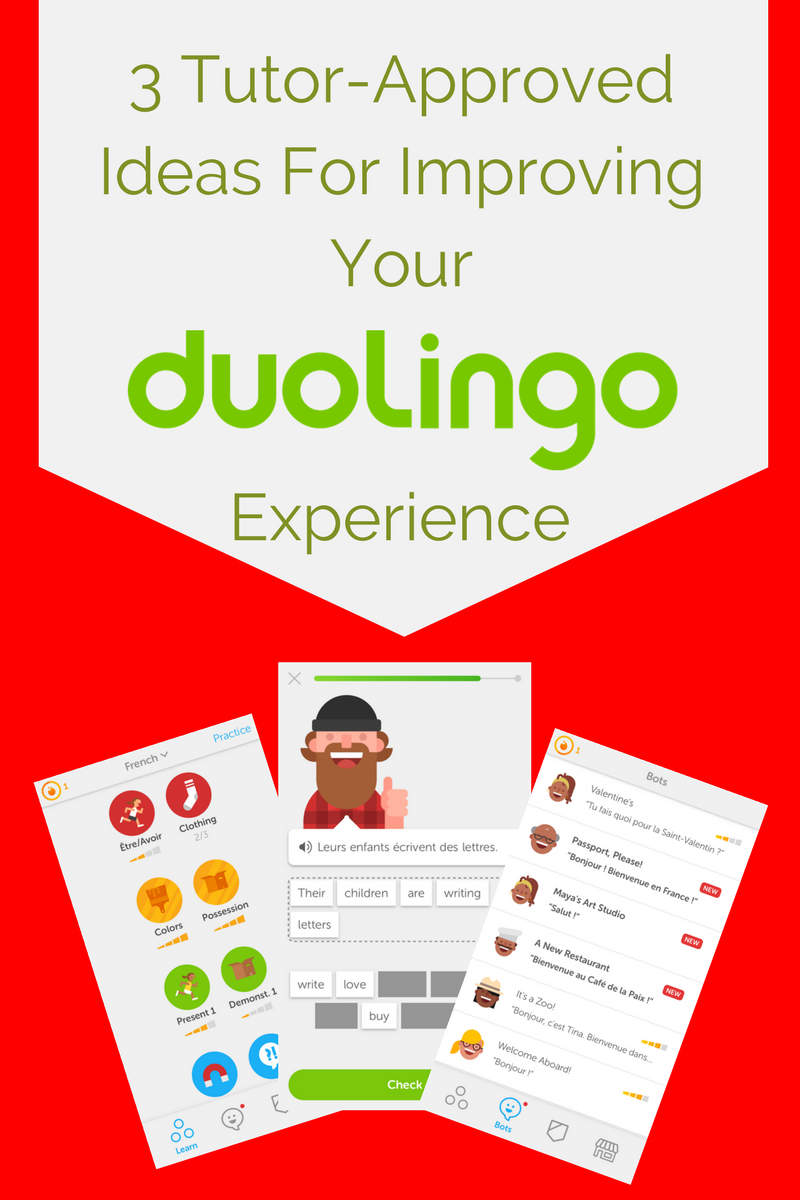
3 Tutor-Approved Ideas For Learning a Language With Duolingo
Language learning was so boring before a little owl in a tracksuit came along.
Armed with addictive streak and modern technology, today's smartphone language learning feels more like a computer game than a language lesson. And in many ways, that's a great thing.
Read on to find out my top 3 tips for getting the most out of your Duolingo time.
Language learning was so boring before a little owl in a tracksuit came along.

Armed with addictive streak and modern technology, today's smartphone language learning feels more like a computer game than a language lesson. And in many ways, that's a great thing. Did you know that every month, the world completes over 6 billion Duolingo exercises? That's a lot of language learning done voluntarily - no school teacher forcing you, no boss breathing down your neck asking "where are you with that language tree?"
Is Duolingo Good For Language Learning?
On the whole, I'm on record as a Duo skeptic. I'm a tutor, I've used it and worked with app users, and it really didn't make them "fluent". But I've come to realize that making you fluent is not the point of Duolingo.
Duolingo mobile provides structure and training in several core skills. Plus, it's sort of a productivity app, with the streaks and bite-sized lessons designed to fit into user's busy lives with ease. All in all, you get a free language-based computer game, an addition to classic courses and tutors and most certainly not a replacement.

Chat bots are a recent addition to Duolingo's courses in more common languages. I haven't seen any in Welsh yet.
I could make a clear case both for or against using this app. On the one hand, I want you to ignore when Duolingo tells you that you are "now 53% fluent" because that is laughable. But on the other hand, I've been truly excited to see constant improvements in recent years.
This app might not become any more effective in terms of teaching you language. But as users, we're becoming better at fitting a language learning app into our lives. And if you've tried it, here are some invaluable tips for raising your Duolingo game.
1) Use the Web Version of Duolingo
Duolingo's mobile app is nice enough, but it lacks solid explanations. If you're a new language learner, you might find it difficult to figure out many of Duolingo's exercises by yourself. Sometimes you are asked to construct sentences, even though the app never taught you how to do these things. In other exercises, a new topic is introduced and can feel overwhelming for app users.
The Duolingo web app is a different story and comes with Personally, I don't use the web app much - Duolingo is a mobile experience for me and I enjoy learning away from the desktop (more about how I learn in my Welsh language updates). But if you're a committed user and want Duolingo to be your main resource, here are 3 awesome things you will find in the web version:

Explanations in Duolingo's web-based interface
The web version offers a fun practice option called "Timed Practice", allowing you to challenge yourself against the clock.
The ability to use the full keyboard and type out each of your answers, helping you to increase your spelling skills.
Explanations 👏! Duolingo web offers an extended "Tips and Notes" section. There are explanations, tables, and even references to which textbook unit you can use to train the same exercise. The content isn't uniform and varies by language, because Duolingo courses are partly created by volunteer experts in each language.
2) Use The Duolingo Skill Tree as a Guide
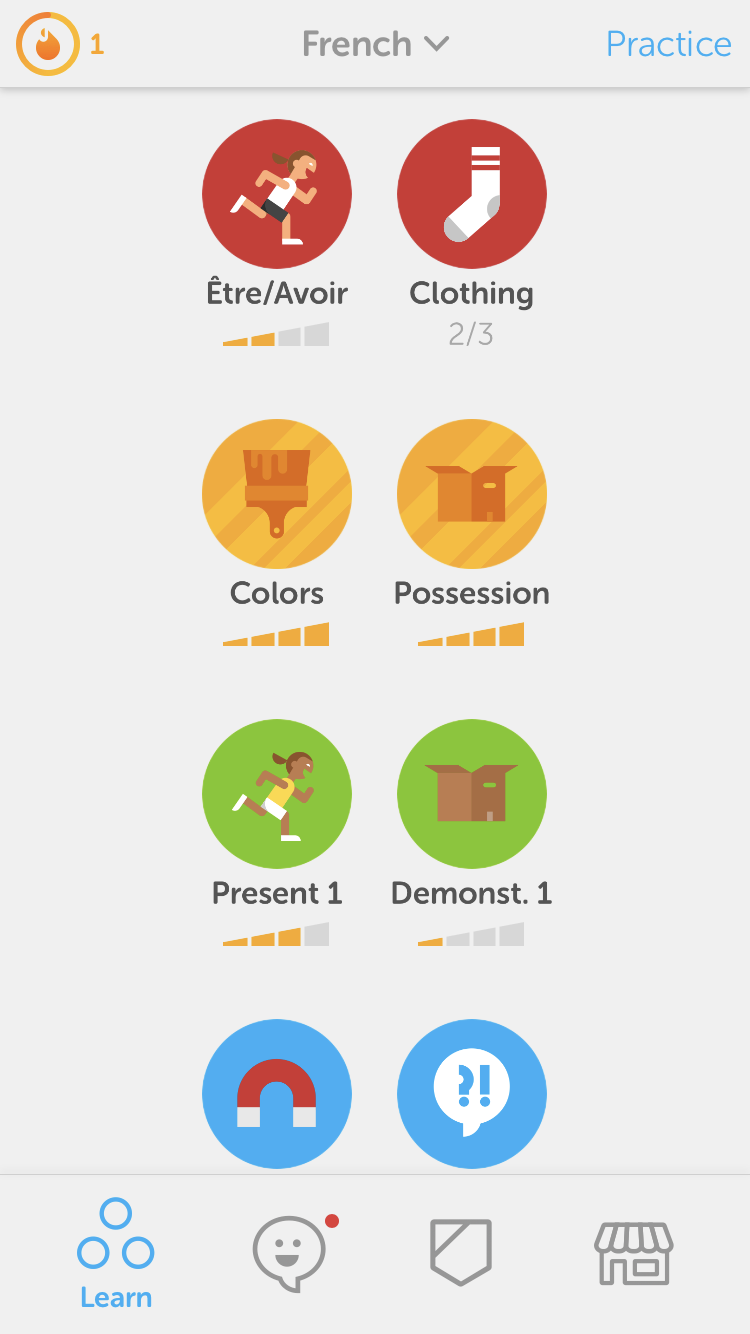
The Duolingo Skill Tree
The skill tree is a the heart of Duolingo and structures it in a way that's quite similar to textbooks. So using the Duolingo setup as a guide, you can let your own questions guide you. Have a classic resource available to answer those questions - why not outside of Duolingo?
A few resources you could try are grammar books, textbooks, podcasts, online courses, language tutors, and even social media. You can read recommendations for more language learning resources in my Resource Guide when you sign up to the Fluent Cool Kids Club.
If you're wondering about the cost of extra books, I recommend checking out your local libraries and charity shops. You're more than likely to find resources for pennies.
Related: Watch My Talk "What You Need to Know Before Spending Money on Language Learning" on YouTube
3) Take Duolingo For What It Is
Duolingo is a language learning app, nothing more and nothing less. In many ways, this makes it perfect for casual users who want to fit in a few minutes of practice at different moments in their day.
It's certainly not a waste of your time if you work your way through a few lessons, and there are dozens of great advantages of using Duolingo. It's cute, it's a fantastic performing app, it's supported by language communities.
If you're a beginner and learning your first or second foreign language, I think that the web version can be your genuine "digital language textbook". But don't rely on it solely and start adding in other resources very early. A good language learning routine is built on habit, human contact and variation in resources.
Do You Use Duolingo?
Are you happy with the little owl? Or does it make you want to howl? I'd love to hear more from you in the comments - tell me which app version you're using!
And for more guidance on language learning apps, join our Fluent Language Learners Facebook group, where I've got a video in the archive for you.
12 Ideas For Making the Perfect Language Learning App
As a language writer, it's part of my job to look out for new trends and developments in language learning. There are so many new apps released every day, and the language learning market is huge.
What makes a good language learning app?
Lanuage learning with an app only is a tall order for anyone, learner or teacher, and different users will look for different results. The following list is based on what I believe makes a good language learning experience, regardless of what the marketing of the app tells you about how it is going to make you fluent instantly.
The best apps:
- focus on doing one thing and doing it well, instead of claiming that they can teach you how to be awesome at listening, reading, speaking and writing AND grammar
- deliver on their promises
- keep your attention
- run well and focus on allowing you to learn instead of piling on features that only slow your phone or tablet's performance
- understands that you're often looking at the app on a small phone screen and you work with an on-screen keyboard
- are interesting, relevant and fun when it comes to their content
- encourage that addictive quality to keep you coming back and building good habits
Of course it's impossible for me to tell you all about the million language learning apps on the internet, but before I launch into a big dream list let's check out what is popular.
Language Learning Apps: What's Out There?
Here are the current multi-language bestsellers in the Google Play and Apple iOS stores (does anyone use Windows Mobile?):
Course-Style Apps
- Duolingo
Duolingo is unbeatable, and I've already covered why it's not perfect. Interestingly, Google lists this as a "brain training app", not a "language learning app".
- Mango Languages
Mango requires that you access it through an account that's linked with your school or public library. A fantastic language selection, cute interface and standard sentences to teach you the language basics.
- Babbel
Similar to most of the above, Babbel adds speech recognition to the useful sentences of Mango and the gamification of Mango. Claims to have "reinvented language learning" in the introduction. The result of reinvention? Learning through vocab-based recall learning with flashcards and games. I would recommend this over Duolingo just because its dialogues felt more useful and real.
Vocabulary and Memorisation Apps
- Memrise: The Ultimate Memorisation App
Memrise focuses on teaching through flashcards and spaced repetition, with user-sourced audio to accompany the words you're learning. Excellent for vocabulary training, but less effective for learning or practising sentences.
- Vocab Express
Mixing flashcards and old-school vocabulary lists, the strengths of Vocab Express lie in focusing on keeping things simple. There's a leaderboard for those who compete with classmates. User reviews do bring up some room for improvement when it comes to the keyboard layout and saving your progress.
- Flashcards+
This one has an Apple Watch integration and allows deck sharing.
- Lingualy
The Lingualy app aims to combine flashcards with what you read on your smartphone to help you look up words in news articles and save them for revision.
The Language App Wish List
If you're out there and you're making a language learning app, here's what I think it should be like. I don't expect the perfect language learning app to be released any time soon, but perhaps one or two of these features rings a bell and you can build it into yours?
Or even better: Do these apps exist already? Do you know about them? If yes, then please leave a comment and tell me all about them.
1) Polyglot Smartphone Keyboards
I really don't like having to change on-screen keyboards between all the languages I'm learning. I text in German and English, I want to practise French, and ultimately my aim right now is to use the Welsh I learn. So that's four languages, plus the emoji keyboard. On my iPhone, this means I spend a lifetime pressing that little world button and getting annoyed at autocorrect.
I'd love the app of my dreams to do more than switch off autocorrect and the keyboard, and instead give me a better keyboard changing experience.
2) Trivago For Dictionaries
Trivago is a hotel room search engine, similar to Kayak for flights or Indeed for jobs. I would be so happy if there was an app combining the great things about several dictionaries together. The accuracy of LEO with the authority of Oxford or Duden, combined with the real-life examples of Linguee or the versatility of Wordreference. Then throw in Forvo so we can pronounce it. Simply enter a word and choose where you would like to look it up to get the right information, a reliable translation, a pronunciation demo. How awesome would that be?!
3) Placement Tests at the Beginning
It's not easy to design a good placement test, which is why most apps don't do much more than asking you "What's your level?". Duolingo obviously approaches this as "test out of a skill", which is as close as I have seen to a really great placement test at the start. There is nothing, however, that compares to the thorough experience you get at the start of something like Rosetta Stone. But I think apps could do better, especially when working together with language test designers to create a placement test
4) Enhanced Reading
The Lingualy app I mentioned above has a really intesting idea in my opinion. Support when reading in a foreign language needs an arsenal of level-appropriate texts and a flashcard system that talks to the best flashcard apps out there. I dream of a Kindle dictionary that can look up the pronunciation of my word on Forvo and then add it to Memrise for me.
Reading in a foreign language is not about inventing more and more apps, but about connecting the best ones together.
5) Language Exchange + Flashcards
I think HelloTalk is an excellent take on language exchange, but on several occasions while using it I wanted to put what I learnt into Flashcards or into my notebook. The dream app would be able to help me out there and offer an integration with one of the great flashcard apps. This could be as simple as exporting a file.
6) Calendar Integration
One of the biggest challenges of language learning is committing to doing something every single day, and my dream app would help a learner out with the habit-forming challenge. There are some great apps out there that help with this, for example coach.me, but I've not seen a language-focused one.
I’d like to see a daily checklist, a scheduler or daily timed activities. No matter if this is for flashcards or spending 10 minutes chatting to people via language exchange, there's nothing like ticking a box to say "I did this!".
What's Your Perfect Language Learning App?
Now it's your turn! If you're a developer feeling inspired by one of these ideas, feel free to take them and turn them into...not cash, but a really fantastic language learning app.
If you're a language learner, what do you think about these ideas? Do you have a favourite app? Do you have dream features you'd love to see from it?
Leave your message in the comments below - I can't wait to hear what you recommend!



Struggling with listening? Discover realistic tips, challenge prompts, and the best tools for improving your listening skills as a self-guided language learner