

What Is Fluency, What Is Mastery...And How Do You Get There?
This week on the Fluent Show, Lindsay and I went deep into what fluency is, adding in a few other words that often feel awkward to use. It's a great conversation, and will provide you with a new sense of clarity and inspiration, so you can confidently go out there and do what you need to do: learn languages and feel great about it!
If there is one question that haunts language learners, it must be this one:
"How many languages do you speak fluently?"
Often asked innocently by people who are interested, it can strike terror in your mind. Will they test you on your languages? Are you allowed to say you're fluent if you still make mistakes?

Oof! Those are heavy questions, and none of them are difficult to answer. Even for those of us who have studied for decades, the question of fluency still causes confusion.
This week on the Fluent Show, Lindsay and I went deep on those questions.
It's a great conversation, and will provide you with a new sense of clarity and inspiration, so you can confidently go out there and do what you need to do: learn languages and feel great about it!
Press play now, and don't forget to leave us a comment below to share what you thought of the show.
Podcast Notes
Our warm-up discussion revolved around the labels we see in our space, and whether they apply to you.
If You Travel And Work On A Laptop, Are You a Digital Nomad?
A digital nomad is a person who travels and works online, right? But for some reason, the term can feel icky to us. In this week's episode, we discussed how some words walk that line between being descriptive and defining.
When being a digital nomad (or "polyglot", y'know..?) becomes a label that you like to put on yourself, it's worth taking a second to consider who that YOU really is underneath. After all, at some point everyone might want to stop travelling and settle up with a nice cat, just two target languages instead of 12, and a garden and a veg patch. And that is super cool, because that's you.
If you thought that this discussion of who YOU are was deep, wait until you hear what we moved on to!
How Will You Get Fluent? How Can You Achieve Mastery?
I have received several messages from listeners recently, asking the Fluent Show to weigh in on how we can achieve goals such as fluency and mastery. And interestingly, each one of them asked another question:
"How do I know when I have achieved it?"
What Is Fluency In A Language?
Our first question came from Evan, and he wondered when one can consider oneself fluent in a language. In the question, Evan considered quite a range of definitions from "making no mistakes" to "dreaming in your target language".
Our discussion starts off with this fluency mindmap I drew:
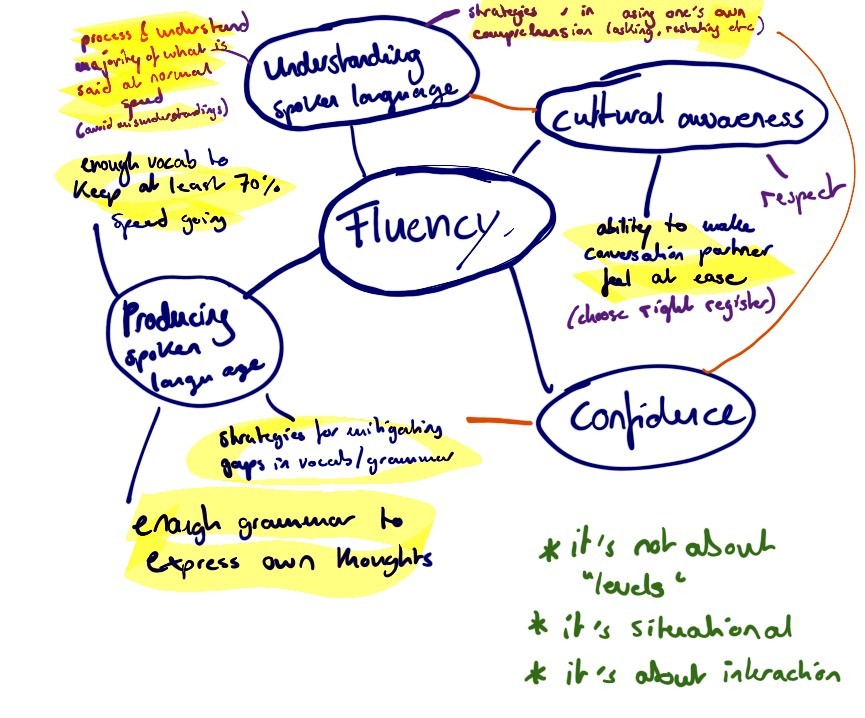
Bet you love my handwriting. Here's more about our take on fluency..
- "Fluency" implies speed and ease when using a language, which comes out most strongly when you're interacting with someone in person
- Usually interacting with someone in person means speaking
- The concept includes intercultural awareness that helps you put your conversation partner at ease and how to interact in a way that is appropriate for their style
- It implies confidence, meaning you have strategies to keep a conversation going
Fluency In A Language Is A Moving Target
Ultimately, your own definition of what fluency means to you is personal and unique. We believe that there are different points of fluency. These can relate to your goals and the purpose of your language learning. They can relate to what you are aiming for next, or what you're finding around you right now.
Just as life is forever changing, you may constantly evaluate your requirements for being "fluent".
What Is Mastery Of A Language?
Moving on from the fuzzy concept of fluency, we turned our minds to "Mastery" and how it is different from the former.
Madeline wrote in and asked:
What counts as mastery? Does every native speaker even possess it?
Our Thoughts on Mastery
This one was even trickier to nail down, believe it or not!
- Mastery is a point of pride and confidence for many, something we actively aim for and
- The word implies comfortable command, being able to use a skill (i.e. a language) with ease
- Mastery includes understanding beyond the literal meaning of the words in a target language
- But it can also imply superiority, like being the best out of everyone who uses that target language. Which isn't quite right in this context.
- For me, mastery is about more than just conversation and personal interaction. It encompasses the four core skills: listening, speaking, reading and writing
Our Conclusion
Both fluency and mastery are wonderful concepts to consider, but as Lindsay says, she is happy to not be fluent or masterful in every language. There is so much to discover and learn, and we can take a lot of joy out of appreciating the way that's ahead of us.
Yes, you can always get better. But there's no point in stressing about whether you are a fluent master - walk your own path, keep moving forward, and allow yourself to feel fluent on your own terms.

#clearthelist April 2018: Now I Know My Welsh Language Level
Catch up with my language learning goals and strategies with #clearthelist

Welcome to my latest language learning update through #clearthelist. Clear the List is a support and accountability blog group sharing monthly language learning goals. I have got LOTS OF GOALS this months, so let's get going.
What Happened in April 2018?
First of all: I went to Wales!
My big April goal was Book a day in Wales: SMASH SUCCESS PARTY, I went and attended a 2 day Easter Course in Wales in early April. You may have heard about it on the podcast I recorded there, which I was so happy with. The course I attended was awesome, so great to spend 2 days in the classroom with others who are also at my level in the language.
Talking of level, I have more good news. I chose to sign up for the course at intermediate level (“Canolradd” or roughly B1). I was not convinced, thinking I’m actually a little lower. But having taken a short self-assessment test, I figured I might as well be ambitious and downgrade if necessary. Turns out, I didn’t have to downgrade.
After 2.5 years of self-study I now know B1 level Welsh! This is so exciting, because I’ve never 100% self-studied a language to this level before. I still enjoy learning the Welsh language so much, and have a long way to go.
If you’re also a self-studier, see if there’s a top-up course like this available in your target language. They are great fun, and the tutor knew exactly which parts learners at our level are struggling with the most.

German Course Creation
I am currently working on a new German course. A lot of my working time was spent working with this story and creating resources for our students. German Uncovered in collaboration with Olly Richards from I Will Teach You a Language, and we're coming close to opening the course for the first time.
The Fluent Show

On the podcast, there were some great episodes during April, but the most exciting one has to be the episode Welsh is Not English.
I had never tried this “radio documentary” style of editing and was so proud of the result. Give the show a listen and subscribe for more episodes if you like it. The Fluent Show is now available on even more platforms including Spotify and TuneIn Radio.
Most “Fun Fact” of The Month
Welsh has 50 ways of saying yes or no. I can correctly use about 1.5 of them. Sigh.
How Did It Go With My April Goals?
In addition to the 2 day course, I also had some other goals:
Have 3 natural conversations with my tutor/exchange partner and listen carefully: Ohh gosh, oh my, I missed the one session I’d booked and never even rescheduled. So that’s 0 out of 3.
However, I had conversations in Welsh while travelling there. I actually tried to use Welsh in 3 or 4 shops and restaurants, and couldn’t find any server who actually knew the language. So my conversations were with enthusiasts, i.e. all the people you heard on the podcast. Thank you so much to Gavin and Steffan, Morfydd and Janet, for speaking Welsh to me.
Practice Welsh listening by playing with no-subtitle TV, and reviewing the Pigion podcast vocab before I listen: I didn’t watch any good TV, I need to stop even setting this goal as it’s just not what I get up to right now. But I listened to 2 Pigions and made good use of the vocab supplied with the show.
Write a longer Welsh poem and continue playing around with different poetry formats: I managed one longer poem, but it was supremely nonsensical. Well, better than nothing, right?
Finish my easy reader novel and read all of the latest Lingo Newydd magazine Yep! I finished Bywyd Blodwen Jones, my first ever book in Welsh! Also did well with the magazine, which continues to be such a joy in my house. Great to add a bit of Welsh over breakfast.
Daily Contact Goal
In April, I logged 19 days of contact with the Welsh language. My most used language apps were ApGeiriaduron, Duolingo, SmartCards+, and Clozemaster. Followed by Instagram and Twitter.
Goals For May 2018
Sometimes there’s nothing special or grand to be aiming for, and those are the hardest times to keep going. It feels like “another month of the same”, without that fizzy excitement of a fixed goal.
I find that my goals get more exciting when I share them with others, and when I join a group. So it’s time to search for accomplices.
They’re also more exciting when they are a challenge, so I made sure to include challenging things in the Speaking and Writing sections for May.
Listening
Complete at least 2 intensive listens to the Pigion podcast This podcast publishes a vocab list for each show, so intensive means I’ll read through the vocab, add some words to my lists, and then listen until I feel like I’ve understood 75%. This is natural, full speed, native content. No shame in not understanding it all.
Reading
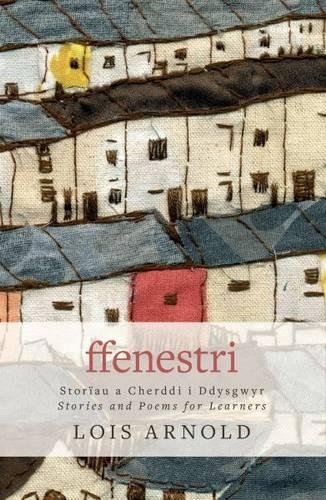
Start reading Ffenestri or Sgwp I bought two books for learners when I was in Wales, and then I got stuck because I can’t decide which one to start with. Goal: Pick one and just bloody start.
Read poetry in Welsh! Great job writing wonky poems on Instagram, Kerstin. But it’s time that I expanded my education here and learnt to appreciate what the language is like when used by a true expert. I love poetry more and more each day, and will
Speaking
Have at least 6 (!) short conversations in Welsh only This month I’m aiming to increase the frequency, not the length of my exchanges. I’ll take any opportunity from tutor sessions, friends, exchanges, and group chats using the Say Something in Welsh Slack group. By short, I mean 15 minutes (but you may make your own definition of “short”).
Look for a book club I mentioned new books above, and I am going to hit the forums at Saysomethingin and social media to see if anyone would like to have a book club meeting to chat about what we’re reading.
Writing
Write 2 language poems, and more considered ones. I have proven that I can write wacky, slightly nonsensical poetry in the Welsh language.
Anything Else?
Note to self: I need to start getting organised and booking my accommodation for the National Eisteddfod in Cardiff nice and early. I'm planning to volunteer again this year, which means a chance to speak and hear lots of Welsh.
I don’t have any goals in a language other than Welsh, but I do have something special and linguistic. to work on. I am reading several books that will help me with my general understanding and appreciation of language, and the English language in particular.
The first one is Getting Through by Roger Kreuz and Richard Roberts, a sequel to their book Becoming Fluent, which I LOVED and reviewed here on the blog (read the review).
There are two poetry books, too: Lifesaving Poems by Anthony Wilson,Collected Poems by Carol Ann Duffy. I’m also interested in finding more great French, German, and Spanish poetry. Great way to discover new worlds in my existing languages!
How was your month?
Is there anything you’re curious about? What did you learn in April? Leave a comment below or join #clearthelist to share your own language learning journey.
If you want to join the linkup for the month, hop on to Clear The List, hosted by my friends and language inspirations Lindsay Williams and Shannon Kennedy.

Welsh Is Not English: How The Welsh Language Fought Back
When I first moved to the UK 15 years ago, I thought Welsh was dying out.
But did you know that people went on protest marches and even got ARRESTED to keep this language alive?
In this podcast episode, I bring you interviews with Welsh learners and teachers, sharing their own passions for this ancient language.
What do you know about the Welsh language?
When I first moved to the UK 15 years ago, I thought Welsh was dying out. I moved to England and never considered that people in the UK speak more than English. To me, the Welsh language was a relic from the past.
But did you know that people went on protest marches and even got ARRESTED to keep this language alive?
In this podcast episode, I bring you interviews with Welsh learners and teachers, sharing their own passions for this ancient language.
Where is Wales?
Wales is one of the four nations that make up the United Kingdom. It's a small part of the UK, located on the western border of England.
It covers just over 8,000 square miles (20,722 km²) - that's about the same size as Massachusetts in the USA or half the size of Switzerland. In other words, Wales is not big.
But it's certainly old. The Welsh history begins with the Celts, and just like the bigger British island, it has a whole history of invasions and territorial fighting on its record. Here is a great timeline guiding you through the last few millennia of Welsh history.
What Is Welsh Like? A Quick Introduction
In terms of the language, Welsh is what was here first. The Celts spoke a dialect that would later evolve into Welsh, so this language is now considered a treasured part of Welsh identity.
Welsh is a Celtic language in the same family as Irish Gaelic, Scottish Gaelic, Cornish, and Manx. It's spoken in two dialects these days: Northern and Southern Welsh.
The Welsh alphabet is quite similar to the English one, with a few quirks:
- The vowels of Welsh are a, e, i, o, u, w, and y
- There are no letters j, k, q, v, w, x, and z
- There are extra consonants, namely ff, ll, rh, and ph
The Welsh letters also mutate when you start putting words together, which means that the first letter can change in all kinds of fun ways. Apart from that though, it's quite easy to pronounce because Welsh is phonetic, meaning what you see is what you get.
Find out more about how the language works and looks on Omniglot
But let's get back to our story.
How Welsh Came Under Attack
Welsh was spoken im Wales for thousands of years. But as the nation entered a turbulent period of history in the 19th century, the MPs and lawmakers in London started to wonder "why are these Welsh folks so much trouble?"
They decided that the existence of Welsh must have something to do with it, and introduced harsh measures to start eliminating Welsh from public and school life. On the podcast, you will hear from Morfydd who remembers her mother avoiding Welsh like the plague...for a pretty good reason!
Fighting For Welsh Language Rights

"I want to live in Welsh" - a campaign poster from the Welsh Language Society
So between the 1800s and the 1950s, the use of Welsh decreased and English became seen as the standard language for any part of the UK.
In the 1960s, the activist language group Cymdeithas Yr Iaith was founded. This group campaigned for many of the things that are now bilingual standards in Wales, such as road signs and official council letters, television, and customer service in Welsh.
Many members were arrested, asserting their willingness to go to court for language rights. And over time, this fight for language rights has led to significant changes in law and society. The Welsh language hasn't died out.
In the podcast, you'll hear from Steffan Webb who shares how Cymdeithas yr Iaith started and what they got up to. Until today, the Welsh Language Society remains an active protest movement and Steffan explained that they see a long way to go.
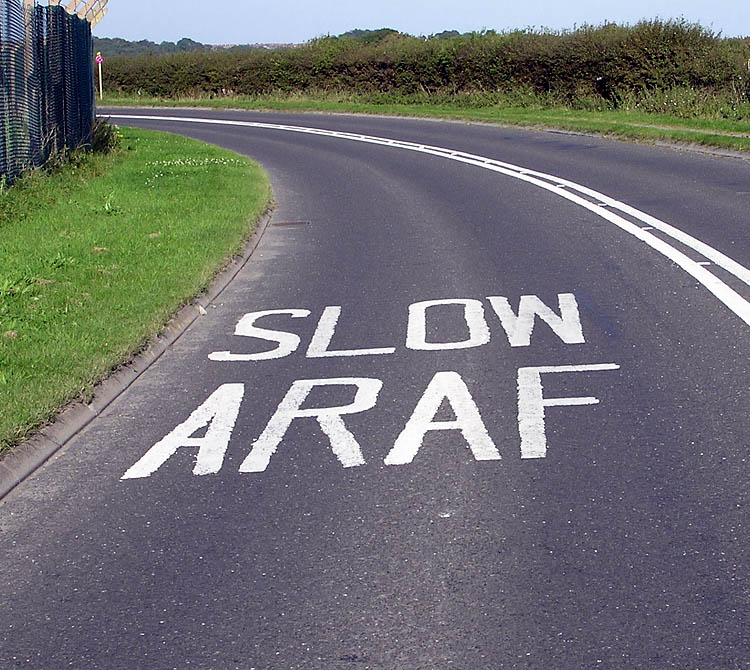
Bilingual Driving Directions
in Wales
What's Next For Welsh?
The Welsh government is a devolved government, meaning they have the power to determine some of what happens in their area. But officially, Wales is still a part of the United Kingdom and they don't get to determine which languages are spoken.
The Welsh language became an official language in Wales in 2011, with the government act stating:
This means it must be treated no less favourably than English.
Fighting For Welsh Language Rights
Welsh is now on Duolingo, and there is a hugely popular online course called Say Something in Welsh, focusing on enabling learners to speak everyday Welsh.
This means that there are independent Welsh learners everywhere in the world now, learning online just like me (read about my own langauge progress).
Do You Want To Give Welsh A Try?
Every Welsh learner becomes a part of this bigger story. If you're interested in trying the language for yourself, you can download my Welsh Starter Kit here and kick off with the resources that I used to start my own journey.
Before you listened to this podcast, what did you think about Wales? Did you already know this story of protesting in the streets for language rights?
Share your thoughts in the comments - I'm excited to hear from you.
And if you want to support the Fluent Show podcast, make sure you subscribe so you always get the latest episodes and share the story with a friend who loves languages too!

How To Get Native Speakers To Speak Your Target Language
Practice is important, but what if people keep switching back to your own language? Will you ever be able to speak to anyone if they don't even want to speak back to you?
This week on the podcast, I have got a packed episode full of tips to help you stay in control.
You may know this feeling: You've spent hours on your own pronouncing words into your phone, studying vocabulary, and when you want to practice your language with friends...they just keep switching back to English!
"Hey, möchtest du vielleicht heute Abend Tatort gucken?" - "Yes, that sounds great. I will bring beer." - "Ähhh, danke."
If you find it frustrating that your friends keep switching back to English, you are not alone. This week on the podcast, I have got a packed episode full of tips to help you stay in control when native speakers don't want to speak their language with you.

The most common issue here is for English speakers. You’re likely to meet the largest number of people who are learning English (because everyone is) and you’re one in a dozen as a learner looking for practice time.
Why Do They Do This?
- They don’t want to be rude. Most commonly, people will want to include you in their conversations and make this as easy as possible.
- They are prioritising their own learning - again, it’s unusual that you want to learn their language and they’ve been wanting to practice their English for ages, so you’re just the person they’ve been looking for.
- They’re busy. You may have chosen a person who just wants to get things done right now. You are speaking slowly and taking 3 seconds between words. You’re hard to understand. You’re looking up words in the dictionary. Ain’t nobody got time for that.
- They think this is a struggle for you and want to make your life easier. Language learning is effort, and if they see you looking up every other word they may just want to save you the work especially if you drop into English now and then.
What You Must Accept
- You can’t win them all - even if you had the perfect accent, chances are that you're still over 6 months away from having those fluent, easy, flawless interactions that you're dreaming of in your Vision Goals. That's okay. Remember that rejection is only for the moment, and only relevant to the current situation.
- You may need to be persistent. This issue will not be resolved even when you get to the higher levels in your language, because it is not just a reflection of you. It’s always about the other speaker and where they are at, so prepare to try several times and start looking for the compromise.
- You may need to hunt down a person who is the right partner for you. Especially in the early stages of your language learning journey, this may well be a tutor who can support you until you're fast and confident enough to stick with the target language.
What You Can Try
- Seek out a group - when they have a common language of interaction with each other, they are more likely to slip in and out. You can eavesdrop, join a meeting, or simply go out for drinks and let them know that you’ll try and stay in their language.
- Set up a clear language exchange or ask them for temporary support such as being 100% in their native language for just 20 minutes.
- Improve your local flair - this one is great for service and shorter interactions, for travel, and for talking to in-laws. If you are regularly frustrated because you can’t even manage to small talk for 2 minutes before there is a switch, then you’ll get a lot out of improving your language skill so you can fake it til you make it. 2 ways to do this: Pronunciation perfection, and stock phrases (fillers, standard constructions).
- Wait until you’re more confident and a little faster. You are going to get there. Until then, the person who keeps switching away from your target language just won’t be the right person to talk to.
- Go with it. Think bilingual conversation, not “battle lost”. Make it fluid, and even if they switch into English you can stay in your own target language and send a signal.
As you've seen there are different ways of dealing with situations like these. Remember to employ empathy when you are speaking to any native speaker of your target language. Consider their own perspective and the situation they are in. Often, it goes a long way just to mention that you are a learner and to say "I could use some practice, can we speak your language?".
Have You Had Good Luck Practicing Your Target Language?
Leave me a comment or say hi on Twitter to share your own experiences of speaking with native speakers. Who switches to English? How have you dealt with it? I'm looking forward to hearing from you guys.
EPISODE SPONSORS
EPISODE LINKS
- How To Get Germans to Speak German To You by Fluent Language
- What's The Secret To The Greatest Language Exchange Ever? by Fluent Language
- To Sell Is Human: The Surprising Truth About Moving Others
- "Make Your German Sound Amazing" Mini Guide with 26 Key Phrases
- The Secret to Getting Natives to Speak Spanish with You | NachoTime Spanish

#clearthelist March2018: Update On My Welsh Language Progress
Learn how I am studying languages in this monthly goals update. This month marks the first time you're hearing about my Welsh progress since like 2016.

Welcome to a new kind of blog post here on Fluent - I’ve long been aware that my last personal language update was about a year ago and this blog should include more of that good stuff. So this month, I am joining Clear The List, a monthly language strategies update.
You may have heard me talk to Lindsay about it on the Fluent Show - Clear The List is open to everyone and gives us support and accountability by sharing regular language learning goals and stories.
Every month, I set my goals using the Language Habit Toolkit worksheets and I put them up behind my computer screen to keep them in mind. And this month, I had a LOT of them in Welsh. The mindset was not to expect too much from myself, but to remember the direction I was aiming for.
What Happened in March 2018?
Up to the 11th of March, my working life was dominated by sharing and co-running the absolutely wonderful Women in Language conference. If you were there, you’ll know that we had a great time.
Click here to read my full debrief of Women in Language, which includes
- the 5 most important lessons I learnt at the conference
- some behind the scenes details
- tips for you on what to do if you also want to be a speaker
- lessons learnt on what we’ll do differently next time.
Special Guests
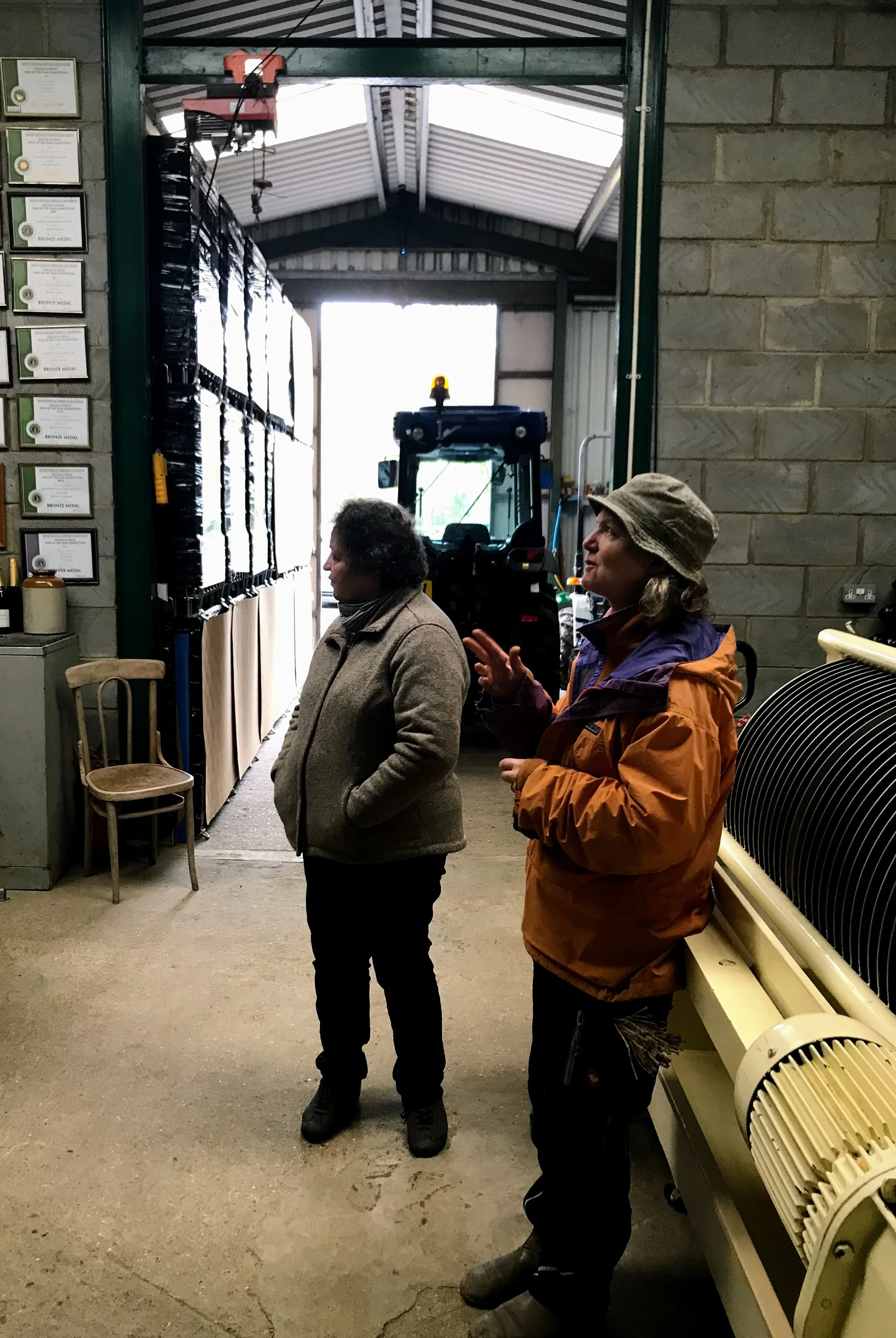
English Vineyard Visit
Right after the conference I experienced another unusual week with lots of spoken German as my parents came to visit me in Canterbury. We had a great time pottering around and I did my usual interpreting job and listened to my husband’s German.
If you are visiting Canterbury and want to practice your German on a city tour, do give me a shout through the contact page.
Highlight: A visit to an English winery, showing me that I know more winemaking vocab than I expected. My parents are winemakers, so this always seems to happen when they’re around.
One more unusual event was the news that my favourite ever English teacher had passed away. He was one of a few English teachers who influenced and inspired me as a teenager, spoke lots of English in class, and shared the literature he loved. What a reminder to appreciate those who inspire us.
The Fluent Show

March marked one month since the Creative Language Learning Podcast became the Fluent Show. Thank you so much for listening!
Here’s my favourite episode from this month: In Language, Are Apps All Amazing? Are All Apps Amazing?
My Welsh Goals For March 2018
With so much going on, did I even get ANY language study done?
Contact Goal
On an everyday basis, I have one important goal: Have contact with my target language. So I have a lot of mini-sessions on Duolingo, Clozemaster, with flashcards, with vocab lists. I read tweets in Welsh, look out for books, anything. All these different strategies add up to consistent slow progress, but they are the basis for all other goals.
I track my contact with Welsh using the Streaks app on my iPhone. In March, I logged 22 days of contact.
Here are the Path Goals I set, and how it went:
Listening
Watch S4C every other day for 10 minutes: Did this about three times. I’m not sure my devices have S4C set up to be accessible as easily as possible. Also, 10 minutes is an awkward length for a TV show. I did watch some YouTube clips, so I’ll take that into account as a goal format.
Listen more when I’m having real conversations Listening is the conversation habit I always need to bear in mind. I had one tutor conversation in Welsh this month, and I did shut up and listen to her a little more than usual. A good job with room for improvement.
Transcribe 1 Song from Listening What was I thinking? Not really a goal I’ll go back to.
This month, I resubscribed to the Pigion podcast and listened to the weekly episodes. I discovered that they provide a vocab list with each episode and reviewed the vocab before I start the episode.
Speaking
I wanted to work through the Sylfaen (Foundation Level) exam questions to practice speaking at a higher level, but found the exam paper so boring that I never went back to it. But on the positive side, I feel confident that I could tackle all of the questions on it, so I’m now definitely on that level or even further ahead.
My other goal was to get to 30 minutes all-Welsh conversation, so my tutor session was a 60 minute time slot, and we had nearly a full hour of Welsh conversation. Very exciting! ✅ I also got to the halfway point on Say Something in Welsh level 2.
Reading
Read articles or 1/2 book page in Welsh every 2 days. The goal here was to acquire new vocabulary, and build up my reading capacity to “more than a tweet”. I don’t think I read enough, partly because I don’t know where to find easy Welsh articles online.
Writing
My goal was to write 1/2 a page and share it with my tutor 3 times. This is where the MAGIC happened. Inspired by one of the talks at Women in Language, my writing practice evolved to include poetry in my target language. It’s really fun - one of the best ways I’ve found to use Welsh creatively.
I haven’t shared with my tutor yet, but I did post the poetry on Instagram with #languagpoems and I’ll keep going.
My other goal was to complete Chapters 7-9 in my Grammar exercise book - I’m halfway through chapter 8, so that one’s trucking along.
Goals For April 2018
In Welsh: My listening skills are a little behind and I don’t understand as much as I would like to, so the focus will again be on this core skill so I can get into a routine.
My goals in Welsh are:
Have 3 natural conversations with my tutor/exchange partner and listen carefully: My next tutor session is already booked so I reckon I can smash this one and I’ll continue aiming for 45-60
Practice Welsh listening by playing with no-subtitle TV, and reviewing the Pigion podcast vocab before I listen: These are about listening comprehension, the area I need to improve right now.
Write a longer Welsh poem and continue playing around with different poetry formats: Last month I tried a Haiku. Maybe this month I’ll attempt poetry that rhymes. I’m loving my poetry focus this month and am also reading more of it in English and German.
Finish my easy reader novel and read all of the latest Lingo Newdyy magazine - these are all offline, can anyone recommend easy Welsh websites?
Book a day in Wales: I keep looking at this list of courses and not booking, even though they’re so cheap. Time to dive in!
One Last Thing: Other Languages
This month, I also dabbled in Swedish and spoke a lot of French. I’m still on the hunt for my new language to play with.
Swedish was the first language in which I've tried an official Memrise course and I'm so impressed. WAY better than the usual.
So now we’re caught up, let me assure you that future Clear The List articles will be a little shorter. I will continue setting goals using the framework of 4 core skills, and I always use the Language Habit Toolkit to set and track quality goals that will challenge me without driving me crazy.
Is there anything you’re curious about?
How was your month?
 \
\
If you want to join the linkup and share your own goals for the month, hop on to Clear The List with Lindsay Williams and Shannon Kennedy. Would love to see what you’re up to!



Struggling with listening? Discover realistic tips, challenge prompts, and the best tools for improving your listening skills as a self-guided language learner