

9 Unexpected Places To Find Real-Life Language Partners
How cool would it be if you could find real life language lovers to meet up with, learn languages together, perhaps even go to class or see a show in another language? Heck yes!
In this article, get few practical tips to help you reach out and connect with your new language squad IRL.

When you’re a solo learner, the internet plays a huge role in your language learning routine. You use online resources like YouTube, courses and apps. You find cool people who share the love of language on polyglot forums, Facebook Groups and Instagram.
But how cool would it be if you could add a few real life language lovers to your squad of #polyglots? You could meet up and encourage each other, share the latest tips, cook a meal or go for a multilingual walk. Honestly, how do any of us live without wanting such delights!
You may be reading this thinking there’s no way you can find another person in your area who is learning the same language as you.
But are you really the only linguist in the village?
Here are some ideas for finding people off-screen who share your passion for learning languages.
Who To Look Out For
Before you bound out into your street armed with a dictionary and the latest edition of El Mundo expecting to bump into your new Spanish exchange partner, you need to make a profile of all the kinds of people you’d love to hang out with.
Your online network can give you hints of the kind of people you like to find. If you bloom in language exchanges, look for similar arrangements offline. If you love to read or watch the story of other language obsessives, add them to your circle. And if you follow 200 linguists on twitter, that’s another great hint for who you’d blissfully share a coffee with.
Looking at all that, it’s clear that casting a broad net will pay off. Stay open to all of people who are on a similar path to yourself, and don’t underestimate the power of a network.
I was always going to mention the dating analogy (just like we did in this podcast about having the best ever language exchange), and it’s a helpful one to consider. So here goes: Don’t look for the future life partner, and you’ll be most likely to bump into them.
Start By Asking Around
The first step is to start by mentioning your language love wherever possible, to more people than you think will want to hear it. It’s like the first rule of advertising: make sure people know what’s up!
In small talk, try to weave in that you are learning your language. If they are interested, you can mention you’d love to have a chat partner or you’ve been wondering if other people might be interested. You never know, their network might turn something up.
A Few Places To Start
Now that you are ready to embrace the many different ways a language lover may pop up in your life, here are a few places to start looking.
Meet-up Groups
Finding a local meet-up group is relatively easy, funnily enough because many groups are listed online. Here are 3 sites to check out:
Meetup.com
The classic website for local meet-ups, where you can join a few groups and start going to meetings.
Eventbrite
Eventbrite is known as a ticketing website, but browse around your local area and you might well discover a lot more, like business networking and free lectures.
This social media giant is a big player when it comes to finding local groups. Use the search bar or browse around its recommendations. I’d recommend starting your search with the local events, and checking out which groups organise them.
Local Events
Events include talks, festivals, open lectures, trade fairs, and conferences. Choose to go to something new and look out for cultural or internationally themed events.
Here are a few examples:
- Cultural celebrations like the Chinese New Year
- Travel talks about a specific part of the world
- Food festivals where you’ll find lots of international cuisines
- Language Days or Cafés like this one
- Political demonstrations and debates
- Taster lectures for starters of other languages (if you’re tempted, your kinda people will be too!)
If you live near a university, look out for the many different events organised by international and country-specific societies. And if you are religious, look out for friendly faces in your local church.
Anywhere people gather can be the place you meet your language buddy.
To Find Speakers Of Your Target Language:
Ask yourself where your target language speakers might want to go if they’re staying in your area for a while. International students may look for churches or business lectures, or a Latin American expat might attend local Salsa nights. The French speakers may come to Pilates classes, but probably won’t be found at a French learner’s event.
Have you made a language learning friend away from the online world?
How did you guys meet
Share your thoughts and stories in the comments below!

How To Get Native Speakers To Speak Your Target Language
Practice is important, but what if people keep switching back to your own language? Will you ever be able to speak to anyone if they don't even want to speak back to you?
This week on the podcast, I have got a packed episode full of tips to help you stay in control.
You may know this feeling: You've spent hours on your own pronouncing words into your phone, studying vocabulary, and when you want to practice your language with friends...they just keep switching back to English!
"Hey, möchtest du vielleicht heute Abend Tatort gucken?" - "Yes, that sounds great. I will bring beer." - "Ähhh, danke."
If you find it frustrating that your friends keep switching back to English, you are not alone. This week on the podcast, I have got a packed episode full of tips to help you stay in control when native speakers don't want to speak their language with you.

The most common issue here is for English speakers. You’re likely to meet the largest number of people who are learning English (because everyone is) and you’re one in a dozen as a learner looking for practice time.
Why Do They Do This?
- They don’t want to be rude. Most commonly, people will want to include you in their conversations and make this as easy as possible.
- They are prioritising their own learning - again, it’s unusual that you want to learn their language and they’ve been wanting to practice their English for ages, so you’re just the person they’ve been looking for.
- They’re busy. You may have chosen a person who just wants to get things done right now. You are speaking slowly and taking 3 seconds between words. You’re hard to understand. You’re looking up words in the dictionary. Ain’t nobody got time for that.
- They think this is a struggle for you and want to make your life easier. Language learning is effort, and if they see you looking up every other word they may just want to save you the work especially if you drop into English now and then.
What You Must Accept
- You can’t win them all - even if you had the perfect accent, chances are that you're still over 6 months away from having those fluent, easy, flawless interactions that you're dreaming of in your Vision Goals. That's okay. Remember that rejection is only for the moment, and only relevant to the current situation.
- You may need to be persistent. This issue will not be resolved even when you get to the higher levels in your language, because it is not just a reflection of you. It’s always about the other speaker and where they are at, so prepare to try several times and start looking for the compromise.
- You may need to hunt down a person who is the right partner for you. Especially in the early stages of your language learning journey, this may well be a tutor who can support you until you're fast and confident enough to stick with the target language.
What You Can Try
- Seek out a group - when they have a common language of interaction with each other, they are more likely to slip in and out. You can eavesdrop, join a meeting, or simply go out for drinks and let them know that you’ll try and stay in their language.
- Set up a clear language exchange or ask them for temporary support such as being 100% in their native language for just 20 minutes.
- Improve your local flair - this one is great for service and shorter interactions, for travel, and for talking to in-laws. If you are regularly frustrated because you can’t even manage to small talk for 2 minutes before there is a switch, then you’ll get a lot out of improving your language skill so you can fake it til you make it. 2 ways to do this: Pronunciation perfection, and stock phrases (fillers, standard constructions).
- Wait until you’re more confident and a little faster. You are going to get there. Until then, the person who keeps switching away from your target language just won’t be the right person to talk to.
- Go with it. Think bilingual conversation, not “battle lost”. Make it fluid, and even if they switch into English you can stay in your own target language and send a signal.
As you've seen there are different ways of dealing with situations like these. Remember to employ empathy when you are speaking to any native speaker of your target language. Consider their own perspective and the situation they are in. Often, it goes a long way just to mention that you are a learner and to say "I could use some practice, can we speak your language?".
Have You Had Good Luck Practicing Your Target Language?
Leave me a comment or say hi on Twitter to share your own experiences of speaking with native speakers. Who switches to English? How have you dealt with it? I'm looking forward to hearing from you guys.
EPISODE SPONSORS
EPISODE LINKS
- How To Get Germans to Speak German To You by Fluent Language
- What's The Secret To The Greatest Language Exchange Ever? by Fluent Language
- To Sell Is Human: The Surprising Truth About Moving Others
- "Make Your German Sound Amazing" Mini Guide with 26 Key Phrases
- The Secret to Getting Natives to Speak Spanish with You | NachoTime Spanish
Language Practice: Why You Don't Need A Native Speaker

The native speaker is often considered an absolute holy grail of language learning: They naturally know how language is used, they speak it perfectly and of course you will be immersed in your target language if you speak to one. But today, I'm writing to make you re-think your dependence!
Have you ever found one of the following problems when practicing with a native speaker:
- It's difficult to understand regional accents
- You ask them a question, and they respond with "it just is like this"
- They always want to practice your language with you
- You run out of topics after a few hours of discussing family, hobbies and weather
What if you have NO native speaker to talk to? Does that mean you will stop learning a language?
Why You Do Not Need A Native Speaker For Practice
In this blog, I'm not advocating that you avoid native level input and natural sources of your target language. They are what makes it come alive! By all means, make full use of Italki, social media and your own network to find a good language buddy, but please note the following:
You don't actually need a native speaker to practice with. This is so important to understand. You just need someone who's good enough or a little better than you. Sometimes it even helps not to have the native speaker, because a non-native speaker has learnt your target language too and can explain grammar and other problems more easily. Natives often don't even know which bits are hard for non-native speakers.
Why Practicing Online Isn't For Everyone
In addition to this point, some people just don't connect so well with the Skype or phone communication method. As an online language tutor, I work on Skype all the time, and it's a different to meeting in person - some of my students love it, some find it odd at the start. For some, I can just tell that it's not the right medium. So if you're In fact, the teenager who will practice his school French with you might actually be a better option than the French native speaker that you meet online.
Moral of the story: Make your own rules for what works for you.
What To Do About It
My advice would be to try a tutor, and that's just because:
- They work hard to make sure you understand, by reducing their own dialects and breaking sentences down to where you need them
- They will stick with you when you run out of the first 3 conversation topics with a language partner and research topics you need to talk about
- They won't expect you to spend any time teaching them your own language
Personally I learnt English before the internet was everywhere and still got from "pretty good" to "pretty fluent", through being taught by German natives and spending a lot of spare time listening to Pulp all the time and talking to myself. But I cannot imagine having done it without teachers. When your target language is German,
I think it's even more important that you find native speakers who understand your needs. German is that much easier to learn when you can make sense of the rules - and our spoken language is different from the grammar books. Trust yourself most of all, but if you have no native speaker around you please remember: It's not going to stop you.
How To Bring In Native-Like Practice
Of course, working without a native person to learn a language does not mean it would be wise to cut out all native-language content. When learning a language, it's important to know how it's spoken and to get a sense of the place where it's spoken.
You want to hear the sounds, the idioms, you want to know that there is a point to what you're doing here. In all learning, it's boring when it's just theory.
To get native-level practice into your studies before you go hunting for speakers all over town, try bringing in audio resources or even TV. It's easy to watch television in other languages or use cool software like Yabla.
And if you have regular access to native speakers, don't avoid them. Go out of your way to say even small things like good morning, and ask them "How do I say this in your language?" You'll soon find that every one of them is a small ambassador for their own language, just like you are for your own. And what's better than sharing?
How Soon Do You Work With Native Speakers?
Has it ever held you back that you can't find the native speaker? Or has shyness stopped you from talking to natives?
Leave your comment below to tell me more!
How To Get Germans to Speak German To You
One of the most common questions I hear from you guys is how to deal when other people refuse to practice your target language with you. I'm excited to present some awesome advice from Anja at The Germanz in Australia.
Matching this awesome topic, I've created the new guide Make Your German Sound Amazing, featuring 26 Key Phrases For Conversations with German Speakers. Pop your details into the form below to join my email list and get the guide immediately!

Germans and their love for English
When you get lost in Australia, the States or the UK and ask for directions, people will most likely answer in English. When you get lost in Germany, people will most likely answer in English too.
Studies suggest that (only) 62% of the German population is actually able to hold a conversation in English and most movies and TV shows are still dubbed into German. In fact, most German customers still prefer things the German way and speaking German is still a necessity no matter where you live in Germany (with the exception of Berlin).
So why is it that German learners complain that Germans respond to them in English?
What if I told you that you don’t just have to take it? No doubt, you can help Germans stay on track and chat away in German for ages.
I’m German myself and I’m going to tell you about a few easy things you can do.
Why Germans Switch To English
Germans switch to English for three reasons.
Sometimes they want to help you
Sometimes they want to help themselves
Sometimes they just prey on the vulnerable and make you the practice tool
But most of the time, they just don’t know any better.
1. They want to help you
Sometimes Germans simply think it’s being polite. They want to help you communicate more efficiently.
When you ask them, “How goes you? I not finds the station train”, they will most likely help you out in English without speaking a word of German. ‘Oh, that’s cool, they tried in German. They’ll probably understand better when I tell them where to go in English!’, the efficient mind will think.
Germans love speaking English, even when speaking German. Even though many Germans learn at least one foreign language in school, some of them fail to remember that only practice makes perfect.
Additionally, some seem to forget that the comprehension skills of a learner usually outweigh their speaking abilities.
The innocently English speaking German simply doesn’t get that you may understand, that it would be polite and helpful to respond in German. It’s like they buried their teenage memories somewhere in the deepness of their minds, along with that sneaky first kiss behind the school building.
Germans will think you just want to break the ice by saying a few words in German. They will return that favour and will try to make the conversation as unconditionally comfortable as possible for you. In English.
2. It's easier for them
But Germans are not always driven by lovely innocence. Some Germans are simply not patient enough: ‘It will be quicker and easier if I just tell them in English. I’m almost late already!’
If their guesstimate places your German skills below their own English proficiency, they might respond in English.
For Germans, it’s all about communicating efficiently. No overexcited small talk, no politely beating about the actual topic, no exchange of unnecessary information, but rather direct communication, cutting to the chase and getting this question answered as accurately and quickly as possible. In English.
3. Germans want to practise their English skills
Of course, let’s face it, a few Germans simply want to practise their English on you because they know how awesome it feels to finally speak in your language of choice.
Moreover, they want to show off how good their English is to impress you (and others). They are going to take advantage of you.
Imagine how convenient, they don’t even have to leave their country to get what they crave. Speaking English. ‘Perfect! This guy from England gets to speak German every day; doesn’t he live here in Germany?’
They quickly forget that a lot of others see their opportunity as well, and this poor guy from England and his German skills fall by the wayside.
Here’s what you should do, as well as what you should avoid, to keep up the conversation in German.
How to Make Them Speak German
How can you fulfil your dreams and get those Germans to speak in German to you? Embrace these two rules that everything boils down to:
1. Speak no English to Germans
And
2. Make your German sound better than it is.
These two rules are the magic tricks that will lead to a happy life in Germany.
Let’s have a look at how to put them into practice with concrete examples and workarounds.
Respond in German
To really cash in and get the Germans speak German, you want to stay away from English as much as possible.
Certainly, it will take some courage especially when you think your German is not good enough. But you know what? The Germans will work it out. If they don’t get what you mean, they will ask (in English or German, it doesn’t really matter).
But if you’re asked, you’ll get a second chance to say it. You may even get some valuable feedback.
More importantly, when someone starts speaking English to you, just keep responding in German.
If your German is already good enough, try to translate the English response into German and say it back to them in German. Be patient and stick to German to get them back on track, no matter what.
If you don’t understand, ask them what it means, in German
Once more, under no circumstances switch to English.
If you can’t remember the word and you really need to know it, do the following:
Describe the word in German and ask them about the correct word.
Was heißt nochmal das eine Pedal im Auto? -Nein, das andere. Ach, ja, das Gaspedal. - What would you call that one pedal in the car? -No, the other one. Ah yes, the gas pedal.) or
Ask them for the translation in German.
Wie heißt nochmal ‘dog’ auf Deutsch? - What’s the word for ‘dog’ in German again?
Work on your pronunciation
As Germans like to switch when they think that communicating with you might not go too smoothly, how about you make your language skills less of a problem?
If Germans think that you’re comfortable speaking in German, they are less likely to switch.
One way of making your German sound better than it is, is to be amazing at pronouncing things. Just practice the proper pronunciation and know how the intonation pattern of a sentence works.
Use phrases and conversation fillers
You could also use phrases and conversation fillers to make your responses sound more natural.
The idea is again that we want to make our German sound better than it is. It’s like saying, “Keep going, nothing to see here”.
To keep up the flow when speaking, it’s a great idea to have handy the vocabulary you will need. But also don’t forget that natives use clichés and filler words, and they say ‘uhmm’ a lot.
Here are some examples:
Ach wirklich/Echt? - Ah really?
Cool!
Macht nichts!/Kein Problem. - That’s alright!/No problem.
Hört sich gut an. - Sounds good.
Ach so. - Ah yea.
Stimmt!/Genau - I agree./Yeah, that’s right.
Na ja, vielleicht. - Yeah, maybe.
Compromise
Let’s face it, sometimes there’s no way that subtle hints will get them back on track.
Please don’t take it personally, they might not even notice. The only thing that will help here is to be very clear about your goals, about genuinely wanting to learn proper German.
Apart from saying “Bitte nur in Deutsch”, you can decide to blitzkrieg and offer a language tandem. Your compromise could be
One hour speaking in German, another hour speaking in English.
If you see them every day, you could agree to speak English from Monday to Wednesday and German from Thursday to Sunday.
If the two of you agree to correct each other properly and also provide alternatives for certain sentences and phrases, you could both benefit from the language tandem quite a bit.
Make (new) German friends
As your language skills progress, you’ll be able to chat away on more and more topics. You will be developing your ‘German You.’ It may be the same as — or completely different from — the English-speaking you.
With your ever-improving skills, making new German friends will become a lot easier.
If you have moved to a German-speaking country, you’ll hit the jackpot by joining a club (der Verein) in the German countryside, but clubs can be found anywhere across Germany, even in the big cities. Similarly, you want to get involved and lend a hand at the local Tatort night, the German-speaking weekly handcraft meeting or the local climbing hall.
Try to maintain a healthy ratio of English-speaking and only-German-speaking friends. You have a choice among about 100 million German native speakers in the European Union alone.
Don’t forget, the more you get to speak German, the easier it gets. Just let Germans know you’re up for a challenge. They will be up for it as well.
Summary
In summary, please don’t get turned off by responses in English, keep learning German and remember these two fundamental rules:
Don’t speak English to Germans.
Make your German sound better than it is.
On a concrete note, you could:
Always reply in German.
Ask for missing words and explanations in German.
Improve your pronunciation.
Use conversation fillers and ‘uhm’ a lot.
Compromise by offering language tandems.
Move to the German country.
Make (new) German speaking friends.
You’ll find more nifty tricks on learning and speaking German on my German language blog.
Don’t forget to tell me in the comments about your favourite strategy in dealing with English speaking Germans.
This article was written by Anja. Anja lives in Melbourne, Australia, is originally from Germany and writes about the German language and culture on her blog when she is not busy teaching German language classes. Hang out and have a chat with her on Google+ or Twitter.

Podcast Episode 28: What You Are is What You Say (Language and Identity)
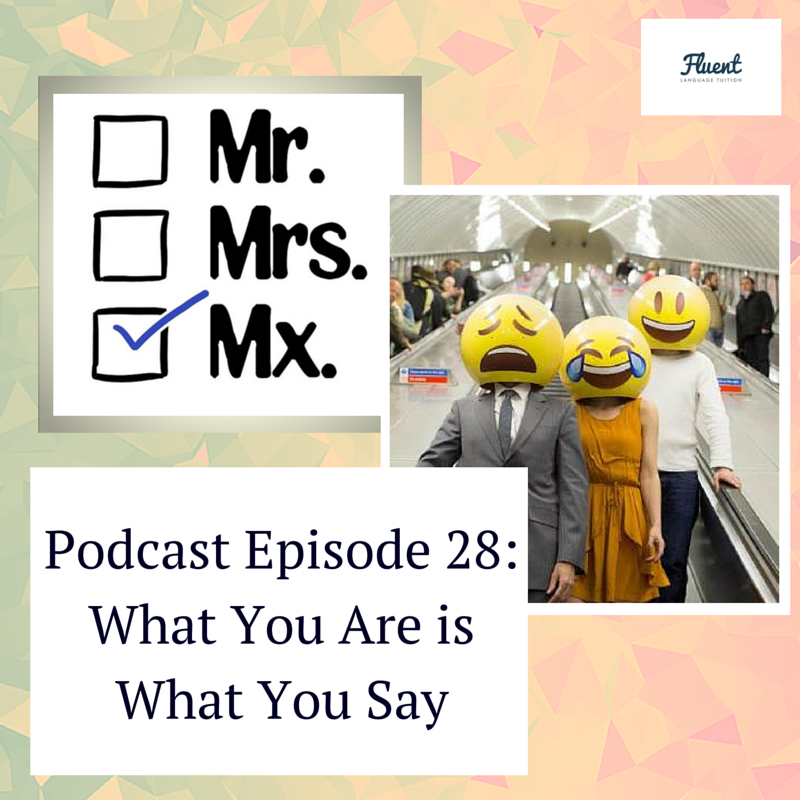
Welcome to Episode 28, a fun collection of language learning news. Lindsay and I shared our progress in Japanese and Welsh, read out wonderful listener feedback, and moved on to 3 big news items.
This episode is brought to you with support from HelloTalk, the world's largest language exchange app.
What's it like when your language changes to express who you are?
The episode features an interview with J from Compassionate Language Learner who identifies as gender-neutral and has some fabulous things to say about the topic.

- Swedish introduces "hen" pronoun
- Oxford Dictionary introduces "Mx" as a new honorific
- Fluent's Quick Guide to Language Blogging for Beginners
See The World in a New Way with Emoji
An emoji is ‘word of the year’, but is it even a word? Is this good? * Emoji word of the year
African Languages Aren’t English
The East African Council has just switched its lead language from English to Kiswahili.
Tips of the Week
Lindsay’s tip is using the Interlinear books method of learning a language.
Only two tips in this episode: 1) Make weekly commitment meet-ups such as going to exercise classes with a language buddy 2) Discover Binaural songs and Interlinear Books
And Even More Interesting Links!
- List of Placeholder Expressions by Language
- Extremely Loud and Incredibly Close
- The Knife of Never Letting Go by Patrick Ness
- HelloTalk - use code FLUENTLANGUAGE for 3 months of free pro membership




Struggling with listening? Discover realistic tips, challenge prompts, and the best tools for improving your listening skills as a self-guided language learner