

9 of the Best Podcasts for Learning Italian
Relax with your headphones on and become fluent in Italian! Sounds like a dream? These podcasts in for Italian learners and intermediate Italian speakers will make it possible.

Buongiorno! Who doesn’t dream of beautiful Italy: world-class landscapes, breath-taking history, outstanding food, and the culture of dolce fare niente! Well, not quite niente - which means “nothing”. There’s probably one little thing you want to try: learning Italiano!
Feel too busy to learn Italian? Want to speak like a native? Podcasts for learning Italian are a perfect solution. They're free and can fit into your daily routine—whether you're driving, doing chores, working out, or relaxing.
Discover 9 of the best resources for other languages.
All Your Italian Resources in One Place!

The Fluent Show
In addition to the Italian podcasts you’ll find in this article, check out the Fluent Show. That’s my own show, co-hosted by Lindsay Williams, where we discuss languages, learning methods, and how to live a multilingual life. Click here to listen and subscribe.
Quick Primer: How Do Podcasts Work?
If you’re curious about podcasts, but not quite sure how they work, here’s what you need to know:
You can subscribe for free to podcasts on your phone, tablet, or computer
If you use an Apple computer or mobile device, you can use the Podcasts app
On a PC or Android device, try the Spotify for a quick and easy start
Subscribing means you’ll always have the latest episode ready and waiting for you as soon as it’s published
Italian is a great language for learning by podcast, so let's dive into that top 9 list. This list has been updated in March 2020, and includes podcasts that have published within the last year. There are a few affiliate links in this post, which mean you support Fluent Language by clicking them at no extra cost to you.
Italian Podcasts For Beginners

ItalianPod101.com (InnovativeLanguage)
ItalianPod101 from InnovativeLanguage covers the basic through advanced levels of Italian. The episodes are exciting and immersive. One episode I particularly enjoyed is Must-Know Italian Slang Words and Phrases - Expressions to Describe Someone You Dislike. It was one of the most humorous episodes and I learned about how colourful Italian insults can be!
The dialogues are presented by engaging hosts in a clear, concise way covering many grammatical features and cultural topics. On the website you can sign up for premium content to access spaced repetition flashcards, PDF lesson notes, and a community forum.

British-born Katie and Italian-born Matteo and podcast simple language learning tips from Milan. Their fun podcast picks up on the common mistakes language learners make. This one is perfect if you want to learn Italian with a friendly English-speaking guide and come out sounding like a natural.
By the way: Katie and Matteo are also the faces of Easy Italian on YouTube.
Italian Podcasts For Intermediate and Advanced Learners

Vaporetto Italiano Podcast is an engaging language learning podcast hosted by Francesco. It's suitable for all levels, and consider this podcast to be your free ticket to immerse yourself in the “Bel Paese” culture while mastering the Italian language. With authentic content delivered entirely in Italian, you’ll elevate your Italian skills and explore Italy’s rich heritage without even trying!

News in Slow Italian, an intermediate level podcast, discusses world news, grammar, and expressions in the form of slowed down audio. Every episode is a virtual immersion into the Italian-speaking world showing grammar and vocabulary in context. The hosts are engaging and they show you that the language is alive and vibrant and waiting for you to dive into it.
The audio is very clear and easy to follow. On the website there are transcripts for each episode available with grammar, expressions, pronunciation, and quizzes.

Arkos Academy is mainly for the intermediate and advanced levels of learning Italian. The audio is mostly in Italian and the recordings are at a slower than normal pace, which allows you to really focus on strengthening your listening skills. There is also a lot of information on Italian culture and society, along with transcripts from each lesson on the website so that you can follow along and actively practice both your listening and reading at the same time.
As an added bonus, the Arkos Academy website offers a directory of private native teachers and excellent articles about Italy in Italian.

This podcast is almost entirely in Italian and is mainly designed for intermediate learners although you can easily select your level and choose to listen to episodes that are right for you. The website includes transcripts as well as helps learners learn colloquialisms in the “Usi Colloquiali” (Colloquial Uses) section. Host Davide mixes stories from his own life with handy new vocabulary - a winning mix!

The Italiano Automatico podcast is great for upper intermediate and advanced learners of Italian. It’s total immersion combined with lots of interesting topics and explains idiomatic and colloquial expressions. It is the companion podcast to the popular Italian learning website Italiano Automatico by Alberto Arrighini.

An Italian podcast with a twist: In Da Costa a Costa, host Francesco Costa covers American politics in the Italian language, offering an in-depth look at the USA from the Italian perspective. The episodes are well-produced and a pleasure to listen to, and will give you plenty of interesting material to listen to. They are created for native speakers, so most suitable for the more advanced learners.

Coffee Break Italian is a podcast show that helps you take your intermediate Italian to the next level, one coffee break at a time! In each 10-episode season, they cover a range of topics to deepen your understanding of tricky grammar, broaden your vocabulary, and improve your pronunciation. The show covers a variety of topics way beyond your usual textbooks.
Interested in other language podcasts?
Interested in podcasts for other languages? We've got you covered! Explore our series of the 9 best podcasts:
9 Of The Best Podcasts For Learning French
Advanced Learner Tip: Native Italian Podcasts
The Italian podcast world has come a long way in recent times, and these days you’ll be able to find a big array of native level content to listen to when you want to get Italian language immersion. You can choose from a full catalogue of shows on topics from politics to film reviews.
The easiest way to access native Italian language podcasts is to go to your Podcasts app and switch the country setting to Italy, San Marino, Vatican City, or Switzerland. There’s no restriction on your switch, and you’ll be able to access all podcasts in the same way that listeners from Italy can.

Spanish Language Learning FAQ: Your Top Questions Answered
Can I Learn Basic Italian in 3 Months?
Yes, you can learn basic Italian in 3 months with consistent effort and the right approach.
Here are some tips to help you:
Set Clear Useful Goals: Define what “basic Italian” means for you. Consider common phrases, basic grammar, and conversational skills.
Daily Practice: Dedicate a specific amount of time each day to study. Even 30 minutes can make a significant difference.
Use Various Resources: Combine different resources to keep your learning diverse and engaging. You can take a look at the Italian resources page I created by clicking here.
How To Learn A Language By Yourself
If you want to boost your motivation and stay on track as you study the Italian language, I recommend the Language Habit System. This course gives you all the tools you need to plan your studies, track your progress and take stock of where you need to go next.
Click here to learn more about the Language Habit System
Don’t forget to share this blog on social media to inspire your friends and fellow Italy travelers to immerse themselves in the language.

How To Learn A New Language With Smart And Useful Goals
For a long time, I had a difficult relationship with goal-setting. As a fully-fledged questioner, I find it hard to take anything at face value, let alone the idea that I must have a goal to achieve anything.
When I was learning languages in full-time education environments like school and university, the goals weren't on my mind. My school sorted that out for me: turn up to classes, write essays, take exams. But since I've started working with independent language learners (and since I became one), goals have taken an entirely different role.
As an independent language learner, you need to know what to do. It's easy to think that you're already doing the work by stating what you want to achieve. But let me have an honest moment with you here:
Those goals don't help you do things.
In this article, you'll learn about the two types of goals you need for language learning.
Goal Type 1: Vision Goals

Let's have a look at those language learning goals I see online again and again.
- "I want to become fluent in Spanish"
- "I want to have a 15-minute conversation in German" Or here is one that I set for myself last year:
- "I want to speak Welsh at the Eisteddfod festival in August"
I am sure you have often heard about SMART goals. In many areas of life, our goals will only serve us if we make them specific, measurable, achievable, relevant and time-bound.
In my mind, these fail the SMART list on a bunch of counts:
They're not specific and realistic enough because they are your inspiration
They aren't measurable, because concepts like "fluency" or "fluent conversation" just aren't
They aren't time-specific either, unless you want to make yourself sad by setting a painfully ambitious deadline
None of this is a bad thing in itself. If you are motivated and driven by a vision of your future self speaking a foreign language without hesitating, then that is an amazing image to hold on to. It should be one of the many vague and inspiring concepts you hold dear, and in fact I would even advise you start visualizing your success.
But those visions aren't useful goals, because they just won't help you when it gets down to doing the language learning work. You need that vision.
And for times when you've carved out that half hour to get to business and really learn a language, you need goals.
The Little-Known System for Success in Language Learning
Goal Type 2: Path Goals
In my Welsh studies, I've been completely independent from the start. I don't have that external structure of tutor, group class, exams, and it took a while before I found a way to use my time for language learning. At first, I tried ideas like "I want fluency" and even "I want to speak Welsh at the Eisteddfod in August". They worked as a motivator, but failed to give me a clear idea of the steps I wanted to take to learn a language.

My current path goals in Welsh
I needed something that would help me know what to do when my study time comes. These goals are what I call path goals. They guide you when you're in study mode and mark the milestones on your path.
Here's what you need for making good path goals:
Structure
Structure is the thing that stops you from starting every study session wondering what you'll work on today. It's absolute gold for independent language learners, because you simply don't have the time to faff every single time. Decision fatigue is real, and it's going to paralyze you if you allow it.
Learn more about how this works when you study more than one language.
- Schedule the days when you're going to study your language, so you can treat them like any other appointment.
- Use your path goals as simple "next steps" so you spend zero time deciding what matters.
- Get some external structure. Follow an established course, work with a tutor, or use a textbook or online course. Even without that, you can be just as successful. Set your goals up to match the four core skills, and this should provide you with the sense of variety and progress you need.
Core Skills
The four core skills are the essential set of everything that makes language learning a success for you. You will want to focus on some more than others, but ultimately you need to put work into all four for becoming that inspiring future self.
The four core skills are listening, speaking, reading and writing. (I wrote a book about this!) Structure your goals around improving in each one, and you're guaranteed to succeed.
There might be other areas you want to focus on too, such as improving your pronunciation and vocabulary. But if you've got the four core skills covered in your goals, I would advise you not to worry too much about any others. They will come naturally as you improve and respond to your needs in every situation.
Variety
Variety is a key component of the path goals you set for yourself. It's realistic to acknowledge that moods, motivation and focus can vary from day to day. So on one day you might be excited to crack open the textbook and work your phrases, but on another day all you want is speaking practice with a tutor.
Having varied goals (I recommend at least 4 to cover each core skill) allows you to pick from a short, focused list of tasks and make progress in every single study session.
Recap: The 2 Goal Types You Need for Learning a Language
So there you have it. Goal setting isn't the holy grail of productivity. But when you do it right and know your goal types, each step can give you the right support you need to progress today.
1. Set Vision Goals
You can call this an intention, a vision, a goal. This is the imagined, vivid image of your future self that will keep you going.
2. Set Path Goals
Path goals are not big visions, they are the structured next steps that will help you when it's time to work on studying
Frequently Asked Questions
How to Set a Smart Goal for Learning a Language?
Start by creating your big and inspiring vision goal. This is about where you see yourself once you have mastered your language. This grand vision will help you get excited and keep you motivated throughout your language learning journey.
Next, break down this vision into SMART path goals. SMART stands for Specific, Measurable, Achievable, Relevant, and Time-bound. These smaller, well-defined goals act as stepping stones towards your ultimate vision, making the learning process manageable and less overwhelming.
What is an Example of a SMART Language Learning Goal?
Let’s create a SMART goal example: suppose you have a language learning podcast you enjoy. Instead of a vague goal like “listen to a language learning podcast,” make it specific and actionable.
Instead of saying “listen to language learning podcast”, you could try and say: “Listen to episode 4 of the [Podcast Name] and write down 5 new words by Friday.”
This goal is specific (listen to a particular episode), measurable (5 new words), achievable (within a week), relevant (improves vocabulary), and time-bound (by Friday).
Such SMART goals keep you focused and make your progress trackable. For more detailed guidance, consider exploring the full Language Habit System® I created specifically for language learners.
What is the Best Way to Learn a Language?
The best part about learning a language is that everything will work a little bit. Rule one should be to do what you enjoy the most. You are NOT doing it wrong. The beauty of language learning lies in its flexibility, and almost any method can contribute to your progress.
It will help you massively when you set yourself goals that help you along the way. Think about why you are learning the language, and where you want to be in the future. For the day-to-day process, add in SMART “Path Goals” that make it easy to take action.
How to Structure Your Language Learning Routine
Do you want to follow the system I explained in this article and start to discover your ideal language learning routine? Then I recommend you check out the Language Habit System, my hands-on course to help you learn any language with personalized milestones.
--> Click here to learn more about the Language Habit System® <--
How to Learn a Language with Spotify, The App for Learning Languages with Music
If you’ve ever had trouble finding more songs and artists to listen to or if you’ve wondered whether it was worth it to try a popular music app like Spotify, here are some tips that can help you make the most of learning with all that Spotify has to offer.
How would you like to learn a language with the help of a famous musician?
Sounds awesome, right? Truthfully, the idea isn’t so far-fetched.
Learning a new language isn’t all about studying grammar and memorizing vocabulary. In fact, many of us have listened to music in another language and even learned a few things from our favourite songs.
For example, who knew the name of Seoul’s cool kid district before "Gangnam Style" became a sensation?

As you can see, it’s always a good idea to explore music in your target language.
Using music to learn a language can help you feel more connected and invested in a language as well as add a bit of creativity to your usual routine.

Photo by Vidar Nordli-Mathisen on Unsplash
The tough news is that can be hard to find music you enjoy listening to in your target language(s). How do you find the top artists in German or French? What if you don’t care for the top hits and want to search for songs in a particular genre?
That’s where music apps like Spotify turn into amazing resources for language learners.
If you’ve ever had trouble finding more songs and artists to listen to or if you’ve wondered whether it was worth it to try a popular music app like Spotify, here are some tips that can help you make the most of learning with all that Spotify has to offer.
Spotify Basics
What is Spotify?
Spotify is a streaming service that lets you listen to music and podcasts on your mobile device or computer. Using the app, you’ll discover music from artists all over the world, which makes it a fantastic resource for language learners.
It’s available for you to use on multiple devices, including your laptop, your phone, your tablet, or your gaming system.
There’s a free version as well as a paid premium version. Both allow you to search for music and podcasts, get recommendations for new music based on your preferences, and create your own playlists.
How To Learn a Language With Music
Spotify is simple enough to use, but how should language learners start using it to actually learn something?
Can you really learn with music?
Yes! Think of music as just another resource. For example, you could..
Look up the lyrics, translate them, and try to sing along
Song lyrics can be simple or complex - some talk about love, others just ask you to put your hands up. Either way, it’s a joy to discover what’s actually being said in the song that you’ve had playing in the background. And once you read along and start speaking or singing the lyrics to yourself, you’ll feel a boost in confidence...like a fluency rock star.
You can even find out about the stories behind your favourite lyrics using apps like Genius. Check out this podcast to learn how it works.

Genius user comments in Spanish
Check out the websites of your favourite artists or follow them on social media
Most artists will post on social media using the language that they sing in, and there’s a wealth of studio pics, in-jokes and fan responses to discover too. Who knows, the next time they announce a gig you might even find the courage to go and see them live? Going to gigs in my target language is one of my top activities!
Discuss your favourite songs or lyrics you don’t understand with a tutor or language exchange partner
Translating lyrics can be tougher than it looks at first, but that’s what you can work on with your tutor. Plus, if you’re working with a local native speaker living in the target country (such as most [italki][0] tutors), they’re likely to tell you about even more groups and artists in the target language.
Songs are natural input, a great way to become familiar with the way native speakers use a language to express themselves. Listening to lyrics is also helpful for training your ear and your pronunciation. I also find that I have a much easier time remembering new vocabulary that I’ve learned from songs because I’ve formed a personal, specific connection with the words and I’ve paired them with music.
Ways to Learn Languages with Spotify
Let it Play
Do you already know at least one song you like in your target language? How about an artist?
Head to the ‘Search’ bar and type in the song or artist you already know. Use that as your starting point and simply let it play. You’ll be able to shuffle through all of the songs under that artist or Spotify will start to play songs similar to what you’ve chosen.
It’s a great way to build up a playlist of songs in your target language, especially if you’re not sure what to listen to. Plus, this option works for both free and premium versions of Spotify.
Find a Playlist
If you’ve already started searching and listening, you’ll soon find that Spotify has some recommendations. You can try shuffling through the recommended artists and albums or try one of the Daily Mix playlists.
You also have the option of listening to other peoples playlists. If a user (or fellow language learner) has made a playlist public, you can choose to listen to the collection of music they’ve put together. In other words, you don’t have to go through the trouble of finding songs to create your own playlist if you don’t want to.
Need Support On Your Language Learning Journey?
Don’t miss out on the Fluent Language newsletter! Sign up today and get weekly language learning advice from me.
Learn with Podcasts
Spotify Search by Language
Music is wonderful, but sometimes you’re up for a bit more learning. Spotify can still help by providing access to hundreds of podcasts.
The easiest way to search is simply by typing your target language into the ‘Search’ bar. You can look up French or français, Spanish or español, Italian or italiano, etc. Either way, you’ll end up with a long list of language related podcasts.
If you already have a favorite podcast in mind, you can search by the podcast name, such as Coffee Break to find all of the Coffee Break language podcasts.
Listen to News Radio
While searching for language learning podcasts, you might come across SBS Radio in your target language. In fact, this is just one of many great options for listening to short news stories. in other languages.
If you search for SBS Radio, you’ll see options in dozens of languages. You can also find popular podcasts like News in Slow German or similar slow news podcasts.
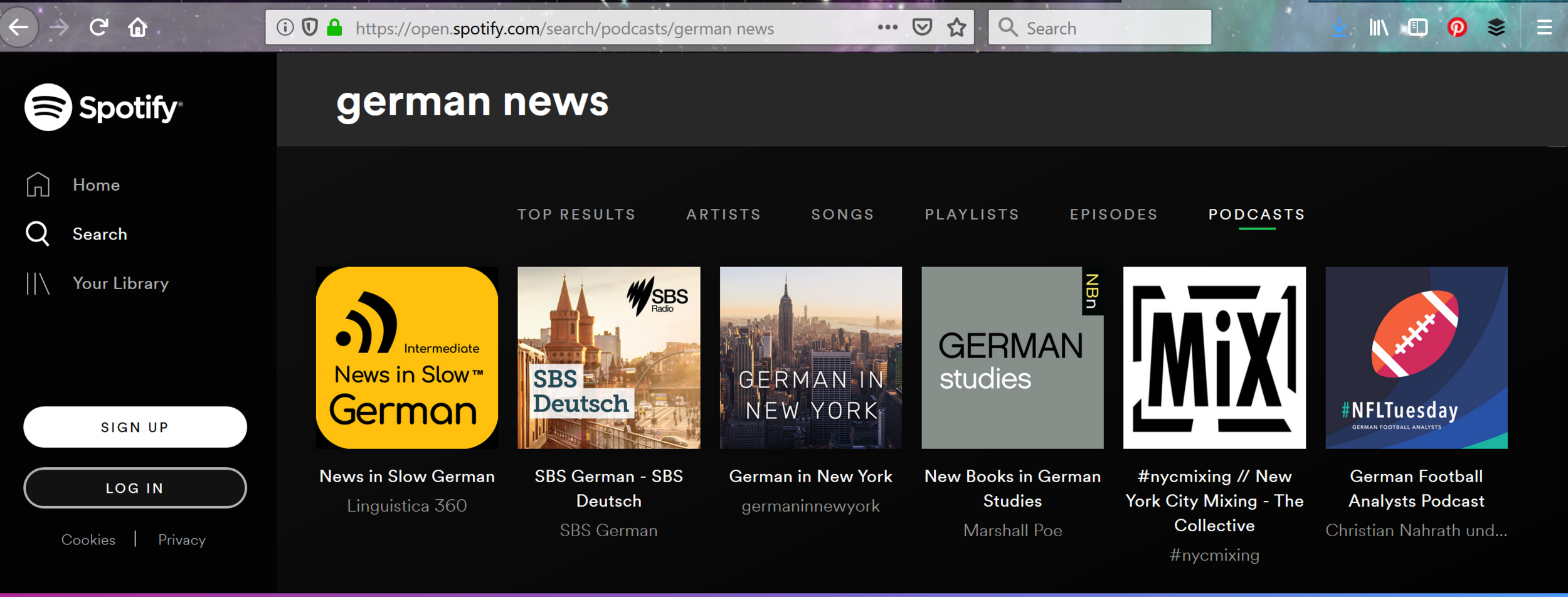
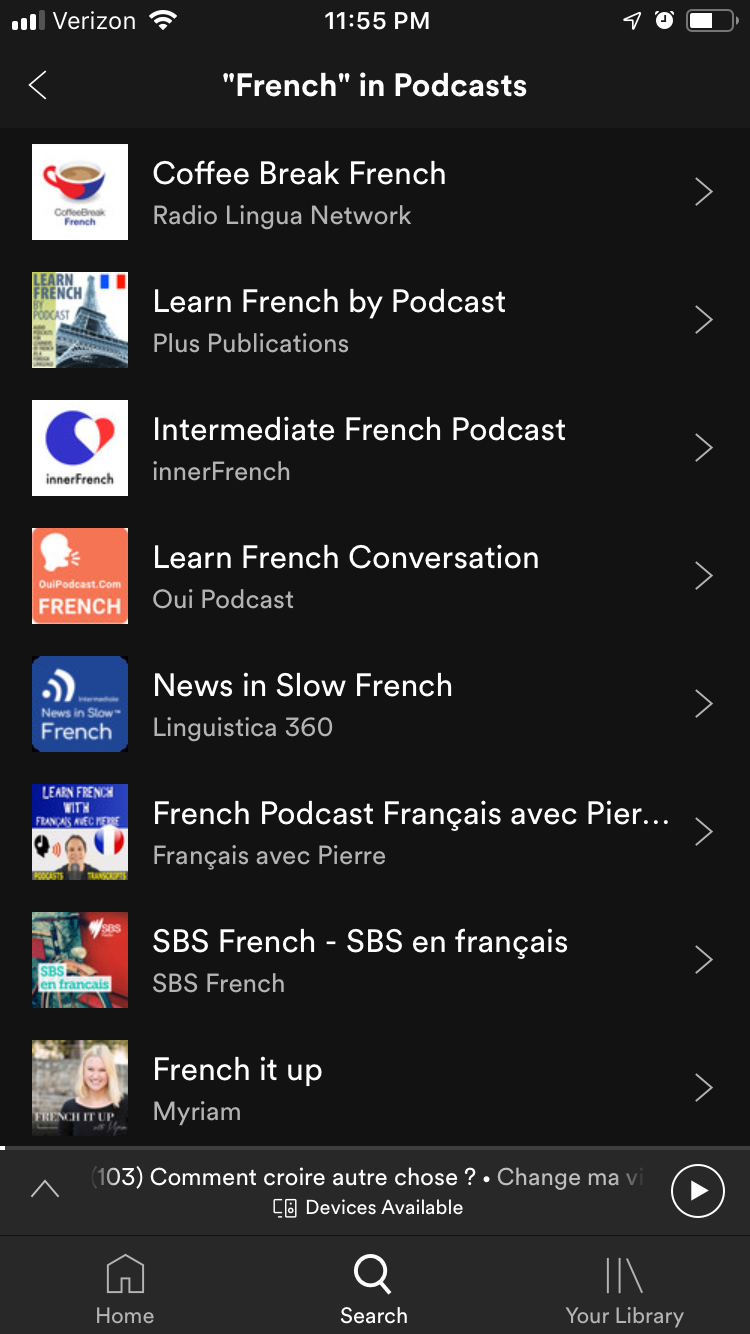
And of course, don’t forget that you can find the Fluent Show (your favourite podcast, right?) on Spotify too. Simply type "Fluent Show" in the search and hit play.
Find Native Language Podcasts
You can easily find podcasts geared towards native speakers as well. If you don’t have a specific topic in mind, type your target language into the Search bar and continue scrolling through until you find a title written out in the target language. In fact, I found one of my favourite French podcasts about personal development with this method, using "français" in the search bar.
If you do have a topic idea in mind, you can also type a related word in the target language into the search bar. Then, be sure to select ‘Podcasts’ or scroll down and select ‘See all podcasts’ (if you’re using the mobile app). This will bring up all the podcasts that have your search term in the name as well as related podcasts in the same language.
Make It A Habit
Adding music to your language learning can make things easier, but your efforts will only pay off if you take the time to learn and use the vocabulary your favourite song can teach you. Most of all, you need to do it consistently.
Listening and learning from music can be both fun and useful when you make it a regular habit.
Frequently Asked Questions
How can Music Help you Learn a Language?
Music can be an effective tool for learning a new language, here is why:
Memory Boost: Music's catchy nature makes it easier to remember words and phrases.
Better Pronunciation: Listening to music lets you hear natural pronunciation and accents that textbooks might miss. Singing along helps you practice these sounds.
Effortless Vocabulary Learning: Songs are filled with new vocabulary. By listening to and analyzing lyrics, you learn new words and see how they're used in context.
You can check out my series on using music for language learning. Where to look for inspiration, and some musical hacks
Can you Learn a Language Using Spotify?
Yes! Spotify is an excellent tool for language learning. In today's blog post, we explored how to fully leverage Spotify for this purpose.
If you've been struggling to find new songs and artists or have been curious about using a popular music app like Spotify for language learning, we've got some tips to help you make the most of what Spotify has to offer.

What Music is Best for Studying a Language?
For concentrating during your studies, choose gentle music without lyrics, attention-grabbing riffs or loud percussion. Try searching for “focus playlists” on Spotify, as there are many available. For learning a specific language, use the tips in this article to get the most out of the lyrics and learn more about which artists are popular in each country.
Try These Ideas!
What now? Pick one of the following ideas, open up your Spotify app, and let’s try it out!
Search for a playlist in your target language
Find a song you like? Search for the artist on social media or check out their website
Search for podcasts in the language so you can hear it spoken!
If you’re an independent language learner, forming successful habits and doing more with the songs you love in your target language isn’t always easy. For those who struggle to create an ideal language learning routine, check out The Language Habit System. It’s meant to help you create habits that work for you, which includes adding the music you love to your language learning.
Want podcast inspo? Check out our Best Podcasts series!

Master Language Learning: The Benefits of Keeping a Language Learning Journal
Discover how a language learning journal can enhance your self-teaching methods and boost your fluency goals. Featuring a gallery of language notebook examples and podcast with expert language learners.

Are you an electric language fiend, armed with Flashcard apps and podcasts? Or going it old-school with pen and paper?
What if you had a language learning tool that costs you hardly anything, adapts to your own preferences, boosts your memory and helps concentration?
Turns out you do, and it's probably in your bag right now: Your notebook!
In today’s article, I want to introduce you to some of the tricks I use to get the most out of my language learning routine without adding to my screen time.
On the podcast I'm joined by language lovers Kathryn and Sam who are passionate about taking fantastic language notes. Listen to discover their experiences, language learning tips and strategies for effective note taking.
My absolute language learning essential is a notebook. Flashcards are great for vocabulary lists, but notebooks are for everything. The first thing I do with a new word is write it down in a notebook, maybe with an example and pronunciation note.
Get Step-by-Step Journal Tips with Write Your Way to Fluency: only $9!
Dive into a world where motivation meets organization, and discover how a simple journal can become your most powerful tool for mastering a new language. Click the image to find out more!

Like this article?
Then you’re going to LOVE Write Your Way to Fluency, my new guide to creating your language learning journal.
Why Keep a Language Learning Notebook?
Working with a paper notebook can bring many excellent benefits to your language learning routine. It provides a refreshing break if you spend most of your time chained to a computer screen or mobile phone. Here are a few reasons that writing on paper can help you add vocabulary, improve your memory and create a better learning experience:
Personalised Learning
Language learning notebooks are a completely blank canvas where you can design the textbook of your dreams. You control the layout and the content, and get to create what makes sense to you.
As you add notes, you are filling pages of paper with clear signs of your work. It is unmistakably yours as it’s written in your personal style and handwriting. No matter if you are 5 or 50 pages into the adventure, there is nothing like the proud feeling of looking back over what you have already done.
You are in charge of your learning experience. Writing allows you to start from zero and design your page in the way that aligns best with how your mind works.
Clearer Thinking

Writing in a notebook means expressing concepts and sentences in a way that makes sense to you personally. It automatically helps organise what you are learning. In the podcast episode, Sam mentions that he selects what he finds most helpful and important from podcasts, YouTube videos and online lessons so he can curate his own version of a personal textbook.
Your thoughts become clearer in your own mind. The UK Handwriting Association features this great quote from a 17-year-old student on its website, illustrating the way in which a screen can actually make it harder to focus on what you are learning. He says:
“The process of handwriting promotes clear thought and natural structure. Being so close to the page means that translation of thought has less opportunity for deviation.
When typing I find I compulsively re-read my work on the screen and the ability to edit is sometimes paralysing, Although computer work can allow for more complex structure, it is often too complex and has many complications for timed conditions.”
Memory Boosts
When you write your notes by hand, you become better at remembering them. The act of writing, perhaps even colouring or illustrating your note is an in-depth repetition of what you’re learning. Add to that the personal connection as you write what is meaningful to you, and the increased repetitions as you look back over your notebook, and what you have created is a reliable system for remembering what you learn.
If you want more inspiration for creating effective study notes in your notebook, check out my short course Write Your Way to Fluency.
Language Learning Motivation
Filling a book is visible progress, a huge psychological benefit which is going to keep you motivated and coming back to your language time and time again.
If you have a creative side you’d like to unleash, your language learning notebook is a welcome new playground. Kathryn and Sam already loved drawing, design and papercrafts. The language notebook became a way of adding language to what they enjoy, and it has helped create time to combine two great hobbies.
Freedom from Screens
Learning online gives you access to infinite materials, but sometimes it’s hard to remember everything that you see. The notebook becomes your place to capture the coolest bits you find online, the new words you learn from an app, everything you find in your personal language learning world.
Need Inspiration? Welcome to our Language Learning Notebook and Language Journal Gallery
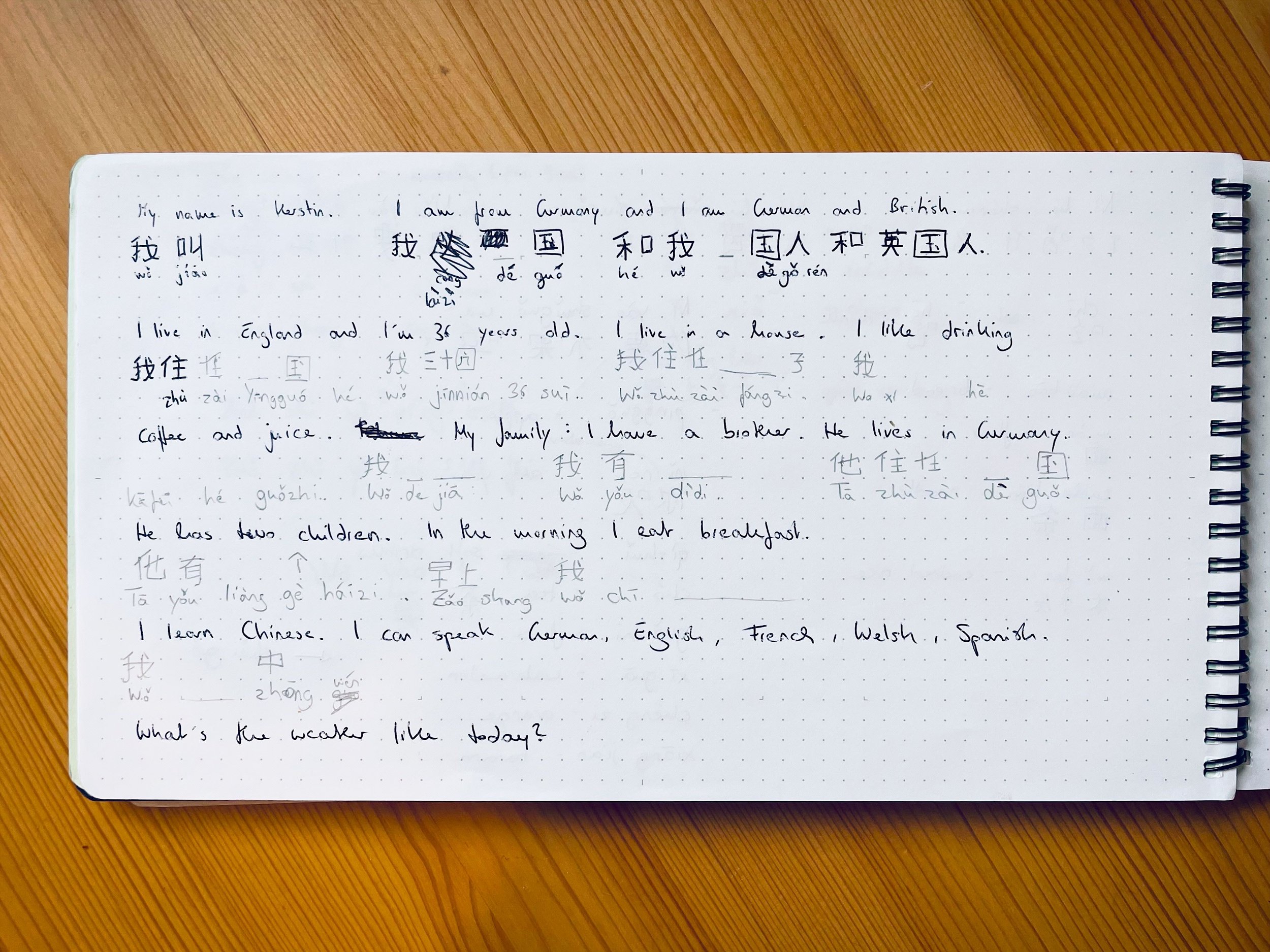

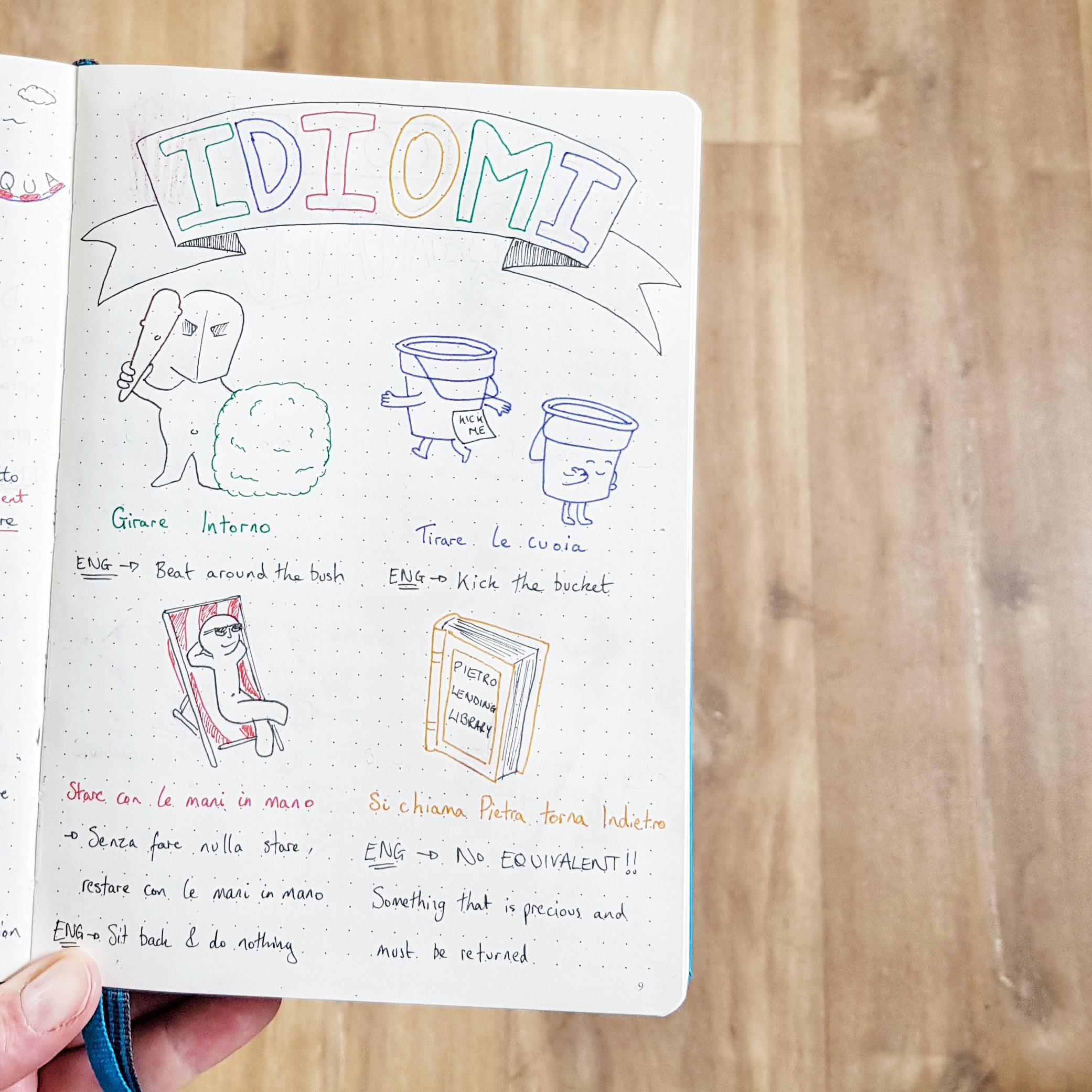
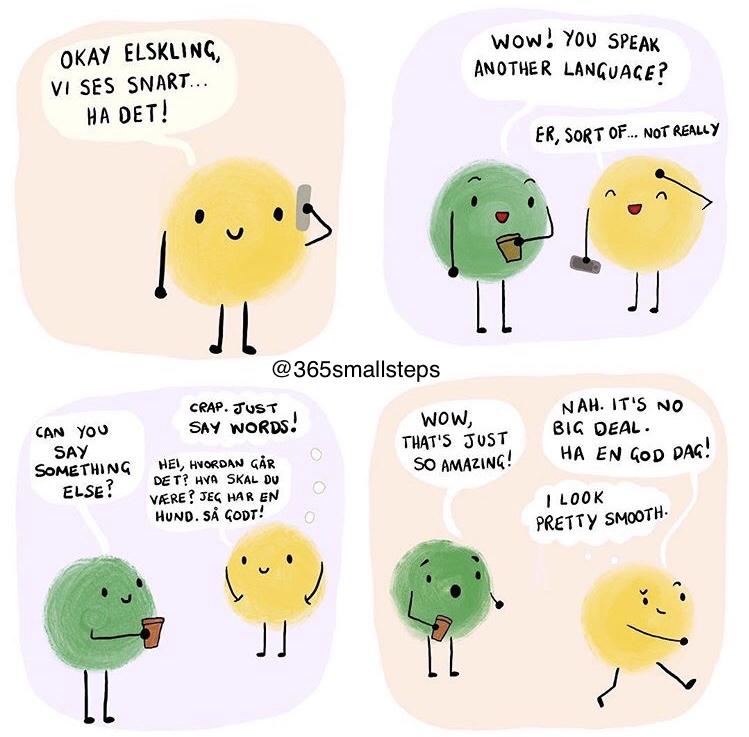

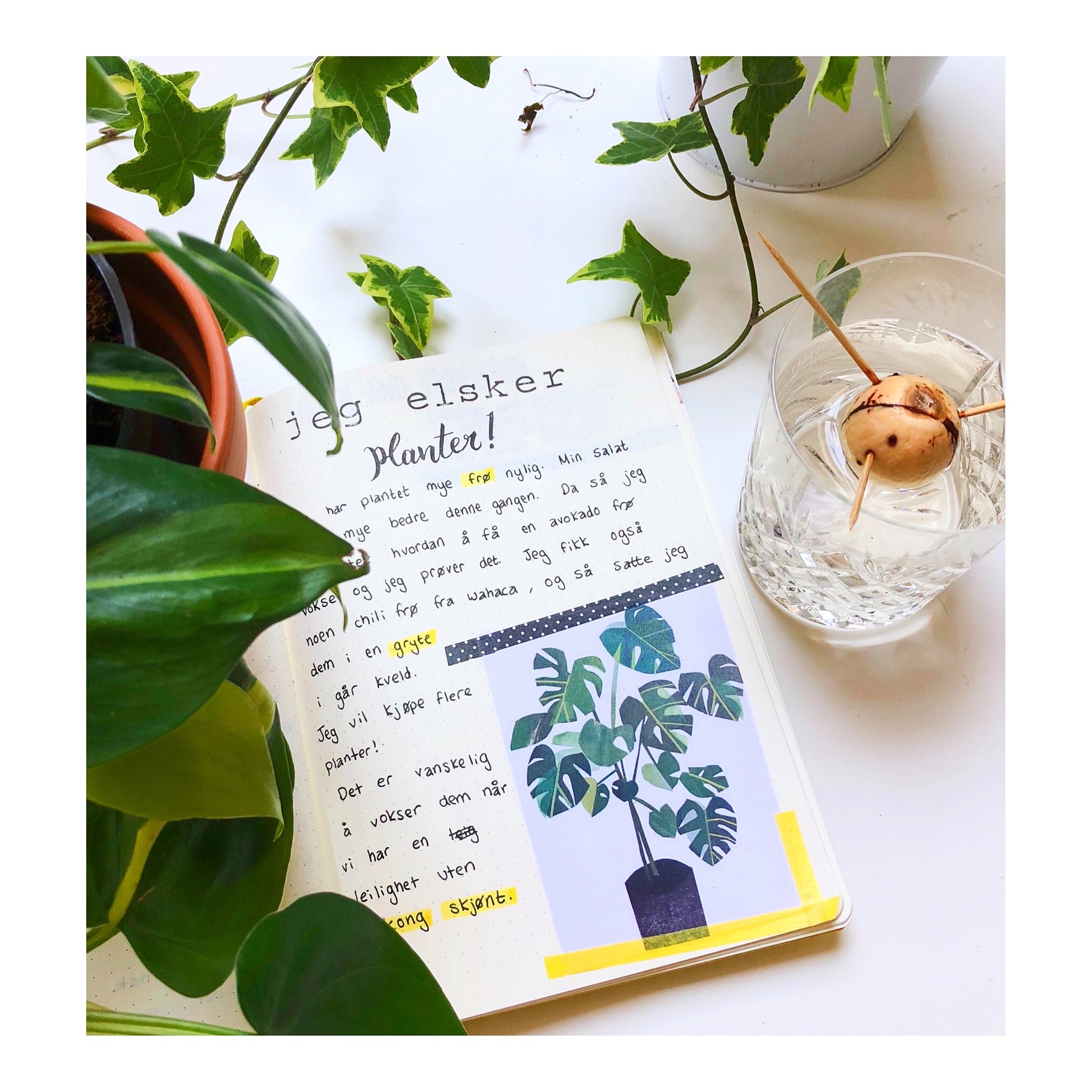
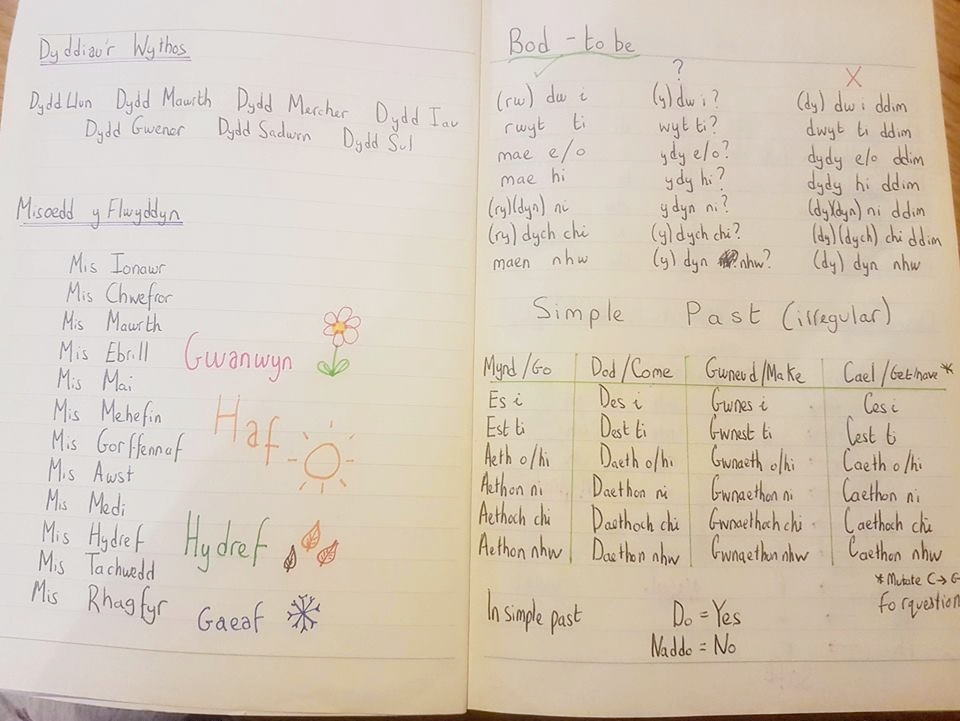
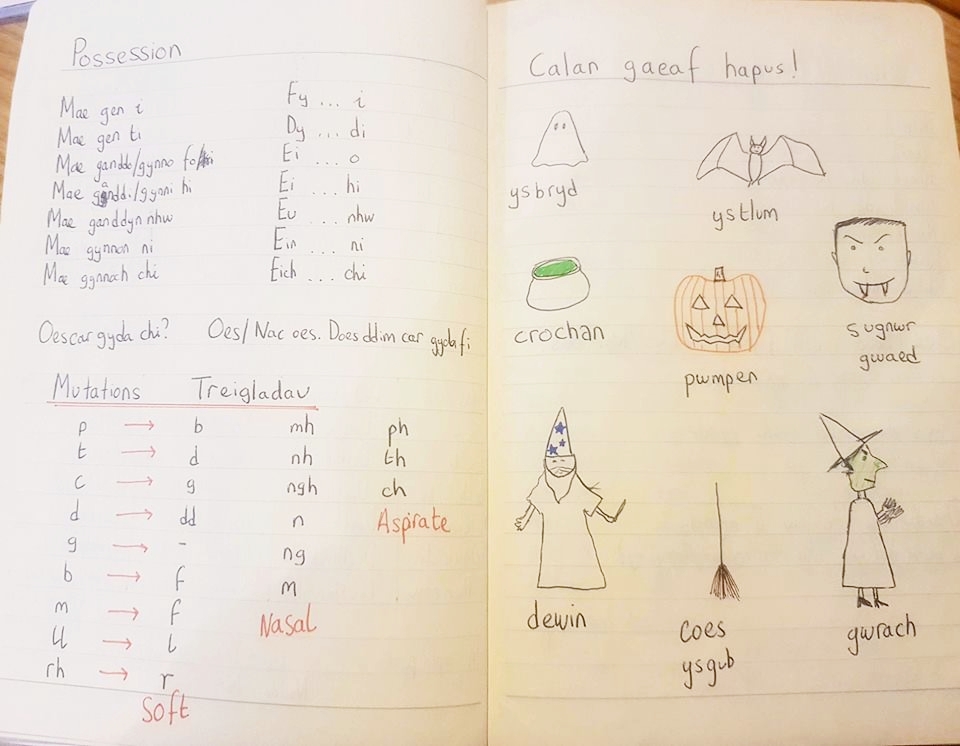
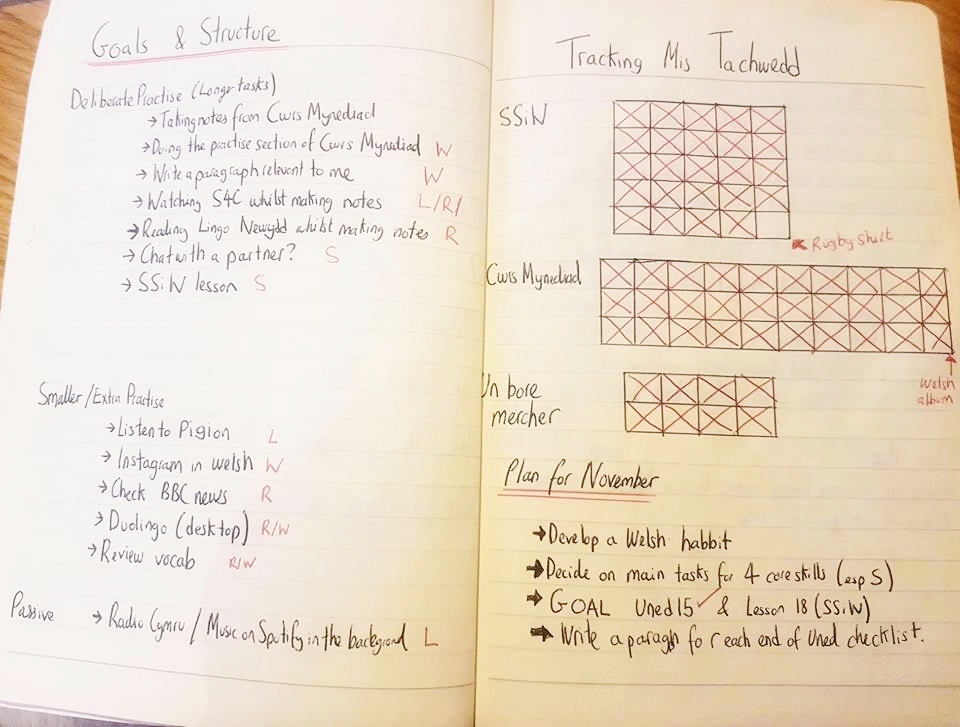
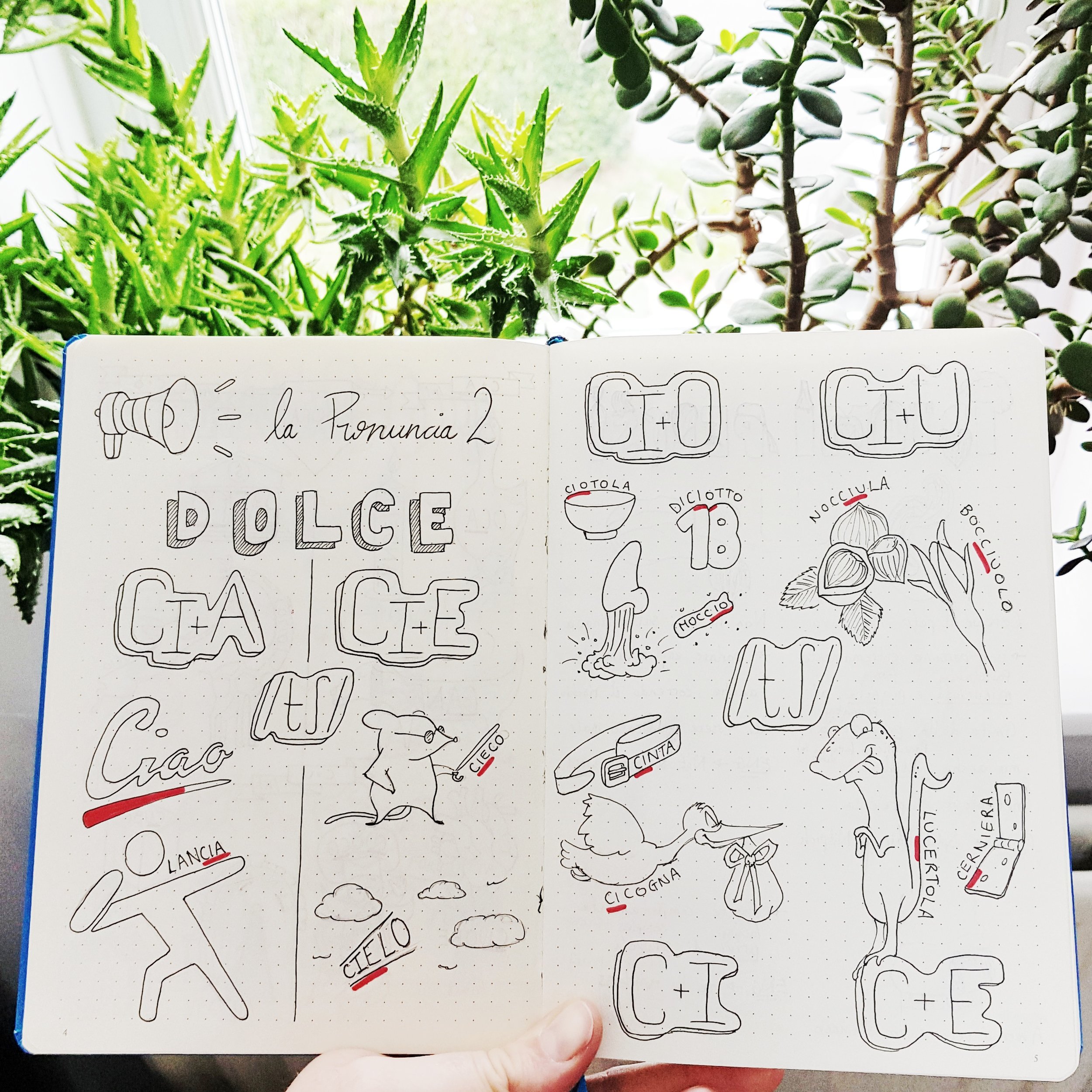
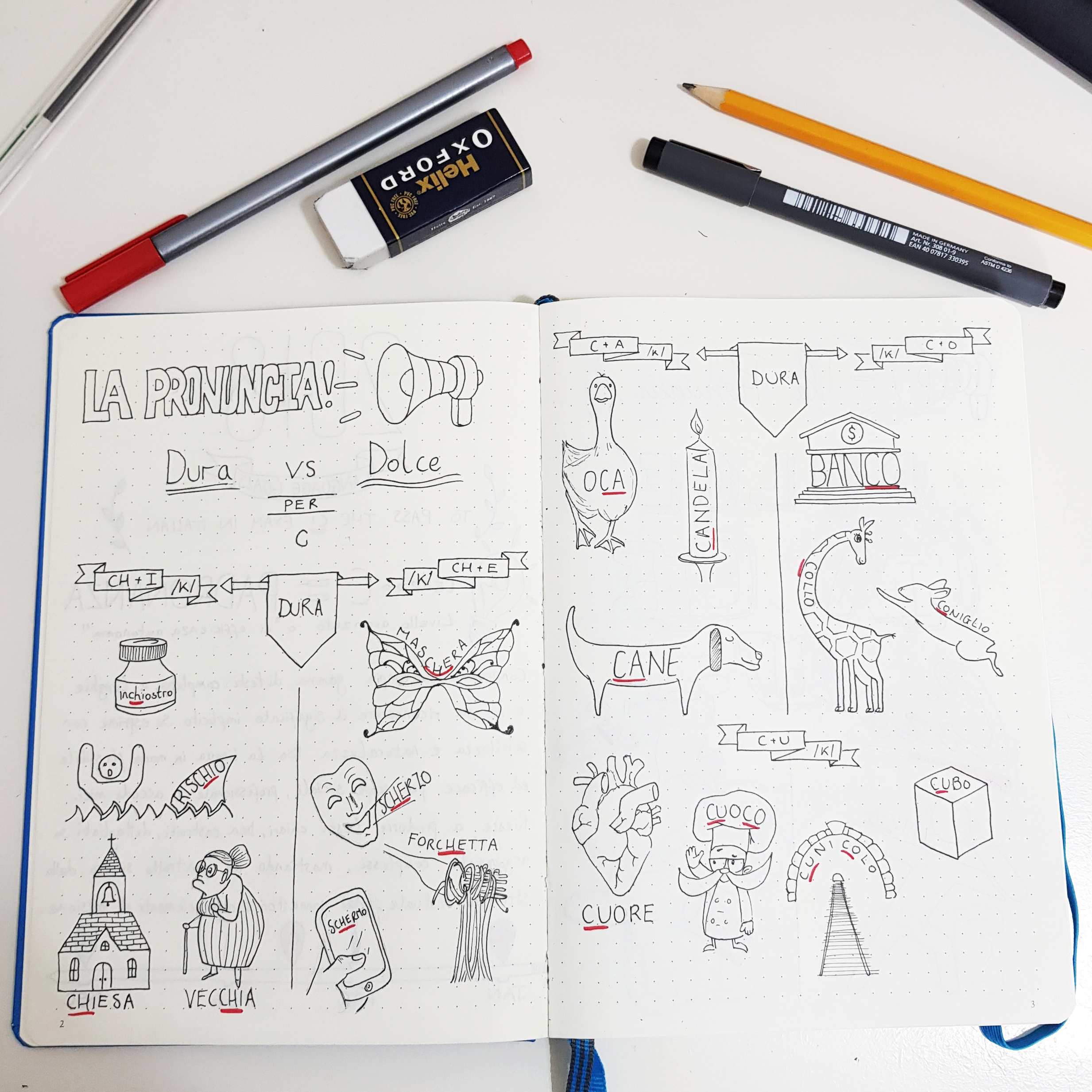
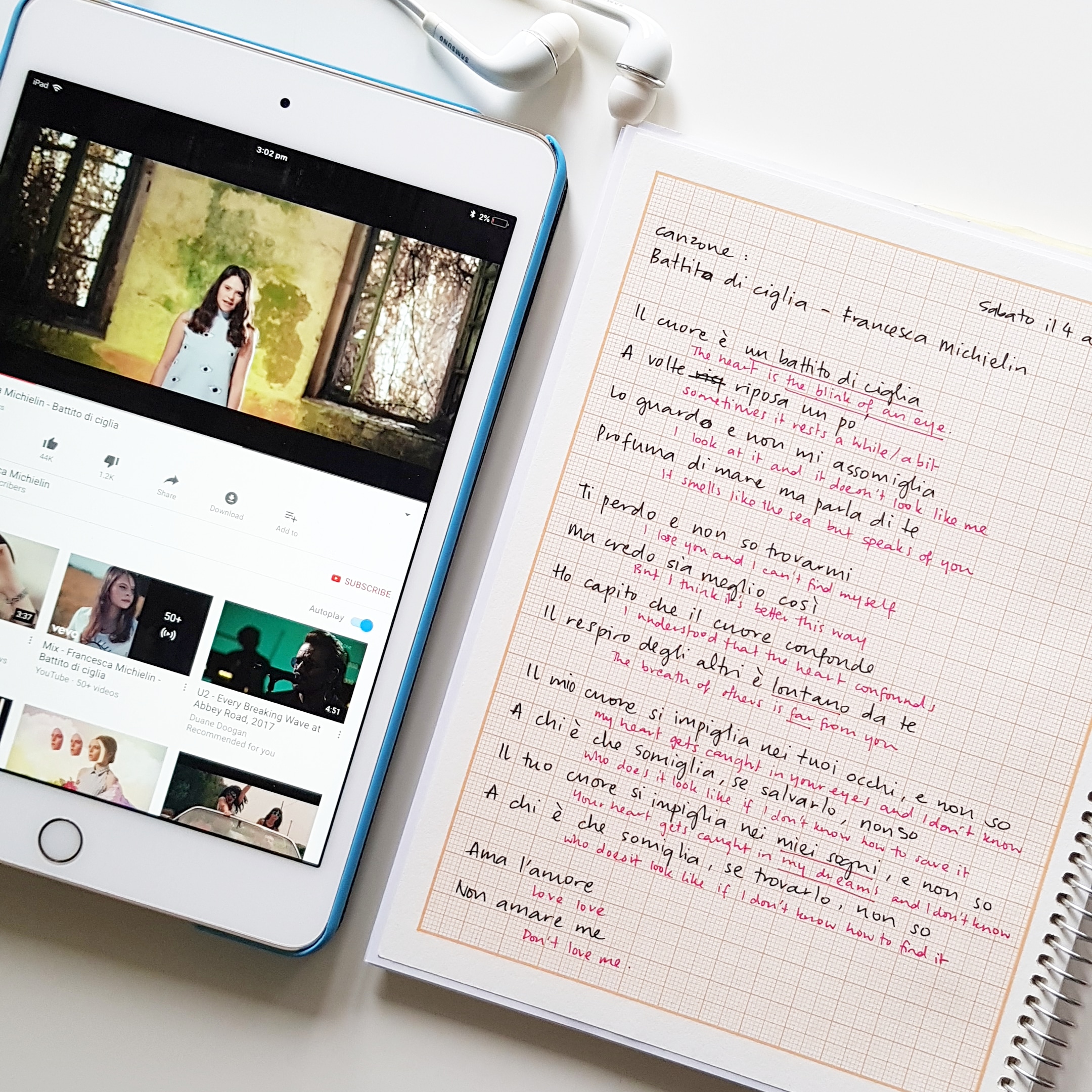
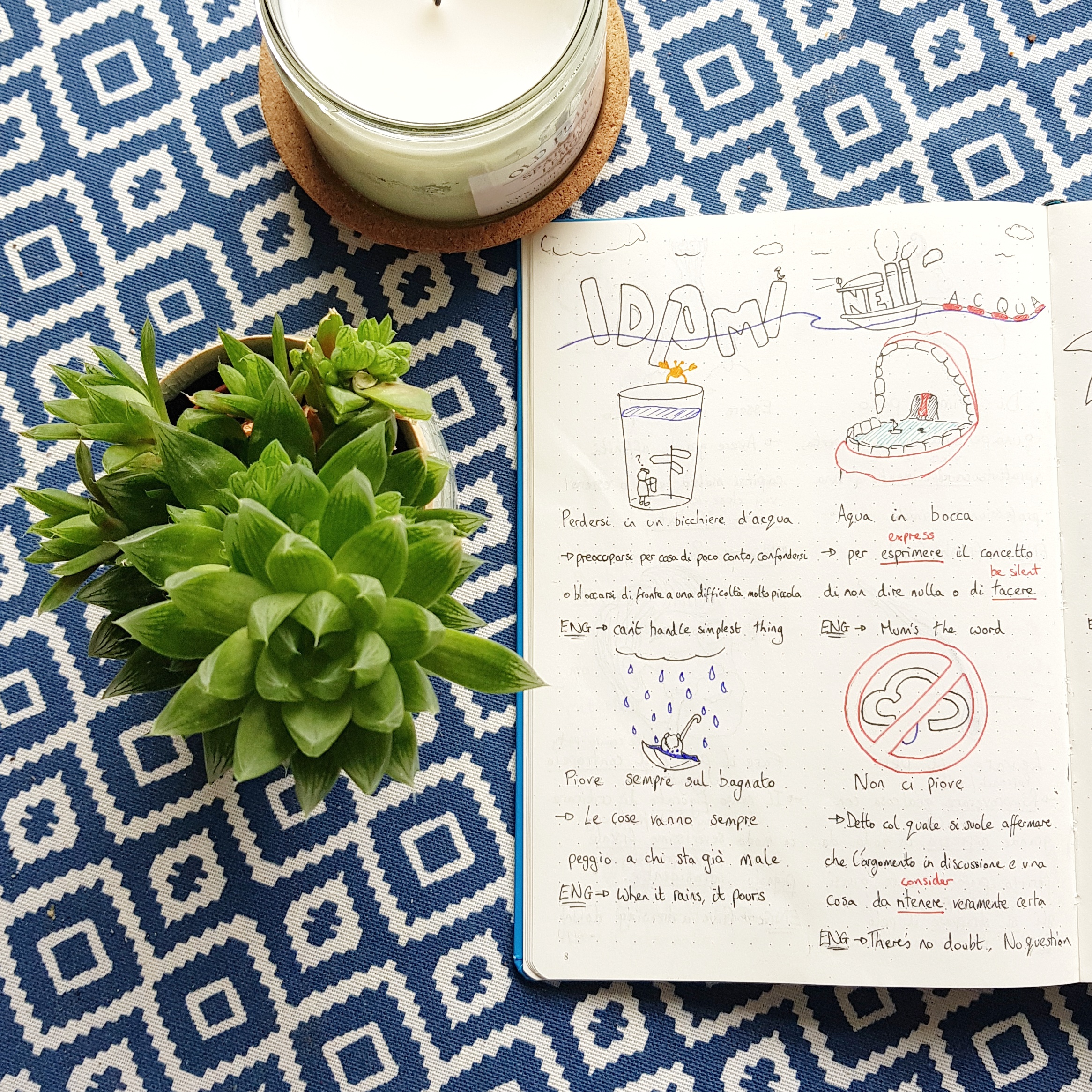
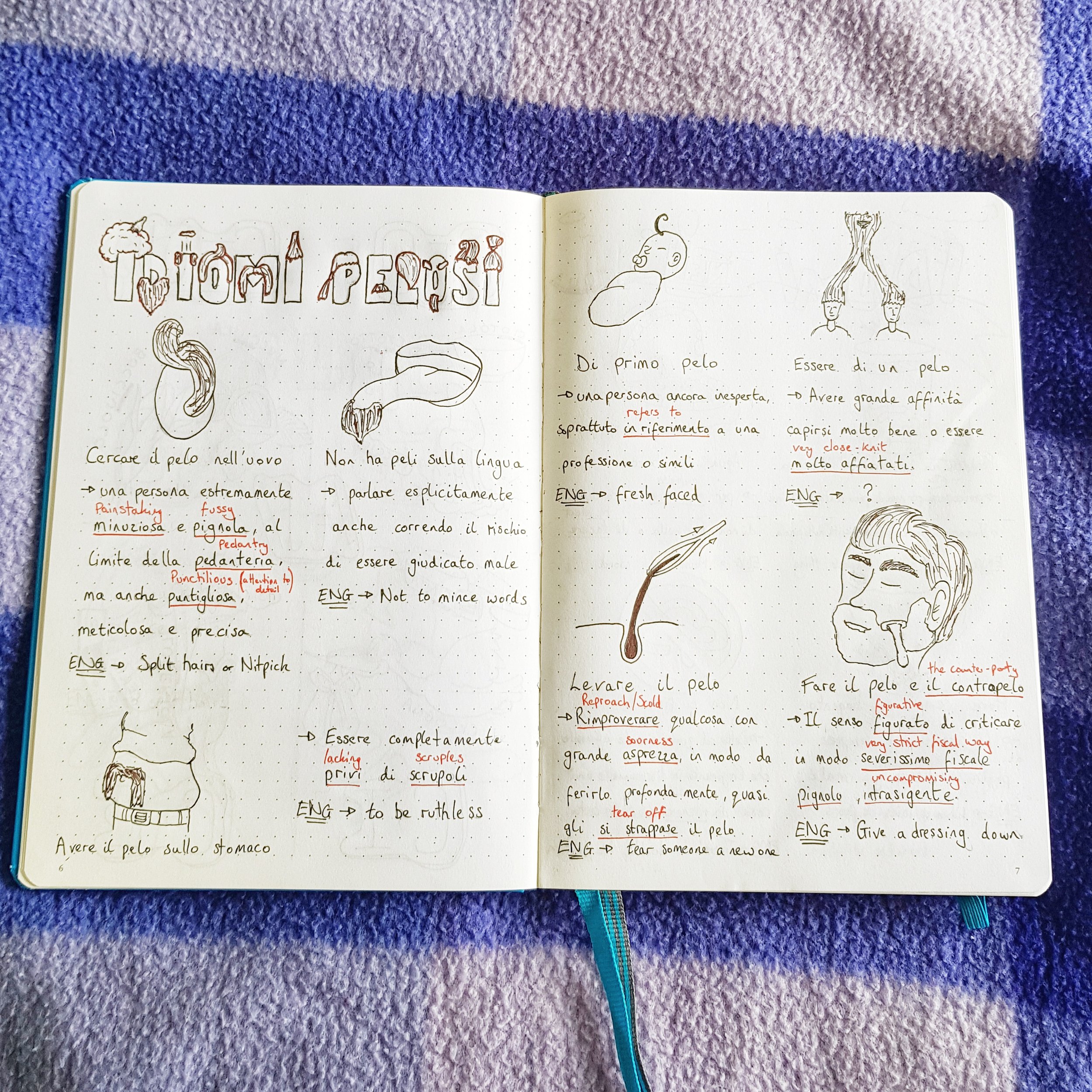

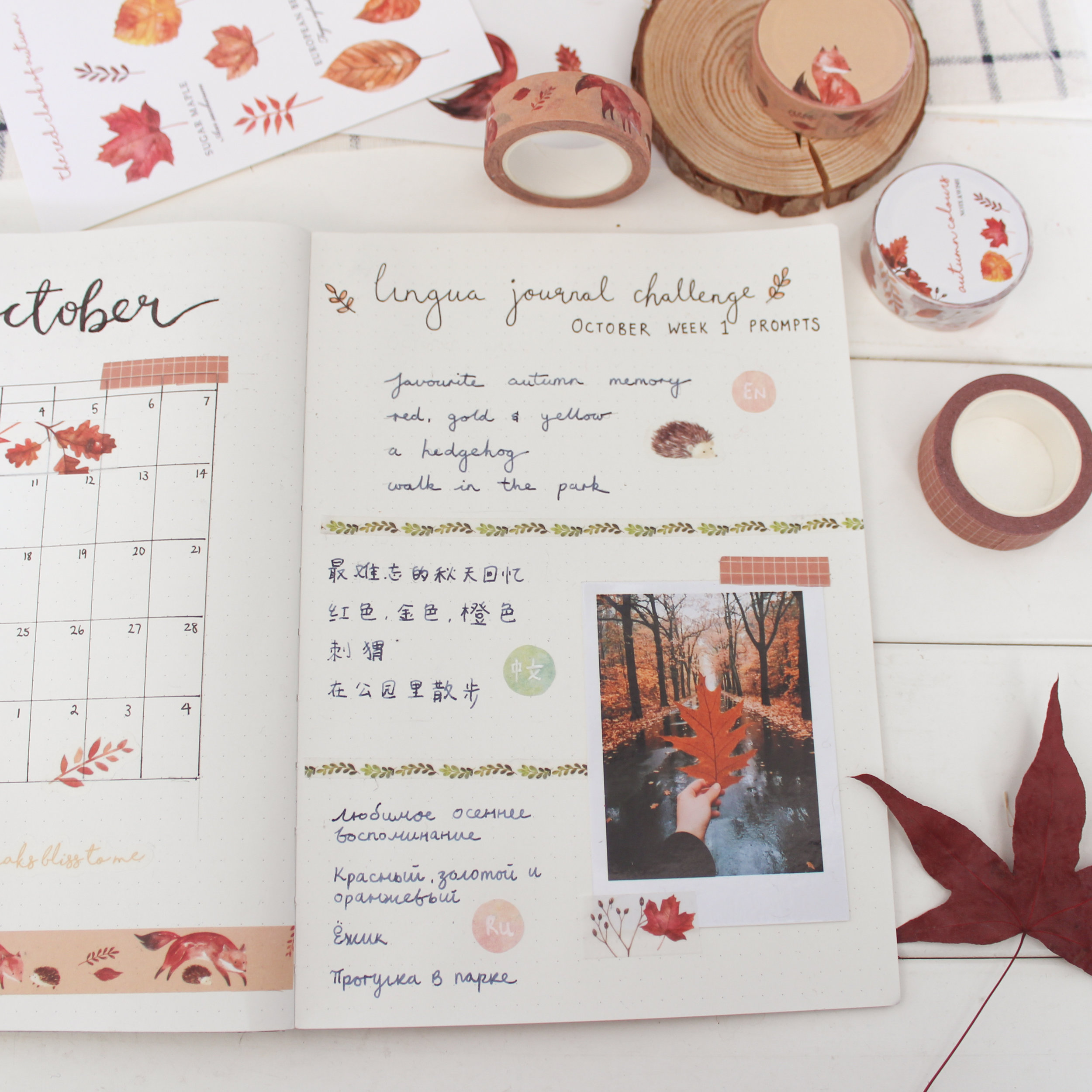
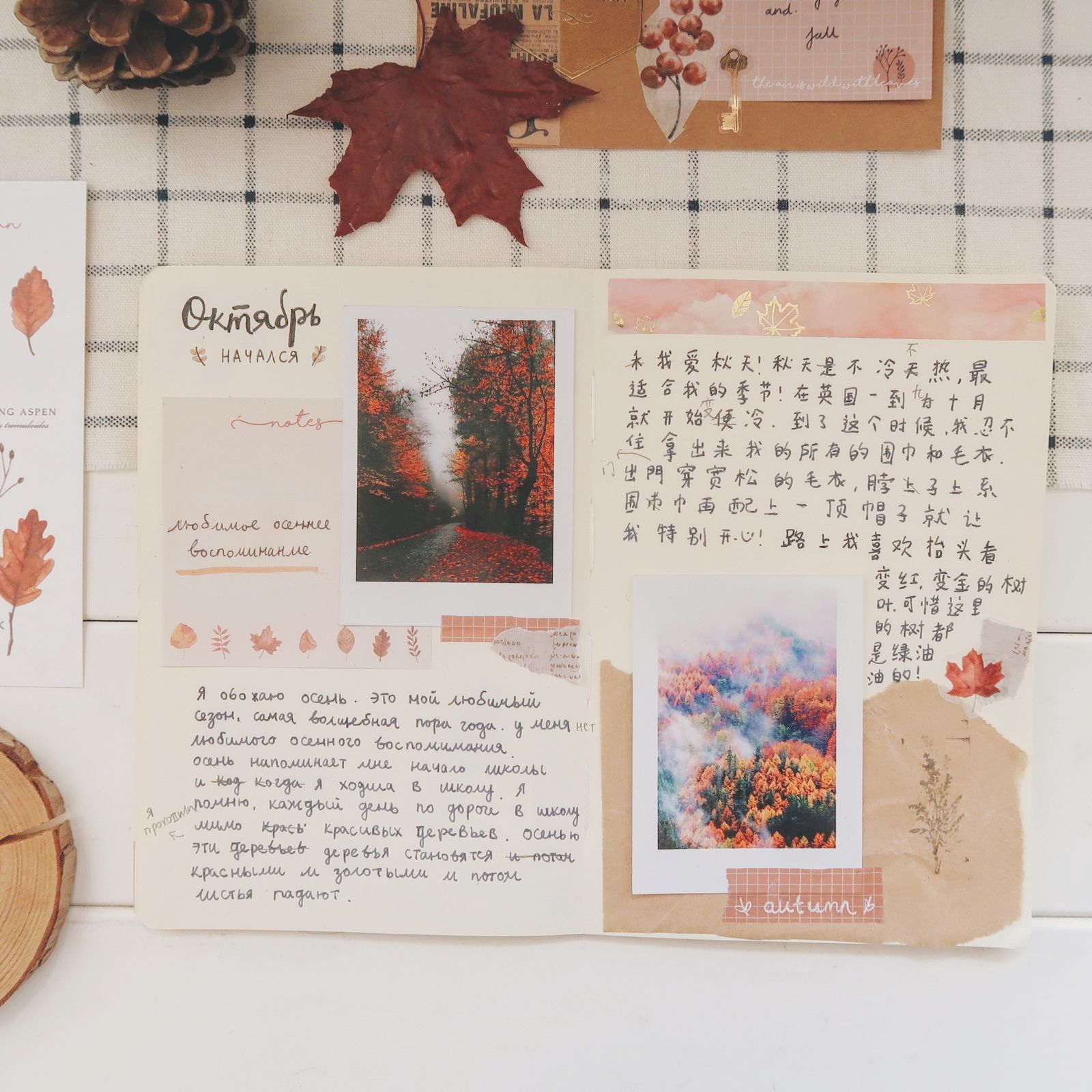

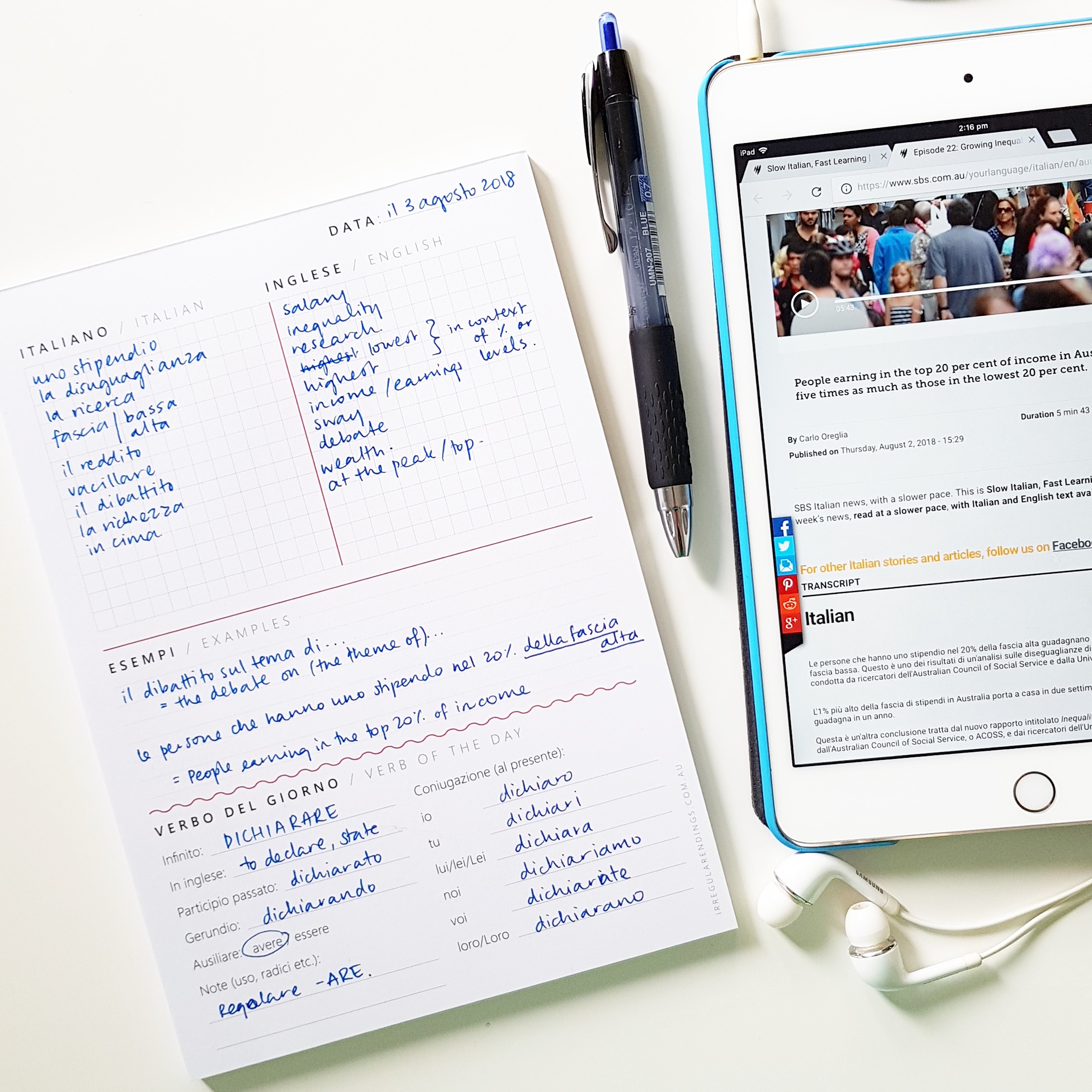
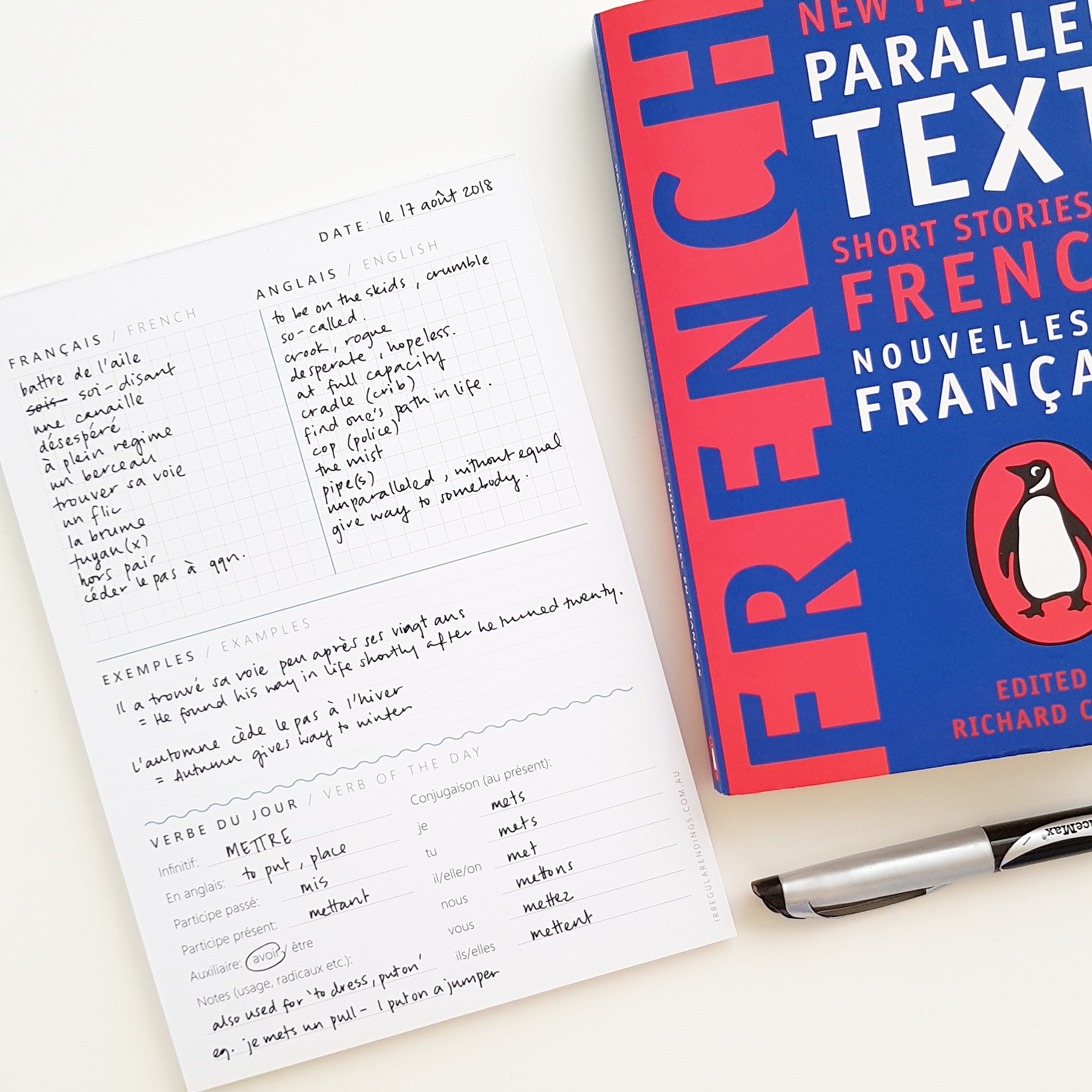
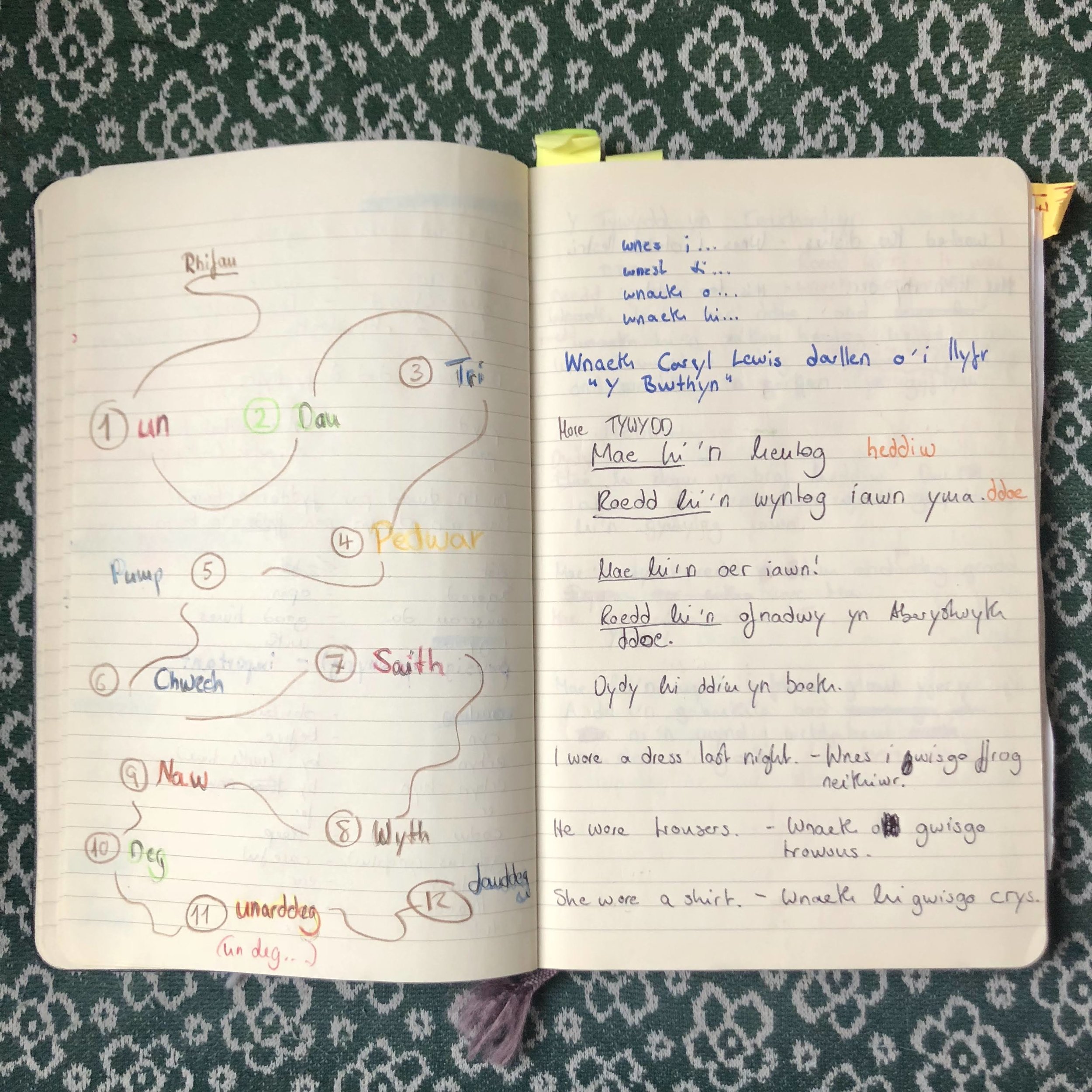
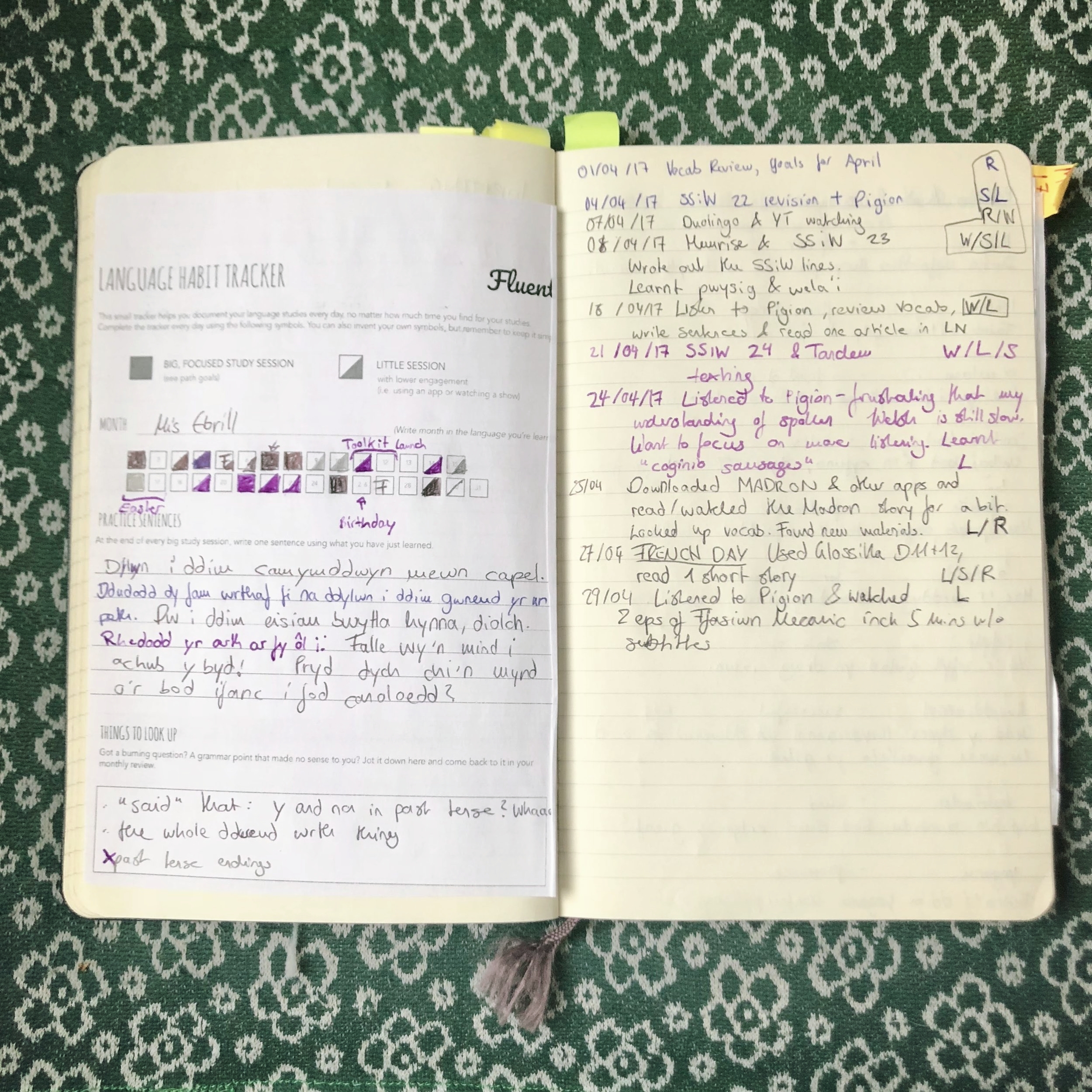
How To Work With The Language Notebook?
When you start learning languages, the notebook becomes more than just the place to note down the bare facts. You can use it for two core purposes:
1. Language Learning
Noting new vocabulary as and when you hear it, drawing memory aids, mapping out your memory palace even. Notebooks are also the right space to write down grammar rules and example sentences. On the pages of my own notebook, I see pronunciation notes and alphabet practice. Basically, anything.
For reviewing and testing yourself, there can be pages dedicated to vocabulary learning. My technique for such pages is to create special reference sections. This works in any book or journal, and you can learn it step by step in my $9 course, Write Your Way to Fluency. .
Here is an example of what this looks like in my current book:

It is easy to highlight words that I tend to forget, and even easier to add them to another list at a later stage so that my revision materials always stay fresh.
At the start of every new session, try looking through previous pages to review what you have learnt before. There is no need to memorize it word for word, but it will jog your memory and set up the ground today’s session can grow from.
2. Goal Setting and Productivity
Language learning is a big journey. For some learners it’s about growth and development, for others it’s a hobby or an aspiration. No matter what your goals and motivations are, you can gain a lot from creating a language learning journal..
Consider adding interesting facts about places, drawing maps or pasting in tickets and mementos from your trips.
Again, writing by hand and focusing on the book in front of you aids clarity and minimises distraction. In a busy world full of overachievers, this is more important than ever.
Here are some more ideas for what you can write in your language learning journal:
Vocab doodles or lists
Jokes & Cute Pictures
Repeat and review things you learnt from YouTube or a podcast
All types of language learning goals and motivations
Memories from cool things you’ve done
Tracking: Core skills balance, daily contact with an app
Your resource lists
Weekly learning plans
Ready to transform your language learning journey with just a pen and paper?
Join Write Your Way to Fluency for only $9! Dive into a world where motivation meets organization, and discover how a simple journal can become your most powerful tool for mastering a new language.
How Can You Navigate Your Language Learning Notebook?
One of the downsides of paper is that it doesn't have a search bar.
To aid yourself with a bookmark system, consider colour-coding areas like "grammar", "vocab" or "situations". Again, the beauty of your notebook is that this is your personal space. You’re no language learning robot, so work with what feels good to you.
The great thing about building your personal language learning system is that these categories can be unique to you and help you build the exact language course that you need (remember that this is one of the core principles in independent language learning).
My favourite bookmarks are sticky notes such as this cute set from Filofax, but this isn't the only way. You can experiment with a notebook in sections, with highlighter pens or beautiful bookmarks.
Good Notebook Options
You can get paper from anywhere of course, but the best language learning notebooks are durable and built to handle a bit of use.
Go for a notebook that is bound like a real book and lasts you all year. Next, discard any paper that is too thin or delicate to take scribbles, highlighters and different kinds of pen. You never know when you'll want to write something down and all you'll have to reach for is your auntie's fountain pen.
The style of paper does not matter - go for squared, lined or blank and pick a paper size that gives you a little space to work with. The language learning notebook works best it doesn't fill up too quickly. My favourite options are:
Frequently Asked Questions
How to Use A Bullet Journal for Language Learning
Having a bullet journal can be an incredibly effective tool for language learning, combining the flexibility of a notebook with the structure of a planner. Bullet Journaling not only improves productivity, it is also extremely flexible in terms of personalizing it for your own needs
Pinterest is excellent to see how other people are designing their bullet journals and to get inspiration for your own.
To keep simple, you set yourself a number of keys, which basically mean you choose which symbols have which meanings. Clarifying your keys is, pun intended, key to using bullet journaling successfully.
Once your keys are sorted, you need to decide on a format. This, however, doesn’t need to be strictly adhered to – indeed, I would actually encourage you to try out different things, since you will know when you’ve got a format that works for you. I like planning my whole year very briefly at the end or the beginning of my notebook. I use a Leuchtturm 1917 with dotted pages, having weekly spreads with the key events from each day, then doing daily pages with detailed to dos and agendas.
Why Do You Need a Language Learning Journal?
A language learning journal is an essential tool that helps you learn a new language more effectively and enjoyably.
Here's why a language learning journal is essential:
Progress Tracking: Helps you visually track your improvements and milestones.
Focused Improvement: Allows you to identify and concentrate on areas needing more work, like grammar or vocabulary.
Memory Aid: Writing down new information helps in better retention.
Customized Learning: Lets you tailor your notes with examples and visuals that make learning more fun and effective.
Self-reflection: Offers a space to ponder your learning methods and discover what techniques suit you best.
Share This Blog to Spread Language-Learning Inspiration With Your Friends!
Share this link on your Instagram stories or Facebook so your friends can create their own personalised language journal: https://www.fluentlanguage.co.uk/blog/language-notebooks.
Who knows, maybe you'll motivate someone to start learning. The more people you know who are learning a language, the more motivated you are!
Don't forget to tag @kerstin_fluent on Instagram or @fluentlanguage on X when you share it!
Further Links
Write Your Way to Fluency, your easy guide to creating the best language learning journa. (just $9)
How To: Bullet Journal for Effective Language Learning by Fluent Language
The Language Habit System | Fluent Language — Templates for building your language learning routine
Learning German With TV Shows: The Most Effective Strategies and Resources for Your Study Routine
Boost your German language learning with TV, podcasts, and radio shows! Discover how to pick the perfect show for your skill level. Say goodbye to dull lessons and hello to rapid vocabulary expansion.
Here's a dream scenario: Watch an hour of German TV every day. Within two months, you will understand everything.

Think that's impossible? Well, you're kind of right. No passive activity is going to give you a huge result if that's all you do.
But working with TV, podcasts and radio shows does deliver excellent results. It's not just a great addition to language learning routines that lack interaction. Using content like this also saves your lessons and study time from terrible dullness.
If you are interested in mastering the German language using podcasts, make sure to take a look at these 9 of the Best Podcasts for Learning German.
Just remember to do your work and think about where these fit into your study routine.
In today's article, I'm sharing recommendations for German shows that fit into your study plan and help you get big results.
Understand German Grammar In Minutes Without Frustration

So How Difficult Should A Show Be?
Opinions vary on how much of your input you should understand in depth for it to count as helpful for your language learning.
Intensive Listening
Intensive listening and watching helps learners develop better listening comprehension. You should want to work more in-depth with your materials, and aim for shows that you understand well. Make sure you are happy to spend an hour or two on the subject. The key expression here is comprehensible input, meaning you work with language that you actually understand.
There is no embarrassment in going for the "this is right for me" label, let’s not be over-ambitious. Slower speeds and easier vocabulary are helpful and mean that you can get the full effect out of the time you put in. Understanding more words is going to help you absorb German grammar naturally.
Extensive Listening
Got no patience for feeling like a learner? Then watch and listen a little above your level. No need to go straight for the intellectual talk rounds, keep it realistic and find a show about what you love.
This approach is best if you’re all gung ho about your learning and want to approach it with zest, speed, and intense practice sessions. You’ll be pushing your boundaries and get a fast sense of progression. The cost? Rapid learning loses thoroughness. The benefits of working with natural input are fast vocabulary expansion.
So pick your level of challenge first. Now, let’s think about the topics and materials that are likely to work for you.
How To Find a Show That Works For You
Millions of language learners have bought books of short stories and graded readers in many languages. Materials that are written for learners help you enjoy a good story while learning a language, and often give you extra vocab help. And what's more motivating than wanting to know what happens next? I think it’s brilliant, and encourage you to look for the kinds of things you enjoy in a foreign language.
Books have a huge advantage: They move at your speed and allow you to pick your own level of engagement. You can skim or speed-read for that immersion effect ("extensive reading"). For "intensive reading", give your text the full study treatment.
Reading and listening are both important, of course. They are two of the four core language skills (listening, reading, speaking and writing). If you want to learn more about core language skills and get tips on how to focus on them, check out my book Fluency Made Achievable.
Right now of course, you're not looking for a book. We're ready to listen! I have written an article on The 9 Brilliant German TV Shows and Movies. These shows will offer you enough entertainment in German to keep you on the couch for weeks in German binge-mode. Los geht’s!
Here are my favourite shows to add to your learning routine:
Designed for German Learners:
Learn Out Live Audiobooks
André Klein is awesome, you already know that if you’ve checked out his written materials in the Dino lernt Deutsch and Aschkalon Fantasy book series. Over the last year, André has also worked on adding audio versions of his popular stories. If you like an engaging story, these audiobooks are perfect practice material and the right choice for learners at A2 or higher. The books are read by the author himself and put you right into the middle of the story. The background sounds bring the story to life. André focuses on practice and pronunciation to help you learn German.
Here’s a sample so you can try it for yourself:
I reviewed Yabla here on Fluent Language a little while ago and I'm still ever impressed with their language learning content. The Yabla player offers one of the best multi-media experiences for learning that I've seen so far. Slower speed, multilingual subtitles and regular reports from all walks of life make this more than just one show.
Yabla is the kind of thing you should check out if you wish there was a whole TV channel just for language learners.
Jojo sucht das Glück
With this telenovela, Deutsche Welle has produced something incredible for language learners. The show is a professionally produced telenovela. Its story focuses on the adventures of Brazilian student Jojo as she moves to Germany and starts her new life in Cologne. There’s romance, music, and grocery shopping. It’s great for speakers upwards of B1 level. The website offers worksheets and exercises to make each episode into a full learning experience. If you’re working with a tutor, this is a great one to share. The addictive Jojo effect is good for extensive learning, because every short episode will make you want to watch the next one. German teachers, check out this page for guidance on how to teach with Jojo.
Slow German
Slow German with Annik Rubens is a culture and language podcast narrated by a native German speaker. Annik tells stories about what Germans get up to in everyday life. She talks about current affairs and offers transcripts and exercises in the paid premium edition.
Langsam Gesprochene Nachrichten
Ready to engage with German at a higher level? Then this podcast from Deutsche Welle is a great resource. This slow news show comes out every day and offers German learners an insight into current affairs. It's recorded at slow speeds to help you focus on understanding as much as possible. The language is not simplified, so this podcast is suitable for learning levels C1/C2. And if you’re not finding this enough of a challenge, you can check out the same broadcast at the original speed.
Logo
Logo is a kids’ news show that has been going since 1988 and enjoys huge popularity in Germany. The show’s web version features written articles, videos and images to help explain what's going on in the world. I like using Logo’s written articles because they have a great way of explaining current affairs and offering background insights and straightforward answers. If read things like Reddit’s “ELI5” (Explain like I’m Five), this news show is perfect for you.
When listening to radio shows or watching TV in German, remember materials for children are not designed for learners. The speakers will be talking quickly, and sentence structures are not be simplified. These materials don't offer transcripts or exercises, either.
Logo is made for native speakers, but its clear explanations make it a fab choice for German learners.
How To Use Your Time Wisely
No matter which of these programmes you choose to check out, remember the purpose of your activity.
- Are you taking a serious study approach to your material?
- Or is this something you're adding onto basic study to give yourself more motivation?
Each approach is valid. Still, you can't expect great results from minimal input. An hour of watching German TV with English subtitles is fun and keeps you interested. An hour of watching Jojo sucht das Glück while reading the transcript, adding new words to your notebook or flashcard deck, and then working through every exercise? Yep, that's going to deliver a BIG result. It's also going to make you more tired.
The key is for you to think about what you really want. If you want to understand more spoken German, it's pointless to work with materials above your level. That is just not how immersion works.
Ultimately language learning isn't down to genius or age or talent. You do the work and you get the results. There could be nothing simpler in the world, and still it's tough to consider.
What are your views about studying with TV shows and radio?
Which do you use for your own language lessons? And what are YOUR real results from building these into your learning routine?
Frequently Asked Questions
Can You Learn German Just by Watching TV?
While watching TV can certainly be a helpful supplement to your language learning, it won’t be sufficient on its own to fully learn a language like German. Relying solely on passive activities won't give you a huge result if that's all you do.
However, incorporating TV, podcasts, and radio shows into your language learning routine along with a practice of speaking and reading does deliver excellent results. It's not just a great addition to language learning routines that lack interaction. Using content like this also saves your lessons and study time from terrible dullness.
How Long Does It Take to Learn German on Your Own?
It doesn’t have to take you very long to learn basic German. For example, with my recommended resources, you’ll have the basics down in just a few hours. German is a beautiful language with many words that will be familiar to you as an English speaker, and the people are welcoming and friendly.
Stick to your new routine for 3-4 months and you’ll soon be having your first conversations. Learning a language to the highest level will take many years, but don’t let that put you off, because learning is a lot of fun!
Does Watching German Shows Help You Learn German?
Yes, watching German shows can be a super valuable and enjoyable add-on to supplement your German learning routine. watching German shows, you get exposed to authentic spoken language, helping you become more familiar with the nuances of the language.
The entertainment factor of watching shows in German can make the learning experience more enjoyable and less of a boring and daunting task. Learning a new language can sometimes be challenging, but incorporating fun elements like watching TV can turn it into a rewarding and entertaining activity.



Struggling with listening? Discover realistic tips, challenge prompts, and the best tools for improving your listening skills as a self-guided language learner