

#clearthelist February 2019: Chinese App Reviews and Teaching Welsh in Edinburgh
In this post, I’m sharing my language learning goals and strategies used in January 2019. And I’m starting to learn my 9th foreign language!

Welcome to the January edition of my #clearthelist goal tracking post. Clear The List is a support and accountability blog group sharing monthly language learning goals, hosted by my friends Lindsay and Shannon.
I have now been tracking my goals using Clear the List for 9 months. It’s a fun process - a little cumbersome at times to write check-in posts but always worth it for the accountability.
Ever since I created the Language Habit Toolkit I have been aware of how important it is to build a review process into your language learning routine. When you step back regularly and write down what you did, it’s easier to feel accomplished and understand that any lapses are temporary.
What Happened in January 2019?
After so much travel in December (retreat and Christmas), my intention was to have a month of routine, perhaps even a little rest. Now at the end of the month, I do feel a little more calm. But I’m also wondering where January has gone!
The month was focused on planning my year and working on the first project, which is launching a fabulous German course for beginners and “false beginners”. I worked on this course for 7 months last year and can’t wait to open it up for my 2019 German learners.
If you want a free preview, hop on here and register your email address.
On the blog, I shared the 9 Best Websites for German Beginners

Presenting my talk in Edinburgh. Thanks Maureen Millward for the picture.
This month, I also started work on Women in Language 2019 by contacting over 40 potential speakers. And ended with a trip to Edinburgh to present a lightning talk at Polyglot Pub Edinburgh. More about that in the Welsh section…
The Fluent Show
The Fluent Show was super efficient this month, I recorded 3 awesome interviews, 2 solo shows and ran a survey of over 150 listeners. Listen out for the next solo episode where I’ll share results and plans.
My favourite episode of January was Ask a Linguist, where we got to meet our linguist podcast heroes from Talk the Talk in Australia!
Language Goals and Progress
Let’s start with Mandarin Chinese for this one! Last month, I came out of the Chinese prep phase and decided that yes, I do want to learn this language a little bit.
Studying Chinese
I have been playing around with a bunch of apps. In my mind this isn't really "language learning" in my usual style yet. I feel like “proper learning” will start for real when I get a notebook, set goals and start saying things to people.
Without repetition and a notebook, I only retain 20% of what I see and practice. So I guess this is high level dabbling, and I’m not finding myself particularly rushed to move forward. I spoke no Chinese for 35 years of my life, and now I’m ok if it takes 6 months to start.
Patience is a secret language learning weapon.
Reviewing Chinese Language Learning Apps
Here are my insights on the Chinese language learning apps I've tried so far:

Memrise @memrise is fantastic for teaching the kinds of phrases you'll want to say. The videos with locals are wonderful, and this grammar screen you see here is a delight. Memrise seems to understand where I'm at as a learner. Only downside: I'm not finding it helpful for character study.
Drops @languagedrops is fantastic for learning lots of vocab, getting the hand of characters, and hearing clear pronunciation. It's got the best character/pinyin system for me. I’ve been enjoying the #90dayswithdrops challenge.
Duolingo @duolingo is good at building up each lesson, and has an interesting way of introducing new words. I'm not finding it as enjoyable as the others. The lessons feel too short. That owl is cute, though.
Lingodeer @lingodeerapp is the most comprehensive and I can see myself using this as a study guide. The stories at the end of each chapter are awesome, though I feel thrown in at the deep end with the characters now and then.
Welsh Language Goals
In Welsh, I usually set goals in 4 areas: listening, speaking, reading and writing. In January I hit a special extra milestone by teaching a few words in Welsh to others. Wow!
You can download my notes and recommendations from the talk by signing up at www.fluentlanguage.co.uk/welshtoolkit
Listening
January was listening month and I tried my best to get more practice in. I listened to Nicky and Lara on Mynd am beint gyda. LOVE the casual feel!
I also listened to the radio a few times, but it didn’t stick. My radio time is the morning, and I’m just not into Radio Cymru’s breakfast shows. If you know any better ones, give me a shout.
Finally, I did listen to the Say Something in Welsh listening practices and parallel.cymru’s spoken news.
I don’t think I’m suddenly twice as good at understanding spoken language, but this listening focus has been a great reason for me to look for new and different audio sources. I’m more surrounded by Welsh audio, and that’s automatically going to add more of it into my routine. Neis!
Reading
I had no goals, but I did read quite a bit anyway. Encouraging!
Speaking
My goal was to advertise for a new Welsh language partner locally, and I can report success! I put a post into a local residents’ group on Facebook. You know the one: “what’s that noise on Jackson street?”…but lucky for me, one out of the many people who read posts in the group referred me to Welsh speaker Jane.
Now I have someone to meet for coffee on a regular basis, and I’ve felt exhausted, excited and abuzz after speaking to her. I can make myself understood on any topic we’ve covered, and her talking speed is definitely adding to that listening practice.
In addition, I completed Say Something in Welsh Level 2, Challenge 22.
Writing
I did have a goal here, which was to write 6 pages using writing prompts. Goal achieved…but I’m not sure how enjoyable I found the topics so far. I prefer writing messages to friends in Welsh, and luckily I do this 3-4 times a week now.
Contact Goal
Every month, I log my “daily contact” with the Welsh language using the Streaks app. January was excellent with 20 days of contact. It’s a habit!
If you’re interested in a printable tracking system for your own language routine, have a look at the Language Habit Toolkit.
Goals For February 2019
Exciting times! I think it’s time to set goals in Chinese.
My Welsh level is comfortable and I’m feeling secure enough to share some attention. I will not set listening, speaking, reading and writing goals in two languages for the same month. That seems like overkill.
Chinese Language Goals
While I get used to easing off on Welsh, my February goals in Chinese are simple:
- Start a Chinese study notebook so I can play with sentences and practice a few characters
- Spend 3 hours studying Chinese in total
- Get a textbook or two out of the library to test drive them
Welsh Language Goals
I’ve been enjoying the structure of having specific goals, and for February I’ll still pick on specific areas out of listening, speaking, reading and writing.
Since I have set up a successful Welsh habit and made lots of friends who speak the language, it’s now fairly regular for me to read and write Welsh in texts and books. Yay!!
Listening is a weakness of mine. I can understand 60-100% of the spoken language now depending on dialect and speed, but I want to feel more comfortable. I’ll aim for 5 days of Welsh audio contact every week, using one of these sources probably:
- Parallel.cymru Newyddion
- Radio Cymru
- Mynd am Beint Gyda
- Spotify Welsh Music
- Say Something in Welsh
Speaking is obviously a key to success at this stage. I want to chat with friends or meet my tutor at least 3 times, and I’ll work on Say Something in Welsh too.
I’d love to make a few videos in Welsh but am struggling for time this month.
Other goals:
- Book a place on another Welsh residential course, this time at the higher level. What could go wrong!
- Say Something in Welsh! I realised today that I’m 3 challenges away from FINISHING Level 2. I can do it!
WOW so there we have it - a big catch-up on my language learning goals and live documentation of how I’m starting to learn Chinese. It’s arguably my 9th foreign language to be studied in some level of seriousness.
What Are Your Language Goals?
It’s time for a new year - are you studying a new language?
If you have ambitions in German, don’t forget to visit www.german2019.com where my free course is launching next month.
How was your January? Leave a comment below and share how you got on.
How Can I Inject Fun Into Language Learning? (Special Guest: Olly Richards)
Having fun is a key to success when it comes to most big endeavours. Surely language learning is one of those, too. But how can you best have fun when you’re learning a language? In this podcast episode, Olly Richards from I Will Teach You A Language joined me to discuss how you can love learning languages and have fun with it.

Learning a language is the challenge of your life.
It requires motivation, discipline, empathy, and some serious grey cells. It's an art because you learn to express yourself freely, beautifully, and you paint pictures with new words. It's also a science because you need to experiment with what works and what doesn't work.
But How Much Fun Can Language Learning Be?
In today's podcast episode, my guest is Olly Richards from I Will Teach You A Language. Olly says he used to learn languages for fun, going out with friends, and enjoying a great social life.
We had an incredible discussion - click play below to listen to it in full.
Now he's still learning them, but his motivations have shifted to intellectual gratification. He still gets fulfilment and a sense of achievement out of learning a language but in today's show he joined me to ask
"How Can I Inject FUN Into Language Learning ?"
Olly cites a few reasons in this youtube video, for example:
- He is busier than he used to be, mostly because he works a lot.
- He considers himself a social learner, but he doesn't have access the fun part of social interaction.
- He pursues the intellectual achievement, which means books and rules rather than pints and parties.
In January I sent out a tweet that caught Olly's eye and opened up the question about fun. Here it is:
Golden Rules of Daily Language Learning
Make contact with your target language on a daily basis
Find a convenient way of making that contact - the more convenient it is, the better
Prioritise fun and find something you enjoy in your target language
Olly saw that I talked about fun, and it was on his mind already...so we got together to have an in-depth discussion about having fun while learning languages.
The Discussion

Debate Team
Fun or No Fun, That Is The Question
Enjoying something does not mean that you are not learning anything. In fact, it is often a huge motivator for learning a new language - but both Olly and I agreed that fun and motivation are NOT the same thing. Fun and enjoyment also matter in language learning, because they add motivation. But can the fun ever be in the learning, or is it always part of the result?
Olly says:
"I care much more about speaking a language than the learning process. For me, the real fun is speaking the language."
Language Choices
We have to acknowledge that a language that's easier to learn can be more fun, because you can use all you learn just that little bit quicker. But does that mean your motivation to learn it will fade just because a language is "difficult"? Not necessarily! Deciding which language to learn is about much more than just thinking whether you'll enjoy it.
Conquering A Challenge
Adding to that, it's also fun to discover that you have achieved something you found difficult. But is that fun? I argued yes, but Olly wasn't sure - he thinks it's more about the results. We both found that conquering a challenge is a big motivation and so are the results. But the challenge itself may not always be the fun part. It can be the opposite of fun when something is way too difficult.
It Has To Be Interesting
The #1 fun killer? Boredom!
If you're all about the results and you work through those verb drills...but you're falling asleep over them...that's definitely not fun. It might still be productive though!
Olly thinks it's impossible to have 100% fun in language learning. There has to be a disciplined aspect, there has to be some routine...but if you were to focus on that exclusively, you'd lose sight of why you even started in the first place. This is especially important for those of us stuck somewhere in intermediate levels, when the honeymoon period is over and new words feel like "ugh, another one" instead of "wow, a new one".
7 Tips: How To Enjoy Language Learning More
So what can be done? How to plan for fun? Here are a few tips emerging from our conversation:
- If you have been feeling frustrated or under stress, take the pressure off and focus away from the results for a little bit. Try doing the opposite for a while and see what happens.
- Adjust your expectations of what "learning" looks like. and
- Be sillier, and try to use art, music, poetry to expand your mind and explore language. This isn't always easy to do, so consider reaching out to a coach or tutor to help you find a new way of looking at language.
- Embrace your own personality and work with who you are. If you enjoy play and your hobbies include juggling and clown skills, it's a safe bet that you may enjoy reading and telling jokes in another language. I also see this with analytical-minded engineers I work with, who love focusing on creating the most effective flashcards and routines based on data and hard facts.
- Curate your social life! Put the books down and spend lots of time with speakers of your target language, and make sure you end up in situations where your target language will actually be spoken.
- Change it up. It could be that you're bored because you've done the same thing too long. Olly finds that the ideal time to switch to a new activity is after a period of 3 weeks, and changing things more regularly is beneficial.
- Choose the easy language! This tip is a little tongue-in-cheek, but it boils down to the fact that you have to ensure you're making progress in order to keep enjoying what you're doing.
What About You?
Do you have fun when you're learning a language?
Do you think it's possible to have 100% fun in language learning?
Do you enjoy the language learning process? Or do you only really love speaking to people?
Join our discussion and share your answers in the comments below! I'm looking forward to reading how you treat "fun" in language learning!
Episode Links
Da Costa a Costa — Italian podcast recommended by Olly
The Fluent Show: Learning and Speaking 20+ Languages in New York City — Interview with "Language Learning Hedonist" Ellen Jovin
EPISODE SPONSOR
A Free Skype Class For Everyone! Claim It From Live Lingua Today

#clearthelist July 2018: French, Welsh, And Why I Am Not Learning Chinese Yet
Clear The List is a monthly language goal report. This month, I’ve got news about three languages as a learner and one more as a teacher. I’m getting into a silly stumble with the Welsh language, and speaking lots of Welsh on podcast and travel.
Plus: Why am I not learning Chinese yet? Read on to find out.

Welcome to my latest language learning update through #clearthelist. Clear the List is a support and accountability blog group sharing monthly language learning goals.
The Fluent Show
Fantastic month for the Fluent Show as we reached 270,000 downloads in under a year. YAY!! Thank you so much.
I loved the conversation Lindsay and I had in the episode “What is Fluency, What Is Mastery…And How Do You Get There?”, my top pick for the month. Every ambitious learner should hear discussion, so do check it out.
What Happened in June
June was always going to be a busy one, because it was the first launch of my brand new course German Uncovered. This is a story-based German course going from zero all the way to B1. There was much to do, and it meant a few early mornings and evening shifts. If you’re on the course, give me a shout. I’m so excited to finally share it with you.

Working on German Uncovered. Look at those lights!
In June, I also attended my first Canterbury Pride celebration and took a lovely week off travelling to Marseille. I also attended the People's Vote March in London.
Learning Welsh
Welsh is still my main language, though it came up a little short this month.
Cymraeg Gogledd neu Cymraeg De?
One thing that slowed me down was my belief that I should switch from the Northern Welsh accent (which I’d studied for 2+ years) to the Southern Welsh accent. Why? Because I moved from North to South in England.
This turns out to be a silly idea. When people tell me “everyone will understand you no matter what accent”, they are right. When they say “only a few words are different”, they aren’t right. Even though it’s possible to understand both types of Welsh, learning to speak them both is harder than I thought. Just look at these two sentences:
1. North Welsh: Dw i eisiau gorffen cyn yfory.
2. South Welsh: Dw i’n moyn cwpla cyn yfory.
As far as I know, these are supposed to mean the same thing, but all native Welsh speakers will understand both.
My tutor at the Welsh class I attended told me “no mixing your accents”, which has made the idea of switching what I’ve studied next to impossible. My italki tutor is a lot more chilled, saying it doesn’t really matter as long as I’m not taking formal tests.
Conclusion: Welsh accents are confusing. I think I’ll declare Project Southern Welsh something I don’t want to continue. I stopped making progress because I felt trapped in this whole accent confusion, when it’s not that relevant. For now, I’ll speak how I speak and let life go on.
Let’s look at the goals from last month.
Listening
I had hoped to continue watching the series Ffit Cymru. But the show’s focus on weight loss as a measure of all good in the world started getting on my nerves. So I watched perhaps one more episode, and my listening in Welsh came up a little short.
Reading
I had hoped to finish the book Sgwp (there should be a ^ on the w but my keyboard can’t cope), and I’m getting behind on this one. But I did take my edition of the magazine Lingo Newydd with me and read it on the beach in France. Result!
One cool new resource I’m using in Welsh now is parallel.cymru, a website featuring parallel articles in Welsh and English. I’m loving the fact that I can read more on screen now, and I even submitted an article myself.
Click here to read my article on parallel.cymru in English or Welsh
Speaking
My goal was to fit in two 30 minute sessions with my tutor Gwyneth, and I did succeed. Scheduling these in advance was a huge help. I was a worse speaker than usual due to the accent kerfuffle, and due to speaking French for 10 days this month. But overall, mission accomplished.
Writing
I wanted to stick with poetry and write a haiku in Welsh, but I didn’t get it done. I didn’t even write much else. WARGH.
Daily Contact Goal
In May, I logged 14 days of contact with the Welsh language. Pretty good considering I was very busy with the German course, and also spent 10 days in France. My most used resources were Lingo Newydd, Ap Geiriaduron, and italki.
Speaking French In France

My second language of June was French, as I recorded my first bilingual podcast in French and English and then took some time off in Marseille. I had a great time, and noticed the difference a week in the country makes.
I was able to speak French pretty well anyway, as it’s a language I’ve studied on and off for 22 years. The week in France worked wonders for my comprehension and my speaking confidence. I refreshed all those everyday phrases like “you’re welcome”, “that was awesome”, or “for takeaway, please”.
I also learnt I enjoy being not-perfect at French. Here in England, I speak a foreign language almost every minute of every day. It doesn’t feel all that foreign anymore. But in French, I am still a learner. There’s a challenge, and that felt great because challenge means progress.
We didn’t stay in the main tourist quarter, and so a lot of people were amused and curious about this German and English couple where only one half speaks French. My husband relied on my French skills and I could tell that speaking the language was an advantage almost everywhere.
Good to Remember: People Switch To English For THEIR Reasons
In a busy restaurant, the host told me how to get to my table in French. It was noisy, and I didn’t understand what he was saying. I said Pardon? and he switched to English. I told him that I do speak French and he can speak to me in French.
His answer? “It is very busy here and I can speak English. In other words: He was too busy to slow down. He didn’t care if I speak French well, and he wasn’t judging my language skills. This was about getting something done.
If you’ve ever been in a similar situation, remember that people switch languages because it’s best for them. When someone switches to English, it’s often because they have other things on their mind than your language progress. Click to read more about this and get tips for dealing with the situation.
Goals For July 2018
Now that I’m in the intermediate haze with Welsh, I find it more important than ever to keep going forward. Happy to put French to one side and focus on Welsh again this month, especially because at the start of August I want to go to the National Eisteddfod again!
Listening
So disappointed I can’t watch the World Cup with Welsh commentary! I need to get ready for the Eisteddfod so it’s time to hear a lot of Welsh. I will Listen to Welsh For 90 Minutes Every Week Doesn’t matter if it’s the Pigion podcast or a show on S4C, the most important thing is that I hear a lot of Welsh right now.
Reading
Try and Finish The Book Sgwp Same as last month!
Speaking
Have 1 Long Lesson and 3 Conversations Loved having shorter classes in June (I scheduled 30 minutes at lunch times) and I’ll keep going with that, but as we know I struggle with yes/no in Welsh so I’ll also book a long lesson to drill these specifically.
And it’s time to catch up with my exchange partner!
Writing
Every month, I read about poetry and I read some poetry. But I’ve not written any. Goal: Write 1 Poem, Any Kind
Maybe asking myself to even to a Haiku was too much, a hurdle in front of getting started. So I will dial down the ambition one more. Easy.
Finally there is one more language I am playing around with, but here’s why I’m not learning Chinese right now.
Chinese
I’m still not learning Chinese. I’m going at the pace of two words a week. There’s so much in this language: words, tones, characters, all of it unknown to me. I can best describe this as a Prep phase, way before “learning the language”. I don’t want to put pressure on myself at this stage at all, and all I’m doing is driven by curiosity.
I had a similar phase in Russian and Welsh, where I’m currently at A1 and B1. Prep phases feel so valuable to me, especially when the other language is different from the ones I already know.
The Prep Phase And My Languages
Here’s an overview of the languages I know:
- I speak German and English at native levels. (C2)
- I’m fluent in French (C1?).
- I’m conversational in Welsh, if the conversation partner helps me. (B1)
- I’m somewhat conversational in Spanish, if the conversation partner helps me loads. (A1-A2)
- I can read Spanish, Italian, some Latin. (A1)
- I can read Cyrillic and exchange basic pleasantries in Russian. (A1)
I’ve never done much with Asian languages.
If I started to learn Romanian or Swedish I probably wouldn’t need a Prep phase. But with a new unfamiliar system, I find this extremely useful. If I decide to take this further, dabbling with tones and apps could turn into learning Chinese for real. But for now, I’m just learning about the language.
How Was YOUR Month?
Do you have a Prep phase too? Are you struggling with accents in your target language?
I would love to read about what you’re up to in the comments below!
If you want to join the linkup and share your own goals for the month, hop on to Clear The List with Lindsay Williams and Shannon Kennedy.
#clearthelist June 2018: Learning Languages When Busy
May was a CRAZY busy month and I missed lots of language goals. But if you need some inspiration (or commiseration!) about learning languages when busy, this clear the list entry will hit the spot.
Welcome to my latest language learning update through #clearthelist. Clear the List is a support and accountability blog group sharing monthly language learning goals.
I’m writing this article a few days later than I would have liked, but that doesn’t mean I can’t review and set my language goals.

What Happened In May
Looking back at the diary, here is a list of what happened over the month. It was a B U S Y one.
- I recorded an awesome episode of the Fluent Show with Ellen Jovin, and several episodes with Lindsay, plus a new bilingual episode that you guys will hear soon
- My beloved car Polly got the rust and failed MOT, meaning I’ll have to say good bye 🚙
- I visited Manchester, one of my favourite cities, and ran the Great Manchester Run (a 10k) in support of Manchester University’s access funds
- Olly Richards and I started working on the launch of German Uncovered, which is my new German course — of course now everything needs to be done faster than ever
- I prepared a talk and presented at the 5th Polyglot Gathering in Bratislava!
- We filled all spaces on Fluent’s first German Retreat 🇩🇪💕🍺 in Munich. The Retreat is now fully booked and I’m looking forward to announcing the next one in a few months.
- I finished the book Getting Through, about pragmatics in intercultural situations. It’s very good! Sadly no time for a thorough review.
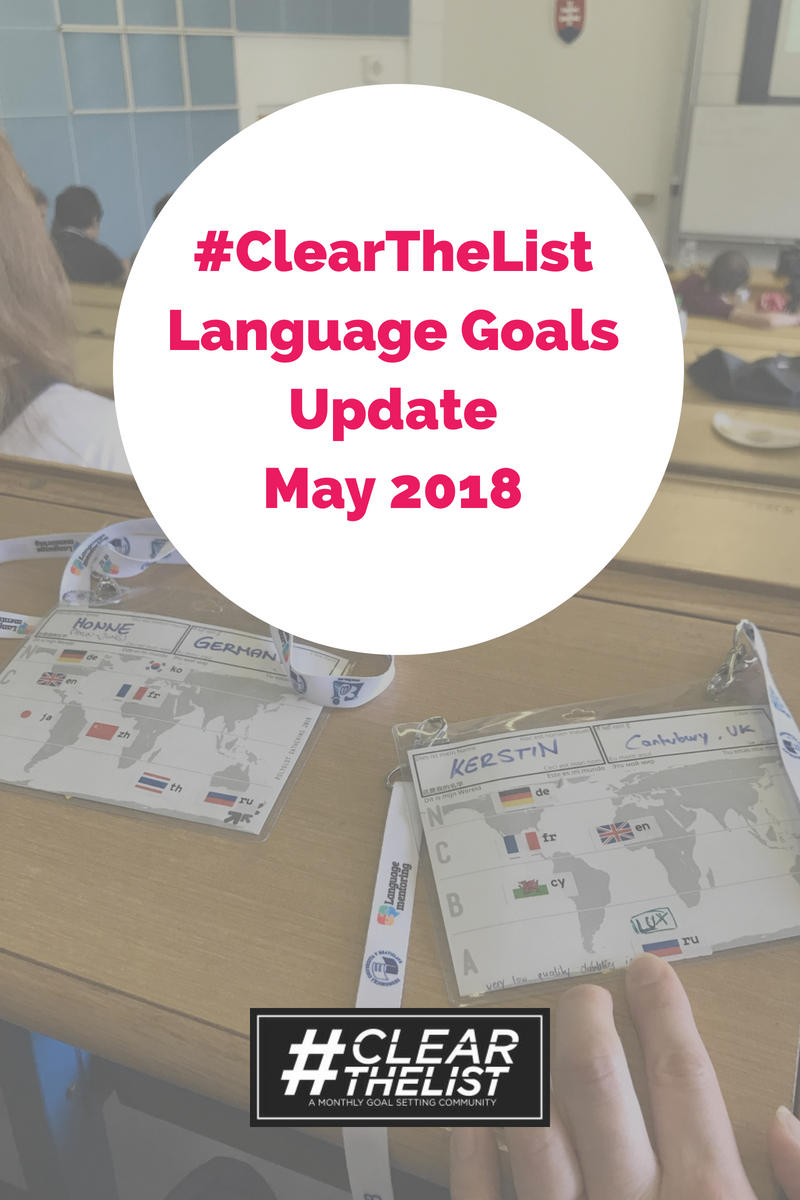
A Polyglot Gathering is always such a fantastic experience, where you get to meet many new friends, practice your languages, and feel as if you’re not a weirdo because other people there get excited about diphthongs too!
Shout out to the lovely James who patiently let me practice my Spanish on him in Bratislava. I was encouraged to be getting sentences together. I also practiced very basic greetings in Russian, and spoke Welsh, German, and French,=.
How I’m Trying A Bit Of Chinese
True to the spirit of a month that ended in the Polyglot Gathering, this one contained some dabbling in a new language. Inspired by a mention of the LingoDeer app by Lindsay during Fluent Show 89, I’ve been learning my first ever Chinese words, letters and phrases.
The Fluent Show

On the podcast, there were some great episodes with both guests and co-host. Don't miss out on my conversation with Ellen Jovin, reminding us all what matters most in language learning. She has studied over 20 languages, all from her apartment in New York City.
Listen To The Episode About Learning And Speaking 20+ Languages In New York City
Thank you, Ellen!! You're awesome.
Welsh Language Goals: Review For May 2018
These were my previous goals
Listening
Hah! Last month I declared that watching TV wasn’t working out for me as a goal. This month I got straight into watching TV, starting with an idle viewing of a Welsh triathlon (for some reason I enjoy sports commentary), and moving on to Ffit Cymru - a sort of “Biggest Loser” show for the whole country of Wales.
And what’s best is that I managed to watch a significant chunk of it without even the subtitles. When switching off the subtitles, I don’t worry so much about understanding 100%. For me, it’s about getting more time to watch before I get tired. So with 15-20 minutes subtitle-free at a time, things are looking great in the listening department.
Complete at least 2 intensive listens to the Pigion podcast This was the original goal and I did listen to one or two of the podcasts, but unfortunately the vocab list links were missing for a few episodes in May. So I didn’t quite get it done as planned.
Still, happy with my Welsh listening comprehension!
Reading
Start reading Ffenestri or Sgwp Result! I am finding my choice Sgwp a lot easier to read than the previous choice (Bywyd Blodwen Jones), and the story is great. The chapters are a lot shorter than expected, so instead of 1-3 I managed to get up to 23 so far.
Read poetry in Welsh! Sadly, this one fell by the wayside. But I’m not ready to give up yet.
Speaking
Have at least 6 (!) short conversations in Welsh only Remember those 6 conversations I was going to have in May? Omg. Fail o Rama. Even though I now have a few people to access as language tutors and exchange partners, I just didn’t make the arrangements to actually let them know I want to practice. Lesson learnt: When you want to practice speaking in your target language, turns out you’ve got to go and arrange speaking practice.
I spoke some Welsh at the Polyglot Gathering and got good feedback, but overall I felt I wasn’t performing how I’d like. The noise levels, spontaneous nature of conversation, and mix of languages flying around my mind meant I was a lot slower. Plus, I still can’t handle those bloody yes/no questions!
All in all, maybe 2 out of 6.
Look for a book club
The book club is in contact, we’re regularly writing to each other and had a date in the diary. Sadly we missed that date, but apart from that it’s mission accomplished.
Writing
Write 2 language poems, and more considered ones. Uhhh, no that didn’t happen. I got intimidated after hearing an excellent BBC documentary about the cynghanedd poetry form, and then I thought I better not bother. Look below for a VERY simplified goal, because I am NOT ready to give up on #languagepoems.
Daily Contact Goal
In May, I logged 20 days of contact with the Welsh language. I lost track a bit towards the end, but I believe about 3-4 days were unlogged. My most used language apps were Ap Geiriaduron, Duolingo, and SmartCards+.
Language Goals For June 2018
June is another month that’s looking like it will be intense, with continued work on German Uncovered for the latest parts of the course and a well-deserved holiday in there too.
Check out the goals:
Welsh
Welsh is still my focus language, but this month I’m reducing the goals to make space for French and Chinese.
Listening
Follow The Ffit Cymru Series on S4C My goal is just to watch it, and I will switch off subtitles if I’m feeling up to it.
Reading
Try and Finish The Book Sgwp I’m enjoying this book and got about halfway through in crazy busy March, so let’s see if I can aim for finishing this month.
Speaking
2 30 Minute Conversations With My Tutor I tend to have a dislike of binding myself to a schedule, so I hadn’t booked regular classes. But noticing how that led to some serious slacking, I’ve now taken action and booked in the next 2 classes with my italki teacher in one go. They’re both in for this month.
Writing
My Welsh writing practice is now regular as I send emails and DMs to a few people in the language, but as a goal, I’m adding.
Write 1 Haiku I overshot last month and want to keep it super easy so I can achieve this one. If I write 1 and there’s time, I’ll write another. Easy!
Non Welsh Practice
There are two other languages I will probably work with this month.
French

La Belle France
Going to see the Calanques!
I’m going on holiday to France, so there’s no way I won’t be speaking a lot of the language. My French is a “rusty C1” kind of level, but especially the spoken language is very rusty. Read here for more about my French practice and tips.
My goal is to book a guided hike of the Calanques, all in French.
Chinese
In Chinese, I’m only dabbling and it feels intimidating to actually commit to a goal. I will keep playing with Lingodeer and see what I can retain.
So, in a nutshell that was the month of May! What about you?
How was your month?
If you want to join the linkup and share your own goals for the month, hop on to Clear The List with Lindsay Williams and Shannon Kennedy. I would love to read about what you’re up to in the comments below!
What Is Fluency, What Is Mastery...And How Do You Get There?
This week on the Fluent Show, Lindsay and I went deep into what fluency is, adding in a few other words that often feel awkward to use. It's a great conversation, and will provide you with a new sense of clarity and inspiration, so you can confidently go out there and do what you need to do: learn languages and feel great about it!
If there is one question that haunts language learners, it must be this one:
"How many languages do you speak fluently?"
Often asked innocently by people who are interested, it can strike terror in your mind. Will they test you on your languages? Are you allowed to say you're fluent if you still make mistakes?

Oof! Those are heavy questions, and none of them are difficult to answer. Even for those of us who have studied for decades, the question of fluency still causes confusion.
This week on the Fluent Show, Lindsay and I went deep on those questions.
It's a great conversation, and will provide you with a new sense of clarity and inspiration, so you can confidently go out there and do what you need to do: learn languages and feel great about it!
Press play now, and don't forget to leave us a comment below to share what you thought of the show.
Podcast Notes
Our warm-up discussion revolved around the labels we see in our space, and whether they apply to you.
If You Travel And Work On A Laptop, Are You a Digital Nomad?
A digital nomad is a person who travels and works online, right? But for some reason, the term can feel icky to us. In this week's episode, we discussed how some words walk that line between being descriptive and defining.
When being a digital nomad (or "polyglot", y'know..?) becomes a label that you like to put on yourself, it's worth taking a second to consider who that YOU really is underneath. After all, at some point everyone might want to stop travelling and settle up with a nice cat, just two target languages instead of 12, and a garden and a veg patch. And that is super cool, because that's you.
If you thought that this discussion of who YOU are was deep, wait until you hear what we moved on to!
How Will You Get Fluent? How Can You Achieve Mastery?
I have received several messages from listeners recently, asking the Fluent Show to weigh in on how we can achieve goals such as fluency and mastery. And interestingly, each one of them asked another question:
"How do I know when I have achieved it?"
What Is Fluency In A Language?
Our first question came from Evan, and he wondered when one can consider oneself fluent in a language. In the question, Evan considered quite a range of definitions from "making no mistakes" to "dreaming in your target language".
Our discussion starts off with this fluency mindmap I drew:
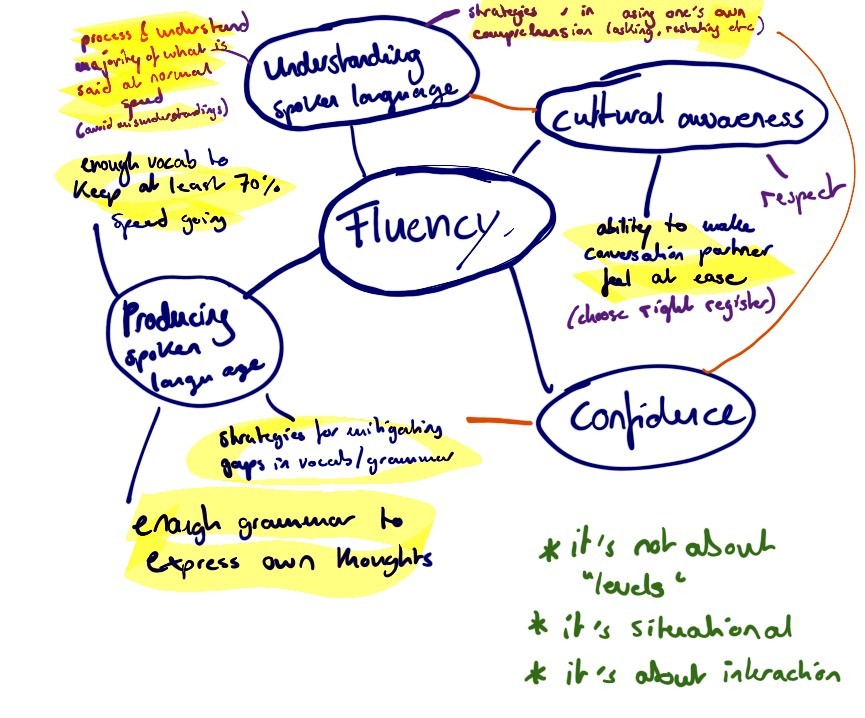
Bet you love my handwriting. Here's more about our take on fluency..
- "Fluency" implies speed and ease when using a language, which comes out most strongly when you're interacting with someone in person
- Usually interacting with someone in person means speaking
- The concept includes intercultural awareness that helps you put your conversation partner at ease and how to interact in a way that is appropriate for their style
- It implies confidence, meaning you have strategies to keep a conversation going
Fluency In A Language Is A Moving Target
Ultimately, your own definition of what fluency means to you is personal and unique. We believe that there are different points of fluency. These can relate to your goals and the purpose of your language learning. They can relate to what you are aiming for next, or what you're finding around you right now.
Just as life is forever changing, you may constantly evaluate your requirements for being "fluent".
What Is Mastery Of A Language?
Moving on from the fuzzy concept of fluency, we turned our minds to "Mastery" and how it is different from the former.
Madeline wrote in and asked:
What counts as mastery? Does every native speaker even possess it?
Our Thoughts on Mastery
This one was even trickier to nail down, believe it or not!
- Mastery is a point of pride and confidence for many, something we actively aim for and
- The word implies comfortable command, being able to use a skill (i.e. a language) with ease
- Mastery includes understanding beyond the literal meaning of the words in a target language
- But it can also imply superiority, like being the best out of everyone who uses that target language. Which isn't quite right in this context.
- For me, mastery is about more than just conversation and personal interaction. It encompasses the four core skills: listening, speaking, reading and writing
Our Conclusion
Both fluency and mastery are wonderful concepts to consider, but as Lindsay says, she is happy to not be fluent or masterful in every language. There is so much to discover and learn, and we can take a lot of joy out of appreciating the way that's ahead of us.
Yes, you can always get better. But there's no point in stressing about whether you are a fluent master - walk your own path, keep moving forward, and allow yourself to feel fluent on your own terms.



Struggling with listening? Discover realistic tips, challenge prompts, and the best tools for improving your listening skills as a self-guided language learner