

Grammar ♥︎ Practice en Français: 3 Sweet Grammar Tricks for Learning French
Quick Fix French! Learn the essentials of the French language, explained in simple terms that will have you creating your own sentences in minutes. For this post, I have selected 2 grammar topics for beginners and 1 bonus for improvers, meaning that you’ll get a great tip no matter your level.
Get out the macaroons for some sweet sweet grammaire française. Yes, I've got a treat for those of you wanting to take grammar ♥︎ to the next level with a dip into the grammar of a language I've learnt for 20 years: French!

In this post, you're going to learn the essentials of the French language, explained in simple terms that will have you creating your own sentences in minutes. It is a collaboration with Shannon from Eurolinguiste, who is covering how to use the past, present and future tenses in French on Monday.
I have selected 2 topics for beginners and 1 bonus for improvers, meaning that you can study French and crack on with this post at any level.
Beginner Step 1: Using French Nouns
Sentences are made up of different components, but only two of them are absolutely essential:
- the verbs, telling you about an action
- the nouns, telling you who is acting and what they're acting with
French nouns come in two gender variations, feminine and masculine. The gender isn't really visible in a word itself, but it has an impact on the kinds of words you have to use around it.
Firstly, make sure you use the right article with your noun. There are definite articles (like the English the) and indefinite articles (like a or an). You have to choose the right one according to the gender, so here it matters if your noun is feminine or masculine.

Quick Guide to French Articles
New French learners find themselves frustrated when they realize that the gender of a noun is impossible to predict. I agree - it's tricky! There are a few good rules, however, that you can use to spot helpful patterns. For example, words ending in -ment are always masculine, words ending in -tion are always feminine, and according to my French teacher in secretary school "all the bad things are masculine" (divorce being her example!).
What If You Get The Gender Wrong?
There is no big penalty for getting the gender of a French noun wrong as you are learning the language. In fact, it happens all the time! Native speakers will not think that you are bad at speaking French because even after decades it's still difficult to assign every gender correctly.
###Easiest "language hack"?
Just ask: ...c'est féminin où masculin, s'il vous plaît?" (is that feminine or masculine, please?).
Beginner Step 2: Using French Adjectives
Adjectives are descriptive words (for example grand meaning big), and you can just pick those out of the dictionary...and then you've got to change them according to the gender of the noun. So in other words, the adjective will always be looking to its big noun brother.
A bit like that kid who hangs out with the stronger kid in the playground and shouts "yeah right!" every time the big kid does some thing. The agreement also covers if the words are in singular and plural
Here is a Quick Reference List of the Rules
- When the adjective usually ends in a consonant, the feminine version will take an extra -e at the end. For example, grand and grande.
- When the adjective ends in -eux, the feminine version will be -euse. For example, heureux and heureuse.
- When it ends in -ien, the feminine version is -ienne, like in ancien and ancienne.
- When the adjective already ends in an -e, it doesn't change. Bonus! For example, jeune stays the same.
Here are a few helpful words that you can use to describe yourself. The French for "I am" is Je suis. Try it!
Quelle est ta nationalité? - Je suis..
- anglais, -e - English
- allemand, -e - German
- américain, -e - American
- canadien, -ne - Canadian
- autrichien, -ne - Austrian
French Grammar for Improvers: Contracted Articles
Shortly after learning the essentials such as nouns, verbs and adjectives, it's time to get into details. French has so many little details that make it sound prettier!
In fact, I have a French textbook from 1948 at home which was owned by my grandfather during the French occupation of Germany. And this book starts with some ground rules of French. Rule number one: Wohlklang, the principle that everything in French has to sound nice. Hah!
Here's what that has to do with French articles. You already know how to say articles from the table above. But here's something you might not realize. Every time the article connects with the words de (of/from) or à (at/to), the two little words try to connect and form a contracted article.
French Contracted Articles in 7 Minutes
Learn the details of how this works in the following video, featuring Kerstin in the summer!
So as you can see, the French grammar really strongly revolves around this idea of sounding nice...well no, actually it's all about your noun being feminine and masculine and this concept determines how the words around it are arranged. Check out Shannon's partner post to learn about the other essential in a French sentence: the verb!
How to Know if You Should Use à or de with a verb
While grammar has many rules that help us avoid memorizing, the case of "how the verb connects to the next word" has to be learnt with a good verb list or table. Those little connecting words are called prepositions, and they cannot be translated directly. When you look up one of the little ones in the dictionary, you're likely to find about 5 meanings.
So for example, "be interested in" is s'intéresser à but "look forward to" is s'attendre à, giving the French word à two different meanings. And that's just the tip of the iceberg.
I was lucky to have a teacher who put a lot of stress on learning the verbs with their connectors right from the start, so that I never developed a big gap. The verbs that connect directly to the next verb are called "pure infinitive", and the other groups are "infinitive with de" and "infinitive with à". If you're a self-teaching French learner at an early stage, do yourself a favour and study them too.
My go-to reference for everything about French verbs is the Bescherelle L'Art de Conjuguer. In my version (the German one), the relevant lists are in section 164 of the grammar part. Very handy!
Like This Post? Check Out The Full Course
If you loved this blog post, you will undoubtedly enjoy learning French with me in Easy French Grammar for Beginners.
This course contains all the explanations that I wish I had had when I first started out. It's plain and simple, putting things in straightforward terms that just make sense.
Several learners have already written to me with gratitude because the course finally helped them understand complicated concepts.
I'd love for you to try it out, and you can do so right here.

4 Techniques for Switching Your Brain into Language Mode
Have you ever heard of a phenomenon called "Priming"? Priming is what psychologists call it when your brain adapts to the environment around it without you realising. For example, you might automatically walk slower in a nursing home than you do in a gym. The brain helps your body to adjust, and this also affects your memory and even your confidence and the whole way you interpret situations.
How Priming Helps You Turn on Your Brain
Priming is largely unconscious, but now that you’re aware of it you can also use it to your advantage when learning languages. The idea is to switch your brain into “language mode” and use cues from your environment to help you get into the right zone.
Want to learn more about how to be a productive language learner?

©morethanmaths on Flickr
How Subtle Prompts Help You Stay in The “Language Learning Zone”
When I was a German tutor, I’d teach many people in their lunch hour. They would stay in the office at their English-speaking workplace, close the door and open up Skype to start chatting German with me.
In those situations, I’d commonly noticed that it took them a lot of time to warm up, relax, and start chatting away. Having thought about the learning environment and what it means for your performance, I came to the conclusion that these students need to make a brain switch from work mode to learning mode.
In this article on Wired, the author describes how a mere glance at the native speaker will prompt them to blurt out native words.
The different role you need to play as a language learner.
And there’s more at play than just the language you’re speaking.
Many people who work in management or office-based roles are in an environment that looks a bit like school, but demands a completely different behaviour. “Professionals” don't just go out and try things. They are expected to control their creativity and maintain a professional image at all times.
When you think about the good mindset for language learners, it's a contrast: You'll do well if you can combine curiosity, discipline and a complete disregard for embarrassment!
How to Start Switching Your Brain Into a Different Mode
Switching up a part of your environment can help you become a better learner, with simple prompts that take seconds to implement.
Try out some ideas that learners and teachers can use to make priming work in the right way:
1. Listen to Target Language Songs and Watch Movies
I will not promise you that watching an awful lot of films in a foreign language will magically beam fluency into your mind.
The real benefit of surrounding yourself with the target language is that you stay engaged with it and develop knowledge of the country. In terms of the priming benefit, it will work magic. Plus, you get to do it while putting your feet up or driving.
2. Find a Suitable Slot in Your Schedule
Schedule your learning sessions for the right times. For example, I like doing my chatting in Spanish on the drive back from Zumba - partly because the Spanish lady is captive in my car, partly because we've just spent an hour having fun and dancing around. Others also swear by having a nice glass of wine to relax or using breathing exercises.
Another great tip is to create a learning corner in your home - somewhere quiet, free from distractions and full of positive associations.

3. Visualise Your Life as a Successful Language Learner
School classroom teachers have known for a long time that putting up posters and displays around the classroom can get pupils in the right state of mind for learning. They don't have to be written in the foreign language, but just reminders of what's great about the country you're learning about.
Take a tip from this and create your own language learning displays full of things that interest you about your language. They could be recipes, tickets from old trips, tourist brochures or printouts from the internet. I particularly love vintage posters.
You can find more inspiration on my Pinterest boards for German, French and Russian.
4. Warm Up in Your Target Language
In my teaching role, I try to start my lessons off easily with some smaller warm-up activities like asking students how they are or offering them a drink.
Recently, I received the great tip that using the same warm-up activity every time for regular students is actually helpful - here I was worrying people would get bored, but the learner's perspective was that knowing "what's coming" allowed them to prepare and feel confident at the start of the lesson. That puts every learner in the right state of mind for success.
A Festive Take on Using Your Environment as a Study Aid
Click here for my article on learning a language at Christmas (even if you don’t celebrate it)
First published July 2013. Last updated December 2021.
A Language Learner's Guide to Mindset, Mantras & Emotions
Psychology and mindset are a big success factor for learning another language, so in this article I will look deep into the eye of the success storm and share the best ways that you can find a growth mindset for language learning success.
This article is great for language teachers and students and features lots of practical tips and a podcast episode.

When was the last time you felt discouraged by a language learning setback?
Discouragement and insecurity get the best of everyone from time to time, but the worst part is that we’re afraid to admit it. Even in a community of language learners, we have a bad habit of hiding in fear during our setbacks and comparing ourselves to those who are experiencing success.
Think back to a time you doubted yourself. Did you ever wonder:
Am I learning the right way?
Why am I not making more progress?
Why does it seem like everyone else is having an easier time progressing?
How can I stop making so many mistakes?
Will I ever be able to learn this language?
If so, you’re not the only one to feel trapped in this sort of negative mindset. It’s a part of life.
What really matters is the steps you take to keep moving forward.
On The Podcast
Listen to this podcast with me and Lindsay Williams to explore more about creating a mindset that will help you learn another language:
What is a Mindset?
Maybe you’ve heard about mindsets before, but what does it all mean?
Like a narrative, a mindset is the mental filter you add to everything that happens in your life. It colours the way you look at the world. For example, when you’re in love, people say you have rose-tinted glasses. You’re so happy and full of endorphins that it doesn’t even matter if someone cuts you off in traffic.
But when you’re having a bad experience in the morning, it can also make you more aware of the next sub-ideal thing. Then, before you know it, you’re having a bad day.
This is a form of priming, which happens when your response to something is shaped by a previous influence. It can affect multiple aspects of our lives including our language learning efforts.
That means, when you find yourself in a negative mindset, it can change the way you view your language learning progress.
Having Negative or Limiting Thoughts?
Now that you’re aware of those pesky negative mindsets, it’s time to change them.
Of course, that’s easier said than done.
One of the first questions you might want to ask yourself is whether you’re being held back by a fixed mindset.
What does that mean?
In learning and education, there is a theory that the presence of either a fixed mindset or a growth mindset can change the way children process difficult tasks and deal with failure. The Growth Mindset theory has been researched by psychologists Carol Dweck and her team.
In short, a fixed mindset is one that believes you cannot change. It’s the idea that insists that you aren’t capable or intelligent enough to conquer the difficulties you face.
Meanwhile, a growth mindset is the idea that you can develop your intelligence to improve and that your continued efforts will lead to success.
Now, think about your own doubts. Are they a part of a fixed mindset that’s keeping you from feeling like you have the ability to succeed?
Do You Believe Language Learning is Difficult?
If you’ve ever thought...
"__ is a hard language. I don’t think I can do it."
"Am I studying enough? Is my method effective? What is my learning style and what is everyone else doing?"
"I’m just not at the level I should be. I’m just not doing well enough and I keep trying but I cannot get the concepts right. Everyone else is progressing more quickly."
"I’m too old and forgetful now, my brain isn’t what it used to be."
"I’m never going to get to the point where I can effortlessly understand. It’s never going to be easy."
..what you might really be saying to yourself is this:
"I’m not smart enough."
"Can I trust myself?"
"I can’t get there."
"I’m not allowed to have fun. Learning this is suffering."
Obstacles can be very real. Depending on your access, opportunity, disability, education, etc., you might not be progressing as quickly as someone else. You might not know about a different method that would suit you a bit better or have the ability to use other resources.
However, the theory behind adopting a growth mindset is not an assumption that your thoughts can magically make everything better. Instead, it’s a way to improve your own self-image and begin recognising your worth and celebrating the skills, talents, resourcefulness, and grit that you do have.
By consciously changing these negative thought patterns, you acknowledge that you are always capable of becoming the best version of yourself and that you’re not the only one.
How to Challenge Your Negative Ideas
Working against a negative mindset, is its own challenge. So, where should you start?
Remember that if you find yourself stuck in a negative, fixed mindset, the only way to start making progress again is to create a new perspective for yourself. Your first step is to promote a growth mindset within yourself by remembering that intelligence is not a fixed, limited capacity that cannot be changed.
In other words, it’s impossible to not be smart enough because you can always learn and improve.
For example, in a school setting, educators and parents are encouraged to use open language that highlights effort and removes the idea of natural talent. This way, children are less likely to adopt a fixed mindset about their abilities and intelligence.
You can use a similar strategy for our own language learning efforts with the help of mantras.
Let’s Make Some Mantras!
If you’ve ever tried meditating, you might already know about mantras. Whether in the form of a word, a phrase, or simply a sound, mantras help us focus our thoughts. They can help change our perception.
This makes them valuable for turning our negative, fixed thoughts into ones that can help us progress.
Mantras can promote overall self-esteem to boost confidence:
I approve of myself and feel great about myself.
My high self-esteem enables me to respect others and beget respect in turn.
I accept others as they are and they in turn accept me as I am.
It matters little what others say. What matters is how I react and what I believe.
I have high self-esteem as I respect myself.
I am solution-minded. Any problem that comes up in life is solvable.
They can also speak directly to your language learning difficulties:
I am a smart and capable language learner.
I grow with every word I say in my new language.
I am soaking up new knowledge like a sponge.
If you believe you’re going to fail, you are probably going to fail.
If you believe you’re going to succeed, you can.
These are just a few examples of mantras you can begin to use. You can also create more personalized mantras by:
Adding the word "yet" to a negative sentence. I’m not prepared to speak yet.
Thinking of what you are worried about or afraid of and imagining yourself overcoming that.
- What is that situation like? How do you feel? How do you move and sound when you’re getting there? Put that feeling into a sentence that you can say to yourself again and again.
Remember that there are no rules for what your mantra has to sound like. Some people like a long mantra while others prefer a single line. You can even search online to find something that speaks to you.
Affirm Your Progress
There will always be setbacks and challenges. Just as making mistakes helps you learn a language, these difficulties and mental blocks can help you grow.
No matter what you face during your language learning journey, tell yourself that:
Yes, you do get to decide that you are good at this. It’s not an outrage. No one will check.
You are working hard enough for the results you are getting. Give yourself some credit and allow yourself to play with and enjoy your new language.
Then, the next time you hit a roadblock, you can ask yourself, "What can I do to get around this?"
Because you will get around it.
Need a bit of help?
Keep some positive affirmation cards handy for those days when you don’t feel very motivated. You can get a free set of language learning specific affirmations here.
Language Practice: Why You Don't Need A Native Speaker

The native speaker is often considered an absolute holy grail of language learning: They naturally know how language is used, they speak it perfectly and of course you will be immersed in your target language if you speak to one. But today, I'm writing to make you re-think your dependence!
Have you ever found one of the following problems when practicing with a native speaker:
- It's difficult to understand regional accents
- You ask them a question, and they respond with "it just is like this"
- They always want to practice your language with you
- You run out of topics after a few hours of discussing family, hobbies and weather
What if you have NO native speaker to talk to? Does that mean you will stop learning a language?
Why You Do Not Need A Native Speaker For Practice
In this blog, I'm not advocating that you avoid native level input and natural sources of your target language. They are what makes it come alive! By all means, make full use of Italki, social media and your own network to find a good language buddy, but please note the following:
You don't actually need a native speaker to practice with. This is so important to understand. You just need someone who's good enough or a little better than you. Sometimes it even helps not to have the native speaker, because a non-native speaker has learnt your target language too and can explain grammar and other problems more easily. Natives often don't even know which bits are hard for non-native speakers.
Why Practicing Online Isn't For Everyone
In addition to this point, some people just don't connect so well with the Skype or phone communication method. As an online language tutor, I work on Skype all the time, and it's a different to meeting in person - some of my students love it, some find it odd at the start. For some, I can just tell that it's not the right medium. So if you're In fact, the teenager who will practice his school French with you might actually be a better option than the French native speaker that you meet online.
Moral of the story: Make your own rules for what works for you.
What To Do About It
My advice would be to try a tutor, and that's just because:
- They work hard to make sure you understand, by reducing their own dialects and breaking sentences down to where you need them
- They will stick with you when you run out of the first 3 conversation topics with a language partner and research topics you need to talk about
- They won't expect you to spend any time teaching them your own language
Personally I learnt English before the internet was everywhere and still got from "pretty good" to "pretty fluent", through being taught by German natives and spending a lot of spare time listening to Pulp all the time and talking to myself. But I cannot imagine having done it without teachers. When your target language is German,
I think it's even more important that you find native speakers who understand your needs. German is that much easier to learn when you can make sense of the rules - and our spoken language is different from the grammar books. Trust yourself most of all, but if you have no native speaker around you please remember: It's not going to stop you.
How To Bring In Native-Like Practice
Of course, working without a native person to learn a language does not mean it would be wise to cut out all native-language content. When learning a language, it's important to know how it's spoken and to get a sense of the place where it's spoken.
You want to hear the sounds, the idioms, you want to know that there is a point to what you're doing here. In all learning, it's boring when it's just theory.
To get native-level practice into your studies before you go hunting for speakers all over town, try bringing in audio resources or even TV. It's easy to watch television in other languages or use cool software like Yabla.
And if you have regular access to native speakers, don't avoid them. Go out of your way to say even small things like good morning, and ask them "How do I say this in your language?" You'll soon find that every one of them is a small ambassador for their own language, just like you are for your own. And what's better than sharing?
How Soon Do You Work With Native Speakers?
Has it ever held you back that you can't find the native speaker? Or has shyness stopped you from talking to natives?
Leave your comment below to tell me more!
New Podcast - Episode 22: Travel and Tutor Hunting Tips
This episode features two core themes of discussion: travel and tutor tips.
"I buy everyone a little lollipop in my lessons"
(Lindsay's Teaching Secret)
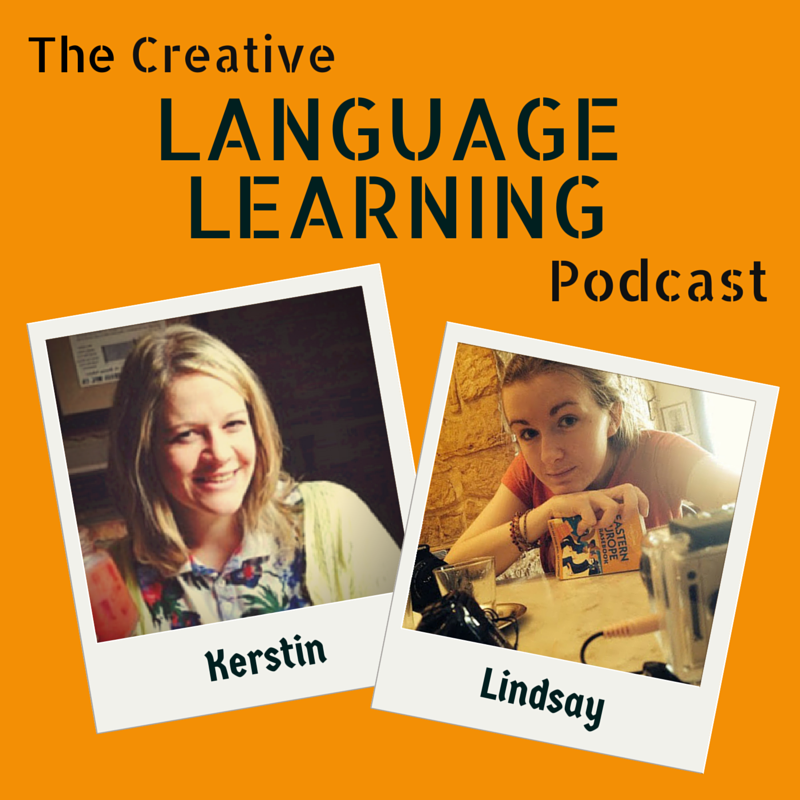
Firstly, we talked about all the ways language learning works when you travel. We also deviated to talk about historic language learning books!±
- Should you study pronunciation first or just go all in with vocabulary? (hint: whatever you like)
- When is it too late to learn? (hint: never)
- What do you need to buy before you set off? (hint: nothing)
In the article discussion of this episode, we took apart the step-by-step process of finding a language tutor.
- What do you have to look for?
- Why are some of them expensive?
- What kind of tutor should you try to work with?
Articles of the Week
Tips on working with a tutor from Judith Meyer
How much do you pay your language tutor? here on Fluent
Tips of the Week
This time, Lindsay chose her favourite tip and in line with her own productivity skills she chose Tip 3. Get organized, folks!
1) Download Quiz Up! and play the language sections
2) Read LOCAL lit, not just "Harry Potter in my target language"
3) Get organized with Evernote
Links and Resources from this Podcast
- You can sign up for Lindsay's new shop here
- My Savvy Brand Toolkit is designed to guide teachers through brand creation
- This train goes on a boat!
Great sites for you to find a tutor:



Struggling with listening? Discover realistic tips, challenge prompts, and the best tools for improving your listening skills as a self-guided language learner