
#clearthelist March2018: Update On My Welsh Language Progress
Learn how I am studying languages in this monthly goals update. This month marks the first time you're hearing about my Welsh progress since like 2016.

Welcome to a new kind of blog post here on Fluent - I’ve long been aware that my last personal language update was about a year ago and this blog should include more of that good stuff. So this month, I am joining Clear The List, a monthly language strategies update.
You may have heard me talk to Lindsay about it on the Fluent Show - Clear The List is open to everyone and gives us support and accountability by sharing regular language learning goals and stories.
Every month, I set my goals using the Language Habit Toolkit worksheets and I put them up behind my computer screen to keep them in mind. And this month, I had a LOT of them in Welsh. The mindset was not to expect too much from myself, but to remember the direction I was aiming for.
What Happened in March 2018?
Up to the 11th of March, my working life was dominated by sharing and co-running the absolutely wonderful Women in Language conference. If you were there, you’ll know that we had a great time.
Click here to read my full debrief of Women in Language, which includes
- the 5 most important lessons I learnt at the conference
- some behind the scenes details
- tips for you on what to do if you also want to be a speaker
- lessons learnt on what we’ll do differently next time.
Special Guests
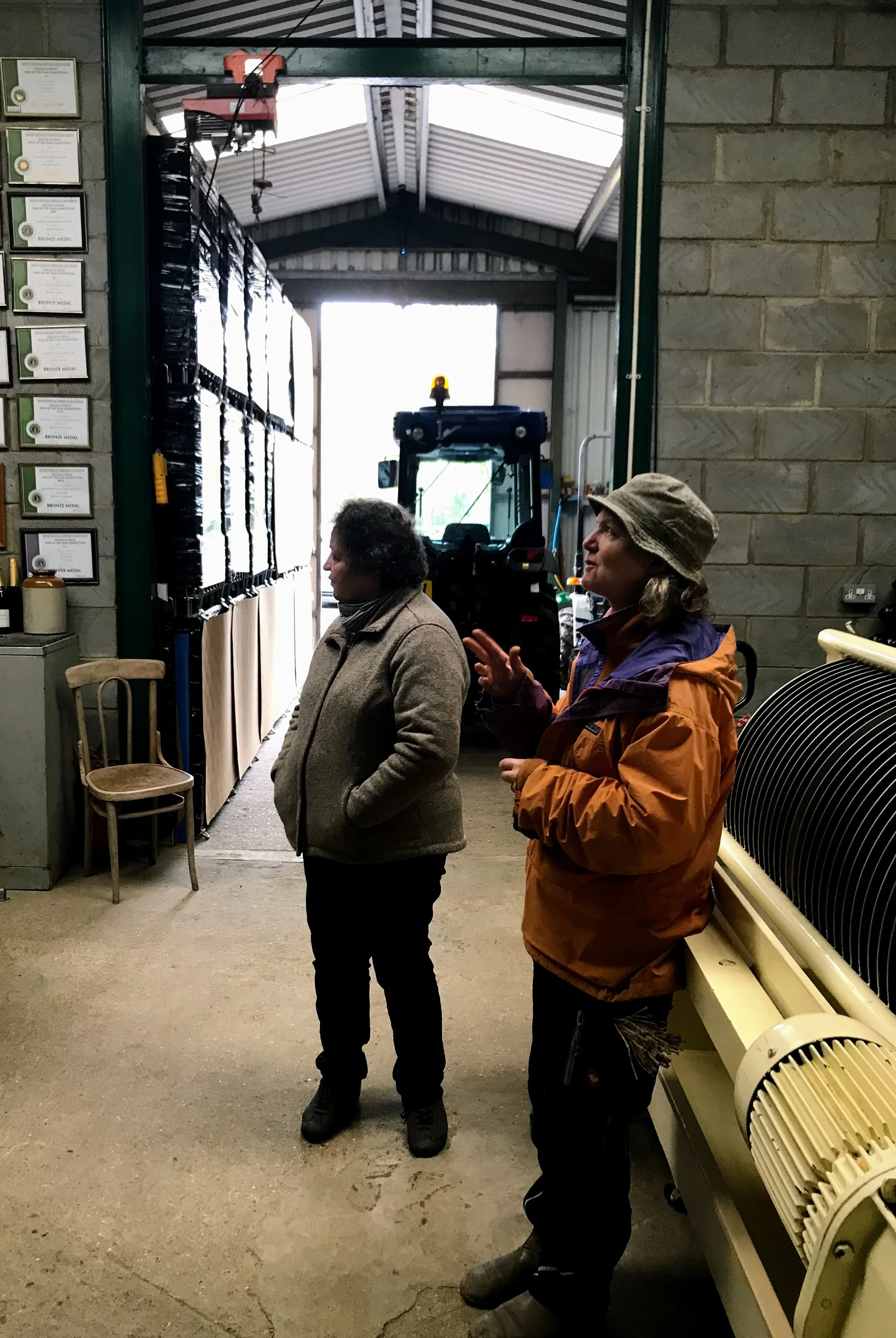
English Vineyard Visit
Right after the conference I experienced another unusual week with lots of spoken German as my parents came to visit me in Canterbury. We had a great time pottering around and I did my usual interpreting job and listened to my husband’s German.
If you are visiting Canterbury and want to practice your German on a city tour, do give me a shout through the contact page.
Highlight: A visit to an English winery, showing me that I know more winemaking vocab than I expected. My parents are winemakers, so this always seems to happen when they’re around.
One more unusual event was the news that my favourite ever English teacher had passed away. He was one of a few English teachers who influenced and inspired me as a teenager, spoke lots of English in class, and shared the literature he loved. What a reminder to appreciate those who inspire us.
The Fluent Show

March marked one month since the Creative Language Learning Podcast became the Fluent Show. Thank you so much for listening!
Here’s my favourite episode from this month: In Language, Are Apps All Amazing? Are All Apps Amazing?
My Welsh Goals For March 2018
With so much going on, did I even get ANY language study done?
Contact Goal
On an everyday basis, I have one important goal: Have contact with my target language. So I have a lot of mini-sessions on Duolingo, Clozemaster, with flashcards, with vocab lists. I read tweets in Welsh, look out for books, anything. All these different strategies add up to consistent slow progress, but they are the basis for all other goals.
I track my contact with Welsh using the Streaks app on my iPhone. In March, I logged 22 days of contact.
Here are the Path Goals I set, and how it went:
Listening
Watch S4C every other day for 10 minutes: Did this about three times. I’m not sure my devices have S4C set up to be accessible as easily as possible. Also, 10 minutes is an awkward length for a TV show. I did watch some YouTube clips, so I’ll take that into account as a goal format.
Listen more when I’m having real conversations Listening is the conversation habit I always need to bear in mind. I had one tutor conversation in Welsh this month, and I did shut up and listen to her a little more than usual. A good job with room for improvement.
Transcribe 1 Song from Listening What was I thinking? Not really a goal I’ll go back to.
This month, I resubscribed to the Pigion podcast and listened to the weekly episodes. I discovered that they provide a vocab list with each episode and reviewed the vocab before I start the episode.
Speaking
I wanted to work through the Sylfaen (Foundation Level) exam questions to practice speaking at a higher level, but found the exam paper so boring that I never went back to it. But on the positive side, I feel confident that I could tackle all of the questions on it, so I’m now definitely on that level or even further ahead.
My other goal was to get to 30 minutes all-Welsh conversation, so my tutor session was a 60 minute time slot, and we had nearly a full hour of Welsh conversation. Very exciting! ✅ I also got to the halfway point on Say Something in Welsh level 2.
Reading
Read articles or 1/2 book page in Welsh every 2 days. The goal here was to acquire new vocabulary, and build up my reading capacity to “more than a tweet”. I don’t think I read enough, partly because I don’t know where to find easy Welsh articles online.
Writing
My goal was to write 1/2 a page and share it with my tutor 3 times. This is where the MAGIC happened. Inspired by one of the talks at Women in Language, my writing practice evolved to include poetry in my target language. It’s really fun - one of the best ways I’ve found to use Welsh creatively.
I haven’t shared with my tutor yet, but I did post the poetry on Instagram with #languagpoems and I’ll keep going.
My other goal was to complete Chapters 7-9 in my Grammar exercise book - I’m halfway through chapter 8, so that one’s trucking along.
Goals For April 2018
In Welsh: My listening skills are a little behind and I don’t understand as much as I would like to, so the focus will again be on this core skill so I can get into a routine.
My goals in Welsh are:
Have 3 natural conversations with my tutor/exchange partner and listen carefully: My next tutor session is already booked so I reckon I can smash this one and I’ll continue aiming for 45-60
Practice Welsh listening by playing with no-subtitle TV, and reviewing the Pigion podcast vocab before I listen: These are about listening comprehension, the area I need to improve right now.
Write a longer Welsh poem and continue playing around with different poetry formats: Last month I tried a Haiku. Maybe this month I’ll attempt poetry that rhymes. I’m loving my poetry focus this month and am also reading more of it in English and German.
Finish my easy reader novel and read all of the latest Lingo Newdyy magazine - these are all offline, can anyone recommend easy Welsh websites?
Book a day in Wales: I keep looking at this list of courses and not booking, even though they’re so cheap. Time to dive in!
One Last Thing: Other Languages
This month, I also dabbled in Swedish and spoke a lot of French. I’m still on the hunt for my new language to play with.
Swedish was the first language in which I've tried an official Memrise course and I'm so impressed. WAY better than the usual.
So now we’re caught up, let me assure you that future Clear The List articles will be a little shorter. I will continue setting goals using the framework of 4 core skills, and I always use the Language Habit Toolkit to set and track quality goals that will challenge me without driving me crazy.
Is there anything you’re curious about?
How was your month?
 \
\
If you want to join the linkup and share your own goals for the month, hop on to Clear The List with Lindsay Williams and Shannon Kennedy. Would love to see what you’re up to!
Progress Report after 13 Months of "Slow Welsh Language Study"
Waw, mae'r amser yn rhedeg...time flies (or runs, as my dodgy translation implies).
I have been learning this new language for about 13 months now...so let's have a look what the middle ground looks like!
Before you read the post, download your copy of the free "Teach Yourself Toolkit" in the Fluent Cool Kids Club. It's got links to all the resources I use.
I Spoke Lots of Welsh in Wales!

Back in August, I fulfilled one of this year's language goals and spoke Welsh at the Eisteddfod, the National Festival of Wales. The festival was one week long, with a big site located in Abergavenny, South Wales.
I pitched up my tent for 4 days at one of the official campsites. What a total delight! Immediately, I was hearing people of all ages speak Welsh around me and everyone addressed me in Welsh. In fact, I was surprised, because turns out..
Welsh is real, mae'r Gymraeg yn go iawn!
It's not a postcard language, and it's not even a dying language. Not when you hear and see it all around you, witnessing thousands of people as they celebrate their art, music and identity. Even though I had been learning the language for a year, this was my first experience of feeling how truly alive Welsh is in this world.
In terms of culture and enjoyment, the Welsh festival was amazing. Wales is such a small country that you can make friends with everyone in just a week. From meeting the bands I love (Plu, Candelas) to hanging out with the creators and learners of Say Something in Welsh, every conversation evolved naturally. I often found myself invited to film screenings and discussions (lots of gwin am ddim - free wine!), quickly forgetting I was attending the festival on my own.
Language Immersion is Easy
The Eisteddfod visit showed me that it doesn't take much to create an environment where you learn this new language. Simply go where people speak it. Hearing the language spoken around me was a boost even before I opened my mouth. Yet I also worked on creating speaking opportunities from the start by volunteering as a steward so I was forced to get involved and talk to people from the minute I arrived. It was the perfect Welsh immersion environment.
Impressions from Eisteddfod week
I liked having English as a backup. It was very reassuring to know that I can stop or ask for a word when I need to... I would have never remembered the word for "self-employed" (hynan cyflogedig) if it hadn't been for so many reminders from my conversation partners.
The Fight For Welsh Language Rights
One of the groups I want to highlight is Cymdeithas yr Iaith, an advocacy group for Welsh language rights.
Cymdeithas is an activist group founded in 1962, promoting the right of Welsh citizens to live their lives in two languages. Without them, there would be no bilingual road signs. Old Welsh people may not understand official letters sent in English only. And there would be no education in Welsh. In other words, the language would be dying a lot faster.
Find out more about language rights in our podcast episode with Wikitongues.
If you want to join me at the next Eisteddfod, here's a helpful guide for English speakers.
Speaking and Understanding Welsh After 14 Months
The benefits of visiting Wales and speaking and hearing my target language took hold right away. I was myself having a 15 minute Welsh conversation with an old man in a tiny village, just one week after.
Since returning from Wales, it's been tough to maintain this immersion but I continued to practice. Back in October, I booked a tutoring session with Mererid and my range of conversation was HUGELY improved. It's really great to know that you're impressing your tutor!
I continue to work through the Say Something in Welsh lessons and switched from the old to the new course system back in September. Yes, so I started at the beginning again but that doesn't feel like a setback at all. I loved the opportunity to consolidate my language skills so far. In fact, I got through the first 8 lessons at 1.5 speed, and am now halfway through the course. Say Something in Welsh is intense at times, and it's making me feel like a very confident speaker. I'm also reading a lot of Welsh as I subscribed to the learner magazine Lingo Newydd.
Grammar and Vocab in Welsh
My system is to practice WLCR (Write, Look, Cover, Repeat) using my own notebook. I also maintain a personal Memrise course with the 30% of words that are the hardest to remember. So overall, my vocabulary in Welsh has now grown to about 500-700 solid words - maybe 1000? Who's counting! Studying vocabulary is never going to be a walk in the park when you don't have classes or conversations every day.
--> Learn more about WLCR techniques in my Vocab Cookbook
I'm very happy with my grammar progress, finding that I'm able to say and describe more patterns (he says mae o'n dweud...he said naeth o'n dweud...he was saying oedd o'n dweud ...and so on). Everything still seems to have lots of extra rules and dialects, but I've not had to study many tables at all.
Being an experienced language learner is a big advantage for me here. I find myself seeing patterns and recognising the rules a lot more quickly, and I am confident when I make new sentences out of these structures. I always loved how language can be so playful when you get a pattern.
My Welsh Language Level After 13 Months?
I'm not performing to a set standard, however I've recently downloaded the Mynediad (Beginners) exam guidelines. I'm planning to work through these materials with a tutor. I am pretty much there, meaning I've reached the end of level A1 by studying "little and often" for a little bit more than a year.
Is this impressive? No idea. I don't feel that I would be able to share this on YouTube as a major polyglot win, but at the same time this is something I know I've learnt for life.
The thing about studying for 13 months is this: My time is not wasted just because I've not learnt everything yet. It is time well spent, moving forward, step by step to conversation levels. When you think about how quickly you can learn a language, it's easy to consider any slow periods as "wasted time", but I believe that the long-term commitment is what counts when you want to progress and grow your mind.
What's Next?
In terms of listening, I wish that I had more opportunities to hear real people instead of TV or radio characters. I feel ready to graduate from TV subtitles, but the radio and TV are still too fast for me. What to do?
As a podcast junkie, I would love a slow Welsh news podcast like News in Slow French, or perhaps a learner's story show. I have heard that there's some useful stuff on YouTube, but it's not enough. Give me more Welsh!
My biggest goal is to speak and eavesdrop more. I want to be able to witness conversations in Welsh easily, so that means the following practical goals for December:
- Book another tutoring session
- Speak Welsh at Polyglot Pub on 6 December
- Spend an hour every week listening to the language, ideally spoken by real people around me (failing that, BBC Cymru and S4C will do)
I'm also planning a social media project based on my friend Lindsay's new Social Media Course. More about that in the next blog update!
How Are You Getting On In Your Language?
Are you learning lots, or struggling to find time? Let me know in the comments below!
Language Update: Speaking Welsh After 8 Months (+ Free Toolkit)

Welcome to my third update on how I'm getting on with the Welsh language! I can't believe how much time has passed, and I'm excited to share what I've learnt in 2016 so far.
Try Welsh for Yourself!
I've written a new "Teach Yourself Toolkit" with all my resources and even the basics you need for saying something in Welsh within minutes, in a handy PDF format. Simply pop your details into the form below to sign up to my newsletter and you'll get this little guide for free.
8 Month Progress
First of all, let's accept it's always tough to assess your own progress. I have a bit of a self-critical streak, and like every other language learner I remember the failures more than the successes.
But there are successes to report. I've closed some basic vocabulary gaps like numbers, days of the week and all that. I added around 150-200 new words in the last months (that's around 7-9 each week, if you've got to count).
I'm halfway through the first Say Something in Welsh course - not bad!
Check out this video to see how I'm speaking Welsh at this stage.
What I've Been Doing
1) Following Say Something in Welsh and the BBC Big Welsh Challenge, and Creating Vocab Lists and Memrise Courses
My core routine has not changed. I add new words to a hand-written list. When I'm not near my notebook, they go straight into Memrise. You can read more about the exact process I use here.
2) Writing Practice Typed and Hand-Written
The great thing about writing is that you really have nowhere to hide. No matter if I'm on Hello Talk or writing by hand, it's obvious where my mistakes are. I share my writing and get corrections online, which helps immensely. Applying the corrections and reading the improved text creates an extremely effective learning process.
3) Finding The Community
It's been tough to attend my Welsh class on a regular basis, but I got involved in an online community. The Dw i'n dysgu Cymraeg group on Facebook is a cool place to find more learners and get help with questions.
Understanding Welsh
Back in February I started watching a Welsh TV drama called Byw Celwydd. After this finished, the next show for me was Ffasiwn Bildar, a reality TV show.
Each source of natural language is a bit different
Going from scripted drama to a reality TV show means that I get to hear more “real language”. But the spontaneous talk is harder to understand, so I still use subtitles. And when I listen to music (indie band Candelas are great), I can repeat, listen again and translate the lyrics. But of course they're more poetic and make less sense!
All in all, having Welsh language channel S4C and Spotify as language resources is a great help. My next TV show will be "Y Gwyll", which you can watch in English as Hinterland. Who doesn't love a bit of Celtic Noir!
Speaking Welsh
I'm now expecting more from myself when I speak Welsh. My pronunciation is fine, and my spelling has improved in line with it. It's still difficult to have an all-Welsh conversation. I'm lucky that all Welsh speakers are bilingual and speak English too.
Welsh is a tease. It lures you in with simple structures! At the start, I was cheerfully ignoring one of the key aspects of Welsh grammar: the mutations! A mutation is when words change their first letter because of the previous word...or their gender...or some other reason. They're not exactly transparent, and it's impossible to hide your bad mutations.
Speaking Welsh In The Real World
People I talk to have to be patient! A lot of the Welsh speakers I have met have been language lovers who know exactly how I'm feeling. The patience of Simon Ager, Richard Simcott, Mererid Williams and Gareth Popkins has been pretty legendary. At the Polyglot Gathering in Berlin for example, I ran into Richard and was encouraged to speak to him in Welsh -- but I'd just come out of my first ever Indonesian class! That sense of embarrassment when you don't rise up to the occasion was painfully real.

Another cool result: I've found out that some of my Facebook friends speak Welsh. It's amazing how people come out of the woodwork when you are learning their language. And how cool that I can talk to them in Welsh now! I'm so grateful for these connections.
Great Plans For The Summer
It's time to make the 3-hour trip to deepest, darkest Wales and start speaking, don't you think? I'm very excited about a few upcoming things.
1) Eisteddfod
The Eisteddfod is an annual festival of all things cultural in Wales. It takes place in the summer over several days - a must for any Welsh learner! I was particularly excited to find out that there's a gig with several Welsh bands and radio star Huw Stephens. Just the right motivation to go!
2) Welsh WJEC Mynediad exam
Having looked at the requirements for passing an A1 exam in Welsh, I think that I could be able to pass the beginner's WJEC exam by the end of the summer. Exams are a fab way to focus when you're learning a language. So I will take the opportunity and prep for this one.
I'm looking forward to visiting Wales again, and can't wait to document all the language I hear and see.
How Are You Getting On In Your Language?
Are you feeling the progress, or feeling stuck? Let me know in the comments below!
If you're in the UK, are you going to the Eisteddfod? I'd love to see you there!



Struggling with listening? Discover realistic tips, challenge prompts, and the best tools for improving your listening skills as a self-guided language learner