
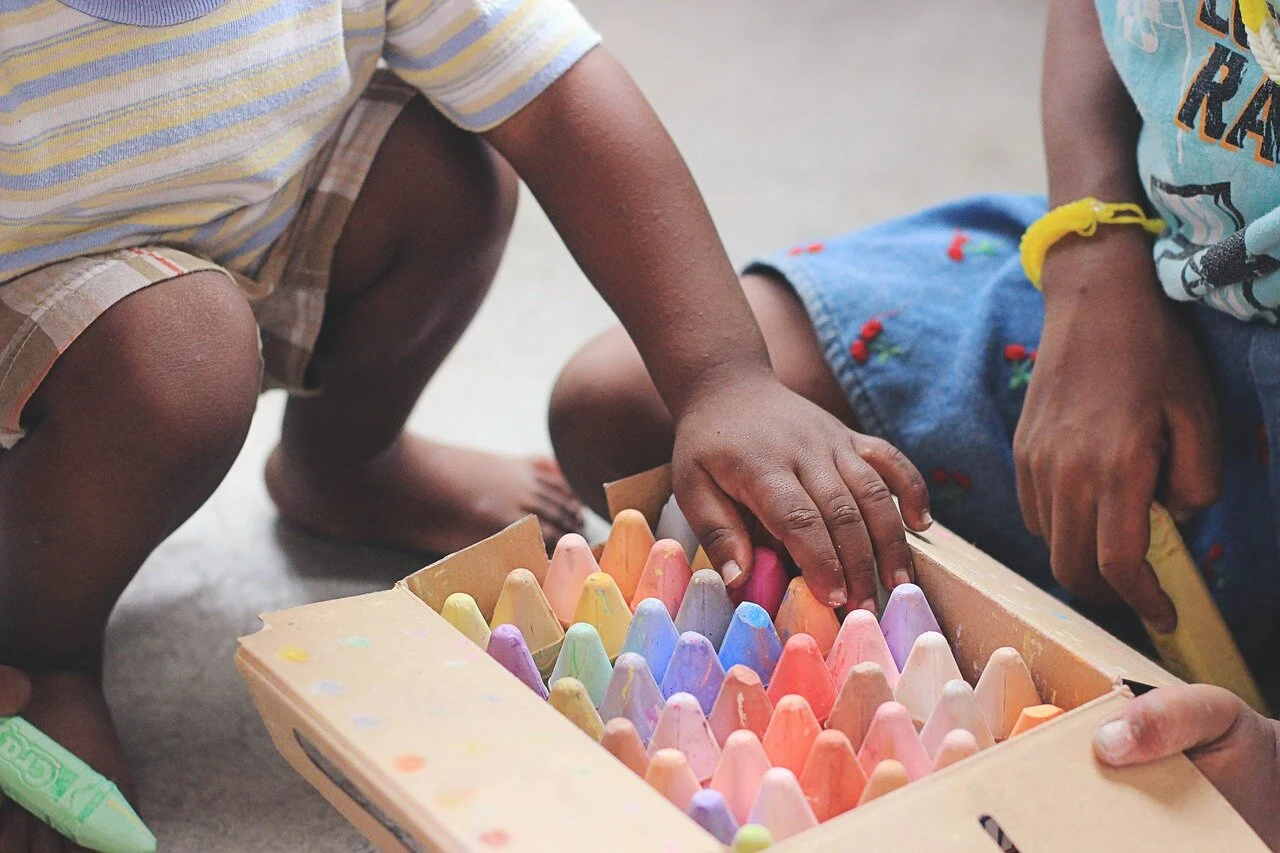
How to Parent Your Children to Be Multilingual

As a German native speaker who speaks English all day long, I find the prospect of bilingual parenting both daunting and fascinating.
I have been contacted by so many different parents over the years for advice on how to raise your children to be multilingual.
First of all, I am so happy to hear that parents are interested in teaching languages to their kids early on. I hear from so many of my students that they wished they would have begun to learn languages earlier in life, so this will make a huge difference in their life.
One thing’s for sure: Raising multilingual children is as challenging as it is rewarding.
After consulting many bilingual parents (full list below) and learning from dozens of professionals in bilingual parenting, I have collected 6 tips for you to help you start parenting your children to be multilingual.
Tip #1: Don’t Expect Them to Be Good Right Away
Your young child does not need to be good at speaking a language, if it is clear they are doing it. Taking away this pressure is what will keep language learning fun for them and keep the curiosity brewing.
Rather than correcting them and making them repeat words and phrases over and over, keep encouraging them to step out of their comfort zone. Making them aware that there are other languages out there in the world will be a huge step.
Tip #2: Exposure Matters More Than Perfection
Exposure really matters, much more than hitting some perfect system or having them “perform” languages beautifully. (The same goes for adults too, by the way.)
Exposing your child to your target language means you can get far with accessible practices like multilingual music, TV/YouTube, and storybooks.
Several generations of learners have told me that Muzzy was their first spark of love for languages. You might start with their favourite TV show in another language (Peppa Pig is a big hit apparently), or read a bilingual story together (try Tim Tim Tom for example).
There are so many different avenues and resources out there to expose your child to other languages in a playful way that they are going to enjoy.

Tip #3: Get Involved Within the Community
Could you get your kids involved in communities where other languages are spoken within the neighbourhood? Chances are, you aren’t the only person in your neighborhood or community who is trying to learn a new language, and there is hidden linguistic diversity everywhere.
You can reach out to other families you know by searching in Facebook groups or connect with your local community. Connect your child with other children who are learning to be multilingual and set up play dates where they can read books, have playtime, or watch their favorite TV shows together in the target language.
Everything is better with a buddy!
Tip #4: Have Language Time
Having specific language time is very helpful for adults, and the same goes for children. This means setting up a dedicated time of the day or of the week where you are only speaking the target language.
This could be 30 minutes after school where your child is telling you about your day, during bath time or at the dinner table.
Tip #5: Try the “One Person, One Language” Strategy
The one person, one language approach is where one person in the family speaks solely one language within the family. It’s very common when parents have two native languages, meaning each parent only speaks their first language with the child.
But even if you are NOT a native speaker of the language you want to share with your child,
Doing this strategy consistently gives the child the expectation that all of their interactions with this person is to be in a specific language, so there are no surprises and they start to develop confidence. This also helps to make sure that your children are receiving continuous exposure and interactions in different languages.
Tip #6: You Aren’t Going to Do It Wrong
No matter what, know that you aren’t doing this wrong! You know your child best and what will work most efficiently for them to learn and interact.
While some parenting experts swear by “OPOL” above all other strategies, it’s important to remember that there are plenty of right ways to do something.
The very fact that you are taking your time and energy to teach and expose your child to a new language is a beautiful thing and something they will be thankful for later in life.
Thank you for sharing the world of languages with your children! 🙏
Resources for Raising Multilingual Children
There are so many different resources that are available for parents who are raising multilingual children or have the vision to do so. Below are different Facebook groups, businesses, podcasts, and more to help you along this journey.
Facebook Groups
Podcasts and Teachers to Follow
The Future is Bilingual with Heather Koziol
Eurolinguiste with Shannon Kennedy
Juliana from The Language Mindset (@thelanguagemindset on IG)
Maritere Rodriguez Bellas: http://maritererodriguezbellas.com/
Bilingual Avenue with Marianna du Bosq
“It’s Hard Work But It’s So Worth It”
This quote is from Marianna du Bosq, who runs Bilingual Avenue and shared her expertise on my podcast. Click PLAY below to listen in.
Keep in mind that it will probably be difficult to help your child learn a new language, but it is going to be so worth it to them!
As they go through life, they will be so thankful and appreciative that you took the energy to teach them a new language at a young age.
Going through the process together as a family can be a fun and exciting experience that makes you so proud of seeing their progress. If you are currently parenting your children to be multilingual, I encourage you to keep going and try these tips out.
Are you raising a child or planning to involve languages in their life in the future? Leave me a comment below to share your story!

Living And Speaking French Just Like In France + 11 Everyday French Expressions
Learn French with a bilingual podcast interview! In this article, you’ll learn what it takes to learn French so you can speak to any local in the language - plus there is an interview on the Fluent Show which is half in French and half in English. C’est trop bon! 🇫🇷
Let's be honest: We all dream of speaking perfect French. To communicate in melodic sentences, move along the boulevards and feel right at home, and essentially turn into Amélie for a day.
But if you've been learning the French language for a while, maybe you've found that it's hard to feel at home with this language. You know all the vocabulary, you have practiced the grammar...but something feels like it's missing.
In today's episode of the Fluent Show, I've got a special guest who is going to help us find that missing piece, in a bilingual episode dedicated to France and French culture. My guest is Géraldine Lepere, an online French teacher at Comme Une Française.
Her French lessons are for anyone who values the French language and culture, and her online courses help learners at any level go beyond grammar and "double their Frenchness."
Start listening here:
Bilingual? How does that work?
It's simple. Throughout this episode of the podcast, Géraldine and I will switch between speaking English and speaking French.
You will hear me make mistakes, forget words, and be right there in the truth of making mistakes. I am a French speaker and have studied French for 20+ years, but my French is NOT perfect.
In this episode you will learn
- how to swear and how to say "that's awesome" in French
- what you need to know about French food
- why understanding French culture makes the difference when you practice your language
- what real French people think about studying French grammar
- where to find the best restaurants and the best music in France
- how Géraldine's website can help you speak French comme une française
Here are a few things to listen out for:
Cross-Languaging

As soon as I started speaking French to Géraldine, I threw in all sorts of other languages! On the recording, you can hear me say things in Welsh, then German, and then finally in the language I was looking for. When you are out of practice speaking any language, this type of "interference" is actually pretty normal.
Everyday Expressions In French
I learnt French in the 1990s from an experienced (though perhaps middle-aged) French school teacher, so I used this opportunity to refresh my Français familier: the colloquial language that was neglected when my education focused on professional environments.
Here are a few of the expressions I learnt in this episode:
- Greetings and Goodbyes - Coucou, À plus
- "quite a while ago" - il y a longtemps
- Swearing (hehe!): mince!, or putain/merde (but those are not suitable for foreigners)
- awesome! - trop bien, génial, chouette
- cute - mignon
- great, but also awful...depending on the context! - terrible
- funny - rigolo
- to confuse - confondre
- around here - dans le coin
Living in Three Languages
Géraldine is more than your average French woman: she grew up conversing with her parents in French and in Spanish, and now runs a business helping English speakers too. For her, every language comes with a slightly different outlook: French for love and life, English for business and strategy, and Spanish for speaking to family.
Setting Good Goals
For learning French, it pays to be structured and organised about learning other languages. Géraldine and I discussed how a clear Vision Goal and Path Goal can serve you as you're sitting down to learn. When you set yourself the goal "I want to speak French", you run a risk of big failure because things are so vague.
Make sure that you capture the vision and document what motivates you to learn French - le désir, but then get specific and create les buts de chemin, goals that guide you on the path to everyday fluency.
The Language Habit Toolkit is my structured product giving guidance and worksheets so you can create your own goals and study plan, step by step.
Speaking a Language Means Having Respect
French people often get a reputation for "rudeness", but is that really true or are they simply acting in a way you're not familiar with? For example, small talk is less common and a French speaker's silence is often meant to communicate respect for you. When you're learning French, knowing these important things about the norms of communication in a country are a lot more important than knowing the gender of every single noun.
Understanding France
Learning French as a language is one thing. Learning real-life French with all the little things that help you sound like a real human instead of a 1950s textbook, that's another. Géraldine mentioned how many times her students struggle trying to get that natural touch in the French language, and how many times they get frustrated because the French keep replying to them in English.
Once you start working on your cultural competence, you'll find that this changes. You'll be able to hook in to that extra layer of fluency that makes everyone around you relax. And voilà, they start answering in French too.
Want To Lean French Language and French Culture? 🇫🇷
If you have been putting in the hours on French duolingo and feel nearly ready to speak the language to real people, here is something that will get you exactly where you want to be.
Géraldine has got a programme fantastique, a brilliant course designed to speak real French. It's perfect for intermediates who want to start speaking French for real.
Oh and best of all, she's included a 15% discount for listeners of the Fluent Show!
Click Here To Discover How To Speak French Like In France (15% Discount)
Loved The Show?
I look forward to hearing your feedback. Did you enjoy this bilingual podcast episode? Did you understand anything...and how did you feel if you did not?
"It's Hard Work But It's So Worth It": Everything You Need To Know For Raising Bilingual Children
Have you ever wondered how bilingual parents do it and what the life of a bilingual family looks like? Are you excited about passing on language skills to your kids, but not sure how?
In this episode of the Fluent Show, you'll get an incredible amount of support.
Marianna du Bosq, bilingual mother in a bilingual family and host of the Bilingual Avenue podcast, talks about how to raise bilingual children. And she knows her stuff.
For a while now, I have wanted to bring you an expert on bilingual parenting on the Fluent Show, and here she is: Marianna du Bosq, host of the awesome Bilingual Avenue podcast, a show for parents who are raising bilingual children.
As a German native speaker who speaks English all day long, I find the prospect of bilingual parenting both daunting and fascinating.
Marianna's incredible energy shines through and she's got SO many tips. I came away with so much more knowledge about what bilingual parenting is really like, and I'm convinced you will too.

In the interview, we'll talk about:
- How much work do you have to put in as the "one language" parent of a bilingual kid
- What agreements parents should set up with each other when they decide to do this
- How to create a more immersive environment for children learning languages
- Whether you have to hire nannies and tutors and do all the expensive things to make this work
- How to overcome negative attitudes, and how to help a parent who feels left out when they don't understand their child
- How to learn a language along with your child
- What the school experience is like for Marianna's daughter who is in an English-speaking school
- What the most popular and effective bilingual parenting models are..and which ones are not the best ones to try
- Which episodes of Bilingual Avenue you should check out next (see below)
And most importantly, why raising a bilingual child is so worth the extra work and planning - Marianna makes a passionate case towards the end of our show so don't miss that.
Step By Step To a Bilingual Family Household
"It's hard work but it's so worth it."
Marianna has worked with many families to support their language plans, and she explains it comes down to six steps.

What I found interesting here is how useful and great these are for adults just as much as children - exposure and need at the heart, and really combing through our routines in detail can uncover new opportunities for speaking another language in the busiest schedules.
1) Start with a vision - how much of a language do you want the child to know, and how do you want family life to look in your family?
2) Assess your surroundings - Where will you and your child be able to get exposure to both languages?
3) Consider what your child's day is like and make notes on where the exposure in each language is coming from
4) Make your kid's interactions with the less dominant language partner fun, interactive, and engaging. They should find themselves entertained and wanting to communicate in that target language.
5) Implement a period of "language time" in the day, when you and your child have fun together and only speak the language you determine. Sometimes you may have to negotiate with them, but around language exposure you're the boss.
6) Stay encouraging and praise your child for speaking the target language, even if they aren't perfect at first. Focus on modelling correct usage rather than pointing out flaws.
I really loved how Marianna emphasized the two most important principles for bilingual life as need and exposure. Just like in adult learning, we won't be able to go far without those two. Need and exposure are the key to a productive language experience, and no matter how old you are you'll benefit from planning those in your life.
"Every time I switch to English, that's a lost opportunity for a word I could have shown, taught and modelled in Spanish."
The Top 3 Models for Bilingual Parenting
Wondering how to get started? Here are the three most popular models of bilingual parenting, and according to Marianna these are the most successful.
"One Person, One Language", a scenario in which each parent (or other person in the child's life, like grandparent or nanny) will choose a language and make that the core of all interactions with the child.
"Minority Language at Home", a scenario in which you make your home language the language that the child isn't exposed to in the wider world. For example, a Korean-speaking family living in Germany would focus on Korean at home but German outside the home.
"Language Time", which means you select pre-determined time periods and switch languages throughout your child's life. For example, as a parent you may want to speak Spanish for 3 weeks followed by 3 weeks in French.
EPISODE SPONSORS
CODE: FLUENT
EPISODE LINKS
- Vocabulary and grammar tips for non-native speakers | Bilingual Avenue — My visit to Bilingual Avenue
- I am Germany on Twitter: "So, as I've been here for a while, and as I have children here, one of my issues is how to raise them bilingual/ teach them German." — Interesting twitter thread on this topic
- ‘We’re told we’re anti-Welsh bigots and fascists’ – the storm over Welsh-first schooling | Education | The Guardian
- Candyland Game — I did not know what this is.
- Bilingual 077: Managing the presence of multiple languages in a single mind with Dr. Giuli Dussias | Listen via Stitcher Radio On Demand
- Bilingual Avenue 093: 15 helpful tools to help you and your child learn a language with Lindsay Dow | Listen via Stitcher Radio On Demand
- Bilingual Avenue 101: Money saving tips for your next language trip with Lauren Lyons Cole | Listen via Stitcher Radio On Demand
- Bilingual Avenue 147: Parenting Abroad with Jennifer Langkjaer | Listen via Stitcher Radio On Demand
- Bilingual Avenue 017: Actionable Tips & Strategies to Enhance Language Development with Susanne Dopke | Listen via Stitcher Radio On Demand — This episode includes tips for play with bilingual kids
- Bilingual Avenue 004: Bilingual Benefits, Myths & Developmental Milestones with Dr. Brenda Gorman | Listen via Stitcher Radio On Demand — Can bilingualism cause speech delay?
- International education - International Baccalaureate®
- LangFest17: Bella and Yulia Devyatkina - Raising Bella in 8 languages - YouTube
Are You Planning a Bilingual Family? Got a Bilingual Family Already?
I'd love to hear more about your own experiences of parenting in another language. Leave a comment below or find me on Twitter
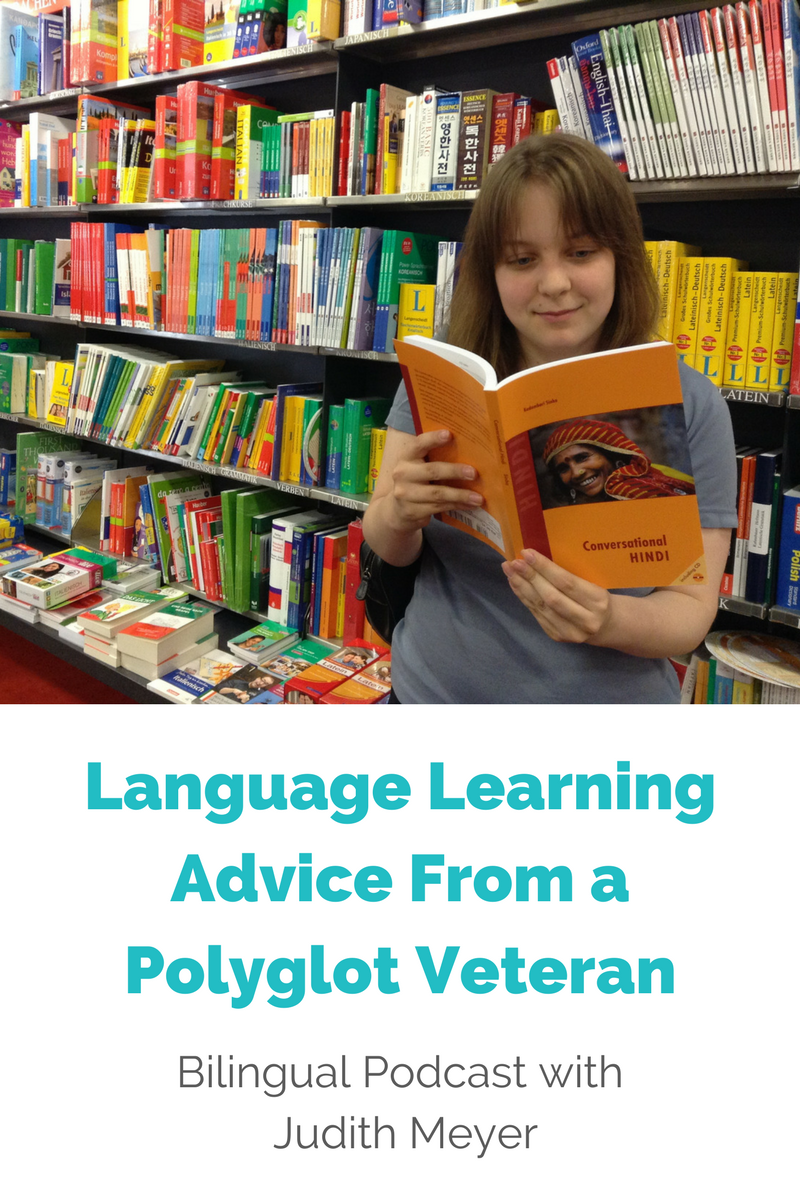
Language Learning Advice From a Polyglot Veteran (Bilingual Interview with Judith Meyer)
In this interview with passionate polyglot Judith Meyer, she shares how she learnt over 14 languages, how you can get over the intermediate plateau, and why learning any other language than English takes a little passion.
We talked about
- what excites Judith about leaving the textbook behind
- how to get over the intermediate plateau
- why using your language is the key to making progress
- what language learners can get out of events like the Polyglot Gathering
Oh...and we did it in two languages! Listen in to find out more.
Judith Meyer is well-known in the language learning world for co-founding the Polyglot Gathering event and writing several language books and courses. She's consulted by many and freely shares her own tips and experiences from learning over 14 languages.
Listen to my interview with her on the Creative Language Learning Podcast:

Happy places
We covered a lot of ground in this interview, and as a language learner you will be delighted to hear her excellent advice.
One Thing You Need to Know About This Episode
This is a bilingual podcast.
If you are not an experienced German learner, there will be some parts of the podcast that you don’t understand. But like all language learners, you’re not alone in that feeling. Try to stay with us, trust that we will come back to English again and again, and challenge yourself to become comfortable with not understanding everything.
German Learners: Click this link to view a full transcript (bilingual) of our conversation, so you can listen and read along at the same time.
The Learning is The Goal
Some people learn for practical reasons like travel or employment. to me is how both Judith and I come from monolingual households. There was no focus on languages, we both started at age 10, and yet this "late start" did not mean that it was impossible to do.
She says she used to try and invent her own writing system as a child because she found Chinese so fascinating.
Use Your Language Early
Judith says that it's important to do something that is NOT studying all the time. She says
I get easily demotivated if it's just studying a textbook
Judith books early lessons with tutors and uses her language in all kinds of ways so she can stay interested.
The Importance of Goals and Tracking
Even though Judith doesn't struggle with the general motivation to learn a language, she does keep track of her progress.
She's kept a spreadsheet on her computer for many years, and maintains a goal of doing a little more each year.
I absolutely agree with her on this, and found myself doing more with my language in the same amount of time when I started tracking. If you're interested in how learning languages works with my system, check out the Language Habit Toolkit.
How to Get Over an Intermediate Plateau

As someone who can hold a confident conversation in over five languages, Judith knows what it takes to go from a plateau to a much higher language level.
The trick is this: Your language level adapts to what you're doing in that language - in other words, you will grow with your challenges. You have to start trying to do something you cannot do.
The hard part is to start before you are ready. Judith describes how new Chinese challenges like presenting and debating tasks helped her get off the intermediate plateau.
But as Judith puts it:
If your lifestyle is such that you don't use C1 German, then good luck learning it.
You might get there for a short while, but to truly stay there you have to keep using your language.
Why Your Reason to Learn a Language Won't Be Enough
Finally, we chatted about the big reasons for learning languages. As a card-carrying member of "the tribe of those who learn a language because it's awesome", Judith has remarkable thoughts on why learning languages is important.
I don't need a reason to learn a language. I need an excuse.
By this she means that if you're looking for a reason, unless you're learning English there's often not a deep seated REASON that will keep you going for long enough to become fluent. Instead, make use of the good excuses out there, like learning for travel or for work.
But if you're just starting a language because you're fascinated, that is perfect.
After all, why would anyone learn so many languages if not for the love of them?
Understanding Germany
As the German part of a German-American couple, Judith knows that understanding other languages is a key part of learning other cultures.
She writes the blog "Understanding Germany", where she offers insights into what the Germans are like, how they think, and what's shaping the German mindset right now.
Click here to access all links and resources mentioned in this podcast
I look forward to hearing your feedback. Did you enjoy this bilingual podcast episode? Did you understand anything...and how did you feel if you did not?



Struggling with listening? Discover realistic tips, challenge prompts, and the best tools for improving your listening skills as a self-guided language learner