

7 Tips For Learning A Language From Your Girlfriend or Boyfriend
If I had 5p every time I read someone telling someone else that the best way to learn a language is to "get a native speaking girlfriend", I think I could retire at 35. But don't get me wrong: having a native speaker on hand at any time of day certainly has its advantages.
Today, you'll hear from English teacher Nick Vance, who is in the lucky position of having that girlfriend. So, how's it working out?
If I had 5p every time I read someone telling someone else that the best way to learn a language is to "get a native speaking girlfriend", I think I could retire at 35.
Today, you'll hear from Nick Vance, who is in the lucky position of having one of those handy "native speaker girlfriends". So, how's it working out?
In this article, Nick will share 7 useful tips to help you understand how to learn a language with your sweetheart.
Learning German from My Girlfriend

As an American living in Berlin with my German girlfriend, Natalie, people constantly ask me the same questions.
Where did you two meet? In Costa Rica - surprising, but true!
Did you move to Berlin to be with her? Nope - it took us many years to finally fall in love.
Is she the reason you speak German fluently? Jein - a combination of the German words “ja” and “nein” (“yes” and “no”).
Natalie did indeed play a huge role in helping me reach fluency in German. However, she didn’t actually teach me very many things about the language. She “just” talked with me for thousands of hours, giving me the opportunity to practice. I learned German grammar, vocabulary, and pronunciation in a language school, through self-study online, and in private one-on-one lessons.
Your partner can be a big help in you learning their native language, but it’s important to be careful about expecting too much from them. Today I’m going to share some concrete tips for how you and your partner can work together to learn each other’s languages.
Speaking Practice with Your Partner
Once you’ve reached about B1 level, you can start having real conversations about real topics. Awesome! This is the area where your partner can really help you, and you can start making lots of progress really quickly.
Set Up Some Rules
There’s no right or wrong way to set up your plan on how and when you speak which language, but they need to be agreed upon by both people. For a long time Natalie and I would alternate weeks. Every Sunday night at midnight, we would switch from English to German, or the other way around. Yes, I would sometimes look at the clock and switch at exactly 12:01 am, mostly just because I thought it was funny. Other people might agree to always speak Spanish at the dinner table, or to speak French on weekends, or whatever. My advice: the simpler the plan, the better.
Focus on What You Say (Not How You Say It)
This part of your language practice should be fun and focused on improving your ability to quickly form sentences and communicate them. Avoid correcting the other person during this time. If you BOTH agree, take some time maybe once a week for the native speaker to share some feedback on what you can improve.
But what if you’re still at level A1 or A2?
Honestly, your conversations aren’t going to be that interesting. However, you can still have some short conversations to get used to the idea of speaking in that language. For example, speak in the language for the first 5 minutes when you see each other in the evening. Depending on your relationship, that’s often how your day was and what you did. You’ll quickly get used to this vocabulary and be able to feel more comfortable in the language.
Your Partner Isn’t the Perfect Teacher
Teaching Is a Skill
I’ve heard lots of stories from friends in similar relationships who were frustrated that their partner wasn’t able or willing to teach them their native language. Some of them even blamed their partner, calling them lazy, uninterested, or simply unhelpful. The more likely explanation is that teaching is a skill that not everyone has.
If you’re just starting out in a language (A1 / A2 level), your partner probably doesn’t understand pedagogically how to teach a language. Should you first focus on learning all of the tenses and their uses? How important is learning vocabulary compared to improving your pronunciation? What books are appropriate for your level? These are questions that a normal person just doesn’t know about their language.
Additionally, your partner might not know exactly how their language works, even if they speak and write it perfectly. For example, what’s the difference between “while” and “during” in English? I only learned this when I became an English teacher. Before then I always used the correct word, but it was just because it “felt” right.
Different Roles
In your relationship, you and your partner have specific roles. Perhaps you make vacation plans while your partner just shows up at the airport and follows your lead. But that’s made up for by your partner cooking dinner every night for the both of you. Everything is great as long as both sides are comfortable with the arrangement.
Teacher-student is a very special role that comes with lots of built-in assumptions. If your partner (acting as the teacher) tells you to work on your pronunciation of “th,” and you don’t practice it, what happens? If the person is just a teacher, that disappointment, frustration, or embarrassment is left in the classroom. If that person is also your partner, it can bleed into the rest of your relationship and cause bigger problems.
Give It a Shot!
This all is not to say it’s impossible. If you both are willing, give it a shot. Maybe your partner is actually quite good at explaining when to use what tense, and you develop a teacher-student relationship that doesn’t does lead to any other issues. Learning the language from your partner could then be a great way to spend time together and strengthen your bond.
But if it feels like a struggle, don’t force it. Accepting this limitation is important for preventing feelings of resentment.
Their inability to teach you about subordinate clauses shouldn’t be seen as a lack of love for you, but only their inability to teach subordinate clauses.
It’s not language learning, but I recently learned how to drive in Germany - both the rules of the road and how to drive stick shift. I’d been driving automatic cars in the US for 15 years, but had never needed to drive stick.
Once again, I hoped to profit from Natalie’s knowledge. We decided that she’d try to teach me a couple of times, and if it didn’t work out, I’d pay for driving lessons from a professional. Even though she had no experience as a driving instructor, she was an amazing, patient teacher, and it was a fun experience. And now I can drive in Germany!!!

No More Borders
No more borders - Nick (from the US) and Natalie (from the former East Germany) on a bridge that once marked the border between East Germany and West Germany.
Being a Supportive Language Helper
If your partner is trying to learn your language, you have a unique responsibility. Even if you don’t act as their teacher or even speak the language with them, there are things you can do to help or hurt their progress. Here are some things that you should definitely avoid.
Don’t Make Fun of Their Language Ability
I’m sure you don’t intend it to be mean, but little comments or jokes can make your partner feel self-conscious and kill their desire to speak. This doesn’t mean you can’t laugh about the language, but just be extra careful you’re laughing with them. Like when I asked Natalie if she had used the helicopter to clean our apartment (I meant vacuum cleaner but had somehow mixed up the words Hubschrauber and Staubsauger… they still sound similar in my head, but apparently in no one else’s).
Don’t Talk about How Difficult Your Language Is
This is usually meant in a helpful way, letting your partner know that they shouldn’t feel bad about struggling or to show them how impressed you are at the progress they’ve made. However, it often comes across as “why are you even bothering.” I can’t tell you how many people have told me that German is “so hard” and “impossible for foreigners to learn.” Yes, there are some things that take time to learn or do 100% perfectly, but there are millions of immigrants in Germany today proving them wrong. If you need help with this language in particular, Kerstin has some great German learning resources.
Conclusion
In the end, there are plenty of ways your partner can help or hurt your language learning. Find out what works best for the both of you, and don’t try to force something that isn’t working. They might be the love of your life, but that doesn’t mean they have to be your language teacher.
If you’d like some more tips, check out Kerstin’s article about helping your partner learn your native language. And I’d love to hear about your experiences.
Share with me in the comments your ups and downs about learning a language from or teaching a language to your partner. Especially if there were any hilarious misunderstandings!
Nick Vance is originally from the U.S. but has been living in Germany the last 6 years. For him, being able to speak German fluently has been a key to feeling at home in Berlin. Learning a language as an adult is much different than learning in school, and Nick uses his own personal language learning experience when he teaches English. You can find more information about his online English lessons at Skype Englisch (in German) or English with Nick (in English).

Welsh Is Not English: How The Welsh Language Fought Back
When I first moved to the UK 15 years ago, I thought Welsh was dying out.
But did you know that people went on protest marches and even got ARRESTED to keep this language alive?
In this podcast episode, I bring you interviews with Welsh learners and teachers, sharing their own passions for this ancient language.
What do you know about the Welsh language?
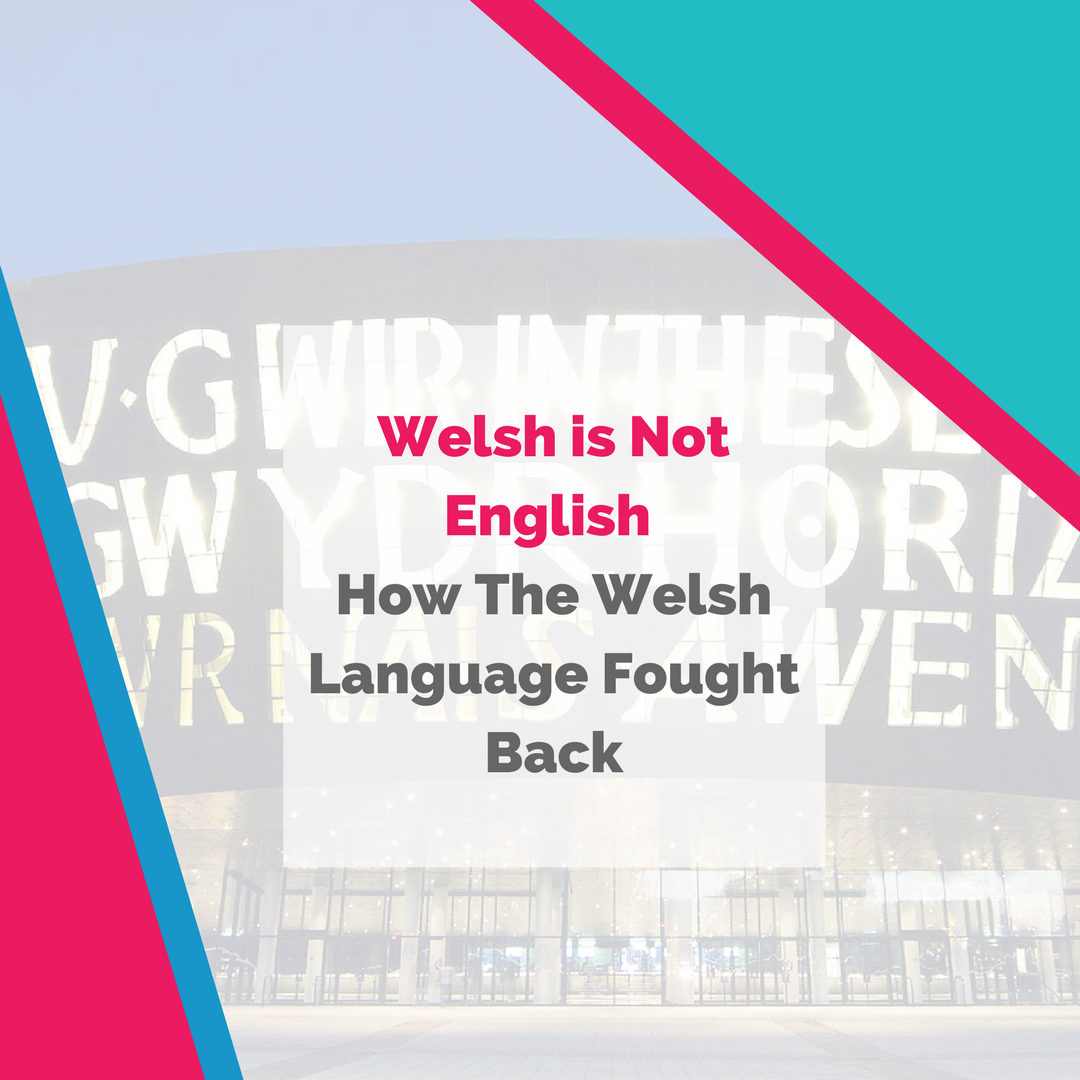
When I first moved to the UK 15 years ago, I thought Welsh was dying out. I moved to England and never considered that people in the UK speak more than English. To me, the Welsh language was a relic from the past.
But did you know that people went on protest marches and even got ARRESTED to keep this language alive?
In this podcast episode, I bring you interviews with Welsh learners and teachers, sharing their own passions for this ancient language.
Where is Wales?
Wales is one of the four nations that make up the United Kingdom. It's a small part of the UK, located on the western border of England.
It covers just over 8,000 square miles (20,722 km²) - that's about the same size as Massachusetts in the USA or half the size of Switzerland. In other words, Wales is not big.
But it's certainly old. The Welsh history begins with the Celts, and just like the bigger British island, it has a whole history of invasions and territorial fighting on its record. Here is a great timeline guiding you through the last few millennia of Welsh history.
What Is Welsh Like? A Quick Introduction
In terms of the language, Welsh is what was here first. The Celts spoke a dialect that would later evolve into Welsh, so this language is now considered a treasured part of Welsh identity.
Welsh is a Celtic language in the same family as Irish Gaelic, Scottish Gaelic, Cornish, and Manx. It's spoken in two dialects these days: Northern and Southern Welsh.
The Welsh alphabet is quite similar to the English one, with a few quirks:
- The vowels of Welsh are a, e, i, o, u, w, and y
- There are no letters j, k, q, v, w, x, and z
- There are extra consonants, namely ff, ll, rh, and ph
The Welsh letters also mutate when you start putting words together, which means that the first letter can change in all kinds of fun ways. Apart from that though, it's quite easy to pronounce because Welsh is phonetic, meaning what you see is what you get.
Find out more about how the language works and looks on Omniglot
But let's get back to our story.
How Welsh Came Under Attack
Welsh was spoken im Wales for thousands of years. But as the nation entered a turbulent period of history in the 19th century, the MPs and lawmakers in London started to wonder "why are these Welsh folks so much trouble?"
They decided that the existence of Welsh must have something to do with it, and introduced harsh measures to start eliminating Welsh from public and school life. On the podcast, you will hear from Morfydd who remembers her mother avoiding Welsh like the plague...for a pretty good reason!
Fighting For Welsh Language Rights

"I want to live in Welsh" - a campaign poster from the Welsh Language Society
So between the 1800s and the 1950s, the use of Welsh decreased and English became seen as the standard language for any part of the UK.
In the 1960s, the activist language group Cymdeithas Yr Iaith was founded. This group campaigned for many of the things that are now bilingual standards in Wales, such as road signs and official council letters, television, and customer service in Welsh.
Many members were arrested, asserting their willingness to go to court for language rights. And over time, this fight for language rights has led to significant changes in law and society. The Welsh language hasn't died out.
In the podcast, you'll hear from Steffan Webb who shares how Cymdeithas yr Iaith started and what they got up to. Until today, the Welsh Language Society remains an active protest movement and Steffan explained that they see a long way to go.

Bilingual Driving Directions
in Wales
What's Next For Welsh?
The Welsh government is a devolved government, meaning they have the power to determine some of what happens in their area. But officially, Wales is still a part of the United Kingdom and they don't get to determine which languages are spoken.
The Welsh language became an official language in Wales in 2011, with the government act stating:
This means it must be treated no less favourably than English.
Fighting For Welsh Language Rights
Welsh is now on Duolingo, and there is a hugely popular online course called Say Something in Welsh, focusing on enabling learners to speak everyday Welsh.
This means that there are independent Welsh learners everywhere in the world now, learning online just like me (read about my own langauge progress).
Do You Want To Give Welsh A Try?
Every Welsh learner becomes a part of this bigger story. If you're interested in trying the language for yourself, you can download my Welsh Starter Kit here and kick off with the resources that I used to start my own journey.
Before you listened to this podcast, what did you think about Wales? Did you already know this story of protesting in the streets for language rights?
Share your thoughts in the comments - I'm excited to hear from you.
And if you want to support the Fluent Show podcast, make sure you subscribe so you always get the latest episodes and share the story with a friend who loves languages too!

#clearthelist March2018: Update On My Welsh Language Progress
Learn how I am studying languages in this monthly goals update. This month marks the first time you're hearing about my Welsh progress since like 2016.

Welcome to a new kind of blog post here on Fluent - I’ve long been aware that my last personal language update was about a year ago and this blog should include more of that good stuff. So this month, I am joining Clear The List, a monthly language strategies update.
You may have heard me talk to Lindsay about it on the Fluent Show - Clear The List is open to everyone and gives us support and accountability by sharing regular language learning goals and stories.
Every month, I set my goals using the Language Habit Toolkit worksheets and I put them up behind my computer screen to keep them in mind. And this month, I had a LOT of them in Welsh. The mindset was not to expect too much from myself, but to remember the direction I was aiming for.
What Happened in March 2018?
Up to the 11th of March, my working life was dominated by sharing and co-running the absolutely wonderful Women in Language conference. If you were there, you’ll know that we had a great time.
Click here to read my full debrief of Women in Language, which includes
- the 5 most important lessons I learnt at the conference
- some behind the scenes details
- tips for you on what to do if you also want to be a speaker
- lessons learnt on what we’ll do differently next time.
Special Guests
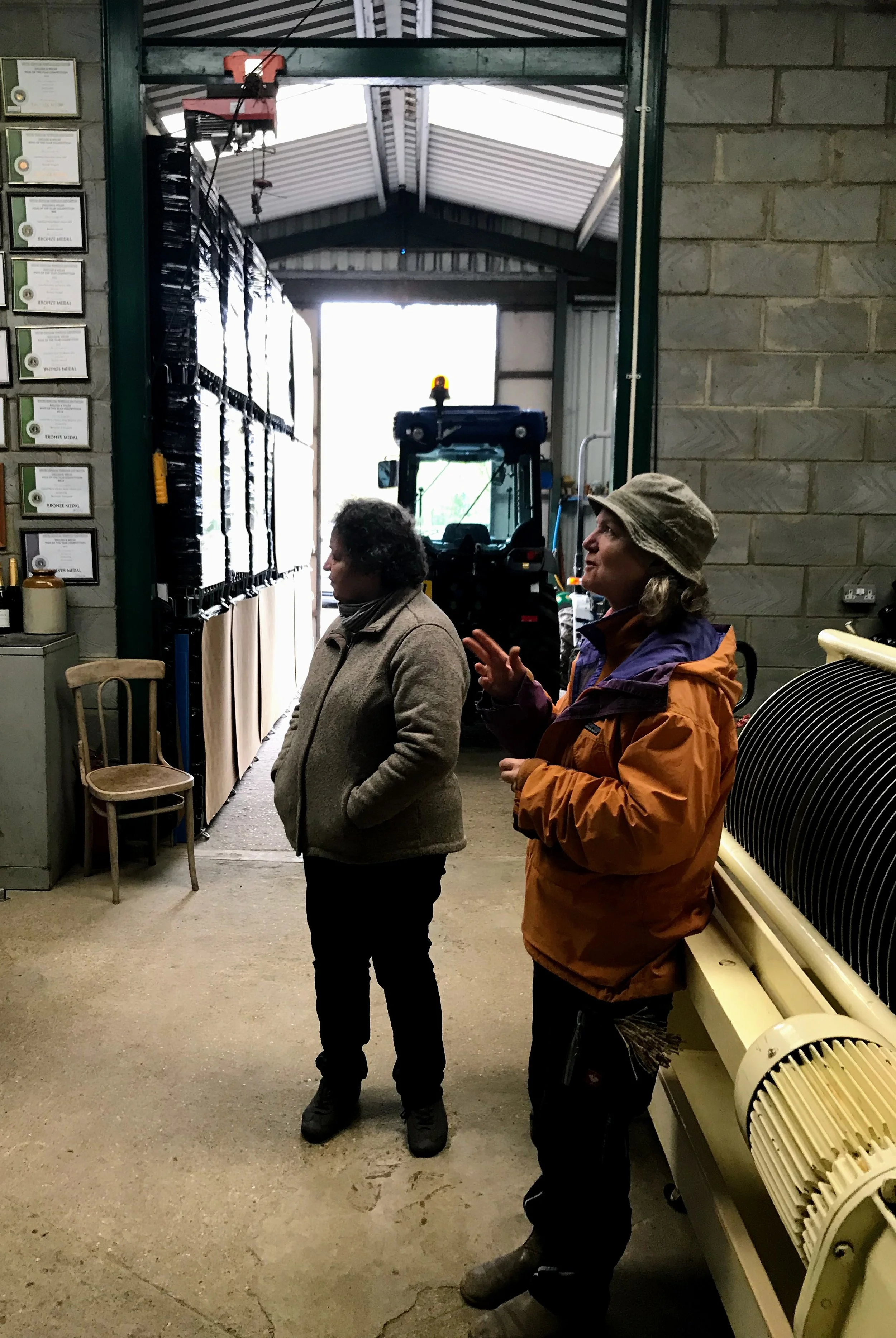
English Vineyard Visit
Right after the conference I experienced another unusual week with lots of spoken German as my parents came to visit me in Canterbury. We had a great time pottering around and I did my usual interpreting job and listened to my husband’s German.
If you are visiting Canterbury and want to practice your German on a city tour, do give me a shout through the contact page.
Highlight: A visit to an English winery, showing me that I know more winemaking vocab than I expected. My parents are winemakers, so this always seems to happen when they’re around.
One more unusual event was the news that my favourite ever English teacher had passed away. He was one of a few English teachers who influenced and inspired me as a teenager, spoke lots of English in class, and shared the literature he loved. What a reminder to appreciate those who inspire us.
The Fluent Show

March marked one month since the Creative Language Learning Podcast became the Fluent Show. Thank you so much for listening!
Here’s my favourite episode from this month: In Language, Are Apps All Amazing? Are All Apps Amazing?
My Welsh Goals For March 2018
With so much going on, did I even get ANY language study done?
Contact Goal
On an everyday basis, I have one important goal: Have contact with my target language. So I have a lot of mini-sessions on Duolingo, Clozemaster, with flashcards, with vocab lists. I read tweets in Welsh, look out for books, anything. All these different strategies add up to consistent slow progress, but they are the basis for all other goals.
I track my contact with Welsh using the Streaks app on my iPhone. In March, I logged 22 days of contact.
Here are the Path Goals I set, and how it went:
Listening
Watch S4C every other day for 10 minutes: Did this about three times. I’m not sure my devices have S4C set up to be accessible as easily as possible. Also, 10 minutes is an awkward length for a TV show. I did watch some YouTube clips, so I’ll take that into account as a goal format.
Listen more when I’m having real conversations Listening is the conversation habit I always need to bear in mind. I had one tutor conversation in Welsh this month, and I did shut up and listen to her a little more than usual. A good job with room for improvement.
Transcribe 1 Song from Listening What was I thinking? Not really a goal I’ll go back to.
This month, I resubscribed to the Pigion podcast and listened to the weekly episodes. I discovered that they provide a vocab list with each episode and reviewed the vocab before I start the episode.
Speaking
I wanted to work through the Sylfaen (Foundation Level) exam questions to practice speaking at a higher level, but found the exam paper so boring that I never went back to it. But on the positive side, I feel confident that I could tackle all of the questions on it, so I’m now definitely on that level or even further ahead.
My other goal was to get to 30 minutes all-Welsh conversation, so my tutor session was a 60 minute time slot, and we had nearly a full hour of Welsh conversation. Very exciting! ✅ I also got to the halfway point on Say Something in Welsh level 2.
Reading
Read articles or 1/2 book page in Welsh every 2 days. The goal here was to acquire new vocabulary, and build up my reading capacity to “more than a tweet”. I don’t think I read enough, partly because I don’t know where to find easy Welsh articles online.
Writing
My goal was to write 1/2 a page and share it with my tutor 3 times. This is where the MAGIC happened. Inspired by one of the talks at Women in Language, my writing practice evolved to include poetry in my target language. It’s really fun - one of the best ways I’ve found to use Welsh creatively.
I haven’t shared with my tutor yet, but I did post the poetry on Instagram with #languagpoems and I’ll keep going.
My other goal was to complete Chapters 7-9 in my Grammar exercise book - I’m halfway through chapter 8, so that one’s trucking along.
Goals For April 2018
In Welsh: My listening skills are a little behind and I don’t understand as much as I would like to, so the focus will again be on this core skill so I can get into a routine.
My goals in Welsh are:
Have 3 natural conversations with my tutor/exchange partner and listen carefully: My next tutor session is already booked so I reckon I can smash this one and I’ll continue aiming for 45-60
Practice Welsh listening by playing with no-subtitle TV, and reviewing the Pigion podcast vocab before I listen: These are about listening comprehension, the area I need to improve right now.
Write a longer Welsh poem and continue playing around with different poetry formats: Last month I tried a Haiku. Maybe this month I’ll attempt poetry that rhymes. I’m loving my poetry focus this month and am also reading more of it in English and German.
Finish my easy reader novel and read all of the latest Lingo Newdyy magazine - these are all offline, can anyone recommend easy Welsh websites?
Book a day in Wales: I keep looking at this list of courses and not booking, even though they’re so cheap. Time to dive in!
One Last Thing: Other Languages
This month, I also dabbled in Swedish and spoke a lot of French. I’m still on the hunt for my new language to play with.
Swedish was the first language in which I've tried an official Memrise course and I'm so impressed. WAY better than the usual.
So now we’re caught up, let me assure you that future Clear The List articles will be a little shorter. I will continue setting goals using the framework of 4 core skills, and I always use the Language Habit Toolkit to set and track quality goals that will challenge me without driving me crazy.
Is there anything you’re curious about?
How was your month?
 \
If you want to join the linkup and share your own goals for the month, hop on to Clear The List with Lindsay Williams and Shannon Kennedy. Would love to see what you’re up to!

"It's Hard Work But It's So Worth It": Everything You Need To Know For Raising Bilingual Children
Have you ever wondered how bilingual parents do it and what the life of a bilingual family looks like? Are you excited about passing on language skills to your kids, but not sure how?
In this episode of the Fluent Show, you'll get an incredible amount of support.
Marianna du Bosq, bilingual mother in a bilingual family and host of the Bilingual Avenue podcast, talks about how to raise bilingual children. And she knows her stuff.
For a while now, I have wanted to bring you an expert on bilingual parenting on the Fluent Show, and here she is: Marianna du Bosq, host of the awesome Bilingual Avenue podcast, a show for parents who are raising bilingual children.
As a German native speaker who speaks English all day long, I find the prospect of bilingual parenting both daunting and fascinating.
Marianna's incredible energy shines through and she's got SO many tips. I came away with so much more knowledge about what bilingual parenting is really like, and I'm convinced you will too.

In the interview, we'll talk about:
- How much work do you have to put in as the "one language" parent of a bilingual kid
- What agreements parents should set up with each other when they decide to do this
- How to create a more immersive environment for children learning languages
- Whether you have to hire nannies and tutors and do all the expensive things to make this work
- How to overcome negative attitudes, and how to help a parent who feels left out when they don't understand their child
- How to learn a language along with your child
- What the school experience is like for Marianna's daughter who is in an English-speaking school
- What the most popular and effective bilingual parenting models are..and which ones are not the best ones to try
- Which episodes of Bilingual Avenue you should check out next (see below)
And most importantly, why raising a bilingual child is so worth the extra work and planning - Marianna makes a passionate case towards the end of our show so don't miss that.
Step By Step To a Bilingual Family Household
"It's hard work but it's so worth it."
Marianna has worked with many families to support their language plans, and she explains it comes down to six steps.

What I found interesting here is how useful and great these are for adults just as much as children - exposure and need at the heart, and really combing through our routines in detail can uncover new opportunities for speaking another language in the busiest schedules.
1) Start with a vision - how much of a language do you want the child to know, and how do you want family life to look in your family?
2) Assess your surroundings - Where will you and your child be able to get exposure to both languages?
3) Consider what your child's day is like and make notes on where the exposure in each language is coming from
4) Make your kid's interactions with the less dominant language partner fun, interactive, and engaging. They should find themselves entertained and wanting to communicate in that target language.
5) Implement a period of "language time" in the day, when you and your child have fun together and only speak the language you determine. Sometimes you may have to negotiate with them, but around language exposure you're the boss.
6) Stay encouraging and praise your child for speaking the target language, even if they aren't perfect at first. Focus on modelling correct usage rather than pointing out flaws.
I really loved how Marianna emphasized the two most important principles for bilingual life as need and exposure. Just like in adult learning, we won't be able to go far without those two. Need and exposure are the key to a productive language experience, and no matter how old you are you'll benefit from planning those in your life.
"Every time I switch to English, that's a lost opportunity for a word I could have shown, taught and modelled in Spanish."
The Top 3 Models for Bilingual Parenting
Wondering how to get started? Here are the three most popular models of bilingual parenting, and according to Marianna these are the most successful.
"One Person, One Language", a scenario in which each parent (or other person in the child's life, like grandparent or nanny) will choose a language and make that the core of all interactions with the child.
"Minority Language at Home", a scenario in which you make your home language the language that the child isn't exposed to in the wider world. For example, a Korean-speaking family living in Germany would focus on Korean at home but German outside the home.
"Language Time", which means you select pre-determined time periods and switch languages throughout your child's life. For example, as a parent you may want to speak Spanish for 3 weeks followed by 3 weeks in French.
EPISODE SPONSORS
CODE: FLUENT
EPISODE LINKS
- Vocabulary and grammar tips for non-native speakers | Bilingual Avenue — My visit to Bilingual Avenue
- I am Germany on Twitter: "So, as I've been here for a while, and as I have children here, one of my issues is how to raise them bilingual/ teach them German." — Interesting twitter thread on this topic
- ‘We’re told we’re anti-Welsh bigots and fascists’ – the storm over Welsh-first schooling | Education | The Guardian
- Candyland Game — I did not know what this is.
- Bilingual 077: Managing the presence of multiple languages in a single mind with Dr. Giuli Dussias | Listen via Stitcher Radio On Demand
- Bilingual Avenue 093: 15 helpful tools to help you and your child learn a language with Lindsay Dow | Listen via Stitcher Radio On Demand
- Bilingual Avenue 101: Money saving tips for your next language trip with Lauren Lyons Cole | Listen via Stitcher Radio On Demand
- Bilingual Avenue 147: Parenting Abroad with Jennifer Langkjaer | Listen via Stitcher Radio On Demand
- Bilingual Avenue 017: Actionable Tips & Strategies to Enhance Language Development with Susanne Dopke | Listen via Stitcher Radio On Demand — This episode includes tips for play with bilingual kids
- Bilingual Avenue 004: Bilingual Benefits, Myths & Developmental Milestones with Dr. Brenda Gorman | Listen via Stitcher Radio On Demand — Can bilingualism cause speech delay?
- International education - International Baccalaureate®
- LangFest17: Bella and Yulia Devyatkina - Raising Bella in 8 languages - YouTube
Are You Planning a Bilingual Family? Got a Bilingual Family Already?
I'd love to hear more about your own experiences of parenting in another language. Leave a comment below or find me on Twitter

No More Hoarding! How to Organize All Your Language Learning Resources
Ever heard of resource overload? Most language lovers I know can't get enough of new books, courses, and blogs to inspire them...but there's a dark side!
Language resources can be overwhelming. You might wonder which ones are worth your time, or what you really need to get started in a language.
Over the years, I've amassed a huge pile of language learning resources, and in today's post I want to introduce you to a few of my favourites and explain four categories of resources that you should have when you're teaching yourself a language.
For instant organisation, you can find a Resource Organiser worksheet in the Language Habit Toolkit, available in the Fluent Online School.
1) Guiding Resources: Language Textbooks and Language Courses
The first resource I believe you should have is what I call a guiding resource. This can be a book, a CD set, a video course, or even a night class. For any resource to be considered a guiding resource in my mind, it must fulfil the following criteria:
Great Structure
Never compromise on structure. Look out for units, chapters, steps. There is none that is best for everyone, so ensure that your guiding resource follows a path that you will find interesting. You don't want something that just throws a lot of information at you, and you don’t want to be yawning by chapter 3.
The resource should have lessons that move you from one level to the next level. For example, in Benny Lewis' Teach Yourself book, there are different units and they tell you what it is you are going to learn - units such as talking about yourself, asking about other people, talking about family, and describing things.
Having a structure to follow is very important for independent language learners, so be sure to check out the curriculum before you buy.
Designed for Your Situation
When you buy a textbook, make sure you check if your choice might be designed for group classes (for example, Façon de Parler). This doesn't make such textbooks bad resources, but the way they are written, a lot of the exercises are usually not designed for you to do by yourself. The text will say something like: "Find a partner in your group and then practice these sentences with them," or "In the group, have a discussion of this image." The textbooks just assume that you're in a group class. If you're teaching yourself, this is not always helpful.
Multimedia
Third, there should be a multimedia component. This means that you want more than just a book or audio. You want the book unit to be accompanied by audio, worksheets, or video. Online courses in languages are getting better and better, but check that there’s offline access if you need it.
My preferred structure for a guiding resource is this:
Start with a story or dialogue, then an explanation of what was new, and finish with a chance for you as the learner to practice what you’ve learnt.
Good examples of guiding resources are
- Teach Yourself series, in particular the Language Hacking books
- Assimil (on Amazon UK)
- Duolingo if used in line with these recommendations
2) Input Resources: Enjoyable and Comprehensible Input
Input resources are very easy to find…the internet is a total treasure trove of them! I also call them supplementary resources, as they supplement all other learning.
You can have as many as you want. You never have too many input resources. With these resources, you can follow any story or video for some time, drop it, and then get back to it weeks later. Most YouTube videos in the language that you're learning are going to fall into this category. Music and TV shows also fall into this category.
Your input resources must be understandable, but not too easy and not too hard. You need to be able to sense that you're learning as you're following it; so, there should be a little bit of a challenge. But at the same time, you don't want them to be so easy that you know exactly what's coming.
If it’s fun, it works
Input resources also must be enjoyable. They must be fun, so feel very free to toss out what doesn’t interest you. If you don't enjoy them, you aren't going to engage with them. At Langfest in Montreal, I met the famous applied linguist Dr Stephen Krashen, whose belief in comprehensible input is all about these resources. This is where the magic happens. You need input, it needs to be fun, you need to understand it, and you need lots of it.
Good examples of input resources include
- Easy Languages on Youtube
- Olly Richards’ Short Stories for Language Learning (Amazon UK | amazon.com)
3) Reference Resources: Dictionaries, Grammar Guides, Phrasebooks
In a journey as epic as learning a new language, you’re going to get lost and waste lots of time without a map, and that’s what the reference resource can be for you.
Accessible Language Materials
First, the resource must be accessible. Obviously, they should be there for you to touch or open, but more importantly, they must be easy to understand. Second, the resource must be accessible in the sense that you should have it around. It should be there when you want it because the whole idea of a reference resource is you don't follow it as a course.
Dip in and out
Nobody ever learned a language by reading a dictionary. Instead of following reference resources as a course, you just have them around for when you have a question. At the start of language learning, I think reference resources are good to help you answer the question for yourself: Where am I going to look this up?
Many video courses fit right into the reference category. For example, the Fluent courses on German pronunciation and on grammar cross over between guiding and reference resources. My dream for my German courses is that somebody follows it, gains a lot from it the first time, but knows that they can dip in and watch every video individually.
Good examples of reference resources include
The three core reference resources you need are
- a good online or offline dictionary (read my in-depth dictionary tips)
- a good grammar resource (read more tips on effective grammar study)
- and a good pronunciation guide.
So those are the three key categories of resources you should have somewhere in your personal language library. To re-cap:
- Guiding Resources give your studies shape and help you know your progress. You want these to be structured.
- Input Resources make language learning effective and enjoyable. You want these to be fun and right for your level.
- Reference Resources are on hand when you have specific questions and need a quick answer. You want these to be easy to access and understand.
If you don't have these three areas covered on your (virtual or IRL) bookshelf, it's easy to feel lost when learning a new language, to miss things, and even to lose yourself and think you're better than you are or worse than you are.
4. Self-Teacher's Resources
Are you learning a language by yourself? You need one more: the self-teacher's resources, which are all about how to organise yourself. This category contains language learning blogs, podcasts, books to help you master the learning process.
The self-teacher's resources are awesome because they
- keep you motivated and accountable
- help you adopt great study techniques.
For a practical, action-focused take on this resource that will set you up for inevitable success, check out the Language Habit Toolkit, your language coach in a box.
What are your favourite resources? Want recommendations for a resource in your target language or feel you're lacking something?
No problem! Leave me a comment below or say hi in the Fluent Language Learners Facebook group.



Struggling with listening? Discover realistic tips, challenge prompts, and the best tools for improving your listening skills as a self-guided language learner