

How to Learn Multiple Languages At The Same Time
It's the dream of many language learners...to study more than one language at the same time and start speaking in more languages within just a year, or maybe even in months. But is this realistic? And what about rules like "don't study languages from the same family"?
In this episode of the podcast, Lindsay and I looked deep into the topic and shared our own experience and best tips. Some of those rules out there didn't hold up!
Is it possible to learn multiple languages at the same time?
Well of course!
In this article, I have collected some solid tips to help you stay sane and make progress even if you are learning more than one language.
And if you want to know how to structure your journey to learning multiple languages, discover the short Multilingual Power-Up online course today!
5 Tips For Learning Multiple Languages At The Same Time
These tips are based on our own experiences over 20+ years of teaching and learning languages, and include our verdicts on the internet's most common "rules".
DO Make Peace With Slower Language Progress
It's undeniable. When you're splitting your time between several languages, you'll save a lot of time by cutting out the worry. The key is to build and maintain a schedule, to build that habit, so you can focus on action instead of worrying about how much progress you're making.
-> Read more about building successful slow language routines herd
Remember that the best way to make progress in language learning is to concentrate on how you spend your time well. The idea of "saving time" itself can be contentious. If you're learning languages because you love them, it's unlikely you'll ever be finished.
DO Commit To Some Kind of Study Schedule
Having a set schedule saves time that you may spend deciding, also saves energy. It comes to decision fatigue.
I wrote about decision fatigue in the Language Habit Toolkit:
At a certain point in the day, > > > > > decision fatigue> > > > > sets in. This term, coined by psychologists studying irrational behaviour in humans, describes the many unhelpful actions you many start to take when you’re tired of all that thinking. It can lead to a loss of willpower, and even a loss of perspective on the choices that people do make.
In a multi-language situation, decision fatigue can zap your energy when you need it most. Take control by following the language habit system so you never have to think "Should I focus on this one or that one now?"
This doesn't have to be elaborate or complicated - for example, I’ve done “French Thursday” for example, using one day a week to take a break from looking at the Welsh language and instead study French.
DO Use Multilingual Resources
If your languages are at different levels, try studying one language through another, for example through buying from local language publishers, using Glossika, Clozemaster, or the awesome Yabla software. And don't forget that vocabulary can be a lot more fun and creative than just rote learning from a list: here are my easy tips for learning vocabulary.
DO Use Your Environment
Sometimes, just being in a different environment can help you gain more focus on specific target languags. Lindsay has done this in the past, for example studying Japanese every time she drove. Try moving around in your home or selecting a favourite café or walking route for interaction with a specific language.
DO or maybe DON'T Start 2 At The Same Time
It's definitely more demanding to start two brand new languages at the same time, so be aware that a project like this would require a lot of time and some support.
Polyglot Luca Lampariello has written about this, recommending learners build a language core. It essentially means moving past the levels where you’re still wondering how to string sentences together or make questions.
BUT - does that mean it's impossible to do? Heck no!
It is an ambitious undertaking, but it's definitely not impossible. We found that the key to starting more than one language at once is to stay realistic and confident, and to set very clear goals about the purpose of learning each language.
For example, you may study one language to become "travel fluent" for a trip, but another one because you want to add it to your life for good. With a project as big as language learning, it's important to make sure that your goals are solid.

DO OR DO Choose Languages From The Same Language Family
Here's another debate from the internet: Should you learn languages that are closely related? Or is that confusing?
Or should you choose two completely different languages?
Either way, we found no evidence that you would be likely to "do it wrong". Building confidence and working at different levels in different languages is beneficial, and you can definitely mix an "easy language" with a "hard language".
But ultimately, language choice should not be about easy vs. hard. It should be about which language you WANT TO learn right now, what you will enjoy the most.
Watch my in-depth video about language choices here
And when it comes to confusing and forgetting the vocabulary, our experience says that this will happen no matter what you do.
Either way you do it, it's definitely a DO. Just give this a go, consider what you are most interested in, and trust that good planning, consistent tracking, and regular reviews will guide you through.
DO Relish The Challenge For Your Brain
Keeping several languages active can have better study results than switching around. Beyond that, it's also bound to give you a wonderful feeling of hard work and reward, and will challenge your brain.
Benny Lewis has a good anecdote about this. Here he describes an experience of progressing and improving in both Spanish and Italian:
"At first, I was indeed producing a kind of “espaliano” when trying to speak either, but forcing myself to speak Spanish constantly every day, while also doing the same for Italian while I was learning and improving it meant that I learned how to compartmentalise each language in my head.")
The Fluent Show: Podcast About Learning Languages
Listen to the full episode including news & updates, or skip to 21:45 to go straight to our tips.
Finally…
Learning languages gets easier with each language you tackle, and a lot of this is related to your improved learning skills and confidence.

Abraham Lincoln said “Give me six hours to chop down a tree and I will spend the first four sharpening the axe", and in the same vein it's helpful to spend some time and energy on learning how to learn productively.
So, How Many Languages Do You Speak? 😝
Have you tackled more than language at once? What are the strategies you are using to avoid mixing them up?
Want more details and a Multilingual Power-Up?
Check out the Multilingual Power-Up online course to learn just how easy it can be to learn two or even more languages at the same time!
How to Maintain a Language While Starting a New One
You've climbed the hill of your first foreign language. Your confidence is growing, and you're beginning to think about learning the next language.
How can you keep an older language fresh while starting on a new one? Do you have to worry about forgetting everything you've learnt within weeks?
Read this article to find out how to plan for success in multiple languages.

You've climbed the hill of your first foreign language, maybe finding yourself at level A2 basecamp or even up on the plateau of endless conversations. Maybe you've even ascended further, building your language home and living near the peak for many years.
And now, you're beginning to think about learning the next language. Maybe you've got a trip coming up or you're simply feeling the curiosity.
It's time to learn a new language! The only question is:
How can you keep your other language fresh while starting on a new one?
Do you have to worry about forgetting everything you've learnt within weeks?
If you want practical guidance about learning more languages, don't miss my handy video course Multilingual Power-Up. It’s packed with tips & insights that will make your life easier!
Want to hear more from the Fluent Show podcast? Click Play to listen to the podcast episode:
First of all, Would I Recommend Learning a Language While Maintaining Another?
It’s always a matter of taste, but my personal opinion is YES. It gets easier to learn your 2nd, 3rd, 4th language because you know yourself and you know languages.
In linguistics, this is called metalinguistic awareness. Your brain has become aware of structures and vocabulary, you already know some language, and you are able to transfer a little bit of that over to the next one.
In addition to this, you now have the psychological advantages of more positive self-talk, reduced self-doubt, increased self-efficacy.
You'll spend less time wondering if you have what it takes because you already know. This is a huge advantage.
Read more about these skills in my blog article about what gets easier after learning 10 languages
Next, it's time to consider how to get the most out of studying both languages.
What Can You Do When Words Pop Into Your Brain in the Wrong Language?
I’ve found that the more languages you want to keep active at the same time before they become so ingrained that speaking is just automatic, the more interference you experience.
Language interference happens whenever you learn new languages, even when you are adding your first ever foreign language. It happens to adults and children, and is a natural part of the process.
For a good insight into this, check out my course Multilingual Power-Up.
You can get
- phonological interference (essentially an accent),
- grammatical interference (word order, pronouns, tense, mood..), * . lexical interference (usually when you borrow words and put them into the 2nd language, like Denglisch or Engrish or English).
Then there’s ‘unintentional code switching’ which is the interference you experience when saying a word in the wrong language. Usually code switching is considered intentional but unintentional occurrences have been studied too.
We lose speaking fluency more readily especially when there wasn’t much speaking before, so you may find that a language is easy to re-learn on Duolingo but almost impossible to speak.
Focus on the skills you want to maintain
When you’re thinking about adding languages and maintaining older ones, it’s important to think not just about the level, but about what you actively want to DO with the language.
Rather than thinking “I want to maintain my French at level B1”, consider what you need the language for and what you want to be able to do at the drop of a hat. So the question is not just keeping it fresh, but HOW you keep it fresh.
Consider listening, speaking, reading and writing, and where you see yourself functioning. As discussed in my podcast about re-learning a language you've forgotten (click here to listen), you will still have literacy and structural understanding, but vocab seems to go more quickly.
Consider your goals in the new language
Are you dabbling, enjoying following your curiosity? This is common for a lot of polyglots.
Or are you considering a language with a serious purpose of functioning in the country?
Your goals in the new language affect how much time you are spending with it, and time really matters here!
So before diving into a project of learning 4 languages at the same time, consider whether you want to go deep and acquire any of them to a very high level, or you are happy veering to the other side of the road now and then.
Conclusions About Learning Multiple Languages
- You can’t just forget a language, but in order to keep it fresh you need to engage in maintenance activities and accept a learning curve when you immerse again
- Learning more languages, even at the same time, is awesome
- But don’t expect miracles, consider your goals and limitations
- Interference is normal

Ready to add a new language?
If you want more practical guidance about learning more languages, don't miss my handy video course Multilingual Power-Up
What Is Fluency, What Is Mastery...And How Do You Get There?
This week on the Fluent Show, Lindsay and I went deep into what fluency is, adding in a few other words that often feel awkward to use. It's a great conversation, and will provide you with a new sense of clarity and inspiration, so you can confidently go out there and do what you need to do: learn languages and feel great about it!
If there is one question that haunts language learners, it must be this one:
"How many languages do you speak fluently?"
Often asked innocently by people who are interested, it can strike terror in your mind. Will they test you on your languages? Are you allowed to say you're fluent if you still make mistakes?

Oof! Those are heavy questions, and none of them are difficult to answer. Even for those of us who have studied for decades, the question of fluency still causes confusion.
This week on the Fluent Show, Lindsay and I went deep on those questions.
It's a great conversation, and will provide you with a new sense of clarity and inspiration, so you can confidently go out there and do what you need to do: learn languages and feel great about it!
Press play now, and don't forget to leave us a comment below to share what you thought of the show.
Podcast Notes
Our warm-up discussion revolved around the labels we see in our space, and whether they apply to you.
If You Travel And Work On A Laptop, Are You a Digital Nomad?
A digital nomad is a person who travels and works online, right? But for some reason, the term can feel icky to us. In this week's episode, we discussed how some words walk that line between being descriptive and defining.
When being a digital nomad (or "polyglot", y'know..?) becomes a label that you like to put on yourself, it's worth taking a second to consider who that YOU really is underneath. After all, at some point everyone might want to stop travelling and settle up with a nice cat, just two target languages instead of 12, and a garden and a veg patch. And that is super cool, because that's you.
If you thought that this discussion of who YOU are was deep, wait until you hear what we moved on to!
How Will You Get Fluent? How Can You Achieve Mastery?
I have received several messages from listeners recently, asking the Fluent Show to weigh in on how we can achieve goals such as fluency and mastery. And interestingly, each one of them asked another question:
"How do I know when I have achieved it?"
What Is Fluency In A Language?
Our first question came from Evan, and he wondered when one can consider oneself fluent in a language. In the question, Evan considered quite a range of definitions from "making no mistakes" to "dreaming in your target language".
Our discussion starts off with this fluency mindmap I drew:
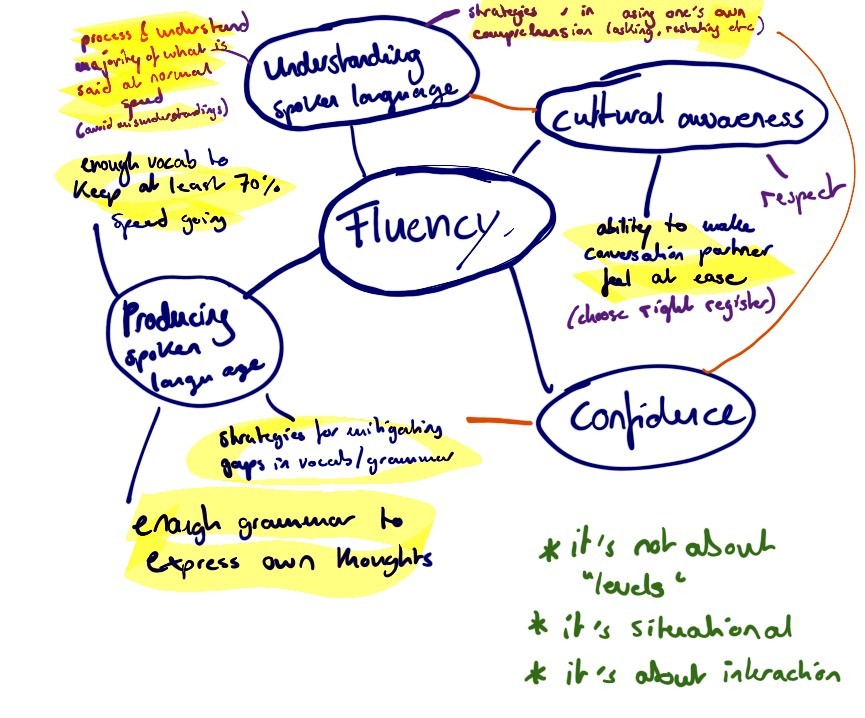
Bet you love my handwriting. Here's more about our take on fluency..
- "Fluency" implies speed and ease when using a language, which comes out most strongly when you're interacting with someone in person
- Usually interacting with someone in person means speaking
- The concept includes intercultural awareness that helps you put your conversation partner at ease and how to interact in a way that is appropriate for their style
- It implies confidence, meaning you have strategies to keep a conversation going
Fluency In A Language Is A Moving Target
Ultimately, your own definition of what fluency means to you is personal and unique. We believe that there are different points of fluency. These can relate to your goals and the purpose of your language learning. They can relate to what you are aiming for next, or what you're finding around you right now.
Just as life is forever changing, you may constantly evaluate your requirements for being "fluent".
What Is Mastery Of A Language?
Moving on from the fuzzy concept of fluency, we turned our minds to "Mastery" and how it is different from the former.
Madeline wrote in and asked:
What counts as mastery? Does every native speaker even possess it?
Our Thoughts on Mastery
This one was even trickier to nail down, believe it or not!
- Mastery is a point of pride and confidence for many, something we actively aim for and
- The word implies comfortable command, being able to use a skill (i.e. a language) with ease
- Mastery includes understanding beyond the literal meaning of the words in a target language
- But it can also imply superiority, like being the best out of everyone who uses that target language. Which isn't quite right in this context.
- For me, mastery is about more than just conversation and personal interaction. It encompasses the four core skills: listening, speaking, reading and writing
Our Conclusion
Both fluency and mastery are wonderful concepts to consider, but as Lindsay says, she is happy to not be fluent or masterful in every language. There is so much to discover and learn, and we can take a lot of joy out of appreciating the way that's ahead of us.
Yes, you can always get better. But there's no point in stressing about whether you are a fluent master - walk your own path, keep moving forward, and allow yourself to feel fluent on your own terms.
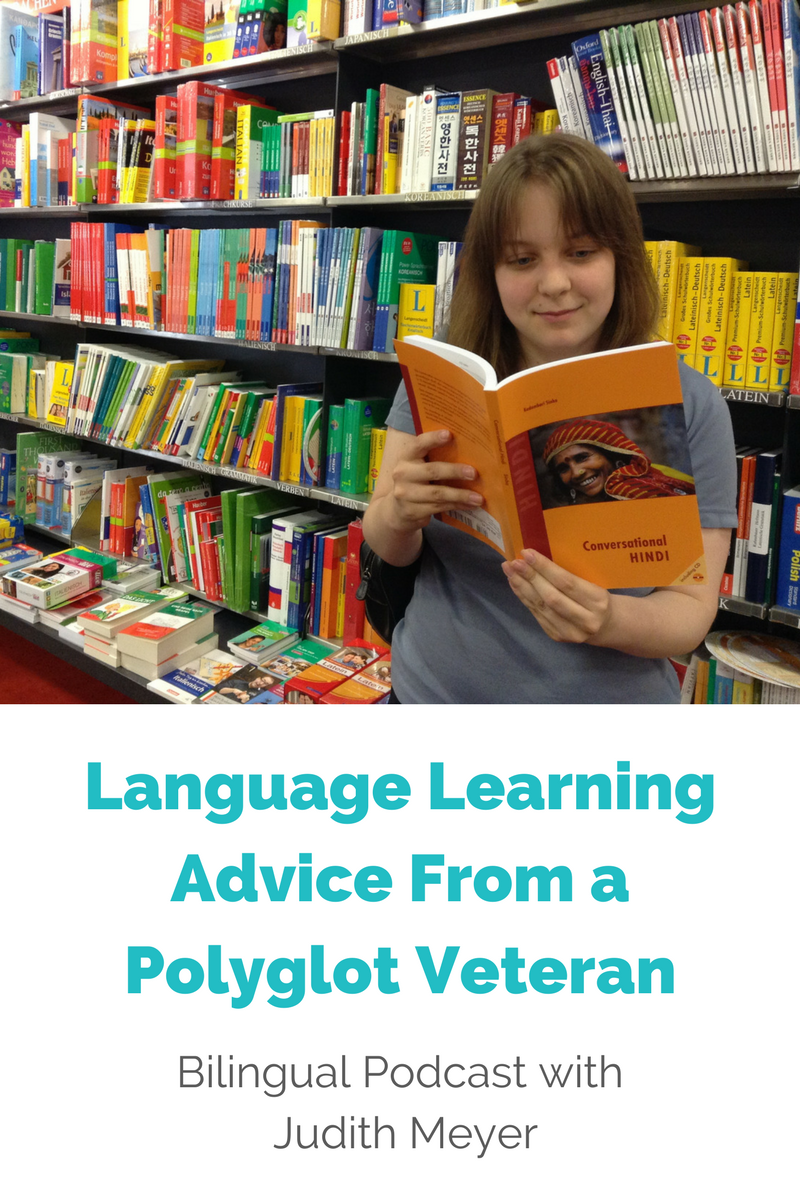
Language Learning Advice From a Polyglot Veteran (Bilingual Interview with Judith Meyer)
In this interview with passionate polyglot Judith Meyer, she shares how she learnt over 14 languages, how you can get over the intermediate plateau, and why learning any other language than English takes a little passion.
We talked about
- what excites Judith about leaving the textbook behind
- how to get over the intermediate plateau
- why using your language is the key to making progress
- what language learners can get out of events like the Polyglot Gathering
Oh...and we did it in two languages! Listen in to find out more.
Judith Meyer is well-known in the language learning world for co-founding the Polyglot Gathering event and writing several language books and courses. She's consulted by many and freely shares her own tips and experiences from learning over 14 languages.
Listen to my interview with her on the Creative Language Learning Podcast:

Happy places
We covered a lot of ground in this interview, and as a language learner you will be delighted to hear her excellent advice.
One Thing You Need to Know About This Episode
This is a bilingual podcast.
If you are not an experienced German learner, there will be some parts of the podcast that you don’t understand. But like all language learners, you’re not alone in that feeling. Try to stay with us, trust that we will come back to English again and again, and challenge yourself to become comfortable with not understanding everything.
German Learners: Click this link to view a full transcript (bilingual) of our conversation, so you can listen and read along at the same time.
The Learning is The Goal
Some people learn for practical reasons like travel or employment. to me is how both Judith and I come from monolingual households. There was no focus on languages, we both started at age 10, and yet this "late start" did not mean that it was impossible to do.
She says she used to try and invent her own writing system as a child because she found Chinese so fascinating.
Use Your Language Early
Judith says that it's important to do something that is NOT studying all the time. She says
I get easily demotivated if it's just studying a textbook
Judith books early lessons with tutors and uses her language in all kinds of ways so she can stay interested.
The Importance of Goals and Tracking
Even though Judith doesn't struggle with the general motivation to learn a language, she does keep track of her progress.
She's kept a spreadsheet on her computer for many years, and maintains a goal of doing a little more each year.
I absolutely agree with her on this, and found myself doing more with my language in the same amount of time when I started tracking. If you're interested in how learning languages works with my system, check out the Language Habit Toolkit.
How to Get Over an Intermediate Plateau

As someone who can hold a confident conversation in over five languages, Judith knows what it takes to go from a plateau to a much higher language level.
The trick is this: Your language level adapts to what you're doing in that language - in other words, you will grow with your challenges. You have to start trying to do something you cannot do.
The hard part is to start before you are ready. Judith describes how new Chinese challenges like presenting and debating tasks helped her get off the intermediate plateau.
But as Judith puts it:
If your lifestyle is such that you don't use C1 German, then good luck learning it.
You might get there for a short while, but to truly stay there you have to keep using your language.
Why Your Reason to Learn a Language Won't Be Enough
Finally, we chatted about the big reasons for learning languages. As a card-carrying member of "the tribe of those who learn a language because it's awesome", Judith has remarkable thoughts on why learning languages is important.
I don't need a reason to learn a language. I need an excuse.
By this she means that if you're looking for a reason, unless you're learning English there's often not a deep seated REASON that will keep you going for long enough to become fluent. Instead, make use of the good excuses out there, like learning for travel or for work.
But if you're just starting a language because you're fascinated, that is perfect.
After all, why would anyone learn so many languages if not for the love of them?
Understanding Germany
As the German part of a German-American couple, Judith knows that understanding other languages is a key part of learning other cultures.
She writes the blog "Understanding Germany", where she offers insights into what the Germans are like, how they think, and what's shaping the German mindset right now.
Click here to access all links and resources mentioned in this podcast
I look forward to hearing your feedback. Did you enjoy this bilingual podcast episode? Did you understand anything...and how did you feel if you did not?

What Gets Easier When You Study More Languages?
People often ask me how many languages I speak. But recently, I was asked one question that made me think more deeply about why and how learning more languages works for me:
Does it get easier when you are learning more languages?
The short answer is "yes". It definitely does.
Here are the things that are helpful, relevant, and different when you are learning your 7th language.
When you are learning your first foreign language, everything feels bizarre. Somewhere in your mind, it seems nuts that you might know that language confidently one day.

You start to look around at multilingual people, you watch a few YouTube videos, read a few blog articles. There's clearly people out there who are learning languages. They seem to know more than just one or two - some people know more than 10 languages!
Like most polyglots, people often ask me how many languages I speak. But recently, I was asked one question that made me think more deeply about why and how learning more languages works for me:
Does it get easier when you are learning more languages?
The short answer is "yes". It definitely does.
Here are the things that are helpful, relevant, and different when you are learning your 7th language.
1) You Know What Language Learning Strategy Works For You
When I first started learning languages, there was one source of information that told me how to learn languages: my teacher. No one told me about the Goldlist method and Anki and even the International Phonetic Alphabet.
Sounds like I had all the chances to mess up, right? But my language isolation bubble had a silver lining: I had the freedom to develop a learning strategy that works for me. I simply discarded the things that waste my time, and perfected those that I need. I amused my mum with vocab sheets taped to the bathroom mirror. I tried, tested, and grew my own masterplan, learning to trust my instincts.
If you follow language learning blogs, you know that there are many methods out there. Bloggers like Benny Lewis advocate speaking very early in the process, others like Gabe Wyner talk about pronunciation above all things. What you discover over the course of many language learning years is that you are always doing it right. The doubt of whether you are using "the best method" simply goes away.
The big secret to learning any language is this: Just don't stop.
2) You Become Confident About Your Language Learning Skill
When people learn a language in school, they often experience languages in a box. They're are on the curriculum, so they're taught inside a classroom and rarely used outside of one. The idea that there are whole communities in the world actually living their lives in different words seems kinda nice...but what's it got to do with you?
Even at exam times, you're tested on theory and abstract skill. The exam papers are about correct grammar and vocabulary. That's undoubtedly important, but it misses out on the greatest part of learning a language: realizing that you can make an amazing connection, right now.
When you start out with your first language or even your first 2 or 3, there is that lurking question inside:
"Am I really able to do this?"
But as you stick with the process, here is what changes: It stops being a classroom exercise. No one who is learning a 5th or 6th has got there without finding a spark that brings their language out of the box. The spark is different for all of us, but once you've got it you know that "good performance" isn't the point. It's all about connection and trusting the process.
I no longer ask myself if I can do this. I know that, given time and dedication, I can learn any language to a very high level. And the reason I know this is because I know that it doesn't matter - I will always be doing this for myself, too. That's what the spark did for me.
3) You Realize There Are Always More Languages to Learn
No matter if you have learnt one language, or seven, or 20: There will always be more languages to learn. Being a prolific language learner is a lifetime commitment, a little like a lifestyle change. I have now realised that I am never going to learn all the languages that are on my list, because that list is forever going to grow.
Our planet and the human race are so wonderfully diverse. We are blessed with thousands of languages, communication systems and scripts. Once you dive into learning one or two of those languages, you enter this amazing world of human communication. And by language number 7, you'll have caught the communication bug.
Even the most multilingual people in the world know fewer than 100 languages. They're certainly not done. I stilll have to work hard to learn a new language, and I still feel like I know nothing. Achieve fluency in many languages - it will open your mind to what you don't know!
4) You Know Being a Polyglot Ain't Special
Learning foreign languages is an unusual hobby, and in monolingual cultures like most of the UK, it's even more of a rarity. At the same time, most people have touched a bit of a foreign language - enough to know that it can make your brain hurt. So the conclusion people draw becomes that it takes a special language gift (perhaps a different brain?).
I believe that learning many foreign languages is a wonderful and incredible achievement. The work, commitment, focus, and dedication of prolific language learners are incredible.
But know that there is no language gene, or polyglot brain. Someone who knows many languages is just as capable as you are. When you are on language number 5 or number 10, you're more efficient, knowing more about your own favourite methods. But it's still hard work.
So here's my bottom line: You should learn a language because it will show you incredible things about your own capabilities. There's nothing to it, really. Nothing you've not got already, anyway.
Which Good Lessons Can You Add?
I'd love to hear your stories in the comments below. And of course, stay encouraged and keep going. You can totally do this.
For more information about coaching and access to lots of free toolkits and worksheets, check out my book The Vocab Cookbook and hop onto the Fluent Language Newsletter today - can't wait to say hello to you on there!



Struggling with listening? Discover realistic tips, challenge prompts, and the best tools for improving your listening skills as a self-guided language learner