

Learning Languages at Intermediate Level: My Language Goals, Routine, and Progress in Detail
Feeling stuck on that plateau of "invisible progress"? Here's how to keep going! Here's a snapshot of how I make progress in my target language step-by-step, even after 18 months of study. You’ll learn about my goals for April 2017, and how I fit in learning 2 languages at the same time.
I use the Language Habit Toolkit, a study system I created for learners like me who are self-guided and want to track flexibly.
Unlike some learners who love to schedule a set routine, my study approach is a little more flexible. I have a variety of resources on the go and work with them all on a regular basis, but my routine currently doesn't contain large daily sessions or check-ins at a specific time.
In today’s article, I am going to show you how I make progress in my target language even without committing to daily routines. You’ll learn about my goals for April 2017, and how I fit in learning 2 languages at the same time.
I use the Language Habit Toolkit, a study system I created for learners like me who are self-guided and want to track flexibly.
Planning My Goals (But Not My Schedule)
I'm not the best with schedules and don't stick to them unless I must. This flexibility is a part of my habits personality, so it really shows up in almost anything I do. For example, I struggle take medicines at a set time each day and often forget the time once I am immersed in a task. Don’t get me wrong…I do schedule things a lot. I just don’t always keep my own appointments.
But even so, I don't want that to stop me from finding focus and progress in language learning. In the Toolkit, my focus is on the content of what I'm learning rather than how regular I am or how many sessions I complete each week.
If I know what I want to get done, I find that I automatically start finding the time to work on it. So rather than thinking "I will complete 4 hours of study this week", I focus on my goals and set myself many very small goals that I want to get done throughout the month.
The daily check-ins in the Language Habit Toolkit are very small. I have seen some learners create their own tracking systems like colour codes and legends, but personally I keep to noting "big session" or "small session. Since I started using the Language Habit Toolkit myself, I definitely have been better about checking in with languages every day and I've finally managed to organise myself enough to learn two languages: Welsh and French.
Example: My Welsh Learning Goals for April 2017
In my routine, I use the Language Habit Toolkit worksheet for setting path goals and getting a quick overview of what I want to achieve in the next month. Here’s what I wrote at the start of April:
“Right Now, I’m Working On…”
- Finishing Level 1 of Say Something in Welsh
- Regular language exchanges on Skype with Gareth from How to Get Fluent, which are increasing the length of time I feel comfortable holding a Welsh conversation
- Getting better at using pronouns and speaking/writing in the past tense
In 30 Days, I want to…
- Be done with Say Something in Welsh Level 1 (I actually wrote challenge 26 - turns out there are only 25! Bonus!)
- Be able to watch 5-10 minutes of TV in Welsh without subtitles
- Grow my vocabulary
- Understand how the one word past tense works
My theme for the month was to become more comfortable listening to Welsh even when I don’t understand everything. These were my larger goals, which I broke down into the four core skills.
My Language Learning Goals and Progress in Listening, Speaking, Reading and Writing
Since we’re already through the month of April, I’ll tell you what the goals were and how it went:

Listening
- Listen to the Pigion podcast when it comes out (I’d been avoiding this one because it is still a little difficult for me, and as of April 30th I’ve listened to 3 out of 5)
- Watch 4 shows on S4C (I was procrastinating on this until my moment of joy…the show Ffasiwn Mecanic is back and I love it and today I’ll watch 3 and 4)
I even switched the subtitles off on Ffasiwn Mecanic and set a timer for 5 minutes, and I was able to understand 40% of what was said.
Reading
- Do a reading prep session from BBC Bitesize (this was a red herring - there aren’t any!)
- Review the hand-written vocabulary in my notebook and add more words (done! I did this in 2 sessions and added 20-30 new words for my vocabulary routine)
I actually read more outside of these goals, mostly Lingo Newydd magazine and news articles on the BBC Wales website, so for next month’s goals I can be more ambitious here.
Speaking
- Have 3 meetings with language exchange partners (not. a. single. one…we were both very busy, but next month we’re back to it)
- Record myself reading a poem (done)
Even though I didn’t meet any exchange partners, I started sending more voice messages in Tandem so I wasn’t entirely quiet.
Writing
- Put up a larger piece of writing on Reddit or Lang-8 (Reddit has writing prompts every week, and still I didn’t reply to them. Time to kick into gear.)
- Email my tutor and ask her to give me writing feedback (again, I neglected this over the month)
I did actually write in Welsh in April through text messages in Tandem, but I’ve been shy about sharing longer pieces. Another way to write more was to transcribe Say Something in Welsh’s levels, which really helps!
In terms of grammar, I did look up those confusing past tenses and found explanations that really helped in Wikibooks.
My Secondary Language: French
In French, my level is a passive B2/C1 and my main aim is to reactivate all those tired brain cells and speak French with less hesitation. I didn’t set myself any specific goals but scheduled in every Thursday as jour français. I read the French edition of Flow magazine, chatted to a new colleague in French, and followed Glossika Fluency 123 French. While I love the Glossika, I find its level a little low so I’m looking forward to more challenging Glossika content in the future.
It helps me to know that French is currently my “secondary” language, so I don’t scold myself for allocating less time to it. Perhaps in half a year, the languages I focus on are going to change as my Welsh skills become more solid, and I still have a lot of time for focusing on other languages in the future.
Overall, How am I Feeling After 18 Months of Welsh?
I’ve not really checked in in detail with my Welsh language skills for 6 months, but overall it’s feeling pretty great. I’m nearly starting Level 2 of Say Something in Welsh, and my conversation skills are improving a lot! Being at this more advanced level seems to mean that the structured resources are becoming more scarce.
Funnily, I worked so hard on creating the Language Habit Toolkit’s Review worksheet that I had not actually been able to use it myself yet! I’m really looking forward to working through all review questions and getting the next set of goals onto the road.
I’m looking forward to the next awesome events that are coming up, all of which are great chances to speak more in Welsh and French at the Polyglot Gathering in Bratislava, at Langfest in Montréal, and of course at the National Eisteddfod in Wales this year!
How Was Your Language Month?
What about you? What were your language goals in April? Are you tracking with the Language Habit Toolkit, or with your own systems? I’d love to hear from you in the comments.
3 Ways to Learn Any Language By Taking it Easy
Learning languages is a smart thing to do, but a lot of people worry about whether or not it’s effective to learn a language without teachers, classroom, or in-country immersion.
Full Disclosure: I Started as a Bad Self-Teacher
After many years of learning at school, the following 3 steps are the most important ones I learnt about how to grow true fluency. My secret? Take it easy.
Learning a foreign language is arguably one of the most rewarding things that people can do in their lifetime. Language learners stay healthy for longer, they’re more attractive, they earn more money.

There are over 6900 languages spoken in the world today, and in fact the World Economic Forum recently cited research showing that languages can be picked up at any age, and that bilingual workers and managers earn more in the workplace.
Learning languages is a smart thing to do, but a lot of people worry about whether or not it’s effective to learn a language without teachers, classroom, or in-country immersion.
How can you become organised, consistent, motivated, and effective as a language learner?
Full Disclosure: I Started as a Bad Self-Teacher
When I became a self-teacher, I had already learnt 5 foreign languages at school and university, and taken a postgraduate degree. I thought I was totally set for life as a language learner.
Safely supported by the structures of school, exams, language classes, I never really wondered what happens when you’ve got to think up your own routine.
After I left university, I took a job in international marketing. In my new job, nobody needed me to speak any other language than English. I still loved languages, and maintained my level in French after begging my employer to let me attend classes…but I was entirely dependent on those classes.
One day, a local teacher I knew decided to offer a single Polish class. I attended, loved what I learnt. The class never picked up enough students to become a course, and it was cancelled. So I decided I was going to “learn Polish” by myself. Simple!
That Polish class was in 2007, 10 years ago today. I consider it my first attempt at learning a language by myself. And I totally failed. I can’t say much more than “czesz, nie mowie po polsku” (and that means “hi, I don’t speak Polish”).
I can’t say it any other way: I was a bad language learner. My Polish project ended the way so many other people’s attempts end: I ran out of motivation and ideas after a few months. I didn’t know where to look for good materials. The language just fell off my radar.
If You Gave Up Before, You Haven’t Failed
At this point in language learning, many people feel that they have failed, or have “no aptitude for language learning”. But sadly, I already knew lots of languages. Aptitude wasn’t the problem. There must be something else I don’t know.
I didn’t really try another new language for a few years after that. I was interested, but had no need to learn…until my job started sending me to Kazakhstan: a country where English wasn’t the norm.
In Kazakhstan, I was surrounded by Cyrillic script and unusual sounds, and I totally wanted to talk to people. The radio, the maps, the street signs: Everything was in Russian (and Kazakh!). I felt like I just had to talk to more people in Russian.
So I did what I had not done for years: I started from absolute zero and I finally figured out “how to learn a language”.
Russian From Zero
Starting small was what mattered the most at this point. I didn’t need to be perfect, and I had to shake off any ideas about where I “should” be with my new languages. I bought the simplest, most encouraging book I could find: Russian in 10 minutes a day. And with this book, I found my first techniques of self-learning.
There were lots resources to play with: visual, aural and even kinaesthetic learning. There were even stickers and flashcards and role play ideas, giving me the kickstart I needed to feel entitled to discover my own style.
And slowly, I continued on my path and started learning the language. I didn’t get lost, and I didn’t “give up”. Instead, I developed language learning routines that put me head and shoulders above most friends I knew who studied in evening classes.
Learn How to Learn Languages With Ease
If you want to reap all those benefits of language learning that I mentioned at the start of this article, it’s important to learn how to learn. At some point, any group class will end and leave you with a cliff edge. The following tips will help you take things easy while growing your self-teaching skills.
Tip 1: Make it Just 10 Minutes a Day
Let’s not kid ourselves here: 10 minutes every day is not enough for you to learn a language “fluently” in under 2 years.
But what matters here is not how little you plan to study. This one is all about overcoming your internal resistance. If you feel like you have to study for 2 hours “or it won’t count”, you’re on your way to giving up too early. Instead, aim for the smallest possible effort, and make it consistent.
You’ll soon find yourself starting a 10-minute session that turns into an hour-long one.
If you want to get ahead in your language and build a simple language learning routine, try the Language Habit Tracker included in the Language Habit Toolkit. Simple system, monthly reviews, and you no longer have to worry about what counts.
Tip 2: Play
The best thing that happened to me when I started self-teaching languages was the flexibility that came with the “10 Minutes a Day” book. I had so many options: flashcards, images, role plays, stickers.
You will learn better when you break through your own limitations and shake up the routine every now and then.
Play around, dabble, try a new language or a new book, discard what you don’t need. It’s good to try out what experts recommend, but never feel like someone else’s path is the only way to do this.
The line here is this: If it’s not working for YOU, then it doesn’t work.
When you’ve played for a few weeks, use something like the “Your Month in Review” worksheet from the Language Habit Toolkit to find exactly what works for you and what you can safely discard.
Tip 3: Continue.
Looking back, persistence was one of the most significant actions on my way to becoming the multilingual person I am today. Had I stopped after that cliff edge of classes and exams, I would be on my way to average, knowing very little and regretting how much I have forgotten.
But if you continue on your language learning journey and make persistence one of your core values, you’ll never go wrong. You can forget a lot of what you learnt, but you cannot really go backwards!
It took me a while to hone these self-study skills, and nothing helps more than a good tracking routine. If you want to find out how to plan, track, and optimise your routine, check out the Language Habit Toolkit.
Do you love self-learning a language? How long have you been at it? Share your thoughts in the comments below!

How To Create The Best Vocabulary Learning Technique In Any Language
How can you make sure that your memory is always sharp - even when you're learning important vocabulary?
Here are a few important points that will help you set up your language learning routine. The concept always remains the same: You need to acquire, memorize and review your words until they go in
How can you make sure that your memory is always sharp - even when you're learning important vocabulary?
Here are a few important points that will help you set up your language learning routine. The concept always remains the same: You need to acquire, memorize and review your words until they go in.

Follow The Vocab Flow: Acquire, Memorize, Review
There are three steps that I want to take you through about vocabulary. These steps don't make up a method, but they will teach you how to think about vocabulary.
1) You Can Learn a Language Without Frequent Word Lists
The first step is growing (or acquiring) your vocabulary, and this one is about organization. You need to know where to find the words. Some learners use frequency lists for this, but in reality your new vocabulary is all around you.
It's more helpful to you if you think about which words matter the most to you and what you will want to talk about. For example, in Welsh I learnt the word for "self-employed" really early because a lot of new friends at the Eisteddfod asked me what I do. That is not a word you'll find in frequent word lists, but it's definitely one I need.
2) How to Memorize Vocabulary With Ease
There are lots of methods for memorizing vocabulary. For me, two core steps work best: First of all, I examine my vocab lists and start looking for patterns. Words are made up of different components, and many of those components repeat in language.
My background in having learnt Latin and many other languages comes in very handy here. For example, look out for prefixes, for example I started seeing more words that started in cefn in Welsh, so I looked up the meaning of cefn by itself and started to see a pattern in how all those words connect.
Related Blog Article: What Gets Easier When You Study More Languages?
If you're a German learner, check out this interesting explanation of how the prefixes work and what many of them mean.
If you don't want to observe your words themselves, you can also check out word association and even Memory Palaces. Connect your words to something that is meaningful and vibrant for you - this works with phone numbers and grammar rules too. Pretty much anything. In The Vocab Cookbook, I described some of these methods step-by-step so you can practice memorization immediately.
3) You Can Train Yourself to Remember Vocabulary
No matter how well you memorize a word, your brain might forget it at some point. This isn't a failure - in fact, it's normal.
All language learners recognise that forgetting is part of this learning process. The forgetting curve isn't so easy to control, either. Sometimes a word can stay in your mind for a week or two, just to disappear after another week. This is why good systems work on the spaced repetition system (SRS), meaning you will need to revisit words many times over...but you also get a break in between.
Great online systems that are built on SRS abound, and you will find that most flashcard apps are built on it. My personal system is first based on handwriting and working away from screens. But for the stubborn words, I also add in a Memrise course in which I curate the words to be the most efficient use of my time.
But every now and then, I trail off and just study everything. Make it your own and "do you" -- it's one of my favourite rules!
What's Your Best Vocabulary Learning System?
You don't have to follow every single step and become a slave to my method.
Instead, experiment through finding a style that you can set once and use for ANY language you'll ever want to learn.
Inside The Tandem Language Exchange App: A Full Review
What if I told you that right now you're only 10 minutes away from chatting about your dreams for the future in your brand new language...on your phone? Sounds mad, but that's exactly what the language exchange app Tandem is designed for.
In this full review, you'll discover exactly how to make the most out of language exchanges and become fluent on your phone.
If you're new to a language exchange, the concept won't be hard to understand: You find a speaker of your target language. That person should want to learn your native language. When you chat to each other, you spend a little time speaking each language, and voilà...it's free, mutual, friendly practice.
Finding those other language lovers used to be a massive pain. Back in the day, you might have to strike up a conversation and exchange addresses with a tourist in the nearest town. Or if you're lucky, someone might put up a notice on a pinboard in the local café.
But what if I told you that right now you're only 10 minutes away from chatting about your dreams for the future in your brand new language...on your phone? Sounds mad, but that's exactly what the language exchange app Tandem is designed for.
How to Start a Language Exchange
Of course, language exchanges are not new. Good ideas start early and stick around. The language exchange concept has been around since the 1970s, named "Tandem" after the word for a two-person bicycle.
Here's an amazing quote from Tandem Fundazioa, explaining the bicycle analogy:
TANDEM is a bicycle designed for two riders both involved in getting forward. We have taken this word into our method of learning by exchanging languages with our motto: "In order to understand each other better I help you to learn and you help me to learn." TANDEM is therefore the bicycle among various language learning approaches - it is cheap, individual and ecological.
Check out this article for more inspiration about how language exchanges can make us happy.
Who'd argue with that... no one. So for free language practice, could the Tandem App be your step into the world of exchanges?
How Good is Tandem Language Exchange App?
You can download Tandem in the App Store for iOS and on the Google Play store for Androis. In this review, I focused on using the iPhone app on an iPhone 7. The app is completely free, with no limitations or premium memberships.
When I opened up the Tandem app, I was immediately taken in by the design and the personalised approach that they took. You open Tandem, connect your profile, and crucially you will tell the app a few things about yourself and your preferences.
There is an approval process, so you cannot join the app randomly and it's monitored by a staff member. I found this reassuring - after all, it's important that you keep your data safe online! Community is very important to Tandem, which has 1 million members from 150 countries.
There are three big sections in the app:
- The Community, where you can search for new people
- The Tutors section, where you can find and book lessons
- The Chats, where you can view all your conversations
Optimizing Your Language Exchange Profile
Before you can join Tandem you have to make an application and become approved by one of their staff members. Your profile will be linked to Facebook.
Once you're in, your profile won't be quite as protected as on other apps. I enjoyed the fact that I could see more photos of my new language friends and learn who they are before I chat to them. This can make it easier to find a good match, but be aware that you're also sharing more data with a big community.
Here are some tips for optimizing Tandem:

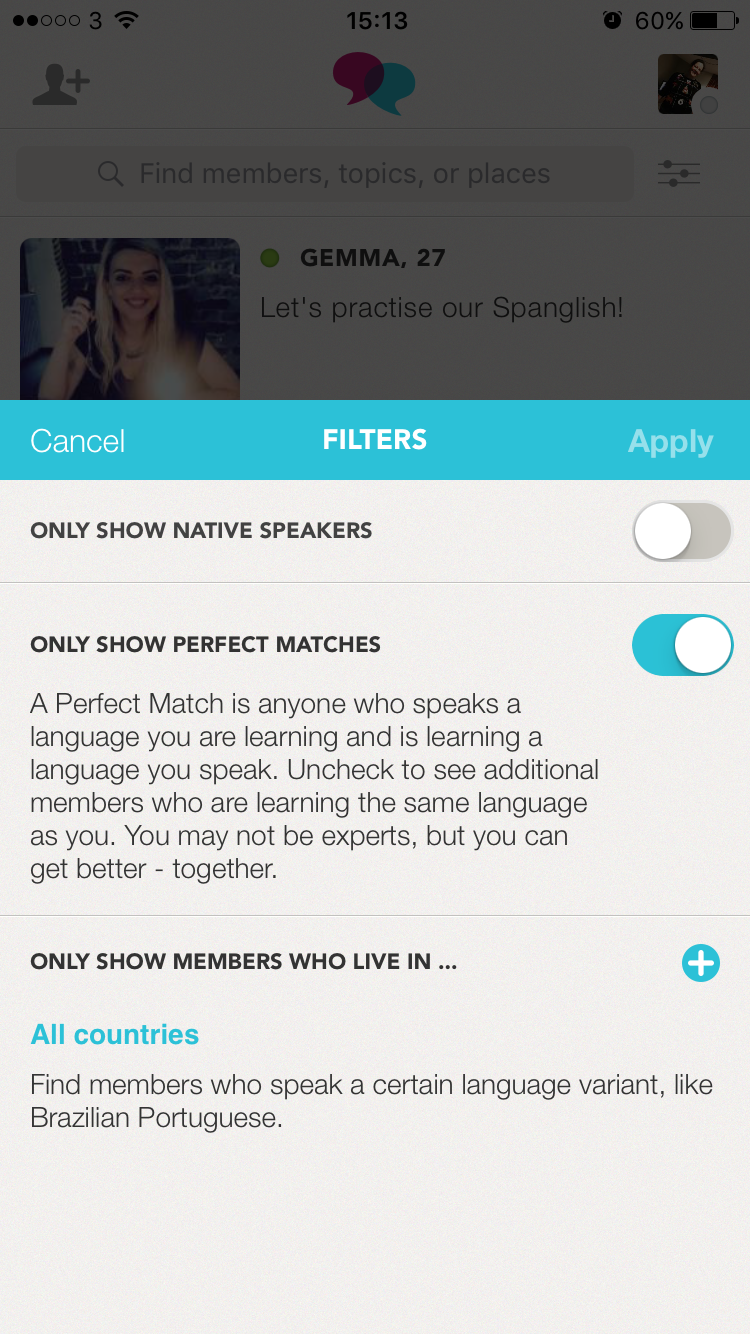
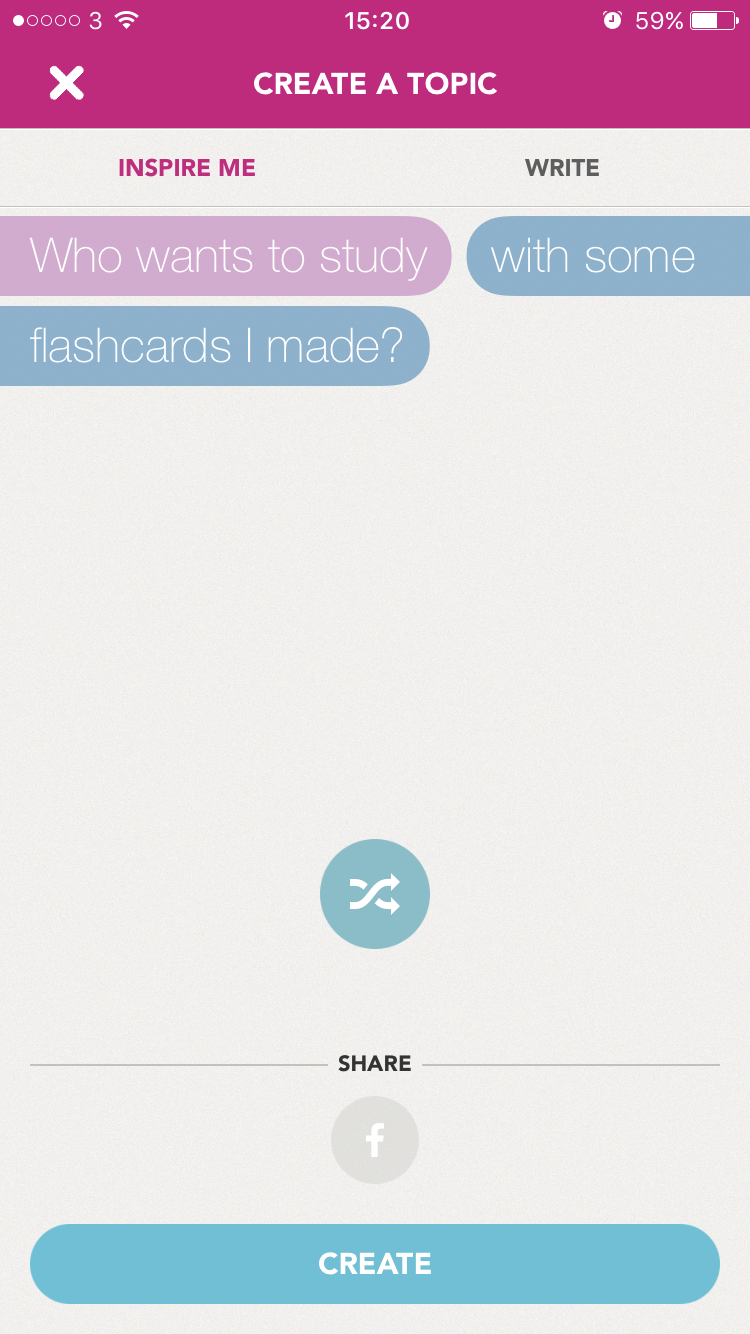
The "My Topics" section makes you an interesting exchange partner.
- Check out the Settings area in your profile to decide who should be able to find you.
- Select something fun you want to talk about in My Topics. The app offers lots of fun and inspiring prompts, or you can make your own conversation starters. These will be seen by others when they find your profile.
- Go into About Me to make sure you're happy with your profile picture and information.
Finding Language Exchange Partners
The partner search is the most important part of any good exchange app.
Tandem suggests people for you based on your language, but there's also a search bar. I had lots of fun on there, as you can search for anything. I tried
- Westworld
- hockey (nothing)
- Manchester United (SO MANY PEOPLE)
It was easy to find Welsh speakers on this app, as well as people learning each one of my interest languages. Remember not everyone needs native speakers.
The search is automatically limited to those users who are some kind of match for your languages, so you save time.
Tandem feels a little like a dating app. The personality of every profile comes out so well through that deeper connection with photos, likes and information. And to top it all off, you can leave comments on a language partner's profile to recommend them and tell others how nice they are.
All in all, I would say 5/5 - well done Tandem for your search experience.
How to Chat With People on Tandem
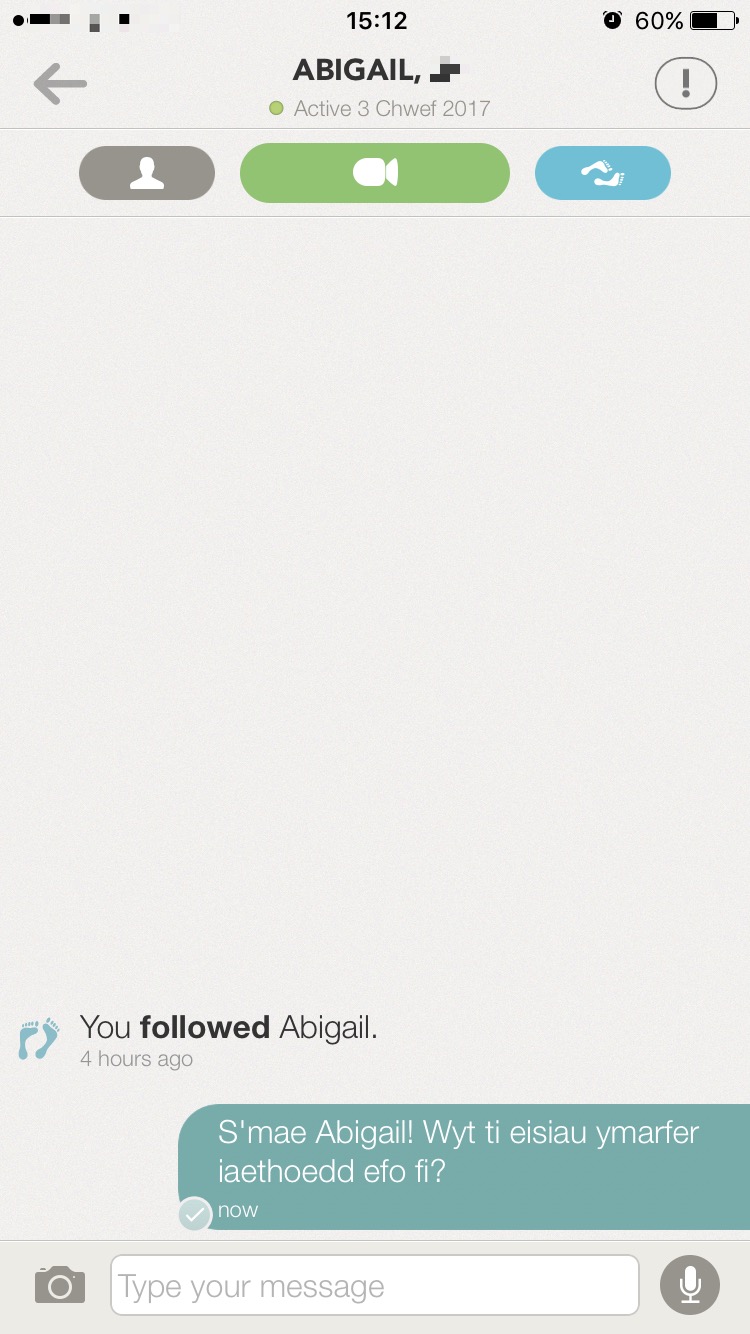
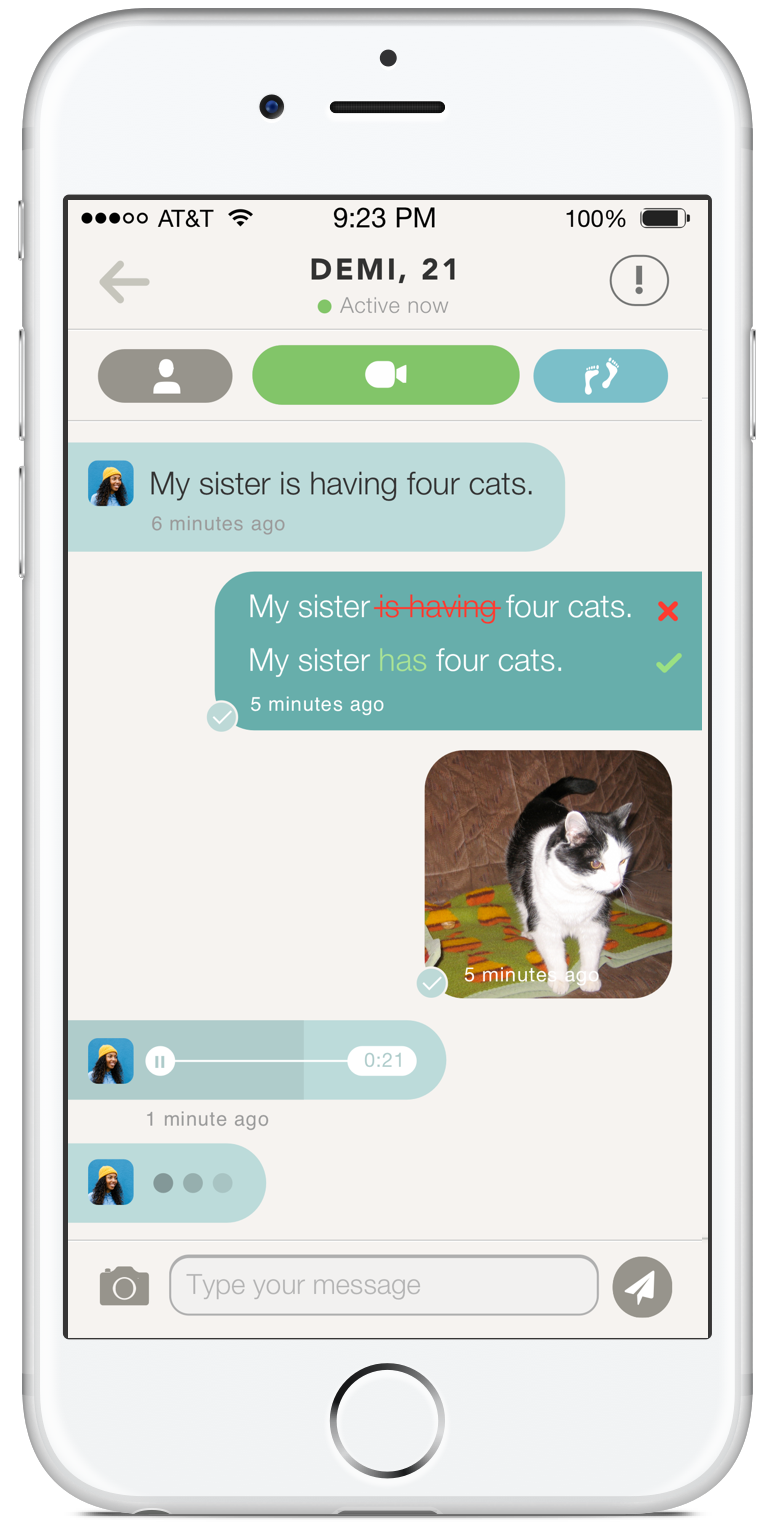
Chatting to someone on Tandem is straightforward. You shoot them a message through your profile. This app has the closest experience to texting that I've seen so far. You can send texts and voice messages, phone them on VOIP or go all out and make a video call.
I like how Tandem has simplified the design of its chats to remove anything you don't need.
Unlike other exchange apps, there is no in-app dictionary, but you can correct your partner's sentences easily. Chats are a friendly experience , making languages a tool for connecting with people. And the community moderation made me feel more comfortable sharing pictures and voice messages, too.
If you find someone who looks interesting and you're feeling shy, you have the opportunity to follow their updates and maybe contact them later. I am not sure how useful this feature is in practice, though.
Make Language Exchange Friends Without Losing Interest
If you go ahead and partner up with someone on Tandem, here are a few tips for making the process easier for you both:
- Arrange a time to meet and video chat or send each other longer messages on a regular basis. If it's a calendar appointment, you won't ignore it as much
- Allow for each person to ask a lot of questions and answer in longer sentences so you don't run out of things to say
- Prepare some interesting and unusual topics to talk about, for example these ideas on the Tandem blog:
- Follow Up each new exchange session by reviewing vocabulary and making sure you follow the acquire-memorize-review technique (I describe this in detail in The Vocab Cookbook)
Language exchanges do come with a small cost, as it takes your time and energy to prepare properly. In a good exchange, you both have responsibility for making this a fun conversation, so get creative and make sure you put in a little effort.
I give the chat experience a 3/5 - personally I'd like more language tools, but the design was lovely.
Or if an exchange sounds like it doesn't suit you right now...
You Can Find Language Tutors in The Tandem App
The inclusion of language tutors in Tandem touches on a really important point: You cannot expect your language exchange partner to be your tutor. I love that this app gives you the option of deciding how you want to be supported in your language learning journey.
Sometimes we all need extra help. Language tutors can explain more complex concepts, tricky grammar rules and fix your pronunciation.
More about this in my article on what you can expect to pay a tutor.
I tried out the tutor process and was absolutely satisfied. There is a personal vetting process, so that tutors have to apply and show how they are qualified and experienced for offering this paid service. The profiles are also reviewed by other users, so you know what you're getting.
Some tutors offer a free trial, but to be honest I found the prices so low that most people should not have to think twice before paying. The app even takes Apple Pay, a testament to its great user experience.
One thing was weird. I know that there are currently no Welsh tutors on Tandem. But even so, the app showed me tutors for everything. I'm a language nerd, so this wasn't a low point. I found it more inspiring...I could learn Korean! American Sign Language! Polish!
I'm giving the tutors in Tandem a 5/5 - this isn't a language school, and the support level seemed perfect for the app purpose.
Conclusions: Should You Try Tandem?

When it comes to recommending Tandem, I'm giving this app a big thumbs up. 👍 It's perfect for aspiring polyglots, because the community is both enormous and very varied. The user experience in the app is the nicest I have seen so far.
Within minutes, you can start swiping and reviewing dozens of cool people's profiles. Who knows what could be uncovered...a new local friend, an exciting connection around the world? No need to leave your house - you can strike up a conversation halfway around the world without ever getting off the couch.
The tutors as a support network are a really smart idea because they keep you committed.
My one bugbear would be with the general lack of integrations - I dream of a language learning app that lets me connect to my flashcards, my other apps, and more. If it works with Facebook, surely it can be done with Memrise?
I am closing my review with a solid 4.5/5 for Tandem. This app is totally free and worth checking out.
You can download the free Tandem app right now

3 Tutor-Approved Ideas For Learning a Language With Duolingo
Language learning was so boring before a little owl in a tracksuit came along.
Armed with addictive streak and modern technology, today's smartphone language learning feels more like a computer game than a language lesson. And in many ways, that's a great thing.
Read on to find out my top 3 tips for getting the most out of your Duolingo time.
Language learning was so boring before a little owl in a tracksuit came along.

Armed with addictive streak and modern technology, today's smartphone language learning feels more like a computer game than a language lesson. And in many ways, that's a great thing. Did you know that every month, the world completes over 6 billion Duolingo exercises? That's a lot of language learning done voluntarily - no school teacher forcing you, no boss breathing down your neck asking "where are you with that language tree?"
Is Duolingo Good For Language Learning?
On the whole, I'm on record as a Duo skeptic. I'm a tutor, I've used it and worked with app users, and it really didn't make them "fluent". But I've come to realize that making you fluent is not the point of Duolingo.
Duolingo mobile provides structure and training in several core skills. Plus, it's sort of a productivity app, with the streaks and bite-sized lessons designed to fit into user's busy lives with ease. All in all, you get a free language-based computer game, an addition to classic courses and tutors and most certainly not a replacement.

Chat bots are a recent addition to Duolingo's courses in more common languages. I haven't seen any in Welsh yet.
I could make a clear case both for or against using this app. On the one hand, I want you to ignore when Duolingo tells you that you are "now 53% fluent" because that is laughable. But on the other hand, I've been truly excited to see constant improvements in recent years.
This app might not become any more effective in terms of teaching you language. But as users, we're becoming better at fitting a language learning app into our lives. And if you've tried it, here are some invaluable tips for raising your Duolingo game.
1) Use the Web Version of Duolingo
Duolingo's mobile app is nice enough, but it lacks solid explanations. If you're a new language learner, you might find it difficult to figure out many of Duolingo's exercises by yourself. Sometimes you are asked to construct sentences, even though the app never taught you how to do these things. In other exercises, a new topic is introduced and can feel overwhelming for app users.
The Duolingo web app is a different story and comes with Personally, I don't use the web app much - Duolingo is a mobile experience for me and I enjoy learning away from the desktop (more about how I learn in my Welsh language updates). But if you're a committed user and want Duolingo to be your main resource, here are 3 awesome things you will find in the web version:

Explanations in Duolingo's web-based interface
The web version offers a fun practice option called "Timed Practice", allowing you to challenge yourself against the clock.
The ability to use the full keyboard and type out each of your answers, helping you to increase your spelling skills.
Explanations 👏! Duolingo web offers an extended "Tips and Notes" section. There are explanations, tables, and even references to which textbook unit you can use to train the same exercise. The content isn't uniform and varies by language, because Duolingo courses are partly created by volunteer experts in each language.
2) Use The Duolingo Skill Tree as a Guide
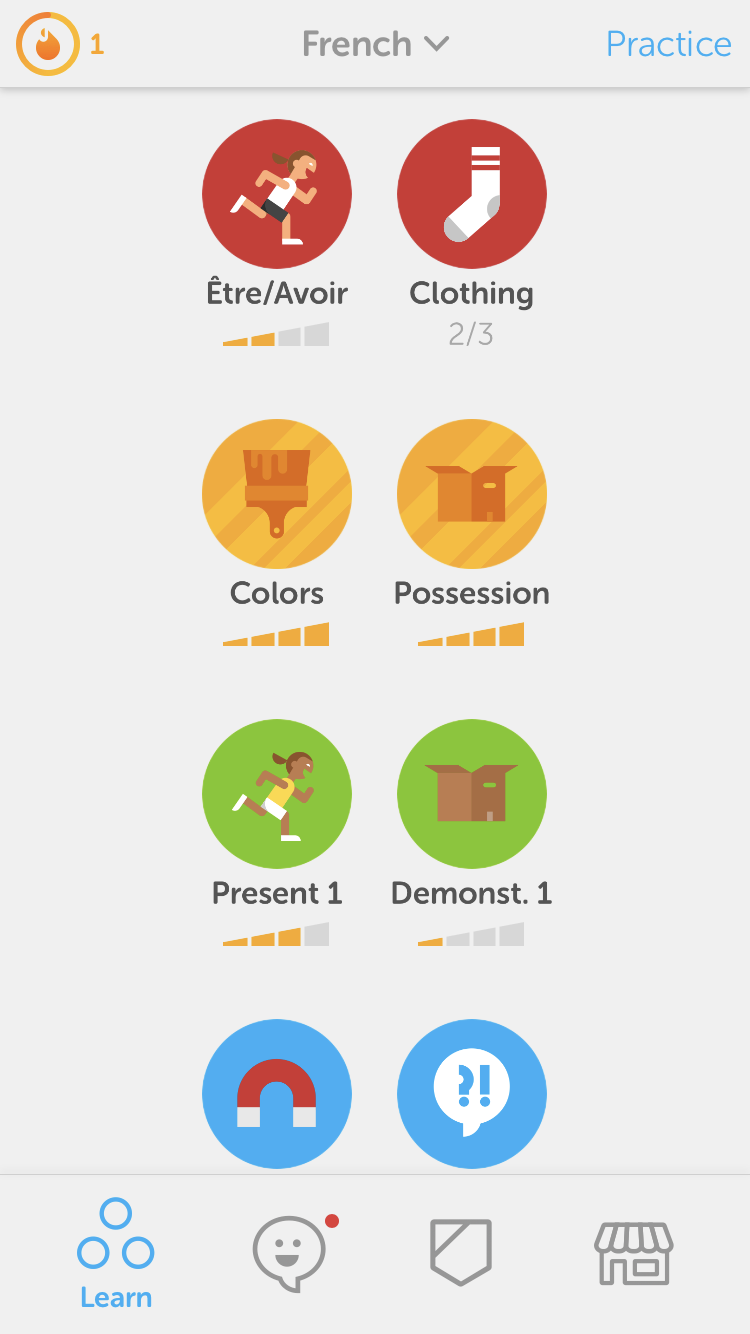
The Duolingo Skill Tree
The skill tree is a the heart of Duolingo and structures it in a way that's quite similar to textbooks. So using the Duolingo setup as a guide, you can let your own questions guide you. Have a classic resource available to answer those questions - why not outside of Duolingo?
A few resources you could try are grammar books, textbooks, podcasts, online courses, language tutors, and even social media. You can read recommendations for more language learning resources in my Resource Guide when you sign up to the Fluent Cool Kids Club.
If you're wondering about the cost of extra books, I recommend checking out your local libraries and charity shops. You're more than likely to find resources for pennies.
Related: Watch My Talk "What You Need to Know Before Spending Money on Language Learning" on YouTube
3) Take Duolingo For What It Is
Duolingo is a language learning app, nothing more and nothing less. In many ways, this makes it perfect for casual users who want to fit in a few minutes of practice at different moments in their day.
It's certainly not a waste of your time if you work your way through a few lessons, and there are dozens of great advantages of using Duolingo. It's cute, it's a fantastic performing app, it's supported by language communities.
If you're a beginner and learning your first or second foreign language, I think that the web version can be your genuine "digital language textbook". But don't rely on it solely and start adding in other resources very early. A good language learning routine is built on habit, human contact and variation in resources.
Do You Use Duolingo?
Are you happy with the little owl? Or does it make you want to howl? I'd love to hear more from you in the comments - tell me which app version you're using!
And for more guidance on language learning apps, join our Fluent Language Learners Facebook group, where I've got a video in the archive for you.



Struggling with listening? Discover realistic tips, challenge prompts, and the best tools for improving your listening skills as a self-guided language learner