
How To: Bullet Journal for Effective Language Learning
Have you ever found yourself in a really good language learning flow, only to have a couple of days off and fall off the wagon? I know this has happened to me numerous times, whether when learning a language, trying to work out daily, or even trying to keep a housecleaning routine.
But now there's a perfect and beautiful answer: the Bullet Journal. Could this powerful paper-based organisation system help you get fluent in another language? Let's dive in and check it out!

Have you ever found yourself in a really good language learning flow, only to have a couple of days off and fall off the wagon? I know this has happened to me numerous times, whether when learning a language, trying to work out daily, or even trying to keep a housecleaning routine. You're doing great, you're feeling organised, and then you have a day off or a temptation and you just can't seem to get back on track.
So what if you had a system to organise your housecleaning routine or language learning that was proven to improve productivity? Bullet Journaling not only improves productivity, it is also extremely flexible in terms of personalizing it for your own needs. Personally, I’m never as efficient as when I’m using the bullet journal system.
So how does it work?
It’s fairly simple, really. You set yourself a number of keys, which basically mean you choose which symbols have which meanings. Clarifying your keys is, pun intended, key to using bullet journaling successfully.
These are the keys I personally use in my bullet journal, however a quick google search or Pinterest search will give many more options.

Once your keys are sorted, you need to decide on a format. This, however, doesn’t need to be strictly adhered to – indeed, I would actually encourage you to try out different things, since you will know when you’ve got a format that works for you. I like planning my whole year very briefly at the end or the beginning of my notebook. I use a Leuchtturm 1917 with dotted pages, having weekly spreads with the key events from each day, then doing daily pages with detailed to dos and agendas.
You can also incorporate spreads and pages for anything you want to track, such as:
- Food eaten
- Water consumption
- Budget and spending
- Daily gratitude
- Workouts
- Words written
- And – you guessed it – language learning.
Have you thougth about creating these spreads in your target language?
Since bullet journaling is almost sure to guarantee you to stay on track, the system is perfect for scheduling your everyday language learning habits.
How To Use It For Language Learning

Snapshot of my own goal setting spread from the Bullet Journal
My number one tip would be to use Pinterest for inspiration for this! Pinterest is excellent to see how other people are designing their bullet journals and to get inspiration for your own. Personally I have a folder just for bullet journal inspiration - it can become an addiction! - and whenever I am struggling for ideas I have a browse in there.
Abigail from Polyglot Progress has also made a really informative video on how to use bullet journaling for language learning, perfect to ease yourself into the system!
The Language Habit Toolkit
Another option, if you do like things to be ready made for you, is the Fluent Language Habit Toolkit. The toolkit combines the best parts of the bullet journal system and effective language learning into one cohesive package.
I started working on it in my own bullet journal, as I realised that there was no all-in-one system out there offering goals, tracking, and review.
The kit is designed to be printed out as either A4 or A5 and is perfect to glue into a notebook for easier overview of your progress. It provides you with a complete set of tools that you can use to make steady progress and start building towards fluency in any language, and is based on 20 years experience of teaching languages.

So what are you waiting for? The possibilities are limitless with this system, and I can't wait to see what you do with yours! Please feel free to tag @fluentlanguage on Twitter or @kerstin_fluent on Instagram to share your creations.
3 Tutor-Approved Ideas For Learning a Language With Duolingo
Language learning was so boring before a little owl in a tracksuit came along.
Armed with addictive streak and modern technology, today's smartphone language learning feels more like a computer game than a language lesson. And in many ways, that's a great thing.
Read on to find out my top 3 tips for getting the most out of your Duolingo time.
Language learning was so boring before a little owl in a tracksuit came along.

Armed with addictive streak and modern technology, today's smartphone language learning feels more like a computer game than a language lesson. And in many ways, that's a great thing. Did you know that every month, the world completes over 6 billion Duolingo exercises? That's a lot of language learning done voluntarily - no school teacher forcing you, no boss breathing down your neck asking "where are you with that language tree?"
Is Duolingo Good For Language Learning?
On the whole, I'm on record as a Duo skeptic. I'm a tutor, I've used it and worked with app users, and it really didn't make them "fluent". But I've come to realize that making you fluent is not the point of Duolingo.
Duolingo mobile provides structure and training in several core skills. Plus, it's sort of a productivity app, with the streaks and bite-sized lessons designed to fit into user's busy lives with ease. All in all, you get a free language-based computer game, an addition to classic courses and tutors and most certainly not a replacement.

Chat bots are a recent addition to Duolingo's courses in more common languages. I haven't seen any in Welsh yet.
I could make a clear case both for or against using this app. On the one hand, I want you to ignore when Duolingo tells you that you are "now 53% fluent" because that is laughable. But on the other hand, I've been truly excited to see constant improvements in recent years.
This app might not become any more effective in terms of teaching you language. But as users, we're becoming better at fitting a language learning app into our lives. And if you've tried it, here are some invaluable tips for raising your Duolingo game.
1) Use the Web Version of Duolingo
Duolingo's mobile app is nice enough, but it lacks solid explanations. If you're a new language learner, you might find it difficult to figure out many of Duolingo's exercises by yourself. Sometimes you are asked to construct sentences, even though the app never taught you how to do these things. In other exercises, a new topic is introduced and can feel overwhelming for app users.
The Duolingo web app is a different story and comes with Personally, I don't use the web app much - Duolingo is a mobile experience for me and I enjoy learning away from the desktop (more about how I learn in my Welsh language updates). But if you're a committed user and want Duolingo to be your main resource, here are 3 awesome things you will find in the web version:

Explanations in Duolingo's web-based interface
The web version offers a fun practice option called "Timed Practice", allowing you to challenge yourself against the clock.
The ability to use the full keyboard and type out each of your answers, helping you to increase your spelling skills.
Explanations 👏! Duolingo web offers an extended "Tips and Notes" section. There are explanations, tables, and even references to which textbook unit you can use to train the same exercise. The content isn't uniform and varies by language, because Duolingo courses are partly created by volunteer experts in each language.
2) Use The Duolingo Skill Tree as a Guide
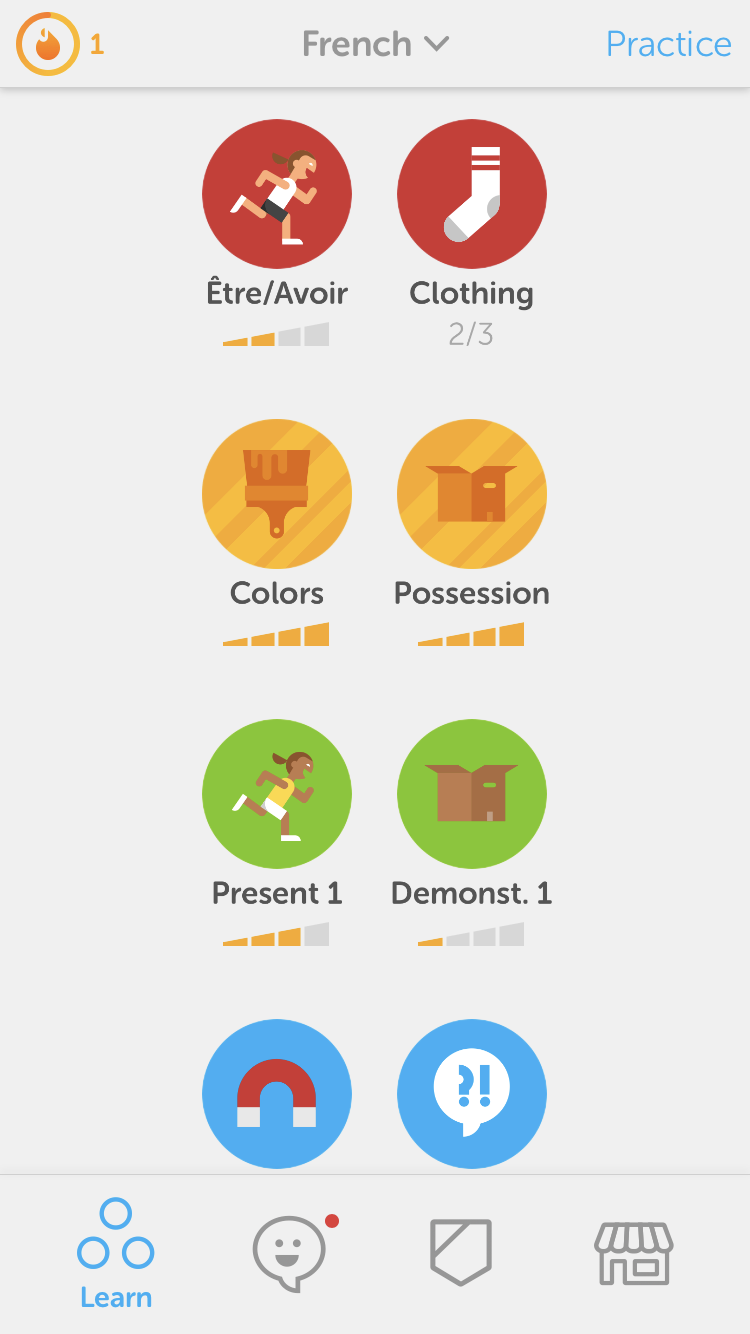
The Duolingo Skill Tree
The skill tree is a the heart of Duolingo and structures it in a way that's quite similar to textbooks. So using the Duolingo setup as a guide, you can let your own questions guide you. Have a classic resource available to answer those questions - why not outside of Duolingo?
A few resources you could try are grammar books, textbooks, podcasts, online courses, language tutors, and even social media. You can read recommendations for more language learning resources in my Resource Guide when you sign up to the Fluent Cool Kids Club.
If you're wondering about the cost of extra books, I recommend checking out your local libraries and charity shops. You're more than likely to find resources for pennies.
Related: Watch My Talk "What You Need to Know Before Spending Money on Language Learning" on YouTube
3) Take Duolingo For What It Is
Duolingo is a language learning app, nothing more and nothing less. In many ways, this makes it perfect for casual users who want to fit in a few minutes of practice at different moments in their day.
It's certainly not a waste of your time if you work your way through a few lessons, and there are dozens of great advantages of using Duolingo. It's cute, it's a fantastic performing app, it's supported by language communities.
If you're a beginner and learning your first or second foreign language, I think that the web version can be your genuine "digital language textbook". But don't rely on it solely and start adding in other resources very early. A good language learning routine is built on habit, human contact and variation in resources.
Do You Use Duolingo?
Are you happy with the little owl? Or does it make you want to howl? I'd love to hear more from you in the comments - tell me which app version you're using!
And for more guidance on language learning apps, join our Fluent Language Learners Facebook group, where I've got a video in the archive for you.
My Challenge Results & 17 Tips For Language Learning on Social Media
This is 2017: Social media is more powerful than ever. The next US president is tweeting at all hours. The Facebook algorithm has contributed to shaping public opinion. And over 80% of the population (in the USA) are on some kind of social network.
You'd think we're all a bunch of timewasters, scrolling our life away. But in this world of chaos, a small idea came and brought new motivation: "Use social media for good", it stated. Let's all stop wasting time and turn that naughty Facebook habit around.
Today, I'm here to tell you how that idea works out in practice. I've just completed a 28 Day Social Media Challenge, supported by the course Social Media Success. This course by Lindsay Williams is made for language learners and builds up your new study habit over 4 weeks.
Download the Guide

If you want to get more "behind the scenes" insight and find out which social networks are my top recommendations for language learners, be sure to download the new Guide to Social Networks from my Fluent Cool Kids Club by signing up here for free..
My Challenge Results
In my main language, Welsh, I spoke more sentences, discovered more native speakers, and added new vocabulary. In other words: HECK YES. This habit does not replace bigger study sessions, but it didn't take away the time for them either. Instead, I spent an effortless extra 3 hours on language learning.
I also found more time for my secondary languages. Currently these are Malaysian and French, and in the challenge I did things for both of them. Just a little bit, but it was there and lets me build onto them. I'm already working on a schedule.
17 Quick Tips for Language Learning on Social Media
Over the course of the 28 days, I collected short and simple tips that can help anyone get started with language learning on social media. Feel free to try a few of these, or even just to pick one.
Learn when you are busy
We already spend so much time on social media that this isn't a new time demand for most people. In fact, when was the last time you checked Facebook or Twitter? 20 minutes ago? Good! If you can do that, then you will find the language activities very easy. I was able to stick with the plan even on days where I travelled for over 12 hours, or met my whole extended family.
Here are my top tips:
- Mix language tools (flashcards) and social media together
For example, you can add new words you learn on Snapchat to a list on Memrise, or document your Duolingo tree in a Facebook group.
- Edit your newsfeed to stay focused
Are you following someone who tweets more nonsense than helpful things? Edit your newsfeed! You can mute some posts and set up focused lists to help you get there and save time. Twitter is my favourite tool for this.
- Newsfeed a mess still? Make a new profile
I created a language profile on Instagram so that I could stay focused on languages and have a newsfeed that gives me support and motivation. You can do the same on any social network, and most apps now support quick switching.
It pays off in 4 ways
Lanugage learning on social media is not just a way of taking your language skills to the next level. It also keeps you accountable, meaning you will stay motivated and keep going for longer. You will create documentation of how you're doing in languages, allowing you to see and feel progress. And finally, the community of language learners will start connecting to you meaning you make new language loving friends and find more interesting things about your language.
Here's how to get the most out of this:
- Follow teachers, bands and businesses
Social Media for Language Learning is about getting your newsfeed right, so make sure you follow as many useful accounts as you can. Find them by searching for your languages or seeing what's related to people you follow.
- Find existing communities
Every social network has a bunch of great groups that are already talking about your language. Check out Instagram challenges, Twitter chats, subreddits and Facebook groups.
- Avoid hiding your mistakes
When there is something wrong, people like to comment and correct it. This is how you find the best language community online, so forget about looking flawed and start putting your mistakes out there - they're like community bait!
- Make and share a goal
If your followers know what you are working on, they will be more invested in your success and you'll get lovely support messages. This also works for your own motivation, as stating the public goal keeps you more accountable.
Not every social network is great for language learning
In my experience of working through the social media jungle, some apps and websites emerged as stars and others felt like a waste of time. You can read more about my experiences in the special guide to social networks I created for the Fluent Cool Kids Club, which is free to join.
- Organise everyone you follow
On Facebook it's groups, on Pinterest it's boards, on Twitter it's lists. The better your organization, the faster you can find the right people.
- Organise early, but not too often
Invest half an hour at the start to get your lists or groups set up, and then don't worry about it anymore and enjoy the journey!
- Be ok with not being everywhere
Over time, you will realize that some apps or networks feel more like an obligation than a pleasure. The best way for you to find out what works for you is to try the challenges in Lindsay's course. After 28 days, look back and ask what worked best for you - then ditch the duds and stick with your daily practice where it matters!
Oh, by the way: This is fun!
Maybe this all sounds like a lot of hard work, but let me tell you: I had lots of fun with my languages. This way of learning is creative and lets you try out anything such as practice with kids, singing new songs, sharing pets or photos of your books.
Some tips to get more out of this:
- Use apps to go with your apps
The app store is full of great ways to take your photos and words to the next level! You can create images with apps like Wordswag, discover Snapchatters on Ghostcodes, and much more. Simply search your app store for the name of any social network and you'll find new ideas instantly.
- Explore more social networks
No one said you have to stick to Facebook and Twitter! Try language learning networks or look around on the boards of Fluent in 3 Months or Italki for example, or investigate the extra social networks in my new Cool Kids Club guide.
- Use algorithms to find more and more
Once you follow a language learner, the social network will learn what kind of people and topics you're interested in. Wait a few minutes, and watch your newsfeed transform into a language class like no other!
At the end of every week, you should spend 30 minutes on a review for new words and lessons. Here's what I did:
- Review your liked/saved posts
On most social networks, you can access a list of everything you've "Liked" so that you can use this as a bookmark system and work through it once a week as you review the best of the week.
- Learn social media vocab
The easiest way to find out vocabulary for "post", "comment", "tweet" etc is to switch the user language in your social network.
- Add your new words to a separate vocab list
Every week, it pays to invest a little bit of time to take all those new posts and words out of the internet and put them into your notebook, flashcards, and, ultimately, brain.
- Stay organised
Building habits is not the same as doing an intensive challenge, but this investment of your time in "little and often" will pay off. Use a diary, a tracker or follow the Social Media Success schedules so that you don't give up halfway through. The goal here is to start a daily language practice, not to become fluent in a short time!
So here's the conclusion: Social Media for Languages is something you should try - immediately! It won't take a lot of time, and it will pay off for sure.
What are your thoughts? Leave a comment here and tell me what worked for you and which social network you use all the time.
And don't forget that my free guide to ALL social networks is waiting for you in the Cool Kids Club!

The Book That Will Change How You See Language Learning (+ Clever Notes & Action Plan FREE)
One of the most common things I hear from language learners is

"what is the best way to do this?" You want to know how to learn a language, in as much detail as possible.
And it's hard to answer that question once and for all, for everyone. People are different, and no one's going to teach you good habits overnight. I know there are plenty of players out there telling you that their way of doing flash cards or listening to native content is the real answer.
But seriously, guys. What it really takes is that you learn to understand your own smart and capable self. That's where a book like Becoming Fluent comes in.
By the way, I've gone ahead and done a little bit of hard work for you guys. You can now enter your details below and download my book notes for Becoming Fluent along with a fab little action plan template so you know what to do next.
What Is Becoming Fluent?
Becoming Fluent is an impressive book in the field of language acquisition. It's written with the scientific background expected from academics. But that doesn't mean that language learners cannot apply it to their lives: Throughout the book, the authors mix explanations and practical tips. The book is written for adult learners who want to conquer another language, and goes into the following topics:
- What do you have to do to make sure you become a successful language learner?
- How can you choose the right target language to study?
- What are the best
- How important is it to know the culture and norms of people who speak your target language every day?
- How can you get better at memorising and remembering more?
Why It's Awesome
There are many language learning books out in the market that tell you all about how wonderful the author's methods are. Most successful polyglot-style books follow this system. The logic is that if following certain steps made the author fluent in another language, then you can do the same by copying the steps.
In Becoming Fluent, I detected none of this. The authors do work from their own experience in languages but never claim to know all the answers. Each chapter is based on a new aspect of language learning and gives a neutral summary of what the science says, followed by practical advice.
I've never used or endorsed the "copy a winner" approach, and I don't think it's quite how things work for language learners. Success in language learning is about more than just playing the game right. The more you learn and discover about yourself, your habits, your preferences and strengths in language learning, the more you will approach a real ability to learn any language quickly.
So for me, Becoming Fluent was an outstanding book about language learning because it doesn't tell you what exactly to do. This one is about empowering yourself to find your own perfect method.
What Wasn't So Great
Becoming Fluent is smart and thorough and scientific, which is a big rarity in language learning. It's great to read such a sensible voice in our field. The book comes at language learning from so many different angles that some great aspects get a little lost.
I would have liked the book's action-focused tips to be highlighted or separated from the main text, making it easier to find exactly how to put new insights into action. As it is, Becoming Fluent does require you to put in a few hours for reading, but this is time well spent.
My Favourite Parts
- All of chapter 2, which addresses the many lies and misleading beliefs that we hold in our heads before we even start learning. If you can only listen to/read one part of the book, this chapter is going to make a massive difference. It's a small window into how your brain trips you up.
- This sentence in Chapter 3:
"The REAL test of how well you speak a language is how easily you communicate when you are using that language, and the pleasure you derive from speaking it."
- The ideas behind common ground and the zone of proximal development, which are all about how you think of how good you are, how good other people are in comparison, and how you can get better step-by-step.
- The focus on learning and speaking a language like an adult, not a kid or teenager. This focus builds great insights, for example the understanding that it's more important to be yourself in another language than to sound "exactly like all the native speakers".
- The image of tutors and helpers as a Sherpa, i.e. Someone who's climbing the mountain with you, showing you the way, teaching you about the process as you're doing it.
- The concept of cognitive overload, which explains exactly why and how and when you get tired.
Overall, I am very happy that I read Becoming Fluent and recommend you check it out too. I ordered my copy from the local library and am very glad that it's in their catalogue now. You can get your own printed copy in the same way, or order it from Amazon (here's the US link and the UK link).
Don’t forget, you can grab my full book notes (9 pages!) by clicking the button below. They include your own action plan template and a checklist of books to check out, so next you can be prepared on your next visit to the library or to Amazon.
Don’t forget to sign up here to get the free notes and action plan.
Episode 38: The Best Tools for Language Learning in Spring/Summer 2016
Episode 38 is brought to you with friendly support from italki. Do visit their site and check out the awesome Buy 1 Get 1 Free offer to learn from native speakers today.
Kerstin and Lindsay bring you the ultimate Spring/Summer collection of language learning tools. We each nominated three things we regularly use for learning languages and discussed how to make them teach you a language.
"I'm not as good as I think I am - but that's a good thing because it motivates me to work harder." - Lindsay
And if that's not enough, we then went ahead and created our own language learning chart for you.
Listen to the show to find out our absolute top recommendation.
Here's a quick run-down of the charts:
1) Forvo

This is the place you can go if you want to know how to pronounce a word in any language. It's even useful for finding out how to say a word (or a name) in your own language. Forvo's top pronounced words of March 2016 were Cruyff, Slaínte and Leicester.
This one is absolutely perfect for people who are curious and excited about language and how it works. In other words, language geeks like us. If you don't know it, forvo it.
2) Spotify

Do you like one artist in your target language and want to explore more? Then Spotify is your best tool.
Here is our podcast's own Spotify Language Chart, created for the European Day of Languages 2015 live show.
3) Workflow and Evernote (IOS devices)
The app Workflow is a way for you to connect different apps on your IOS device to each other. Use it to save audio from anywhere on the internet and save it, so that you can access it offline no matter where you are.
We recommend Workflow for anyone who loves to tinker and build their own little systems for language learning.
Workflow also talks to the Apple watch - have you used it with the watch for flashcards or uploads? I'd love to hear your stories.
3) Snapchat

Snapchat is a social network that allows you to use your phone's camera and create your day's story with videos and photos. Use it to practice speaking or snap new words in your target language.
This one is perfect if you're embarrassed to speak, because whatever you upload into Snapchat will disappear after 24 hours. We recommend Snapchat for younger learners, and anyone who loves using the camera on their smartphone.
4) Readlang
Readlang is an extension for your browser or an app for your mobile device, and it translates any website. With Readlang you can just tap on any word and it will translate it for you - and then you can save it for later or add to your flashcard system.
It makes language learning so much more interesting because you can look at anything that's relevant to YOUR life. We recommend this one for learners who are intermediate to advanced and want to maintain their language levels.
If you're a Welsh learner, there's a similar system built into the BBC Cymru website ("Vocab" button in the top right).
5) Google Sheets Translate
This is the best for anyone wanting to build word lists in several languages. Google Translate has now been added to Google Sheets, so what you can do is build a simple vocab list in a spreadsheet, then set all those words to auto-translate into another language.
Here's the detailed Google article explaining how to use this function.
If you have a csv file, you can even export from your favourite flashcard app and add it back in to google. It's perfect for polyglot learners who are working on several languages.
Honorary Mentions
Welsh-specific:
- iPlayer
Korean-specific: - Drama Fever
Everlasting Classics
italki, Memrise (Anki/Quizlet), HelloTalk
Do You Agree With Our Language Chart?
You can get in touch with us and tell us what you thought by
1) leaving us an iTunes review by visiting our itunes page and clicking "Ratings and Reviews"
2) using hashtag #cllp (or #kerstinyouold) on Twitter (I am @kerstinhammes and Lindsay is @ldlanguages).
And once again, thanks so much to our sponsors Italki - please support our show by visiting them today.



Struggling with listening? Discover realistic tips, challenge prompts, and the best tools for improving your listening skills as a self-guided language learner