
How to Learn a Language at Christmas (Even If You Don't Celebrate Christmas)
It’s the season / ‘tis the season to relax with friends, decorate the home and…hang on, how are you meant to fit language learning in between all that celebration energy?
Don’t worry, I’ve got you covered! Read this article to get easy tips for learning a language during the holiday season.

With just a few days to go until the Christmas holiday, chances are you might be feeling busy right now. When you’ve got gifts to wrap and trees to light, how can you keep learning languages?
Don’t worry, it’s not impossible. In this podcast and article, I’ve got handy tips for you to keep you in touch with any language - no matter if it’s Christmas, Kwanzaa, Hanukkah or Pagan Yule season.
You can also find this podcast by searching “Fluent Show” on 🍎 apple podcasts 📣Spotify 🔶Overcast 📻TuneIn Radio 🏆and anywhere you get podcasts
1) Surround Yourself With Your Target Language
At this time of the year, you’ll probably spend a lot of time in the home. You may already be decorating your house, which is a great opportunity for subtle language immersion.
The psychological concept behind this tip is that of priming, which describes the way your brain reacts to even the tiniest cues and adjusts its assumptions and expectations accordingly. You can use it to your advantage by decorating with a little language flair.
How about
- a few decorations adorned with words in your target language
- multilingual cards and greetings this year (try Irregular Endings)
- making and serving different foods and drink, inspired by your target culture
Even if your items don’t have any words in your target language on them, they will remind you that you’re a learner of another language and bring your loved ones in on your project.
2) Seek Out Tutorials in Your Target Language
This time of year is perfect for homemade gifts, decorations, and food. If you have an IRL friend who practices your target language with you, get out of the “1-to-1 conversation” routine and make something together!
For added bonuses, use a tutorial in your target language. This is excellent practice for reading comprehension and boosts your motivation by giving you something instant to show.
For example I’ve made biscotti before from a recipe in my Welsh learners’ magazine and then I packaged them up and gave them to friends and family as Christmas presents.
Look out for
- Crafting tutorials and magazine articles in your target language
- Recipes for seasonal food
- Crafting materials and instructions
3) Host a Language Party
The holiday season is a time to get together, not to sit alone and stare at Duolingo or Memrise. Here are a few ideas for bringing a bit of language flair to your holiday party:
Play Games Together
There are so many great word games that broaden your horizons about English, and it’s not too difficult to adapt them to a multilingual group. For example, guess the answers to a round of Pictionary or charades in another language, or get your friends to act out your vocabulary lists for you!
For more ideas, read these ideas for language learning games in a group.
Discover Music in Your Language
Play music in your target language and explore and share how they celebrate the season. If possible, get out and visit a celebration in the community of your language. There’s lots going on and during the holiday season most people love to open their doors.
If you haven’t found any music in your target language yet, go straight to my Spotify for Language guide or this multilingual Christmas song made by Lindsay Williams.
Watch a Christmas Movie
Many people have a favourite film about Christmas, and if you don’t have one yet then Netflix is ready to help out with every new instalments of the Christmas Prince series.
Here are a few ideas:
- Un conte de Noël in French
- 3 Haselnüsse für Aschenbrödel,a German/Czech 70s classic
And of course, you can always put target language subtitles on Die Hard!
If you have not found a festive movie in your target language yet, now is the time to ask and enjoy some well-deserved downtime.
What If Your Target Language Has No Christmas Season?
No worries!
Use decorations that suit the season, and learn about celebrations at this time of year
Sneak a little snack or food from your target language environment into the boring old Christmas with Aunt Bridget
Use festive colours and glitter pens to write your vocabulary lists and language notes
Take pictures of your decorations and add them to your digital flashcard apps (for example, Smartcards + lets you easily add photos)
Find Time and Focus For Studying Your Language
The winter holiday season often means a drop in productivity. You are likely interrupted in your routine, and you may find yourself with lots of extra tasks on your plate.
If you find yourself wanting stay productive without the added stress, take my short language course Focus & Fluency.
It’s a proven way to get more motivated and kickstart your learning with smarter study techniques.
No matter what you do, merry Christmas if you do celebrate it - nadolig llawen - frohe Weihnachten, and comment below sharing your favourite songs and movies in your target language.
Indigenous Languages Explained: What You Need to Know Today
Up to 95% of the world’s languages might be extinct or endangered by the end of the century. And most of them are indigenous, meaning that they spoken by the indigenous people of a region.
In this article, you'll discover
What’s an indigenous language?
Why does it matter so much that we preserve these languages?
And much more about how you can start learning one of these languages too

How would you feel if you were the only person left in the world who spoke your native language?
It seems unthinkable, right? Yet, it’s a reality for more than a few speakers of indigenous languages that are at risk of dying out. In fact, it’s estimated that one indigenous language is lost every two weeks.
Out of around 7,111 languages, about a fifth are endangered or vulnerable on some level. Indigenous languages make up at least 4,000 of the world’s languages, though it’s impossible to know the exact number.
But what exactly is an indigenous language and what makes them so important?
Listen to this podcast episode with me and Lindsay Williams to learn more about indigenous languages (and Sean Paul!).
What’s an Indigenous Language?
To put it simply, an indigenous language is one that is spoken by the indigenous people of a region.
However, most indigenous languages are also minority languages that are spoken by a very small number of people and many of them are in danger of losing out to more widely spoken languages. Factors such assimilation into the dominant culture or even coercion to abandon minority languages have seriously decreased the number of native speakers. In some cases, there is only one known speaker of a language, which puts these languages at serious risk of becoming extinct.
The Year of Indigenous Languages

Indigenous languages are fading out, unnoticed, because there aren’t enough people who speak or learn them.
What can we do about it?
In an effort to bring attention to and preserve these languages, along with the cultural diversity they represent, the United Nations has declared 2019 as The International Year of Indigenous Languages.
The idea behind the declaration is not only to raise awareness, but to take actions that support, increase access to, and promote indigenous languages, including:
Supporting revitalization with more materials and services that encourage speakers to use indigenous languages
Increasing educational means to learn indigenous languages
Promoting knowledge of both indigenous languages and cultures
Why is Protecting Indigenous Languages So Important?
Think for a moment about a time you felt like an outsider among people who spoke a foreign language. Besides the more obvious difficulties of not being able to express yourself, you might have felt that there were social and cultural differences that you just didn’t understand. Likewise, there would be things that they wouldn’t understand about you.
That’s because language doesn’t exist in a vacuum. Culture, traditions, social norms, and even unique expressions are built into a language. What do you think happens when those things aren’t passed down alongside indigenous languages due to assimilation, discrimination, and other threats to indigenous languages?
They become lost, too.
Language is a Human Right
When we allow indigenous languages to be lost and discriminated against, we’re also allowing indigenous people to be forgotten and discriminated against. Working to preserve indigenous languages acknowledges that choosing and speaking our languages is a human right.
In the Universal Declaration of Human Rights, law provides for:
Freedom from discrimination
The right to a fair trial, which means getting an interpreter if needed
Freedom of expression - no matter which language you choose
The right to education in your chosen medium of instruction
The effort to preserve indigenous languages reminds us that:
Nationhood is NOT defined through language, as shown in many situations all around the world where languages have been imposed on people after conquest or colonization.
Indigenous languages are very often minority languages, and minorities are routinely
Denied education, money, access to opportunities and resources
Exploited and oppressed, so they cannot speak out about what matters to them
Your language IS your voice, your history, and your culture. It’s a big source of self-confidence and self-belief in the world.
- When you lose that connection to your own identity, you lose yourself.
How Much Do You Know about Indigenous Languages?
You might be surprised to learn that…
Only 23 languages are used by more than half of the world’s population
Up to 95% of the world’s languages might be extinct or endangered by the end of the century
Papua New Guinea is the most linguistically diverse country in the world, followed by Indonesia and Nigeria. Most of the languages spoken in these countries are indigenous.
The Navajo language is the most spoken Native American language in the U.S.
In some cases, indigenous languages have a larger influence on the dominant language or culture than you think.
- Did you know that a number of Australian English words have been borrowed from indigenous Aboriginal languages, including the word "kangaroo"?
In an effort to promote these languages and bring indigenous cultures into the spotlight, some people have implemented more creative (and fantastic) means.
- The National Arts Centre in Ottawa is opening the first Indigenous Theatre program, featuring multiple shows performed entirely in an indigenous language
Sharing Indigenous Languages
As enthusiastic and curious language learners, you might already be wondering about what some of these indigenous languages sound like, especially if you’ve never heard of them before.
Are they ever similar to more dominant languages in the same region? If not, how different are they?
Luckily, as more and more people embrace indigenous languages, opportunities to listen to and learn about them are increasing as well. For instance, you can listen to covers of popular songs in an indigenous language, like this version of Blackbird sung in Mi’kmaq, which is spoken in Canada and the U.S.
Similarly, there have been a few projects to expand the reach of Navajo, including a dubbed version of Star Wars and Finding Nemo.
Music lovers can also hope to find both cover songs and original music by speakers of indigenous languages, including this one by Eivør Pálsdóttir, a Faroese singer and songwriter. If you listen, you might pick out that Faroese is related to Icelandic, though it still has distinctive qualities of its own. Currently, the language is mainly spoken in the Faroe Islands.

A Mi’kmaq prayer book photographed by Dennis Jarvis (Flickr)
Recommendations for Tools and Resources
You can start learning any language, including many indigenous ones. If the language is endangered or spoken by a minority that has experienced unfavourable treatment in the past, bear in mind that your access may not match the access that members of the language community may have.
Approach language practice with the same respect you would owe anyone that gives you the time and attention of practicing a language with them.
Remember: Cultural exchange and learning each other’s languages is how humans show respect to each other.
The best places to find out about almost any language under the sun are these four:
To learn one of those many languages, keep an eye out among the most popular language resources first. Programmes like Glossika or Drops support a few indigenous languages, and you may be surprised about how many languages you’ll find at Teach Yourself, Michel Thomas or Pimsleur.
Don’t forget to look at social media as a second resource, searching for hashtags in indigenous languages and following musicians or writers who use them.
And finally, look around platforms like Italki when you’re ready to have a conversation with an online tutor. With over 10,000 tutors listed on the platform, we have studied several popular indigenous languages ourselves on there such as Guaraní and Icelandic.
Do You Know an Indigenous Language?
Share a comment below and tell us what you know about an indigenous language from anywhere in the world.
The Most Popular Language Exams (And Why They're Great For Independent Learners Too)
Language exams can add to your routines and make you a much better language learner. At the end of this article, you'll find a handy list of popular tests and exams in a whole bunch of languages.

Why Take a Language Exam or Language Test?
You may find yourself wondering why a language test would be useful for you at all, especially if you’re not studying for work or school. But there are a few excellent reasons to dive into the idea of test prep.
1) Gain a Solid Framework Instantly
Self-guided language study is a bit haphazard at times. You may lack the support network of a group class, and you may not have found the right tutor yet. You may even find yourself changing resources a lot of the time. One day you spend half an hour on Memrise, the next day it’s back to podcasts. If you find that your entire language learning system is not as good as it could be, working towards will help you grow from solid ground. Language exams are built on the four core skills principle of listening, reading, speaking and writing.
Read more about the core skills in my book Fluency Made Achievable
2) Achieve More, Faster
Believe it or not, putting a smaller goal such as a specific language test at the next level in front of you will make you feel better. It’s a bit like going on marathon training. You could try and run the whole 26 miles all in one go, and then you’ll feel frustrated when you haven’t got there after 1 hour. Or you could practice little and often, and aim for a level that’s the next sensible goal. As you approach the 5 mile marker for the first time you’ll feel pretty proud and you’ll know you can build onto this foundation. The same mindset will work for you when you aim to pass the right exam instead of spending all your days wondering “how long until I’m fluent?”.
3) Get the Benefit Without The Fees
Language tests are created for applicants to universities, aspiring immigrants or job applicants who need to prove that they can function at the required level in a language. This has two big advantages for you as an independent learner:
First of all, the tests are not about rote learning and recalling 1000 words. They are about how well you can function in your target language. Can you read the paper, can you understand your boss, can you convince a friend to see your movie choice? For anyone dreaming of true functional fluency in another country, language tests are perfect.
But secondly, if you’re not actually planning to move to your target language’s country, you have got a fab deal. Buy a test prep manual, join a test prep class, research a test…but don’t go and take it because you don’t need to do this. You can mock test yourself in ways that are cheaper than some of the registration fees charged by test providers. For example, work with a tutor just to check your answers or become a study buddy for a learner at your level.
The Most Popular Framework for Languages
These days, most accredited language tests are designed in line with the Common European Framework for Language Proficiency (CEFR), which is split into levels A1 to C2.
You may also see websites that refer to the amount of study hours a student has put in to achieve this level, but it’s a lot more helpful to think about it as the answer to the question “What can you do with your language skills at this level?"
The aspect that I like best about this framework is that it does not focus on numbers. Instead of checking which vocabulary words you know (like the scary/horrible American GED), these tests are about interaction. They are exactly what language learning is about in the 21st century. If you’re hoping to speak to a real person soon, then this system is exactly right for you.
The Most Popular Language Exams
English
Both exams are accepted widely throughout the English speaking world. With both of these, you don't study towards a specific level exam. Instead, you're tested and your result will indicate which level the testers found you are at.
German
- Goethe Certificates from A1 to C2
- ÖSD, the Austrian language diploma which assesses the Austrian dialect of German
French
- DELF and DAF are the official French government language exams and offer tests ranging from A1 to B2 and the DAF as the higher option
- TCF, the Test de Connaissance du Français also has a Québec option if you're looking at Canadian French in particular
Spanish
- DELE is the official Spanish government language exam and awards diplomas from A1 to C2
Italian
- CILS, the Certificazione di Italiano come Lingua Straniera is particularly useful for people aiming to study at Italian universities, and also available from A1 to C2. It's offered by the University of Siena.
- The popular CELI is available at levels UNO, DUE and TRE. View all options at the University of Perugia website.
Japanese
- The JLPT is the Japanese Language Proficiency Test or Nihongo Nōryoku Shiken. It doesn't follow the usual framework to the letter but instead runs from level N1 to N5.
If you haven't found a language exam that interests you on this page or want to find even more options, read further on Wikipedia.
Do You Think a Test is Right For You?
In my own experience, I have prepared students for Goethe Exams at levels B1 to C1 and found that it really focused our lessons. And I'm not a stranger to language exams myself, having taken the IELTS before moving to the UK many moons ago.
Have you ever taken a language proficiency test or prepared for one? Would you do this in your language learning?
Share your opinion about formal language exams in the comments!

#clearthelist March 2019: Surprising Gigs, Welsh Friends, Big Things to Come
Clear the List is a monthly round-up of my language goals and progress. This month, read about
how I ended up at a political rally without noticing
how having friends is my language constant in Welsh
how to start learning Chinese (if you’re me, haha)

Welcome to the March edition of my #clearthelist goal tracking post. Clear The List is a support and accountability blog group sharing monthly language learning goals, hosted by my friends Lindsay and Shannon.
Anyone can join and you're welcome in the blog round-up. Lindsay has more information on how it works on her website.
What Happened in February 2019?
February is a short month and full of joy for me as one of the co-organisers of the Women in Language conference. I spent a big chunk of the month emailing speakers, creating a schedule and booking everyone in for their individual speaking slots. And then of course there’s marketing - I hope you spotted us on the blog or on a podcast you listen to.
As I write this, we’re just 2 days away from starting the conference. I’m feeling nervous and excited, and ready to enjoy 4 days of straight-up fun. All the information you need is at Womeninlanguage.com.
During this month, I also put together everything I need so I can open my new course German Uncovered in March. I am excited to be taking the first Fluent students and made a free mini course for all of you to enjoy. Sign up at www.german2019.com site to find out more about that one.
Surprising Gig Experience
February wasn’t all work. I took a fun trip to Cardiff (the Welsh capital) with my friend Gareth and saw a fab selection of bands for the Yes is More! gig. I attended for the bands…didn’t quite realise the gig’s political dimension as it was a Welsh independence campaign rally too!
Ending up dancing at a concert that supports an “independent, socialist Wales” is EXACTLY why I learn languages. It’s the kind of thing I would never ever get to do if I didn’t speak the language and let that pull me deeper under the surface of a country.
What language-based adventures have you had in your life?
And finally, I was excited to be commenting on Britain’s less impressive language news on BBC Radio 5 Live. Here’s a glimpse of their high tech local studio!
The Fluent Show
February’s episodes were fabulous - I shared the results of the big audience survey in episode 123 and got to bring you a brand new bilingual podcast. This time, I spoke French and English with Khady Ndoye who can teach us a lot about the many languages of Africa.
Listen to the bilingual episode about African languages here
Language Goals and Progress
As I mentioned above, the Women in Language conference is just 2 days away. So this time I’ll breeze through the goals and give you a very short summary.
extremely short summary: Chinese learning not terrible, Welsh learning mostly speaking practice.
Let’s take a quick look at my…
Welsh Language Progress
I’m only one lesson away from finishing level 2 of Say Something in Welsh. This level is 25 lessons long so once I get that done I’ll be at a GREAT milestone.
As I mentioned above, I visited Wales in February. That’s always a treat. Cardiff is mostly English speaking but there are always a few opportunities for Welsh practice too. Hanging out with Gareth from How to get fluent is great for me - not just because he’s another Welsh speaker but also because he’s a good friend.
I stayed at the YHA, where the staff wear badges to show their language skills, and one of the staff members had all her exchanges with me in Welsh. Which was awesome and confirmed that I’m fully functional in this language.
I also popped up to visit my friend Dafydd who patiently spoke Welsh with me even when I lazily switched to English. Diolch!
And finally, I also met with my local language exchange partner I found on Facebook, and texted and messaged several friends.
Now that I have built a network of Welsh speakers around me, it feels almost impossible to spend a month not using this language. This is such a positive development!
In terms of listening, I also listened to a full episodes of the Mynd am beint gyda.. show with Nicky Roberts. I can now listen while doing other stuff and still understand everything. Result!
Chinese Language Progress
Well, isn’t Chinese at a different level! This month I did meet my goals of
- starting a Chinese notebook
- going to the library to see what they have.
Sadly the library didn’t have anything useful in terms of traditional courses, so I continued to explore online and use apps. I listened to a few episodes of Coffee Break Chinese which I enjoyed lots.
Best new word of the month is definitely the Chinese for English: yīng gé lán 英格兰…because it sounds like the “In-ger-land” shout in New Order’s song ‘World in Motion’ which I love. 😅
Language Goals for March 2019
March looks like it’s going to be a month all about German with the new German course opening, but here are the goals I’m going to set myself.
Welsh Language Goals
- I’m keen to have more real conversations to develop my Welsh listening skills, so I hope to chat to friends every week on Skype or locally.
- I am 100% going to finish Level 2 of Say Something in Welsh!
- Listening needs more attention! Once again, Nicky’s podcast to the rescue. It’s great for my level, conversational with a good amount of English thrown in.
I miss reading in Welsh so I’m also going to start my next book, which is Ffenestri by Lois Arnold.
Chinese
I get the feeling it’s now time that I move on from the basics of “good, thank you, I am, you are, excuse me..” and towards some way of expressing myself in my target language.
I’ve also decided to focus less on the characters, as my first vision goal has been established: I want to understand what people say!
So my main work here will have to be on pronunciation and on lots of listening.
Here are a few things I hope to do:
- Purchase an audio-based course
- Make my first sentences in my notebook
- If there’s time, book my first Chinese lesson to try those sentences with a tutor
- Keep up with the apps I’m liking: Drops, Memrise, Lingodeer if there’s time.
So that’s it, my Clear the List report for the two languages I’m now learning at two very different levels.
By the way, if you’re interested in learning more about learning two languages at once, check out Abigail from Polyglot Process who is presenting at Women in Language. Her talk is going to be popular!
What Are Your Language Goals?
Have you studied two languages at very different levels? For me it’s not the first time, but it is the first time as a solo learner!
If you have ambitions in German, don’t forget to visit www.german2019.com where my free course is launching next month.
How was your February? Leave a comment below and share how you got on.
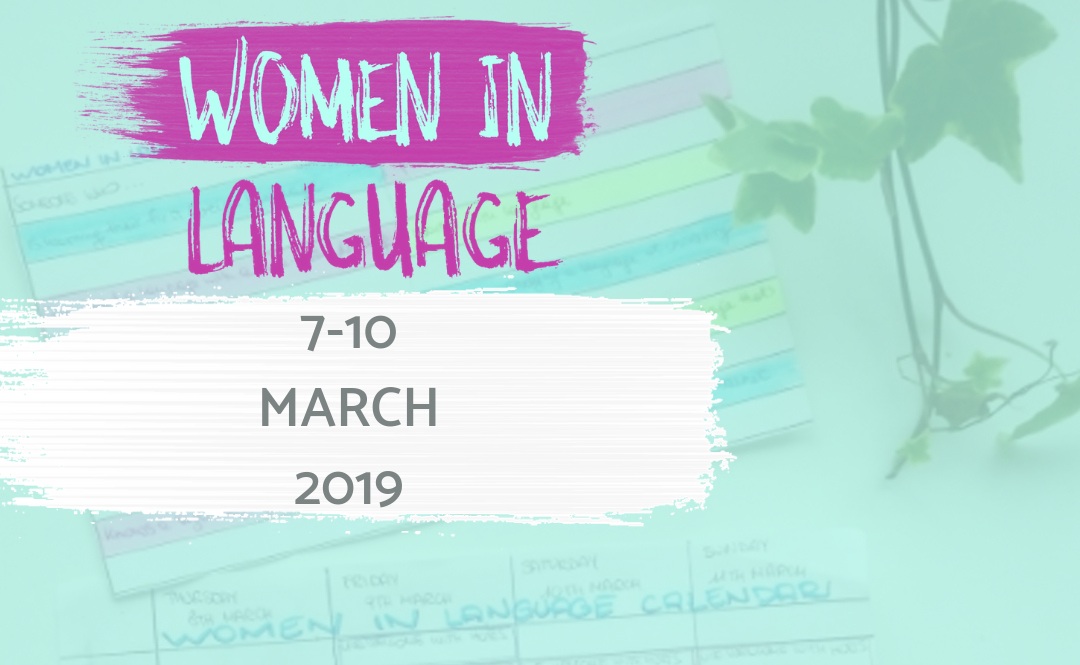
Women in Language TICKETS ARE HERE For 7-10 March 2019
Women in Language is a special online conference for all language lovers, organised by Shannon Kennedy, Lindsay Williams, and me. In this article, you’ll discover more about how it all started and what it feels like to be at the conference.
Just over 16 months ago, Lindsay Williams (my podcast co-host) and I were chatting on Skype. It was October or November. I remember the day turning into night at what felt like 4 in the afternoon on my side of the world, while Lindsay was getting ready for her day.
We were chatting about a few ideas for the future, when she mentioned this one thing that made my heart explode with excitement.
“So I’m thinking of maybe doing a one day event on International Women's’ Day with loads of female language people speaking...wouldn’t that be cool?! I can’t do it this year though because I’ll still be away but…”
I didn’t need to hear any more. I was like STOP IT RIGHT THERE I AM IN!!
Lindsay had just spoken an idea that had been growing in my brain, too. And I’m not a patient kinda girl so I wasn’t going to let Lindsay’s round-the-world trip stand in the way of an amazing idea. We contacted Shannon Kennedy and asked “would you maybe be interested…”.
Shannon was a yes. The organising team was ready, and few months down the line we shared the news with the world that we’d be hosting Women in Language in March 2018.
The event was a massive success! (Read my full debrief if you want to know what I learnt and how we pulled it off.)
Over the last year, we continued to work on our list of speakers and our background preparations. And now, we’re ready to bring you WOMEN IN LANGUAGE 2019!
If you were at last year’s event, you’ll know what to expect.
But if not, I know you’re curious. I asked writer Cassie Wright who was at Women in Language to share what it was like for her. Here’s Cassie’s story:
Conference Experience: What Cassie Thought Of The Language Conference
Once, when I was 9 years old, I tried to tell everyone I knew that in Finnish, you could make whole sentences into one super long word.
How awesome, right?
Unfortunately, my school friends were a lot less enthusiastic about my latest language tip. In fact, I was surprised to find that they didn’t really care at all.
Even at that age, I had two binders dedicated to languages, each full of vocabulary: one labeled ‘Finnish’ and another labeled ‘Japanese’. I was fascinated by languages and it stood out just as much as my mop of curly hair in a classroom full of long, straight locks. I was a language nerd at heart, though no one else seemed to have the same sort of passion.
Despite the fact that my friends didn’t care about my Finnish facts, I was proud of my attempts and motivation to learn. I never got very far, but I was always confident in my abilities.
"Japanese?" People would ask, “Isn’t that hard?”
I would just nod and grin.

But eventually, going it alone became too much of a challenge and the things other people told me were more important took over.
Still, languages followed me through both high school and college. Without fail, each time I tried to start again, I couldn’t find the drive to keep going.
Then, years later when I tried once more, I found an entire blog dedicated to learning languages. It was a lot different from the sites I’d seen before that featured big name polyglots and sold all kinds of "easy tricks".
That’s when I came across an announcement on my Twitter feed for Women in Language.
It caught my attention immediately, not only because there were so many women prepared to talk about their language experiences, but because it was all online. The only thing I needed to attend was a ticket for the event, which meant the cost of plane rides and hotels wasn’t an issue.
When I bought my ticket to Women in Language that day, I didn’t realize how much it would change my approach to language learning.
It’s not just about languages. It’s about representation.
Learning a language is the goal, but how do you do it with a busy schedule? Kids? How do you find the courage to pick up and move to another country? How do you immerse yourself when that’s not possible?
How amazing would it be to learn about those things from someone in your place: women of all different races and backgrounds with a variety of experiences.
This is what I really gained from Women in Language and it gave me a sense of validation.
Here were a number of talented women who gladly shared their knowledge and ideas. I saw in them my own language learning dreams, only this time, it wasn’t some unrealistic goal.
In this community of multilingual women, I felt I could proudly hold onto my vocabulary-filled binders with my mess of curly hair and say, "Hey! I’m one of you, too. I see myself here."
Women in Language brings that community of learners forward and inspires them to keep going.
More than anything, it’s a breath of fresh air for those who need a place to share a common interest and belong.
GET YOUR TICKET TO WOMEN IN LANGUAGE!
This year, we are proud to announce that there are EVEN MORE presentations at Women in Language. There’s so much more happening – including 2 Panel Discussions and a chance for YOU to present, a prize draw worth over $1000, and daily fun activities for everyone.
Ready for it?
Women in Language is happening live and online over 4 days from Thursday 7th March to Sunday 10th March 2019.
If you can’t make it on those dates, you can catch up at any time since your ticket purchase gets you access to all recordings for as long as you like.
Everyone is welcome (the ‘women’ in Women in Language only refers to the line-up of speakers!) and we’d love to have you join us for the live event. Click below to get your ticket now for Women in Language 2019.
To join us, click here to purchase your ticket.
Are you coming to Women in Language? Leave a comment below and let me know!




Struggling with listening? Discover realistic tips, challenge prompts, and the best tools for improving your listening skills as a self-guided language learner